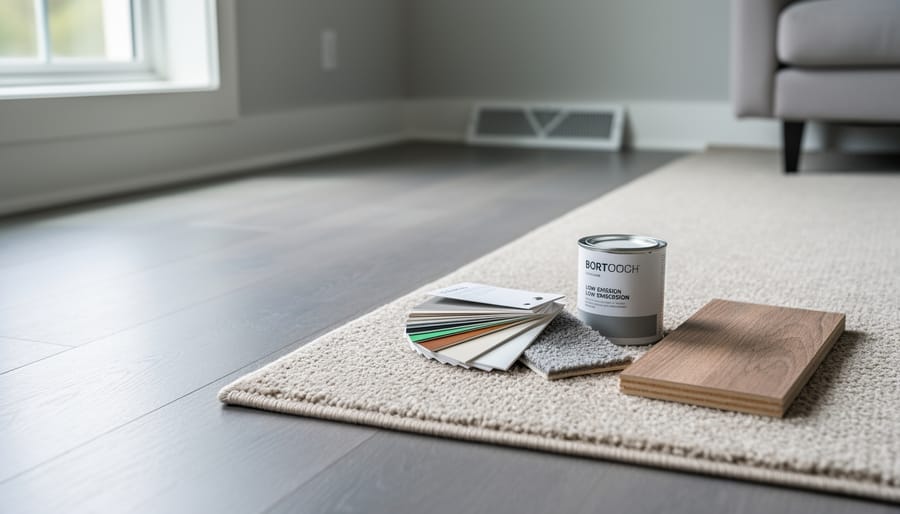
How to Choose Low-Emission Interior Materials: Understanding µg/m³ Air Quality Ratings
When you see µg/m³ on an air quality specification sheet for flooring, paint, or furniture, you’re looking at micrograms per cubic meter, the standard measurement for airborne pollutant concentration. Lower numbers mean cleaner air, and for most interior materials, you’ll want to see volatile organic compound (VOC) emissions below 100 µg/m³ to maintain healthy indoor air quality.
This measurement matters because the materials you bring into your home continue releasing particles and gases long after installation. That new carpet smell or fresh paint odor? It’s measurable contamination, and the µg/m³ rating tells you exactly how much. Understanding this number helps you compare products side by side and make decisions that protect your family’s health without relying on vague “eco-friendly” marketing claims.
The challenge is that manufacturers report these numbers differently, testing methods vary, and no single threshold works for every situation. A product rated at 150 µg/m³ might be perfectly safe in a well-ventilated living room but problematic in a small bedroom where your child sleeps eight hours a night. Room size, ventilation rates, and the total surface area of emitting materials all factor into your actual exposure.
This guide breaks down what µg/m³ measurements mean for common interior materials, which thresholds to target for different rooms, and how to evaluate products when manufacturers don’t make the data easy to find. You’ll learn to spot the difference between genuine low-emission products and greenwashing, avoid costly mistakes, and create healthier indoor spaces without overthinking every purchase.
What µg/m³ Actually Tells You About Your Indoor Air
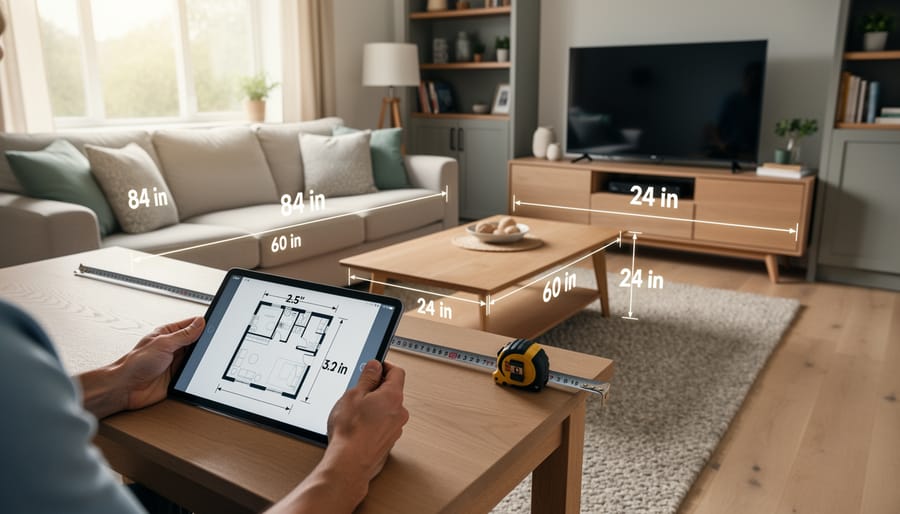
When you see µg/m³ on an air quality monitor or product spec sheet, you’re looking at micrograms per cubic meter, a measurement of how much pollutant mass exists in a given volume of air. One microgram is one-millionth of a gram, which sounds tiny until you realize that even these microscopic quantities can affect your health when you’re breathing them constantly. This measurement gives you a precise snapshot of pollutant concentration in your indoor environment, allowing you to compare air quality across different rooms, times of day, or before and after material changes.
The unit tracks several categories of indoor air pollutants. Why PM2.5 matters becomes clear when you understand these are particulates smaller than 2.5 microns that penetrate deep into your lungs and bloodstream. Your µg/m³ readings also capture volatile organic compounds (VOCs) from paints, adhesives, and synthetic materials, formaldehyde off-gassing from pressed wood products and certain textiles, and other chemical emissions released by flooring, furniture finishes, and wall treatments.
Different pollutants have different acceptable thresholds. VOCs measured in µg/m³ can range from under 50 (excellent) to over 1,000 (problematic), while formaldehyde levels above 100 µg/m³ warrant immediate attention. PM2.5 concentrations should ideally stay below 12 µg/m³ for good indoor air quality, though outdoor conditions and activities like cooking can temporarily spike these numbers.
What makes this measurement particularly useful for homeowners is its objectivity. Unlike vague “low odor” or “eco-friendly” marketing claims, µg/m³ readings are quantifiable and comparable. When a flooring manufacturer states their product emits less than 50 µg/m³ of total VOCs after 14 days, you can directly compare that against another product claiming 200 µg/m³ emissions. This hard data transforms material selection from guesswork into informed decision-making based on measurable health outcomes.
How Interior Surface Materials Impact Your Air Quality Numbers
Your walls, floors, and furniture aren’t just decorative choices, they’re active sources of the pollutants measured in µg/m³. Every painted surface, vinyl floor plank, and piece of upholstered furniture continuously releases chemicals into your indoor air through a process called off-gassing. The materials you install today will influence your home’s air quality readings for months or even years to come.
Off-gassing happens when volatile organic compounds and other chemicals trapped in manufacturing processes slowly evaporate into your home’s air. New flooring can release formaldehyde and toluene, wall paints emit acetaldehyde and glycols, and VOC from furniture includes benzene and styrene, all contributing to those µg/m³ concentrations you’re trying to reduce. The rate starts highest right after installation, then gradually decreases over weeks to months depending on the material type and ventilation in your space.
What makes interior materials such a significant factor is surface area and proximity. Your flooring covers hundreds of square feet, wall treatments surround you in every room, and you spend hours in direct contact with furniture. Unlike outdoor pollution that dilutes across vast spaces, emissions from interior materials concentrate in enclosed rooms where you breathe the same air repeatedly. This makes material selection one of the few air quality factors you can directly control, often with more impact than adding air purifiers or opening windows after the fact.
What to Look for When Shopping: Key Buying Factors for Low-Emission Materials
Understanding Emission Testing Standards
When you’re shopping for interior materials, you’ll encounter several testing standards that measure emissions in µg/m³. The most rigorous is GREENGUARD Gold, which tests products in sealed chambers and sets strict limits for VOCs, formaldehyde, and other pollutants. It’s particularly valuable for bedrooms and nurseries because it uses children’s health benchmarks. California Section 01350 provides another trusted framework, simulating real classroom conditions and measuring emissions over multiple days. For flooring specifically, FloorScore certification tests products against California’s stringent VOC limits. These standards all measure similar pollutants, but testing conditions vary. GREENGUARD uses a 1-cubic-meter chamber, while Section 01350 simulates larger spaces. When a product meets multiple certifications, you’re getting verified low emissions from different testing angles. Look for products that achieve LEED low-emitting materials criteria, which requires compliance with recognized standards and sets maximum thresholds for specific pollutants. The certification label on a product means independent labs verified the emission rates, not just the manufacturer’s claims.
Reading the Fine Print: Emission Rate Specifications
When you flip to the technical specifications page, emission rates typically appear in two formats: total VOC (TVOC) emissions and individual chemical limits, both measured in µg/m³. Look for numbers taken at 336 hours (14 days) after installation, that’s the industry standard testing point that best predicts long-term performance in your home.
GREENGUARD Gold certified products must meet strict thresholds: formaldehyde below 9 µg/m³, total VOCs under 220 µg/m³, and individual VOCs capped at 50 µg/m³. These aren’t just arbitrary numbers, they represent concentrations proven safe for sensitive populations including children and those with asthma.
Pay attention to the testing chamber conditions listed. Reputable manufacturers test at realistic temperatures (23°C) and ventilation rates (0.5 air changes per hour). If those details are missing, the data’s less reliable.
Here’s what gets tricky: some spec sheets show emissions “per product” while others report “per square meter.” A paint showing 15 µg/m³ per square meter will contribute far less to your room’s total pollutant load than flooring emitting the same rate, simply because you’ll use more flooring material. Calculate the total surface area you’re covering to estimate cumulative emissions.
Types of Low-Emitting and Air-Purifying Materials Compared
Low-VOC and Zero-VOC Paints and Finishes
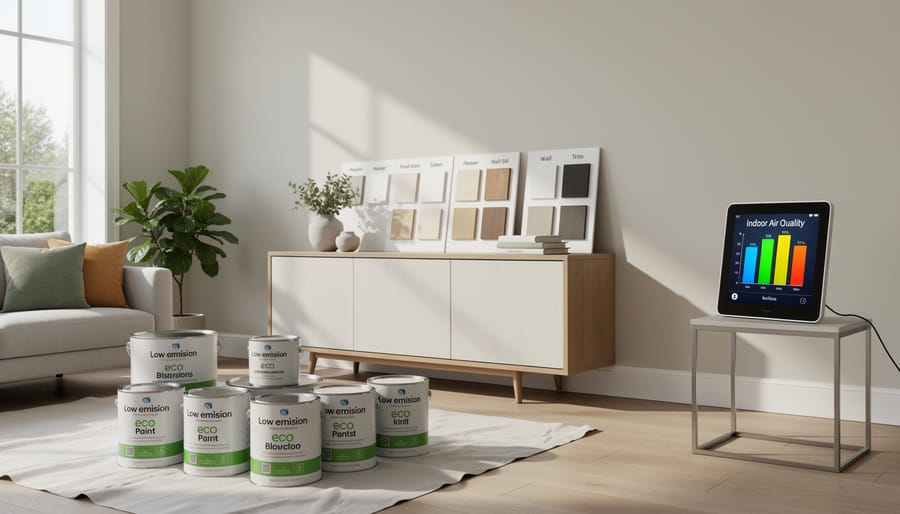
Low-VOC paints emit less than 50 grams per liter of volatile organic compounds, while zero-VOC formulations register under 5 g/L before tinting. These modern water-based paints typically achieve indoor air pollutant concentrations below 100 µg/m³ within 48 hours of application, compared to 500+ µg/m³ for conventional solvent-based products. Premium zero-VOC lines now match traditional paints in coverage, durability, and washability, brands like Benjamin Moore Natura and Sherwin-Williams Harmony demonstrate no performance sacrifice. The formaldehyde-free resins and plant-based pigments in quality low-VOC options also prevent long-term off-gassing that can persist for months with standard paints. Color selection no longer means compromising air quality, as manufacturers have expanded their low-VOC paint ideas to include thousands of hues. Look for GREENGUARD Gold certification on the can, which confirms emissions testing at 10,000 µg/m³ total VOCs or less in chamber tests, a reliable benchmark for genuinely clean indoor air.
Natural and Mineral-Based Wall Coverings
Clay plasters stand out as one of the cleanest wall covering options, typically registering under 10 µg/m³ total VOC emissions after curing. These earth-based finishes contain no synthetic binders or chemical additives, relying instead on natural clay particles that bond as they dry. Beyond low emissions, clay actively regulates humidity by absorbing excess moisture when levels rise and releasing it when air becomes dry.
Lime washes and mineral paints follow similar emission profiles. Authentic lime wash, made from slaked lime and water, emits virtually nothing after carbonation completes. Mineral paints use natural earth pigments and mineral binders, avoiding the acrylic and vinyl resins found in conventional paints. Both options cure through chemical reactions rather than solvent evaporation, eliminating the off-gassing period that plagues standard paints.
Natural wallpapers made from grasscloth, cork, or paper with mineral-based inks typically measure between 5-15 µg/m³. Skip vinyl-backed versions entirely; they reintroduce the petrochemical emissions you’re trying to avoid. The adhesive matters too, use starch-based pastes rather than synthetic alternatives.
Certified Low-Emission Flooring Options
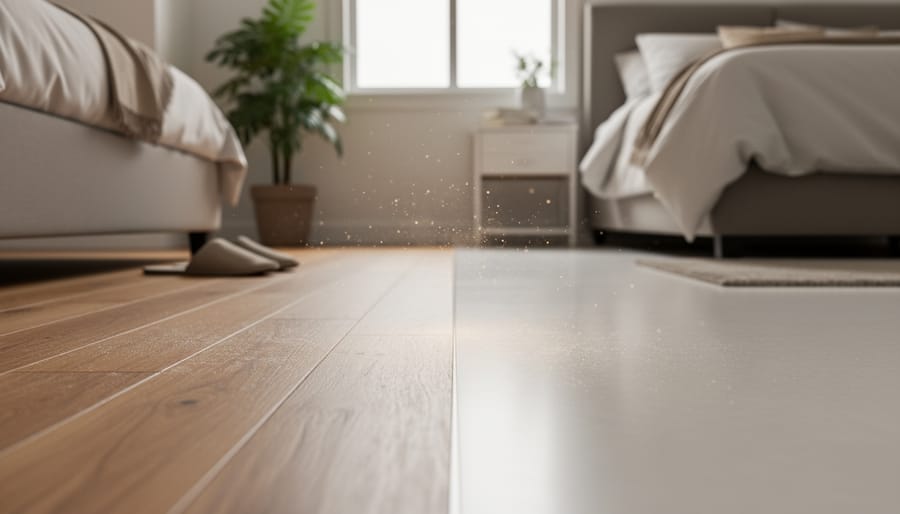
Hardwood remains a top choice when you verify it’s finished with water-based polyurethane or natural oil rather than solvent-based sealers. Look for FloorScore certification, which caps formaldehyde emissions at 13.5 µg/m³ and total VOCs at 100 µg/m³.
Bamboo and cork offer naturally low emissions, but quality varies dramatically by manufacturer. Check for GREENGUARD Gold certification, which tests for over 360 VOCs and sets strict emission limits. Avoid products using urea-formaldehyde binders between layers.
Linoleum, the real stuff made from linseed oil, not vinyl, emits minimal pollutants and actually improves over time as it fully cures. Natural linoleum typically measures under 10 µg/m³ total VOCs after installation.
Ceramic and porcelain tile are essentially inert once installed, but the adhesive matters enormously. Skip mastic adhesives that can off-gas for months. Choose low-VOC thinset mortar (under 50 g/L VOC content) and water-based grout sealers. The installation products often emit more pollutants than the tile itself.
Active Air-Purifying Surface Materials

Active air-purifying materials represent a shift from merely avoiding emissions to actively removing pollutants from your home. Photocatalytic coatings use titanium dioxide activated by light to break down VOCs, formaldehyde, and odors at the molecular level, with lab tests showing reductions of 50-80% in specific pollutants within 24 hours. These air-cleaning coatings work continuously as long as they receive adequate light exposure, though performance varies with coating thickness and room conditions.
Mineral-infused panels containing zeolites or activated carbon physically trap VOCs and moisture, with some products claiming to reduce formaldehyde levels by 70-90% over their lifetime. Bioactive wall finishes incorporating probiotics are emerging but have limited independent testing. These technologies typically cost 30-200% more than conventional alternatives and work best as part of a comprehensive strategy, not replacements for proper ventilation. Expect measurable µg/m³ reductions in targeted pollutants, but verify claims through third-party certifications like GREENGUARD or independent air quality testing in your specific application.
Recommended Products and Materials for 2026
The materials market has matured significantly, and verifying actual emission performance is now straightforward if you know which certifications and specifications to trust. Here are proven options organized by where you’ll use them, with realistic performance expectations based on third-party testing data.
Bedrooms and Nurseries: Where Air Quality Matters Most
Start here because people spend seven to nine hours breathing the same air every night. For walls, mineral-based paints like those from Romabio and Earthborn meet GREENGUARD Gold standards with formaldehyde emissions typically below 10 µg/m³. Clay plasters from American Clay offer both low emissions and humidity buffering, though they cost more upfront. If budget matters, standard latex paints with Green Seal certification perform nearly as well once fully cured.
Flooring choices make the biggest numerical difference. Solid hardwood with water-based finish, cork with low-VOC adhesive, or natural linoleum consistently test under 50 µg/m³ total VOC emissions after the first week. Avoid laminate flooring unless it carries FloorScore certification, many budget laminates still use formaldehyde-based resins that off-gas for months.
Living Spaces and High-Traffic Areas
Durability and cleanability matter alongside emissions here. For floors, polished concrete sealed with low-VOC acrylic, ceramic or porcelain tile with low-emission grout, and engineered hardwood with CARB Phase 2 compliance all deliver long-term performance under 30 µg/m³. The installation adhesive matters as much as the material itself, specify products meeting MATES testing protocols.
Wall treatments benefit from active air-purifying options in spaces where cooking or pets contribute to pollution loads. Photocatalytic mineral paints break down VOCs when exposed to daylight, though the effect diminishes in windowless rooms. Graphene-infused coatings show promise but remain expensive and difficult to source consistently.
Room-by-Room Quick Reference
- Bedrooms: Mineral paint or GREENGUARD Gold latex, solid hardwood or cork flooring, avoid composite furniture
- Nurseries: Clay plaster or zero-VOC paint, natural linoleum or sealed cork, prioritize certified cribs and changing tables
- Kitchens: Ceramic tile, sealed stone, or polished concrete for floors; lime wash or mineral paint for walls away from splash zones
- Bathrooms: Porcelain tile with epoxy grout, mineral-based paint rated for moisture, avoid vinyl wallpaper
- Living rooms: Engineered hardwood with low-emission finish, natural fiber area rugs, solid wood or metal furniture
- Home offices: Low-VOC paint, bamboo or reclaimed wood flooring, minimize particle board desks and storage
The strongest performing combination across all rooms pairs a mineral-based wall coating with hard surface flooring and minimal composite wood products. This typically achieves total indoor VOC levels below 100 µg/m³ within two weeks of installation, compared to 300-500 µg/m³ in conventionally finished rooms.
Budget constraints rarely require compromising air quality entirely. Generic GREENGUARD-certified paint costs only marginally more than standard options, and delaying one finish upgrade to afford better materials in bedrooms produces measurable health benefits where they matter most.
Common Mistakes to Avoid When Choosing Air Quality Materials
Even the most well-intentioned material choices can backfire if you fall into these common traps. Knowing what to avoid is just as important as knowing what to buy when you’re trying to protect your indoor air quality.
The biggest mistake is trusting vague environmental claims without verification. Terms like “eco-friendly,” “natural,” and “green” mean absolutely nothing without third-party certification to back them up. A product labeled “low-VOC” might still emit formaldehyde, acetaldehyde, or dozens of other pollutants that aren’t technically VOCs but still degrade your air quality. Always look for specific certifications like GREENGUARD Gold or FloorScore rather than relying on marketing language.
Another critical error is focusing exclusively on the finish material while ignoring what goes underneath and around it. You can install the most pristine zero-VOC paint available, but if you use a standard primer, caulk, or adhesive, you’ve just introduced high-emission products that will off-gas for months. The entire installation system needs to meet low-emission standards. This includes subfloors, underlayments, grouts, sealants, and any preparatory products.
Many people also rush the process by ignoring manufacturer-specified cure times. Low-emission materials often need proper ventilation and full curing periods to reach their advertised emission rates. Installing furniture or closing up a freshly painted room too quickly traps emissions and defeats the purpose of choosing better materials.
Finally, mixing one or two low-emission products with standard materials rarely delivers meaningful results. If you install certified low-VOC flooring but keep formaldehyde-releasing furniture and conventional paint on the walls, your overall indoor air quality won’t improve much. The high-emission items will dominate your µg/m³ readings. For noticeable air quality improvements, you need a coordinated approach across all major surfaces in a room.
DIY Installation Tips to Preserve Low Emission Properties
Installing low-emission materials correctly is just as important as choosing them. Even certified products can compromise your air quality if installed improperly or paired with high-VOC adhesives and primers.
Start by clearing the room completely and opening all windows at least 24 hours before beginning work. Cross-ventilation is crucial, set up fans to create airflow that exhausts outdoors rather than circulating air within your home. Keep this ventilation running throughout installation and for at least 72 hours afterward.
Read manufacturer cure time requirements and double them. Most low-emission paints reach touch-dry in hours, but full curing takes weeks. During this period, VOCs continue off-gassing at elevated rates. Maintain ventilation and avoid sleeping in newly painted bedrooms for at least a week, even with zero-VOC products.
Match every component to the same emission standards as your primary material. A GREENGUARD Gold-certified floor loses its air quality advantage when installed with standard construction adhesive. Use only compatible low-emission primers, adhesives, sealants, and finishes specified by the manufacturer. These products cost more but maintain the integrity of your investment.
For flooring, allow materials to acclimate in the installation space for 48-72 hours before laying them. This prevents warping that could require additional adhesives or treatments later. When installing wall coverings, work in sections and maintain room temperature between 65-75°F, extreme temperatures can affect cure rates and emission profiles.
Consider renting or purchasing a home air quality monitor that measures VOCs and particulates. Take baseline readings before installation, monitor during the cure period, and verify that levels return to or fall below your starting point. If readings remain elevated two weeks post-installation, increase ventilation and contact the manufacturer.
Frequently Asked Questions About µg/m³ and Interior Air Quality
Homeowners often have the same practical questions when they first encounter µg/m³ measurements and air quality data. Here are the answers to what I’m asked most frequently about choosing and living with low-emission materials.
What’s a safe µg/m³ level for VOCs in my home?
For total VOCs (TVOCs), aim to keep levels below 500 µg/m³, with anything under 300 µg/m³ considered good indoor air quality. Individual VOCs like formaldehyde should stay below 10 µg/m³ for long-term health.
How can I test the air quality in my home?
You can use a consumer-grade air quality monitor (around $150-300) that measures VOCs, formaldehyde, and particulates in real time. For more comprehensive testing, hire a certified indoor air quality professional who will take samples and provide a detailed lab analysis.
When should I replace materials that are off-gassing?
Most materials off-gas heavily in the first 30-90 days, then emissions drop significantly. If your levels remain elevated after six months with proper ventilation, or if anyone experiences health symptoms, it’s time to replace the source material.
Can air purifiers make up for high-emission materials?
Air purifiers help reduce existing pollutants but cannot completely offset materials that continuously emit high levels of VOCs. They’re best used as a supplement to low-emission materials, not a replacement for them.
Do natural materials always have lower emissions than synthetic ones?
Not automatically, untreated solid wood rates low, but some natural materials use high-VOC adhesives or finishes. Always verify third-party testing rather than assuming “natural” means low-emission.
How long does it take for new low-emission materials to reach stable emission levels?
Even certified low-emission materials off-gas slightly during the first two weeks after installation. They typically reach stable, minimal emission levels within 30 days when properly ventilated during the cure period.
The testing question deserves extra attention because many people buy monitors expecting laboratory precision. Consumer devices give you useful trends and alert you to problems, but they’re not as accurate as professional testing. I recommend starting with a quality monitor to establish your baseline, then calling in a professional if readings stay high or someone in your household develops unexplained respiratory issues or headaches.
When you’re comparing materials in the store, remember that the lowest number isn’t always the best choice if it means sacrificing durability. A material rated at 15 µg/m³ that lasts twenty years without needing replacement often performs better than a 5 µg/m³ option that requires refinishing every three years with additional products that add their own emissions.
Choosing low-emission and air-purifying materials isn’t just about following trends, it’s about creating measurable improvements in the air your family breathes every day. The µg/m³ readings in your home will reflect these choices, often dropping significantly within weeks of replacing high-emission surfaces with certified alternatives.
You don’t need to renovate your entire house at once. Start where it matters most: bedrooms where you spend eight hours breathing the same air, or nurseries where developing lungs are most vulnerable. Swapping out just the paint and flooring in a single room can cut indoor pollutant concentrations by 40-60%, a change you can verify with basic air quality monitoring.
Think of these material decisions as investments in long-term health rather than one-time purchases. When you’re already planning to repaint, refinish floors, or update wall treatments, choosing low-emission alternatives costs roughly the same but delivers benefits that compound over years. Better indoor air quality means fewer headaches, improved sleep, reduced allergy symptoms, and a healthier environment for everyone under your roof. The µg/m³ numbers tell the story, but you’ll feel the difference.