
Your Furniture Could Be Making Your Family Sick (Here’s How to Fix It)
Your furniture could be quietly releasing harmful chemicals into your home right now. That new couch smell, the fresh-from-the-factory desk, even that trendy particleboard bookshelf—they’re all potentially emitting volatile organic compounds (VOCs) like formaldehyde that degrade your indoor air quality and may trigger headaches, respiratory issues, and long-term health problems.
The good news? You have more control than you think. Low-emitting furniture uses materials and finishes that minimize or eliminate these chemical releases, creating healthier living spaces without sacrificing style or breaking your budget. Understanding certifications like GREENGUARD Gold and knowing which materials naturally emit fewer VOCs transforms you from a passive consumer into an informed decision-maker who can protect your family’s health.
Whether you’re furnishing a nursery, outfitting a home office, or simply replacing worn pieces, choosing low-emitting options isn’t complicated once you know what to look for. From solid wood alternatives to water-based finishes, from off-gassing techniques to budget-friendly swaps, this guide walks you through practical strategies that work for real homes and real budgets—no chemistry degree required.
What Makes Furniture ‘Low-Emitting’ (And Why It Matters)
The Hidden Chemicals in Traditional Furniture
That new couch or dresser might look perfect in your home, but it could be releasing a cocktail of chemicals into the air you breathe. Traditional furniture often contains volatile organic compounds (VOCs) that off-gas over time, affecting your indoor air quality.
Formaldehyde is one of the most common culprits, found in pressed wood products, particleboard, and the adhesives that hold furniture together. It’s that distinct “new furniture smell” many people recognize, but it can cause eye irritation, headaches, and respiratory issues with prolonged exposure.
Flame retardants are another concern, especially in upholstered furniture and foam cushions. While intended for safety, many of these chemicals have been linked to health problems and can accumulate in household dust. Your family might be exposed through both inhalation and skin contact.
Don’t forget about the adhesives, stains, and finishes used in furniture production. These products often contain multiple VOCs like benzene, toluene, and xylene. The off-gassing is strongest when furniture is brand new but can continue for months or even years.
The good news? Understanding these hidden chemicals is your first step toward making healthier furniture choices that protect your family’s wellbeing without sacrificing style.
How Low-Emitting Furniture Protects Your Home
Understanding what makes furniture truly low-emitting starts with recognizing the standards behind the label. Third-party certifications provide independent verification that furniture meets strict chemical emission limits, protecting your indoor air quality just like healthier home surfaces protect against other hazards.
GREENGUARD Gold Certification is the gold standard for low-emitting furniture, testing products for over 360 volatile organic compounds and setting limits 50% lower than standard GREENGUARD. These certifications require continuous testing in controlled chamber environments that simulate real-world conditions in your home.
The California Air Resources Board (CARB) compliance is another important benchmark, particularly for composite wood products like particleboard and plywood. CARB Phase 2 standards limit formaldehyde emissions, one of the most common and problematic chemicals found in furniture.
When shopping, look for clear certification labels or ask retailers for documentation. Legitimate low-emitting furniture will proudly display these credentials. Some manufacturers also provide detailed transparency reports listing all materials and emissions test results, giving you complete confidence in your purchase decision and ensuring your family breathes cleaner air every day.
Spotting Low-Emitting Furniture: What to Look For

Certifications You Can Trust
When shopping for low-emitting furniture, you’ll encounter several certification labels that indicate a product has been independently tested for harmful chemicals. Here’s what each one actually means for your home.
GREENGUARD Gold is the gold standard for indoor air quality. This certification tests for over 360 volatile organic compounds and 10,000 total chemicals, with stricter limits than the regular GREENGUARD certification. Products with this label are especially safe for schools, healthcare facilities, and homes with children or sensitive individuals. You’ll find this certification on everything from mattresses to office chairs.
CertiPUR-US focuses specifically on foam products. If you’re buying a sofa, mattress, or cushioned furniture, this certification confirms the foam is made without ozone depleters, flame retardants like PBDEs, mercury, lead, formaldehyde, and phthalates. It also limits VOC emissions to 0.5 parts per million.
CARB Phase 2 addresses formaldehyde emissions from composite wood products like plywood, particleboard, and MDF. California’s Air Resources Board set these standards, which are now among the strictest in the world. Since formaldehyde is a common culprit in furniture off-gassing, this certification matters for any wooden furniture pieces.
Other trustworthy certifications include OEKO-TEX for fabrics and textiles, which tests for harmful substances, and FSC certification, which while primarily focused on sustainable forestry, often correlates with lower chemical treatments.
When furniture carries multiple certifications, you’re getting comprehensive protection across different materials and potential emission sources.
Materials That Naturally Emit Less
When you’re shopping for healthier furniture, understanding which materials naturally produce fewer emissions makes all the difference. Let’s break down your best options for creating a cleaner indoor environment.
Solid wood remains one of the safest choices because it doesn’t contain the formaldehyde-laden glues found in particleboard or plywood. Oak, maple, walnut, and other hardwoods emit minimal VOCs once properly dried and finished. While solid wood furniture typically costs more upfront, it’s worth considering alongside other durable furniture finishes for long-term value.
Natural fabrics like organic cotton, linen, hemp, and wool contain fewer chemical treatments than synthetic upholstery. These breathable materials skip the stain-resistant chemical coatings that often release VOCs for months after purchase. Look for certifications like GOTS (Global Organic Textile Standard) to ensure you’re getting genuinely untreated fabrics.
Water-based finishes have revolutionized furniture manufacturing by replacing traditional solvent-based products. These finishes dry quickly, emit significantly fewer fumes, and provide excellent protection. Many manufacturers now offer water-based options that rival oil-based finishes in durability, similar to innovations in eco-friendly flooring options.
Low-VOC adhesives are game-changers for assembled furniture. Traditional wood glues release formaldehyde and other harmful chemicals, but newer formulations use plant-based or water-based ingredients. When possible, choose furniture constructed with mechanical fasteners like dowels or mortise-and-tenon joints, which rely less on adhesives.
By prioritizing these natural materials, you’re investing in both your health and home’s air quality.
Room-by-Room Guide to Low-Emitting Furniture
Bedrooms: Where You Spend a Third of Your Life
Since you spend roughly eight hours breathing the air around your mattress every night, your bedroom deserves extra attention when selecting low-emitting furniture. Mattresses are the biggest concern here—many conventional options contain flame retardants, polyurethane foam, and adhesives that release VOCs for months or even years.
Look for mattresses certified by GREENGUARD Gold or those made with natural latex, organic cotton, and wool. These materials provide natural flame resistance without chemical treatments. Brands like Avocado, Naturepedic, and Saatva offer certified options at various price points. If a new mattress isn’t in your budget right now, adding an organic mattress cover can create a barrier between you and existing emissions while you save up.
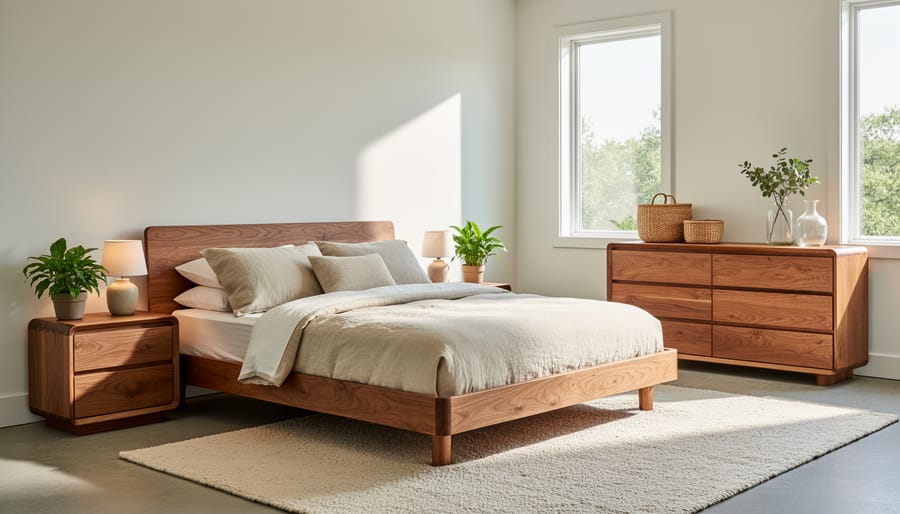
For bed frames, solid wood options beat particle board every time. Choose pieces finished with water-based stains or natural oils. Metal frames are another excellent low-emission choice since they don’t require adhesives or formaldehyde-based binders.
Nightstands follow the same rules—seek solid wood construction with non-toxic finishes. If you’re handy, this is a perfect DIY opportunity. Sand down a secondhand piece and refinish it with zero-VOC paint or natural wood oil for a custom, emission-free result.

Nurseries and Kids’ Rooms: Extra Protection for Little Ones
Children spend significantly more time near the ground and put objects in their mouths, making them especially vulnerable to harmful emissions from furniture. Their developing bodies also process toxins differently than adults, so choosing low-emitting furniture for nurseries and kids’ rooms isn’t just preferable—it’s essential.
When shopping for cribs, changing tables, and toy storage, look for GREENGUARD Gold certification, which has stricter standards specifically designed with children’s health in mind. This certification limits chemical emissions far below standard levels and tests for over 360 volatile organic compounds.
Avoid furniture with flame retardants, particularly in foam mattresses and upholstered pieces. These chemicals have been linked to developmental issues and can accumulate in house dust where little ones play. Instead, opt for naturally flame-resistant materials like wool or look for products that meet flammability standards through safer methods.
Choose solid wood furniture over particle board when possible, and if you’re painting or finishing pieces yourself, use zero-VOC paints and finishes. Let any new furniture off-gas in a garage or covered outdoor area for several days before bringing it into your child’s room.
Consider adding an air purifier with a HEPA filter to nurseries for an extra layer of protection during those crucial early years.
Living Areas and Home Offices
Your living room and home office are spaces where you probably spend most of your waking hours, so choosing low-emitting furniture here makes a real difference. Sofas and sectionals are major purchases that can impact your air quality for years. Look for pieces with solid wood frames and cushions made from natural latex or organic materials rather than conventional polyurethane foam, which releases VOCs over time.
For home offices, desks and shelving are often made from particle board or MDF, which typically contain formaldehyde-based adhesives. Instead, seek out solid wood or bamboo options, or choose composite wood products certified as formaldehyde-free. These pieces cost a bit more upfront but create healthier workspaces where you might spend eight hours daily.
Bookcases and storage units in high-traffic areas benefit from low-VOC finishes since they’re constantly exposed to air circulation. Some manufacturers now offer water-based stains and natural oil finishes that perform just as well as traditional options without the chemical smell.
DIY tip: If you already own quality furniture with strong odors, try placing it in a garage or covered outdoor area for a few weeks to off-gas before bringing it inside. This simple step can significantly reduce initial emissions.
Making Your Current Furniture Safer
The Ventilation and Off-Gassing Period
Whether you’ve just brought home new furniture or want to refresh existing pieces, proper ventilation can significantly reduce chemical exposure. The off-gassing process is most intense during the first few weeks after manufacture, so a little patience goes a long way toward protecting your indoor air quality.
Start by removing all packaging materials immediately, as plastic wrapping can trap VOCs and slow their release. If possible, place new furniture in a garage, covered patio, or well-ventilated spare room for 3-7 days before moving it into your main living spaces. This simple step allows the heaviest emissions to dissipate away from where you spend most of your time.
For furniture already in your home, create cross-ventilation by opening windows on opposite sides of the room. Run ceiling fans on medium speed to keep air circulating without creating drafts that might blow dust around. Consider using an air purifier with activated carbon filters, which specifically target VOCs and odors.
The golden window for off-gassing is typically 2-4 weeks, though some materials may release chemicals for several months. During this period, maintain consistent ventilation, especially during warm weather when higher temperatures accelerate VOC release. A simple DIY approach is setting a reminder on your phone to open windows for 15-20 minutes twice daily, creating a healthy routine that protects your family’s wellbeing.
Sealants and Covers That Help
If you already own furniture that’s releasing unwanted chemicals, don’t worry—you have options to reduce your exposure without replacing everything.
Washable slipcovers are your first line of defense. They create a physical barrier between you and the furniture while being easy to launder regularly. Choose slipcovers made from organic cotton or other natural, untreated fabrics. The best part? You can remove and wash them whenever needed, which helps eliminate dust and any VOCs that may have settled on the surface.
Low-VOC sealants offer another protective layer, especially for wood furniture. Products like AFM Safecoat or water-based polyurethane can seal in emissions from composite wood or particleboard. Before applying any sealant, test it in a small, hidden area and ensure proper ventilation during application. Let the furniture cure completely in a well-ventilated space before bringing it back inside.
For upholstered pieces, consider adding a layer of barrier cloth between the cushions and your regular fabric. Materials like organic cotton duck canvas work well for this purpose.
These solutions won’t eliminate all emissions instantly, but they significantly reduce your exposure while you plan longer-term replacements or simply want to extend the life of existing furniture safely.
Budget-Friendly Ways to Transition to Low-Emitting Furniture
Which Pieces to Replace First
Start with bedroom furniture, as you spend roughly one-third of your life sleeping and breathing in that space. Replace your mattress and bed frame first, especially if they’re made with particleboard or have that new furniture smell. These pieces sit closest to your breathing zone for extended periods, making them the highest priority.
Next, tackle upholstered pieces like sofas and armchairs in living areas where your family spends significant time. These often contain flame retardants and foam that can off-gas for years. Focus on items you regularly make direct contact with.
Move on to office furniture, particularly desks and storage units made from pressed wood products. If you work from home, you’re logging serious hours near these pieces.
Lower priority items include occasional furniture like side tables, bookshelves, and decorative pieces. While still worth upgrading eventually, these typically have less surface area and direct contact time. If budget is tight, refinish or seal existing pieces with low-VOC products as a temporary solution until you can replace them with certified low-emitting alternatives.
The Smart Case for Secondhand and Vintage
Here’s a budget-friendly secret: vintage and secondhand furniture can actually be healthier choices than brand-new pieces. Older furniture has already gone through its off-gassing phase, meaning those volatile organic compounds have already dissipated over the years. That musty smell in grandma’s attic is nothing compared to the chemical cocktail released by fresh particleboard.
When shopping vintage, focus on solid wood pieces from the 1950s and earlier, before formaldehyde-heavy adhesives became standard. Look for furniture with intact finishes rather than pieces needing refinishing, as sanding and new stains introduce fresh chemicals. Inspect upholstered items carefully—while the frame may be safe, old foam cushions might have deteriorated and need replacing with natural latex or organic options.
Avoid pieces with visible damage, heavy water stains, or musty odors that won’t air out, as these could indicate mold issues. A quick DIY test: leave the piece in your garage for a week. If the smell improves significantly, it’s just old-house odor that’ll continue fading.
DIY Refinishing with Low-VOC Products
Giving old furniture new life doesn’t mean compromising your indoor air quality. Start by working in a well-ventilated area, preferably outdoors or in a garage with open doors. First, clean your piece thoroughly with mild soap and water, then lightly sand the surface to help your new finish adhere properly.
When selecting products, look for low-VOC paints, stains, and sealers labeled with third-party certifications like Green Seal or GREENGUARD. These products release fewer harmful chemicals while still delivering beautiful, durable results.
Apply thin, even coats rather than one thick layer, allowing proper drying time between applications as directed on the product label. This technique reduces odors and ensures better adhesion. For best results, plan for 2-3 coats of paint or stain, followed by a low-VOC topcoat sealer for protection.
Let your refinished piece cure completely in a ventilated space for at least 72 hours before bringing it indoors. This simple process transforms tired furniture into safe, stylish pieces that enhance your home without compromising air quality.
Creating a healthier home through low-emitting furniture isn’t as overwhelming as it might seem at first. You’ve now got the essential knowledge to make informed decisions that protect your family’s health and improve your indoor air quality. Remember, you don’t need to replace everything at once or break the bank to see real improvements. Even small changes, like choosing one certified piece for your bedroom or opting for solid wood instead of particle board for your next purchase, contribute to a cleaner indoor environment.
The key is starting somewhere. Maybe it’s asking about VOC content at your next furniture shopping trip, looking for GREENGUARD or FSC certifications, or simply allowing new pieces to off-gas in your garage before bringing them inside. Each conscious choice moves you closer to a healthier living space.
You’re not just buying furniture anymore; you’re curating an environment that supports your wellbeing. Armed with information about materials, certifications, and smart shopping strategies, you can transform your home one piece at a time. Your health is worth the effort, and the good news is that safer furniture options are more available and affordable than ever before.