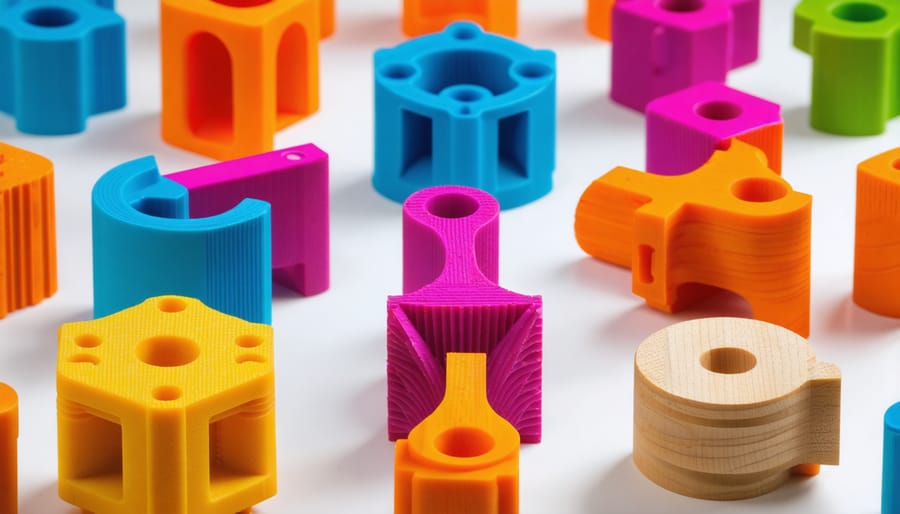
Strong 3D Printed Joints Transform DIY Furniture Projects
Transform your furniture-making capabilities with 3D printed furniture joints that revolutionize how we connect and customize wooden pieces. These innovative connectors bridge the gap between traditional woodworking and modern technology, offering precision, strength, and design flexibility that conventional joints simply can’t match.
Print custom-designed corner brackets, dovetail alternatives, and hidden connectors using durable materials like PETG or ABS plastic to create furniture that’s both sturdy and uniquely yours. Whether you’re crafting a minimalist bookshelf or assembling a complex modular storage system, these joints eliminate the need for complex wood joinery while maintaining professional-grade durability.
The beauty of 3D printed joints lies in their adaptability – design and print exactly what you need, from simple 90-degree connectors to complex multi-angle joints that would be nearly impossible to create through traditional methods. Plus, with the right printer settings and material choices, these connections can bear significant weight while remaining completely invisible in your finished piece.
This modern approach to furniture assembly democratizes custom furniture creation, allowing makers of all skill levels to achieve professional results without years of woodworking experience.
Why 3D Printed Furniture Joints Are Revolutionizing DIY Projects
Customization and Design Flexibility
3D printed furniture joints open up a world of creative possibilities that traditional joinery methods simply can’t match. With the ability to design and print custom joints, you can create furniture pieces that perfectly reflect your style and space requirements. Want a uniquely angled bookshelf? Or perhaps a table with an intricate geometric base? 3D printed joints make these visions achievable.
The customization options are practically limitless. You can adjust joint angles, sizes, and shapes to create furniture that fits unusual spaces or serves specific functions. For example, you might design a joint that allows a desk to fold flat against a wall in a small apartment, or create decorative joints that become aesthetic features of your furniture piece.
Color matching is another advantage, as you can print joints in various materials and colors to either blend seamlessly with your furniture or stand out as intentional design elements. Plus, you can iterate and refine your joint designs quickly, testing different versions until you achieve the perfect balance of form and function. This flexibility makes 3D printed joints particularly valuable for both one-off custom pieces and small-batch furniture production.
Cost-Effectiveness and Accessibility
3D printed furniture joints offer a cost-effective alternative to traditional hardware, especially for those who enjoy DIY home projects. Once you have access to a 3D printer, the cost per joint typically ranges from $0.50 to $2.00 in materials, significantly less than specialized metal hardware. This affordability makes customization and repairs much more accessible to the average homeowner.
The ability to print replacement parts on demand is particularly valuable when dealing with discontinued furniture lines or unique pieces. Instead of replacing an entire piece of furniture due to a broken joint, you can simply print a new one. This not only saves money but also helps extend the life of your furniture.
Most 3D printed joints can be produced in a matter of hours using common materials like PLA or PETG plastic. The digital files for many standard joint designs are freely available online, and customizing them requires only basic 3D modeling skills. This accessibility has democratized furniture repair and modification, making it possible for anyone with a 3D printer to maintain and upgrade their furniture independently.
Popular 3D Printed Joint Types for Home Furniture
Corner and Angle Joints
Corner and angle joints are essential elements in furniture construction, offering both structural stability and aesthetic appeal. These joints are particularly useful in creating bookshelves, tables, and cabinet frames where pieces need to meet at right angles or specific degrees.
The most popular 3D printed corner joint is the 90-degree connector, which features two or more slots that intersect perpendicularly. These joints often include reinforcement ribs and can be designed with various features like snap-fit mechanisms or screw holes for added security.
For more complex furniture designs, adjustable angle joints provide flexibility in assembly. These clever connectors allow pieces to meet at custom angles, typically ranging from 45 to 180 degrees, making them perfect for creating unique furniture shapes or adapting to unusual room layouts.
When printing corner joints, it’s crucial to consider the orientation of the print layers. The strongest configuration is when the layers run perpendicular to the direction of stress. Most successful designs incorporate filleted edges to reduce stress concentration and prevent layer separation.
For enhanced durability, many makers opt for joints with integrated support brackets or gussets. These features distribute weight more evenly across the joint and prevent sagging or warping over time. Some advanced designs even include cable management channels or decorative elements while maintaining structural integrity.
Remember to match your joint design with your furniture’s intended use – heavier pieces require more robust joints with larger contact areas and additional reinforcement points.

Connection and Support Joints
When it comes to connecting 3D printed furniture joints, stability and durability are key factors. The most common connection methods include snap-fit joints, which provide a satisfying click when assembled and can be easily taken apart for furniture moving or storage. These joints work particularly well for temporary or modular furniture pieces.
For more permanent connections, mortise and tenon-style joints are popular among DIY enthusiasts. These classic woodworking joints have been successfully adapted for 3D printing, offering excellent structural integrity. The printed version typically includes additional support features like ribbing or honeycomb internal structures to enhance strength.
Dovetail connections, another traditional woodworking favorite, translate remarkably well to 3D printing. These joints provide both mechanical strength and aesthetic appeal, especially when printed in contrasting colors or materials.
Support joints often incorporate additional features like reinforcement tabs or interlocking mechanisms. Many designs include channels for metal rods or wooden dowels, adding extra stability to larger furniture pieces. Some makers opt for hybrid solutions, combining 3D printed connectors with traditional materials for optimal strength.
For adjustable furniture, ball-and-socket joints or sliding mechanisms can be integrated into the design. These allow for customizable angles and positions while maintaining structural integrity. Remember to consider the printing orientation when designing joints, as this affects both strength and print quality.
Materials and Durability Considerations
When it comes to 3D printing furniture joints, choosing the right materials and printer settings is crucial for creating durable, functional pieces. Among the revolutionary materials available today, PLA and PETG stand out as top choices for furniture joints.
PLA is perfect for indoor furniture joints that won’t be exposed to high temperatures or significant stress. It’s easy to print with, provides excellent detail, and offers sufficient strength for light to medium-duty applications. For more demanding projects, PETG offers superior durability and impact resistance, making it ideal for joints that need to withstand regular use and movement.
Print settings play a crucial role in joint strength. Use these recommended parameters for optimal results:
– Layer height: 0.2mm for smooth surfaces
– Infill: 50-80% for structural integrity
– Shell thickness: minimum 1.2mm
– Print temperature: 200-220°C for PLA, 230-250°C for PETG
– Print speed: 40-50mm/s for precision
To enhance durability, print joints with their load-bearing axis perpendicular to the layer lines. This orientation maximizes strength and prevents layer separation under stress. Consider using a minimum of three perimeter walls and adding chamfers or fillets to stress points.
For outdoor furniture or pieces that will bear significant weight, consider using ASA or ABS filaments. These materials offer excellent UV resistance and mechanical strength but require an enclosed printer and careful temperature control during printing.
Remember to factor in shrinkage and thermal expansion when designing your joints. Most materials will shrink slightly as they cool, so include a tolerance of 0.2-0.3mm in your designs to ensure proper fit.
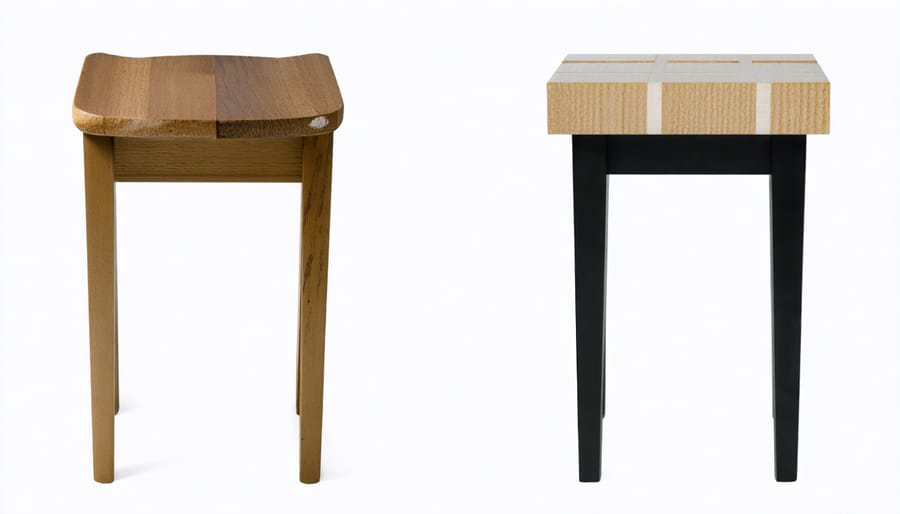
Practical Tips for Implementation
Design and Printing Guidelines
When designing furniture joints for 3D printing, strength and durability should be your top priorities. Always orient your prints vertically to ensure the layer lines run parallel to the stress direction, maximizing structural integrity. For optimal results, use a minimum layer height of 0.2mm and maintain at least 25% infill density.
Choose materials wisely – PETG and ABS offer excellent durability for furniture applications, while PLA can work for lighter loads. Whatever material you select, increase the wall thickness to at least 2mm for load-bearing joints. Consider adding reinforcement ribs and fillets to distribute stress more evenly across the joint.
Test your designs with small prototypes before committing to full-scale prints. This approach, similar to how smart home innovations are developed, helps identify potential weak points early. Print temperature and speed significantly impact joint strength – stick to manufacturer-recommended settings and avoid rushing the process.
For connecting parts, design with appropriate tolerances (usually 0.2mm-0.4mm) to ensure pieces fit together smoothly. Include alignment features like pins or grooves to make assembly foolproof. If possible, print joints as single pieces to eliminate weak points from assembly. Remember to factor in wood screw clearance and counter-sinks where needed for proper furniture assembly.
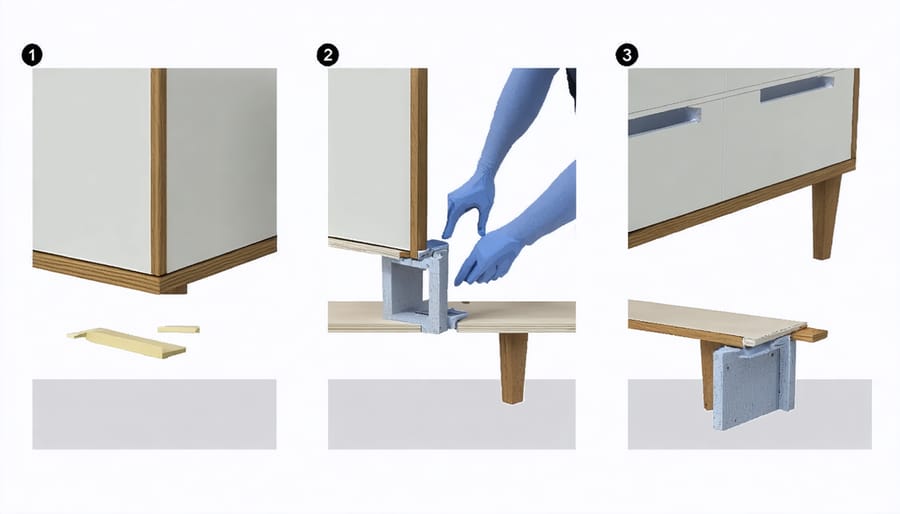
Assembly and Installation Tips
Before assembling your 3D printed furniture joints, ensure all pieces are completely cured and free from printing defects. Start by doing a dry fit to confirm all components align properly. If needed, use fine-grit sandpaper to smooth any rough edges that might prevent a snug fit.
When installing the joints, apply even pressure and avoid forcing pieces together, as this could cause cracking. For additional stability, consider using a small amount of wood glue in the connecting areas. If your joint design includes screw holes, use appropriately sized screws and pre-drill when necessary to prevent splitting.
Temperature and humidity can affect the performance of 3D printed joints, so keep furniture away from direct heat sources and extreme temperature fluctuations. Regular maintenance includes checking for signs of wear or loosening and tightening any screws as needed.
For load-bearing joints, reinforce connection points with metal brackets if you notice any flexibility. Clean your joints periodically with a slightly damp cloth, avoiding harsh chemicals that could degrade the printing material.
Keep spare joints on hand for quick replacements, and store your 3D printing files safely for future use. If you’re working with larger furniture pieces, having an extra set of hands during assembly can prevent stress on the joints and ensure proper alignment.
The emergence of 3D printed furniture joints has revolutionized the way we approach furniture making, bridging the gap between traditional craftsmanship and modern technology. This innovative solution has made custom furniture creation more accessible to DIY enthusiasts while offering professional furniture makers new possibilities for design and production.
The impact of 3D printed joints extends beyond just practical assembly – it’s reshaping the entire furniture industry. Homeowners can now create unique pieces that perfectly fit their spaces, while manufacturers can reduce waste and production costs. The ability to rapidly prototype and test different joint designs has led to stronger, more efficient connections that combine the best of traditional woodworking wisdom with cutting-edge manufacturing techniques.
Looking ahead, we can expect to see even more advanced applications of 3D printed joints, from smart furniture with integrated technology to fully customizable modular systems. The sustainability aspect is particularly noteworthy, as 3D printing allows for on-demand production and the use of recyclable materials, reducing the environmental footprint of furniture manufacturing.
For DIY enthusiasts and professionals alike, 3D printed furniture joints represent a perfect blend of innovation and practicality. They’ve made complex furniture designs more achievable, opened up new creative possibilities, and provided a cost-effective solution for custom furniture needs. As the technology continues to evolve, these joints will undoubtedly play an increasingly important role in the future of furniture making.