
Smart Space Solutions: How Adaptive Furniture Transforms Your Home
Transform your living space instantly with adaptive furniture that evolves with your needs. Modern homes demand flexible solutions, and adaptive-x furniture represents the cutting edge of space-efficient design. These innovative pieces seamlessly transition between functions – from a dining table that becomes a workstation to a sofa that transforms into a guest bed.
Smart homeowners increasingly embrace adaptive furniture solutions to maximize every square foot of their living space. Whether you’re furnishing a compact urban apartment or designing a multifunctional home office, adaptive-x pieces offer sophisticated solutions without compromising on style or functionality.
More than just space-saving furniture, adaptive-x represents a movement toward intentional living. These pieces integrate advanced engineering with thoughtful design, creating environments that respond to our dynamic lifestyles. From wall-mounted desks that fold away to modular shelving systems that reconfigure at will, adaptive-x furniture empowers you to reimagine your space on demand.
The real beauty of adaptive-x lies in its ability to solve multiple challenges simultaneously – optimizing space utilization, reducing clutter, and providing versatility for changing needs. As our living spaces continue to evolve, adaptive furniture stands at the forefront of modern interior design, offering practical solutions for today’s flexible lifestyle requirements.
What Makes Furniture ‘Adaptive’?

Smart Technology Integration
Modern technology has revolutionized how we interact with adaptive furniture, making it more intuitive and user-friendly than ever before. Smart motors and actuators now allow pieces to transform smoothly at the touch of a button, while built-in sensors can detect weight distribution and automatically adjust for optimal comfort and support.
Many adaptive furniture pieces now come with smartphone apps that let you control and customize settings remotely. You can save preferred positions for different activities, schedule automatic transformations, and even integrate with smart home systems. Voice control compatibility with platforms like Alexa and Google Home adds another layer of convenience, letting you adjust your space hands-free.
Some advanced models feature wireless charging stations, USB ports, and LED lighting systems that adapt to your activities. Motion-sensing technology can automatically illuminate pathways at night or adjust furniture configurations based on room occupancy. Built-in IoT capabilities allow furniture to learn your habits over time, anticipating your needs and making proactive adjustments to enhance your living space.
Power management systems ensure energy efficiency, with some pieces incorporating solar charging options for sustainable operation. These smart features not only make adaptive furniture more functional but also future-proof your investment in an increasingly connected world.
Modular Design Elements
Modular design elements form the backbone of adaptive-x furniture systems, offering unprecedented flexibility in home and office spaces. These elements typically include interchangeable components like adjustable shelving units, convertible seating arrangements, and expandable table surfaces that can be easily reconfigured based on your needs.
Core features often incorporate sliding panels, rotating sections, and fold-out components that transform spaces instantly. For example, a standard wall unit might include pull-out work surfaces, hidden storage compartments, and adjustable shelving that can be modified without tools. The beauty of these systems lies in their ability to serve multiple functions while maintaining a cohesive aesthetic.
Key modular elements usually feature:
– Quick-connect mechanisms for easy assembly
– Standardized dimensions for seamless integration
– Durable materials that withstand frequent reconfiguration
– Smart storage solutions built into each component
– Customizable finishes to match existing décor
These versatile components work together harmoniously, allowing you to create everything from compact home offices to expansive entertainment centers. The modular approach ensures that your furniture investment remains relevant as your space requirements evolve over time.
Popular Adaptive Furniture Solutions
Multi-functional Pieces
In today’s space-conscious world, multifunctional furniture solutions have become essential for modern living. These versatile pieces are the cornerstone of adaptive-x design, offering creative ways to maximize your living space without compromising on style or functionality.
Consider a coffee table that transforms into a dining surface, complete with hidden storage compartments for remote controls, magazines, and table linens. Or imagine a sleek wall unit that unfolds into a home office during the day and tucks away neatly when evening comes, revealing an entertainment center instead.
Popular multi-functional pieces include ottoman beds with built-in storage, modular sofas that can be reconfigured for different occasions, and expandable dining tables that adjust to accommodate varying group sizes. These adaptive furniture pieces are particularly valuable in urban apartments and smaller homes where every square foot counts.
The beauty of these designs lies in their seamless integration into daily life. A murphy bed with an integrated desk system can transform a home office into a guest room in minutes, while stackable chairs can be easily stored when not needed and brought out for larger gatherings. This flexibility allows homeowners to adapt their space to different needs throughout the day, making the most of every room without cluttering the space.

Space-Saving Systems
In today’s urban environments where space comes at a premium, adaptive furniture systems have become essential for comfortable living. These innovative solutions incorporate space-saving design principles that transform ordinary rooms into multi-functional spaces without sacrificing style or comfort.
Popular space-saving systems include wall beds that fold away during the day, creating instant floor space for other activities. Modular sofas with built-in storage compartments serve double duty as both seating and organization solutions. Expandable dining tables can accommodate anywhere from two to eight guests, then collapse to a compact size when not in use.
Vertical storage solutions play a crucial role in maximizing space efficiency. Pull-out pantries, sliding wardrobes, and floor-to-ceiling shelving units take advantage of often-overlooked vertical space. Nesting furniture, such as tables and chairs that stack together, provides flexibility without cluttering your living area.
For home offices, consider desk systems that fold flat against the wall or convert into other pieces of furniture. Many of these solutions feature integrated charging stations and cable management systems, keeping technology organized and accessible while maintaining a clean aesthetic.
Implementation Strategies
Room-by-Room Solutions
Every room in your home presents unique opportunities to maximize your living space with adaptive solutions. In the living room, consider wall-mounted TV units that fold away when not in use, paired with modular seating that can be rearranged for different occasions. Coffee tables with built-in storage and adjustable heights serve multiple purposes without cluttering the space.
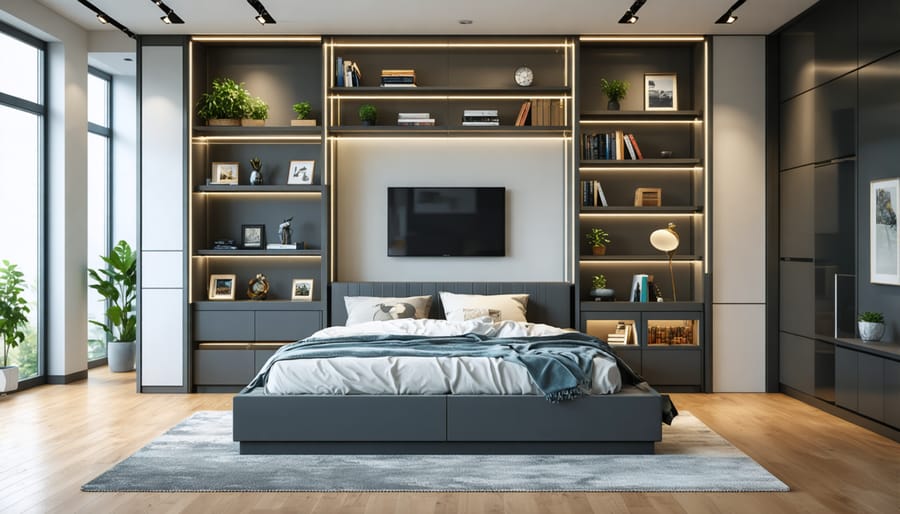
For bedrooms, murphy beds combined with desk systems offer the perfect day-to-night transformation. Add sliding wardrobes with customizable interiors and fold-down bedside tables to complete the adaptable setup. In home offices, opt for expandable desks and mobile filing systems that can be tucked away after work hours.
Kitchen spaces benefit from pull-out countertops, fold-down dining tables, and rotating corner cabinets. Install retractable kitchen islands that provide extra prep space when needed but can be compacted for improved flow. In bathrooms, wall-mounted vanities with concealed storage and fold-down shower seats make excellent use of limited space.
For studio apartments or open-plan layouts, room dividers on tracks or rotating panels can create instant privacy while maintaining flexibility. Consider furniture pieces that serve dual purposes, such as ottoman beds or expandable dining tables, to ensure every square foot works harder for your lifestyle needs.
DIY Adaptation Tips
Transform your existing furniture into adaptable pieces with these simple modification techniques. Start by adding locking casters to heavy furniture like tables, sofas, or storage units. This simple upgrade instantly makes them mobile while maintaining stability when locked in place.
Consider installing fold-down brackets on tables or desks attached to walls. These allow you to create instant workspace that can be tucked away when not in use. For shelving units, replace fixed shelves with adjustable ones using peg holes or track systems, allowing you to modify storage space as needed.
Make your seating more versatile by adding modular elements. Convert a standard couch into a sectional by attaching connecting brackets between pieces. For dining areas, invest in drop-leaf hinges to create expandable table surfaces that can accommodate varying group sizes.
Storage furniture can be enhanced with sliding panels or removable dividers. Install drawer slides on cabinet doors to create pull-out surfaces, or add rolling drawers under beds for maximizing unused space. For office furniture, consider mounting monitor arms to desks for adjustable screen positions, and install cable management systems to maintain flexibility while keeping spaces tidy.
Remember to always use appropriate hardware rated for your furniture’s weight and check weight limits before modification. When possible, opt for reversible changes that won’t permanently alter valuable pieces.
Future of Adaptive Design
The future of adaptive furniture is rapidly evolving, with exciting innovations that promise to revolutionize how we interact with our living spaces. As technology continues to advance, we’re seeing the emergence of smart furniture that can adapt not just physically, but digitally as well. These new adaptive design concepts are transforming ordinary furniture into extraordinary solutions for modern living.
One of the most promising trends is the integration of artificial intelligence and IoT capabilities into adaptive furniture. Imagine a dining table that automatically adjusts its height based on whether you’re having a formal dinner or working on your laptop, or a bed that transforms into a home office setup with integrated charging stations and connectivity features.
Sustainability is another crucial aspect shaping the future of adaptive furniture. Manufacturers are increasingly using eco-friendly materials and designing pieces that can serve multiple purposes, reducing the need for multiple furniture items. This approach not only saves space but also minimizes environmental impact.
3D printing technology is revolutionizing how adaptive furniture is produced, allowing for customizable solutions that perfectly fit unique spaces and needs. This technology enables the creation of complex mechanisms and joints that were previously impossible or cost-prohibitive to manufacture.
The rise of micro-living and remote work is driving innovation in multi-functional furniture design. We’re seeing the development of entire furniture systems that can transform a single room into different functional spaces throughout the day. These solutions often incorporate smart storage solutions and modular components that can be easily reconfigured.
Looking ahead, we can expect to see more furniture that responds to voice commands, remembers user preferences, and even anticipates needs based on daily routines. The integration of augmented reality will also allow users to visualize different furniture configurations before making physical changes, making adaptive furniture more intuitive and user-friendly than ever before.
Embracing adaptive-x solutions in your living space isn’t just about following a trend – it’s about creating a more functional, efficient, and enjoyable environment that truly works for you. Throughout this guide, we’ve explored how adaptive furniture and design elements can transform your space, from multifunctional pieces that save precious square footage to smart storage solutions that keep your home organized and clutter-free.
Remember that implementing adaptive-x concepts doesn’t require a complete home overhaul. Start small by identifying areas where versatile furniture could make the biggest impact, whether it’s a murphy bed in your guest room or a expandable dining table in your eat-in kitchen. Focus on pieces that serve multiple purposes and complement your existing décor while meeting your specific needs.
The beauty of adaptive design lies in its flexibility – as your needs change, your space can evolve with you. Consider investing in quality pieces that will stand the test of time, both in terms of durability and style. Don’t forget to measure your space carefully and plan for traffic flow before making any purchases.
By incorporating these adaptive solutions thoughtfully, you’ll create a home that’s not only more functional but also more sustainable and future-proof. Take the first step today by evaluating your space and identifying where adaptive furniture could enhance your daily living experience.