Transform Your Space with Leather: Modern Tech Meets Time-Honored Craft
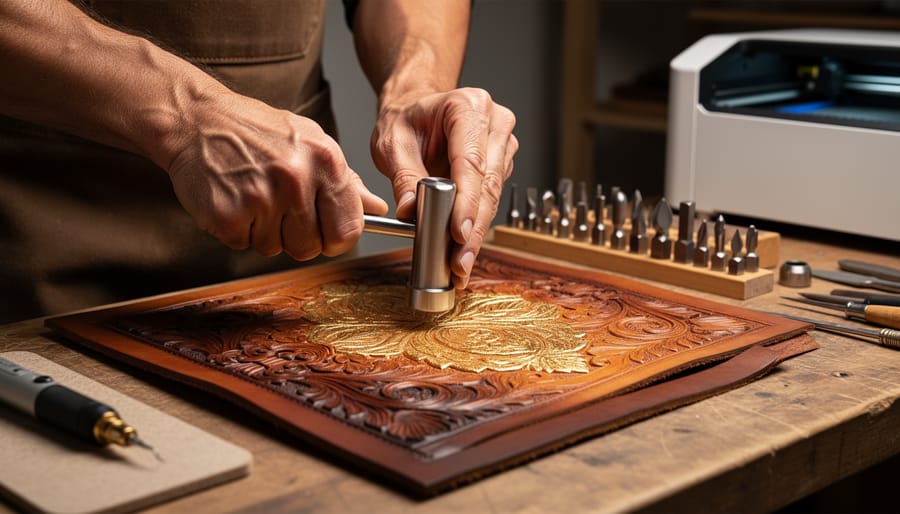
Transform ordinary leather into stunning decorative pieces by mastering tooling, where you press patterns into dampened vegetable-tanned leather using stamps and a mallet to create intricate designs for wall hangings, book covers, or furniture accents. Apply alcohol-based leather dyes with daubers or airbrushes to achieve professional gradient effects and vibrant colors that penetrate deep into the material, ensuring long-lasting beauty without surface cracking.
Combine pyrography techniques with modern digital stencils to burn detailed artwork onto leather surfaces, creating personalized home accents that blend traditional craftsmanship with contemporary aesthetics. Laser engraving machines offer precision cutting and etching capabilities for complex geometric patterns or photographic images, making professional-quality results accessible to home crafters—a perfect example of tech-enhanced decor.
Layer painting techniques using acrylic leather paints create dimensional artwork on leather canvases, while embossing with heated plates produces raised patterns ideal for coasters, trivets, or decorative panels. Incorporate metallic foiling by applying adhesive, pressing gold or silver leaf onto leather surfaces, and sealing with finisher for luxurious accent pieces.
Whether you’re updating furniture upholstery, crafting unique wall art, or designing custom accessories for your space, these leather decoration techniques offer endless creative possibilities. The versatility of leather as a medium allows you to experiment with multiple methods on single projects, combining tooling with painting or adding dyed backgrounds to pyrography work for truly one-of-a-kind decorative elements that elevate any interior design scheme.
Why Leather Decoration Still Matters in Modern Homes
In a world dominated by synthetic materials and mass production, leather stands out as a timeless element that brings authenticity and character to any space. There’s something inherently special about leather that continues to captivate homeowners and designers alike, making it a staple in both traditional and modern interiors.
The tactile warmth of leather creates an immediate sense of comfort and luxury. When you run your hand across a leather headboard or sink into a leather-upholstered chair, you experience a connection to natural materials that plastic and fabric simply can’t replicate. This sensory appeal makes leather particularly valuable in creating inviting spaces where people want to linger and relax.
Durability is another compelling reason leather decoration remains relevant. Quality leather ages gracefully, developing a rich patina that adds depth and character over time. Unlike trendy materials that quickly look dated, leather becomes more beautiful with use, making it a smart long-term investment for your home. This makes it perfect for high-traffic areas like living rooms, offices, and entryways.
What truly sets leather apart is its remarkable versatility. A cognac leather accent wall can anchor a contemporary loft just as effectively as it can warm up a rustic farmhouse. Leather seamlessly bridges design eras, complementing everything from mid-century modern furniture to industrial-chic commercial spaces. This adaptability makes it an ideal choice for those exploring custom artisanal decor projects.
For commercial property owners, leather decoration offers the perfect balance of sophistication and practicality. It elevates restaurants, boutique hotels, and professional offices while withstanding daily wear. Whether you’re refreshing a single room or transforming an entire property, leather decoration techniques provide endless creative possibilities that stand the test of time.
Essential Leather Decoration Techniques Every DIYer Should Know
Tooling and Embossing: Creating Texture and Pattern
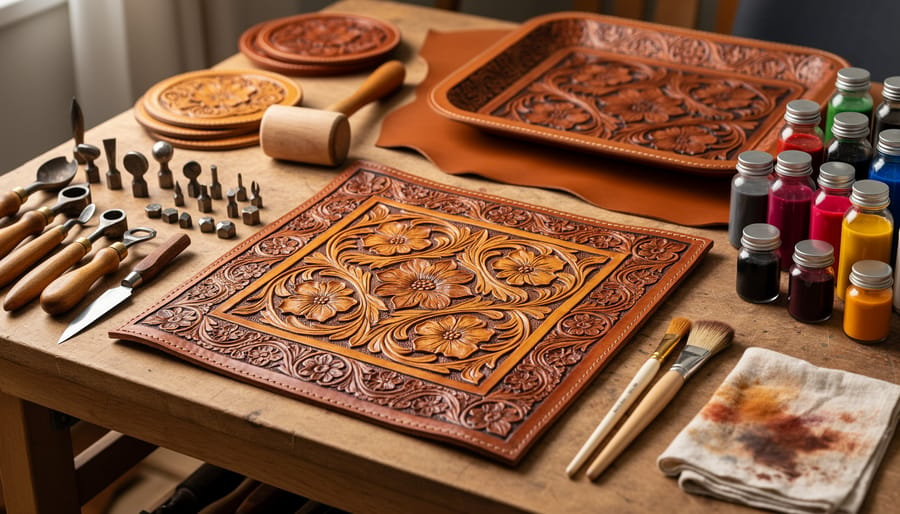
Tooling and embossing transform plain leather into stunning textured artwork perfect for upholstered furniture, wall hangings, and decorative accents. The process involves creating raised or recessed designs by pressing specialized tools into dampened vegetable-tanned leather, which holds impressions beautifully once dry.
Traditional tooling requires a few key items: swivel knives for cutting design outlines, bevelers for creating depth, and background stamps for texture. You’ll also need a granite slab or marble surface as your work base, a mallet for striking tools, and a sponge to dampen the leather. Vegetable-tanned leather works best because it’s firm yet responsive to pressure.
For beginners, start with simple geometric patterns or border designs. Dampen your leather piece with a sponge until it darkens slightly, then trace your design lightly. Use a swivel knife to cut the main outlines with consistent pressure, then switch to beveling tools to push down areas around your design, making other sections appear raised. Background stamps add beautiful texture to recessed areas.
Modern innovations make tooling more accessible than ever. Electric embossing tools offer temperature control for consistent results, while 3D-printed custom stamps let you create personalized patterns without investing in expensive traditional stamp sets. Digital design software helps you plan intricate patterns before touching leather, reducing waste and mistakes.
Try creating leather wall art panels with botanical designs or customize existing furniture pieces with simple border patterns. The combination of traditional craftsmanship and modern tools opens endless creative possibilities for personalizing your space.
Dyeing and Staining: Color Your Vision
Transform your leather pieces with dyeing techniques that range from traditional to cutting-edge. Traditional alcohol-based leather dyes offer rich, permanent color that penetrates deeply into the material, while water-based alternatives provide an eco-friendly option with easier cleanup and lower fumes. For beginners, start with pre-mixed dyes in small bottles to experiment before committing to larger projects.
Color-matching your leather to existing decor is easier than ever with smartphone apps that can identify paint colors and suggest complementary shades. Simply snap a photo of your furniture or wall color, and use the color code to find matching leather dye tones. Many craft stores now offer custom color-mixing services for precise matches.
Create stunning ombre and gradient effects by diluting dyes with water at different ratios. Apply the darkest shade at one end using a sponge applicator, then gradually transition to lighter concentrations. This technique works beautifully on pillow covers, headboards, and decorative wall panels.
For eco-conscious DIYers, natural dyes from tea, coffee, or vegetable sources offer subtle earth tones. While less vibrant than synthetic options, they provide unique, organic color variations perfect for rustic or farmhouse aesthetics. Always seal dyed leather with a protective finish to prevent color transfer and ensure longevity.
Stamping and Branding: Personalized Details That Pop
Stamping and branding bring a professional, customized touch to leather projects that’s surprisingly achievable at home. These techniques let you add monograms, logos, or decorative patterns to drawer pulls, furniture tags, and wall panels with permanent, eye-catching results.
Leather stamps work by pressing pre-designed metal tools into dampened leather using a mallet. You’ll find alphabet sets, decorative borders, and custom designs available online. The key is preparing your leather correctly by dampening it with a sponge until it darkens slightly, creating a receptive surface that holds impressions beautifully.
Branding irons offer a different aesthetic with their burned-in look. Electric branding tools maintain consistent temperatures between 650-750°F, making them safer and more reliable than traditional fire-heated irons. Always work in well-ventilated areas and keep a fire extinguisher nearby when using heat-based tools. Test your design on scrap leather first to perfect timing and pressure.
For furniture applications, consider branding custom cabinet pulls with family initials or stamping leather panels for headboards with geometric patterns. Furniture makers love using small branded tags attached to chair backs or table undersides as signature touches.
Modern laser engravers take these techniques further, offering precision impossible with manual tools. These computer-controlled devices let you upload any design for flawless reproduction, though they require more investment. Whether you choose traditional stamps or high-tech engraving, personalized leather details transform ordinary furniture into conversation pieces.
Painting and Finishing: Beyond Natural Tones
Ready to take your leather projects beyond their natural hues? Painting leather opens up endless possibilities for customization, whether you’re refreshing a worn furniture piece or creating statement décor items.
Acrylic paints work surprisingly well on leather, but the key is proper preparation. Clean your leather thoroughly with rubbing alcohol and let it dry completely. Mix your acrylics with a textile medium (2 parts paint to 1 part medium) to keep the leather flexible and prevent cracking. Apply thin, even coats using foam brushes or airbrush tools for professional results.
For projects that’ll see heavy use, specialized leather paints offer superior durability. Angelus Leather Paint remains a favorite among DIYers for its flexibility and color range. Apply in light layers, allowing each coat to dry for 15-20 minutes.
Protection is crucial for longevity. Once your design is complete and fully dried (give it 24 hours), seal your work with a leather finish. Acrylic finishers provide water resistance, while resolene offers a more flexible, natural feel. For high-traffic items like ottoman covers or chair seats, apply 2-3 thin coats, allowing proper drying time between applications.
Smart tip: Use a heat gun on low setting between coats to speed up drying while enhancing paint adhesion.
Tech Tools That Transform Traditional Leather Work
Laser Engravers: Precision Meets Creativity
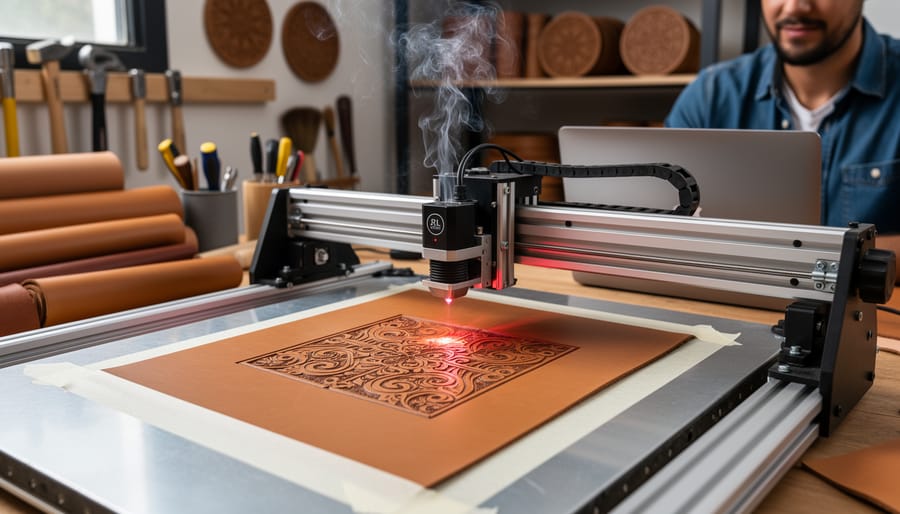
The technology revolution has made professional-quality leather engraving accessible to everyone. Modern home laser engravers can create incredibly detailed designs, from geometric patterns to photographic portraits, with precision that hand tools simply can’t match. These machines work by burning designs into the leather surface at controlled depths, producing clean lines and subtle shading effects.
When shopping for a laser engraver, consider wattage first. A 40-60 watt machine handles most leather projects beautifully, offering enough power for deep engraving without burning through the material. Look for models with adjustable speed and power settings, which let you experiment with different leather types and achieve varying effects. A working area of at least 12 x 12 inches gives you flexibility for larger projects.
Most affordable units now include user-friendly software that accepts standard image files, making design work straightforward even for beginners. You can create custom patterns from scratch or work with purchased design files to jumpstart your projects.
Project possibilities are endless. Leather coasters with monograms make thoughtful housewarming gifts, while large wall hangings featuring nature scenes or geometric designs create stunning focal points. Consider engraving leather pieces as furniture inlays for tabletops or cabinet doors, adding unique character to standard pieces. Personalized keychains, bookmarks, and journal covers are perfect starter projects that build your confidence before tackling larger installations.
The best part? Once you master the basics, you can turn your hobby into a side business, creating custom pieces for clients seeking one-of-a-kind leather decor.
Digital Design Software: Plan Before You Cut
Before you pick up your cutting tools, take advantage of digital design software to plan your leather projects with precision. Think of these programs as your virtual workshop where mistakes are just a click away from correction, not a ruined piece of leather.
For beginners, free apps like Inkscape offer intuitive design capabilities perfect for creating custom patterns and templates. You can measure twice, cut once by testing different layouts digitally first. Adobe Illustrator remains the industry standard for professionals, but accessible alternatives like Canva provide leather-friendly templates that simplify the design process.
Specialized leather crafting apps like LeatherCraftPro help you visualize tooling patterns, calculate material requirements, and even estimate project costs before purchasing supplies. These tools let you experiment with color combinations using digital swatches, ensuring your burgundy dye pairs perfectly with that antique brass hardware.
The real game-changer? Most programs allow you to create precise measurements and export templates at actual size. Simply print your design, transfer it to leather using tracing paper, and execute with confidence. This technology integration approach saves both materials and money while reducing frustration for DIY enthusiasts at any skill level.
Start with simple geometric patterns in your chosen software, gradually building complexity as you become comfortable with the digital tools.
3D Printing for Custom Tools and Stamps
Modern technology makes custom leather decoration more accessible than ever. 3D printing for custom tools opens up exciting possibilities for creating unique stamps and stencils without the hefty price tag of professional tooling.
Using a basic 3D printer, you can design and produce custom leather stamps featuring your own patterns, logos, or designs. Simply create your design in free software like Tinkercad, then print it in durable PLA or PETG plastic. These printed stamps work beautifully for embossing and stamping leather surfaces.
Beyond stamps, 3D printers can produce custom stencils for dye work, allowing you to create intricate patterns that would be challenging to cut by hand. You can even design specialized tooling implements tailored to specific projects, like custom-sized burnishing tools or unique edge bevelers.
This approach is perfect for testing design ideas before committing to expensive metal stamps. Start with a simple geometric pattern or monogram, and gradually experiment with more complex designs as you gain confidence with both the technology and leather working techniques.
DIY Project Ideas: Leather Decor for Every Room
Living Room: Statement Wall Panels and Furniture Accents
Transform your living room into a sophisticated space with leather statement pieces that showcase your decorative skills. Large-scale leather wall panels create dramatic focal points, especially when using techniques like embossing or laser-etching geometric patterns. Consider creating a feature wall behind your sofa using individual leather tiles in varying tones, arranged in a modern grid pattern. For a custom look, combine hand-tooling with leather staining to produce ombre effects that complement your existing color scheme.
Leather furniture accents add warmth and texture throughout the space. Update plain throw pillows with laser-cut leather overlays featuring intricate designs, or add leather corner protectors with embossed patterns to coffee tables and side tables. Chair backs offer perfect canvases for decorative leather panels secured with upholstery tacks or hidden adhesive.
DIY enthusiasts can start small with leather coasters featuring pyrography designs or cabinet door inserts with embossed motifs. Use a rotary tool with leather-cutting attachments to create clean edges, and finish pieces with leather sealant to protect against daily wear. These touchpoints throughout your living room create cohesion while highlighting your craftsmanship.

Home Office: Functional Art That Impresses
Transform your workspace into a sophisticated haven with leather accents that showcase both practicality and personality. A custom desk pad becomes your centerpiece—use tooling techniques to emboss geometric patterns or your initials, creating a professional statement piece that protects your desk surface. For a modern twist, try using a laser engraver to create intricate designs that would take hours by hand.
Upgrade basic drawer pulls by wrapping them with dyed leather strips secured with contact cement, adding warmth and texture to filing cabinets or storage units. Cable organizers fashioned from leather scraps keep cords tidy while adding an artisanal touch to your tech setup. Simply cut small rectangles, punch holes at intervals, and thread cables through for instant organization.
Decorative storage boxes covered in tooled or painted leather elevate everyday items to display-worthy accessories. Line them with felt to protect contents, then arrange them on shelves for a cohesive, curated look. These projects require minimal investment in materials but deliver maximum impact, impressing clients during video calls while keeping your workspace beautifully functional.
Small Touches with Big Impact
You don’t need to overhaul an entire room to enjoy leather’s luxurious appeal. Start with simple projects that deliver maximum visual impact with minimal time investment.
Leather coasters are perfect beginner projects. Cut four-inch squares from vegetable-tanned leather, stamp a simple geometric pattern, and apply a leather sealant. Stack them on your coffee table for instant sophistication. For tech-savvy makers, use a laser cutter to create intricate designs or personalized monograms in minutes.
Transform plain picture frames by wrapping the edges with thin leather strips, securing with craft adhesive. The textured border adds warmth and dimension to family photos or artwork.
Macramé-style plant hangers get an upgrade with leather cord substitutions. The material’s natural strength supports heavier pots while maintaining that handcrafted aesthetic. Simply follow standard macramé patterns, replacing cotton rope with leather lacing.
Cabinet hardware makeovers offer another quick win. Wrap existing drawer pulls with leather strips or create leather loop pulls for a Scandinavian-inspired look. These small changes refresh kitchen or bathroom cabinetry without the expense of complete replacements. Each project takes under an hour but adds artisanal character that guests notice immediately.
Leather decoration techniques beautifully demonstrate how traditional craftsmanship and modern innovation can work together to create stunning, personalized pieces for your home. Whether you’re hand-tooling intricate designs or using laser cutters for precision work, the key is finding the approach that matches your skill level and creative vision.
If you’re just starting out, don’t feel pressured to invest in expensive equipment right away. Begin with simple hand-stamping projects or basic dyeing techniques to build your confidence and understanding of how leather responds to different treatments. As you become more comfortable, gradually introduce technology tools like digital design software or precision cutting devices to expand your creative possibilities.
The beauty of tech-enhanced artisanal decor is that it removes barriers and makes quality design accessible to everyone. You don’t need years of apprenticeship to create professional-looking leather accents for your space. With the right combination of foundational techniques and smart tool integration, you can produce custom wall art, furniture accents, or decorative accessories that reflect your personal style.
Remember that every expert started as a beginner. Each project you complete teaches you something new about material behavior, design principles, and your own creative preferences. The journey of learning leather decoration is just as rewarding as the finished pieces you’ll create. Start small, experiment fearlessly, and enjoy the process of bringing your unique vision to life through this versatile and timeless material.