
Why Your Office Air Quality Could Be Making Everyone Sick (And What Standards Actually Protect You)
Your employees spend roughly 90,000 hours inside office buildings during their careers, breathing air that’s often two to five times more polluted than outdoor air. That’s why indoor air quality standards exist—to protect health, boost productivity, and ensure your workspace meets legal requirements. Whether you’re managing a corporate high-rise or renovating a small commercial property, understanding these standards isn’t optional anymore.
The Occupational Safety and Health Administration (OSHA) sets baseline requirements for workplace air quality, while ASHRAE Standard 62.1 provides specific ventilation rates and air filtration guidelines that most building codes now reference. You’ll need to maintain carbon dioxide levels below 1,000 parts per million, ensure adequate fresh air circulation of 15-20 cubic feet per minute per person, and monitor volatile organic compounds that off-gas from furniture, paint, and cleaning products.
Meeting these standards doesn’t require a complete building overhaul. Start by upgrading your HVAC filters to MERV 13 or higher, which captures particles down to 0.3 microns. Install CO2 monitors in conference rooms and open workspaces where levels spike quickly. Schedule regular duct cleaning and maintenance checks every six months. Choose low-VOC paints, adhesives, and furnishings for any renovation projects.
The payoff is measurable: studies show proper indoor air quality reduces sick days by 35% and increases cognitive function by up to 101%. Your compliance effort directly impacts your bottom line.
What Indoor Air Quality Standards Actually Mean for Your Office
The Key Metrics You Should Know
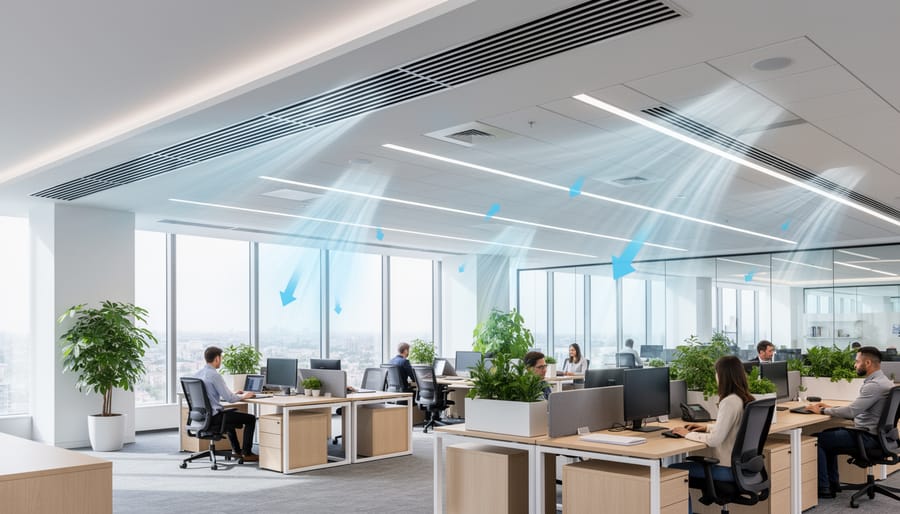
Understanding air quality metrics doesn’t require an engineering degree. Think of these measurements as vital signs for your office space, similar to how you’d monitor your own health.
Ventilation rates measure how often fresh outdoor air replaces indoor air, typically expressed in cubic feet per minute per person. A well-ventilated office exchanges stale air for fresh at least every hour, preventing that stuffy conference room feeling we’ve all experienced.
CO2 levels serve as a reliable indicator of ventilation effectiveness. When carbon dioxide rises above 1,000 parts per million, it signals inadequate fresh air circulation. You might notice people getting drowsy or struggling to concentrate when levels climb too high.
Particulate matter includes dust, pollen, and other tiny airborne particles. PM2.5 refers to particles smaller than 2.5 micrometers, roughly 30 times smaller than a human hair. These microscopic invaders can penetrate deep into lungs, making their control essential for healthy workspaces.
Volatile Organic Compounds, or VOCs, are gases released from paints, furniture, cleaning products, and office equipment. That new carpet smell? That’s VOCs off-gassing. Keeping these below 500 micrograms per cubic meter helps prevent headaches and respiratory irritation.
Finally, temperature and humidity control matters more than you might think. Ideal office humidity ranges between 30-50 percent, while temperatures should hover around 68-76 degrees Fahrenheit. Getting these right prevents mold growth and keeps everyone comfortable and productive.
Who Enforces These Standards (And When)
Here’s the reality: most indoor air quality standards for office buildings are actually recommendations, not legal requirements. OSHA sets mandatory limits for specific hazardous substances in workplaces, but doesn’t regulate general indoor air quality in typical office settings. Instead, organizations like ASHRAE and EPA provide guidelines that represent best practices rather than enforceable laws.
However, these voluntary standards often become mandatory through other channels. Building codes in many cities reference ASHRAE standards for ventilation systems. Green building certifications like LEED require specific air quality benchmarks. Some states have their own regulations, particularly California with its stricter indoor air requirements.
Enforcement typically happens during routine building inspections, when applying for occupancy permits, or if employees file complaints with OSHA about specific air quality concerns. Insurance companies may also require compliance with certain standards to maintain coverage.
For commercial property owners, the smartest approach is treating these guidelines as minimum requirements, not optional suggestions. Poor air quality leads to employee complaints, potential liability issues, and decreased productivity. While you might not face immediate legal consequences for ignoring recommendations, the business costs of subpar air quality often exceed the investment in proper ventilation and monitoring systems.
Specialized Design Elements That Make the Difference
Advanced Ventilation Systems
Modern office buildings are getting smarter about ventilation, and you might be surprised how much technology can improve your air quality while saving money on energy bills. Let’s break down some game-changing systems that are transforming indoor environments.
Demand-controlled ventilation (DCV) is like having a smart assistant for your HVAC system. Instead of running at full blast all day, DCV uses sensors to monitor carbon dioxide levels and occupancy in real-time. When more people enter a conference room, the system automatically increases fresh air flow. When spaces are empty, it dials back, reducing energy waste. You’ll typically see a 20-30% reduction in ventilation costs while maintaining excellent air quality. The best part? Installation is often straightforward enough for facility teams to manage, especially in buildings with existing smart building infrastructure.
Energy recovery ventilators (ERVs) are another smart addition worth considering. These clever devices capture heat and moisture from outgoing stale air and transfer it to incoming fresh air. During winter, this means you’re not constantly heating frigid outdoor air from scratch. In summer, it works in reverse, pre-cooling hot incoming air. The result is continuous fresh air circulation without the energy penalty you’d expect.
Modern HVAC configurations now combine these technologies with sophisticated controls that learn your building’s patterns. They can anticipate morning rush arrivals, adjust for seasonal changes, and even integrate with your calendar system to prepare conference rooms before meetings. For property owners managing multiple buildings, cloud-based dashboards let you monitor and adjust settings remotely, making compliance tracking significantly easier.
Filtration and Purification Technology
Choosing the right air purification technology depends on what contaminants you’re tackling in your office space. Let’s break down the most effective options and when each one shines.
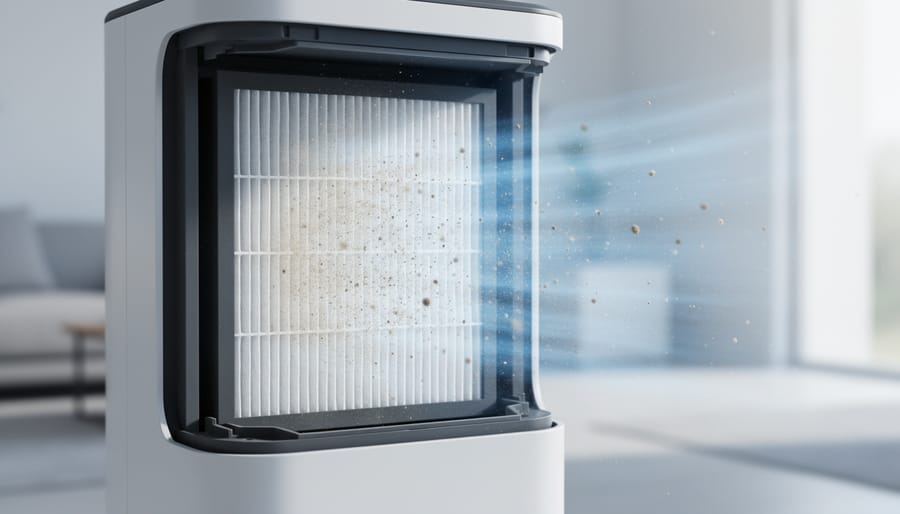
HEPA filters are your go-to for capturing physical particles. They trap 99.97% of airborne particles as small as 0.3 microns, including dust, pollen, mold spores, and even some bacteria. If your office has high foot traffic or nearby construction, HEPA filtration is essential. These filters work mechanically, forcing air through a dense fibrous maze that catches particles without releasing chemicals or byproducts.
For odors, volatile organic compounds, and chemical fumes, activated carbon systems are your best bet. The porous carbon material absorbs gases and odors that HEPA filters can’t catch. This makes them ideal for offices near busy roads, parking garages, or spaces with new furniture that off-gasses. Many commercial air purifiers combine HEPA and carbon filtration for comprehensive protection.
UV-C light purification targets biological contaminants by disrupting the DNA of bacteria, viruses, and mold spores as air passes through the system. This technology works well in healthcare offices or buildings with moisture issues, though it requires proper exposure time to be effective.
Ionization technology releases charged particles that attach to airborne contaminants, making them heavier so they settle or get captured by filters more easily. While effective, some ionizers produce trace amounts of ozone, so look for models certified as ozone-free for occupied spaces.
Most office buildings benefit from a layered approach, combining HEPA filtration with activated carbon and possibly UV-C for maximum protection across all contaminant types.
Smart Monitoring and Control Systems
Modern air quality monitoring has become surprisingly accessible and effective, transforming how offices maintain healthy environments. Smart sensors now continuously track key pollutants, CO2 levels, humidity, and temperature—giving you real-time visibility into your workspace conditions.
These monitoring systems integrate seamlessly with building management platforms through IoT technology. When sensors detect elevated CO2 or particle concentrations, automated controls can immediately increase ventilation rates or activate air purifiers. Think of it as having a 24/7 air quality guardian that never takes a coffee break.
For property owners considering upgrades, installation is more straightforward than you might expect. Many systems connect wirelessly, eliminating expensive retrofitting. You’ll receive alerts on your smartphone when conditions drift outside acceptable parameters, allowing quick response before problems escalate.
The benefits extend beyond compliance. Data analytics reveal patterns—maybe conference rooms need better ventilation during afternoon meetings, or copy areas require enhanced filtration. This insight helps optimize HVAC performance while reducing energy costs.
Integration with smart home design for wellbeing principles creates comfortable, productive spaces. Advanced systems even adjust lighting and temperature alongside air quality, creating holistic environmental control.
Whether you’re managing a small office or multi-floor building, these technologies offer scalable solutions that make maintaining air quality standards remarkably manageable.
Material Selection and Source Control
The best approach to maintaining excellent indoor air quality starts before air ever needs filtering—by choosing materials that don’t release harmful pollutants in the first place. This proactive strategy, known as source control, makes a dramatic difference in your office environment.
When selecting paints, prioritize products labeled as low-VOC or zero-VOC. Traditional paints release volatile organic compounds that can off-gas for months, causing headaches, respiratory irritation, and reduced productivity. Today’s low-VOC alternatives perform just as well without compromising air quality. The same principle applies to low-VOC wall coverings, which offer stylish options without the chemical off-gassing.
Furniture selection matters significantly too. Look for pieces certified by GREENGUARD or similar organizations, which verify low chemical emissions. Solid wood furniture typically emits fewer VOCs than particle board or laminate options that use formaldehyde-based adhesives.
Flooring choices impact air quality considerably. Hard surfaces like natural linoleum, sealed concrete, or hardwood generally emit fewer pollutants than vinyl or carpet. If carpet is necessary, choose products with Green Label Plus certification and ensure proper ventilation during and after installation.
Combining these smart material choices with biophilic design elements creates healthier, more productive workspaces from the ground up.
How to Tell If Your Office Meets These Standards

DIY Assessment Checklist
You don’t need expensive equipment to get a baseline understanding of your office air quality. Start with your senses and some budget-friendly tools to identify potential issues before bringing in the professionals.
Begin by observing physical signs: persistent musty odors, visible mold or moisture stains, excessive dust accumulation, or condensation on windows. Note if employees frequently complain about headaches, fatigue, or respiratory issues, particularly if symptoms improve when they leave the building.
For under $50, you can purchase basic air quality monitors that measure carbon dioxide levels, humidity, and temperature. CO2 levels above 1,000 ppm suggest inadequate ventilation. Humidity should stay between 30-50% to prevent mold growth and maintain comfort.
Check your HVAC filters monthly. If they’re clogged with dust or haven’t been changed in over three months, airflow is likely compromised. Inspect vents for blockages or dust buildup that restricts circulation.
Consider tracking air quality measurements over several weeks to identify patterns. Document readings at different times of day and in various office areas to pinpoint problem zones.
While DIY assessment provides valuable insights, professional testing may be necessary if you discover significant concerns or need to verify compliance with specific standards.
When to Call in the Professionals
Sometimes DIY monitoring only tells part of the story. Professional air quality audits make sense when employees report persistent health symptoms, your building undergoes major renovations, or you’re consistently seeing concerning readings from your monitors. These comprehensive assessments typically cost between $500 to $2,000 for standard office spaces, depending on building size and testing complexity.
What do you get for that investment? Professionals use calibrated equipment to measure multiple pollutants simultaneously, identify hidden sources like mold within walls or HVAC systems, and provide detailed reports with actionable recommendations. They’ll test for parameters beyond basic monitors, including volatile organic compounds, carbon monoxide, radon, and biological contaminants.
Consider professional testing mandatory if you’re purchasing commercial property, dealing with potential liability issues, or need documentation for insurance or legal purposes. The detailed analysis and third-party verification often pay for themselves by preventing costly mistakes or identifying problems before they escalate. Many auditors also offer follow-up testing to verify that implemented solutions actually work.
Implementing Air Quality Improvements: Where to Start
Low-Cost Quick Wins
You don’t need a massive budget to start breathing better air at work. Some of the most effective improvements cost very little and deliver noticeable results within days.
Start by upgrading your HVAC filters to MERV 13 or higher ratings. These capture significantly more particles than basic filters and typically cost just $20-40 per unit. Change them every 60-90 days instead of quarterly for better performance.
Next, adjust your ventilation schedule. Many systems shut down completely after hours, but running them at 30% capacity for one hour before staff arrives helps flush out accumulated pollutants overnight. This simple programming change costs nothing but improves morning air quality dramatically.
Adding indoor plants provides natural air purification. While they won’t replace mechanical ventilation, varieties like spider plants, pothos, and snake plants help remove volatile organic compounds. Place 6-8 medium plants per 1,000 square feet for measurable benefits.
Schedule a quick HVAC audit to ensure dampers and outdoor air intakes work properly. Many systems deliver less fresh air than designed simply because dampers are stuck or improperly calibrated. Your maintenance team can often fix these issues during routine service calls without additional cost, immediately boosting ventilation rates and compliance with basic air quality standards.
Medium-Term Upgrades
Once you’ve tackled basic improvements, medium-term upgrades deliver noticeable air quality gains without breaking the bank. Standalone air purifiers with HEPA filters are game-changers for offices, particularly in conference rooms and high-traffic areas. Look for units certified to handle your square footage and check CADR ratings to ensure they’ll actually move enough air. Position them strategically away from walls and corners for maximum circulation.
Installing air quality sensors gives you real-time data on CO2 levels, particulates, and VOCs. Many models integrate with smart building systems and send alerts when readings exceed healthy thresholds. This technology lets you track improvements and identify problem areas before they impact productivity.
Consider swapping out older furniture and materials that off-gas VOCs. Replace particle board desks with solid wood alternatives, choose low-VOC paint for accent walls, and opt for natural fiber carpets or hard flooring. These material upgrades reduce pollutant sources at the root while refreshing your workspace aesthetic. Most importantly, these mid-range investments deliver measurable compliance with air quality standards while creating a healthier environment your team will appreciate.
Long-Term System Overhauls
When standard upgrades aren’t enough, comprehensive system overhauls deliver lasting air quality improvements. HVAC replacement with modern, properly-sized systems ensures better ventilation and filtration capacity. Consider units with variable speed drives and enhanced air handling capabilities that adjust to occupancy levels automatically. Building envelope improvements, including air sealing and updated insulation, prevent outdoor pollutants from infiltrating your space while maintaining temperature control. Smart building integration brings everything together through sensors that monitor air quality in real-time, automatically adjusting ventilation rates and triggering alerts when issues arise. While these projects require significant investment, they transform older buildings into compliant, healthy workspaces that reduce long-term operating costs and attract quality tenants.
Meeting indoor air quality standards isn’t just about checking boxes for compliance—it’s an investment that pays dividends across multiple areas of your business. The benefits are real and measurable: healthier employees take fewer sick days, productivity increases when people can breathe easier and think more clearly, and job satisfaction improves when workers feel their wellbeing is valued. Plus, properties with documented air quality systems often command higher market values and attract quality tenants more easily.
The good news? Improving your office air quality is more achievable than you might think, regardless of your building’s size or your budget. You don’t need to overhaul everything at once. Start with a simple air quality assessment to identify your biggest opportunities for improvement. This baseline measurement helps you prioritize investments and track progress over time.
For smaller offices or tighter budgets, begin with DIY-friendly upgrades like replacing HVAC filters regularly, adding indoor plants known for air purification, and establishing a ventilation schedule. Larger facilities might invest in automated monitoring systems or professional HVAC upgrades, but the principle remains the same: small, consistent improvements add up to significant results.
The path to better air quality starts with that first step—the assessment. Whether you hire a professional or use an affordable air quality monitor, understanding your current baseline empowers you to make informed decisions. Your employees, your bottom line, and your property value will all benefit from cleaner, healthier air. The question isn’t whether you can afford to improve air quality—it’s whether you can afford not to.