
Low-Emitting Materials That Actually Make Your Home Healthier (LEED Explained)
Choose paints, adhesives, and sealants with VOC content below 50 grams per liter to meet LEED v4 standards and prevent headaches, respiratory issues, and long-term health problems in your home. Check product labels for GREENGUARD Gold or Green Seal certifications, which guarantee materials have been independently tested for low chemical emissions. Replace particleboard furniture and cabinets with solid wood or formaldehyde-free alternatives, since pressed wood products are among the biggest indoor air polluters. Install low-emitting flooring like natural linoleum, bamboo, or cork instead of conventional vinyl, which releases harmful phthalates for years after installation.
LEED certification awards points to buildings that prioritize materials releasing minimal volatile organic compounds, creating healthier spaces where you live and work. Understanding which materials qualify isn’t just for commercial developers anymore. Homeowners renovating a single bathroom and designers specifying finishes for entire homes both benefit from selecting products that keep indoor air clean.
The good news? Low-emitting materials have become mainstream, with major manufacturers now offering healthier options at competitive prices. You don’t need a chemistry degree or unlimited budget to make smarter choices. By focusing on the materials that matter most—those covering large surface areas or used in enclosed spaces—you’ll dramatically improve your indoor air quality while potentially increasing your property value. This guide breaks down exactly which materials to choose in every room, from your kitchen cabinets to bedroom carpets, making LEED principles accessible for any project size.
What LEED Actually Means for Your Home’s Air Quality

The VOC Problem in Traditional Building Materials
VOCs, or volatile organic compounds, are chemicals that evaporate into the air at room temperature. Think of that fresh paint smell or new carpet scent—that’s actually VOCs being released into your home’s air. While they might seem harmless, these invisible compounds can stick around much longer than you’d expect.
You’ll find VOCs lurking in many everyday materials. Interior paints and primers are common culprits, along with adhesives used in flooring installation. Engineered wood products like particleboard and plywood often contain formaldehyde-based resins. Even that beautiful new furniture can emit VOCs from finishes, stains, and glues. Carpets, vinyl flooring, and wall coverings join the list too.
So what’s the big deal? Short-term exposure can cause headaches, dizziness, eye irritation, and respiratory issues. Some people experience nausea or fatigue without realizing their building materials are the source. Long-term exposure to certain VOCs has been linked to more serious health concerns, including liver and kidney damage, and some are even classified as carcinogens.
The good news? Understanding VOCs is the first step toward creating a healthier indoor environment. By choosing low-emitting materials—which is exactly what LEED certification promotes—you can dramatically reduce these harmful emissions in your space.
How LEED Certification Tests Materials
LEED (Leadership in Energy and Environmental Design) certification uses science-backed testing methods to identify materials that won’t compromise your home’s air quality. Think of it as a health screening for building products. The system focuses primarily on VOC (volatile organic compound) emissions, which are chemicals that evaporate into the air you breathe.
Here’s how it works: Materials are placed in specialized chambers that measure what they release over time. Testing labs follow strict protocols established by organizations like CDPH (California Department of Public Health) and SCAQMD (South Coast Air Quality Management District). These tests track emissions at various intervals, typically from 24 hours up to 14 days after installation.
LEED awards points based on how low a material’s emissions are compared to established thresholds. Products must meet specific limits for formaldehyde and total VOCs to qualify. The certification looks at everything from paints and adhesives to flooring and furniture.
For homeowners, this means you can trust the LEED label when selecting materials. Products displaying LEED compliance or third-party certifications like GreenGuard Gold have already passed rigorous testing, taking the guesswork out of creating a healthier indoor environment.
Low-Emitting Materials You Can Use in Every Room
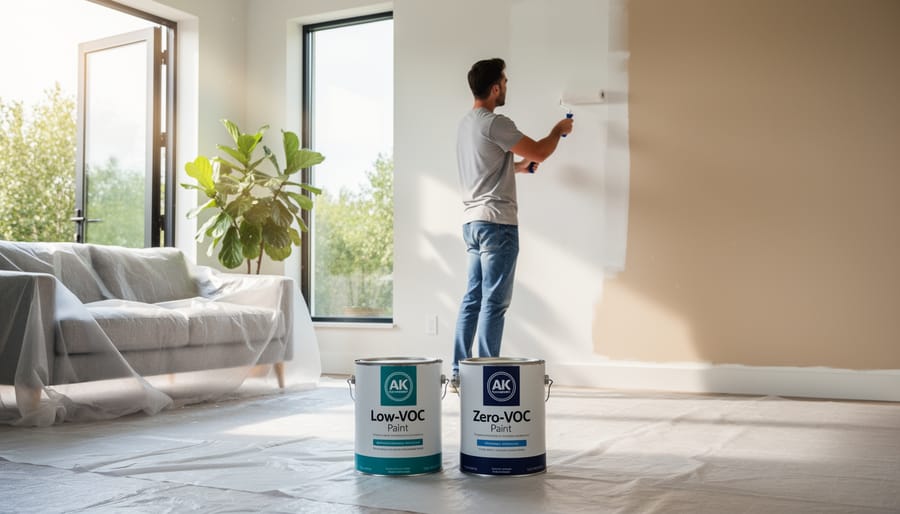
Paints and Coatings
When you’re painting your home, choosing the right products can dramatically improve your indoor air quality. Traditional paints release volatile organic compounds (VOCs) that can cause headaches, respiratory issues, and long-term health problems. The good news? There are plenty of low-VOC paint options that perform just as well as conventional paints.
When shopping, look for labels that specify VOC content in grams per liter. LEED standards require paints to contain less than 50 g/L for flat finishes and less than 150 g/L for non-flat finishes. Zero-VOC paints are even better, containing less than 5 g/L.
Trusted brands readily available at major home improvement stores include Benjamin Moore Eco Spec, Sherwin-Williams Harmony, and Behr Premium Plus with low VOC formulas. These products offer excellent coverage and durability while keeping your indoor air clean. Remember to check if the low-VOC claim applies to both the base paint and any added colorants, as tints can sometimes increase VOC levels.
Flooring Options That Don’t Off-Gas
Your floors cover a lot of square footage, so choosing low-emitting options makes a real difference in your home’s air quality. The good news? You have plenty of attractive, healthy choices.
Solid hardwood flooring is naturally low in VOCs, especially when finished with water-based polyurethane or plant-based oils instead of traditional solvent-based finishes. Look for products certified by FloorScore or GREENGUARD to ensure the finish meets strict emission standards.
Bamboo and cork offer sustainable, low-emitting alternatives. Both materials grow quickly and naturally resist moisture without chemical treatments. When shopping, verify that adhesives and finishes used during manufacturing carry low-VOC certifications.
Ceramic and porcelain tile are excellent zero-emission options. The firing process eliminates VOCs, and when installed with low-VOC adhesives and grouts, they create completely clean floors. They’re especially practical for kitchens, bathrooms, and high-traffic areas.
For carpet lovers, select products with the Carpet and Rug Institute’s Green Label Plus certification. These carpets, pads, and adhesives meet rigorous emission standards. Natural fiber options like wool, sisal, or jute provide inherently low-emitting alternatives.
When exploring eco-friendly flooring choices, always request product documentation showing VOC content and third-party certifications. This simple step ensures you’re getting truly low-emitting materials that contribute to LEED credits and healthier indoor air.
Adhesives, Sealants, and Caulks
When tackling a renovation or DIY project, don’t overlook those tubes and cans of adhesives, sealants, and caulks hiding in your garage. These products are surprisingly significant sources of VOCs that can linger in your home long after application. The good news? Low-VOC and zero-VOC alternatives are now widely available at most hardware stores.
For LEED compliance, look for products certified by Green Seal or GreenGuard, which ensure emissions meet strict standards. Construction adhesives, carpet glues, and caulking compounds should all display VOC content on their labels. Aim for products with less than 70 grams per liter for general adhesives and under 20 grams per liter for sealants.
When shopping, water-based formulas typically emit fewer VOCs than solvent-based options. For caulking around windows and bathrooms, silicone and acrylic latex caulks work beautifully without the harsh chemical smell. Many manufacturers now clearly label their low-emitting products, making selection easier than ever. Remember to always work in well-ventilated spaces and allow proper curing time for optimal results and minimal exposure.
Furniture and Composite Wood Products
Pressed wood products like particleboard, MDF, and plywood are commonly found in furniture and cabinets, but they can release formaldehyde, a known carcinogen and respiratory irritant. This off-gassing happens over time, slowly releasing harmful chemicals into your home’s air. The good news? LEED standards help identify products with dramatically lower emissions.
When shopping for furniture and cabinetry, look for CARB Phase 2 or TSCA Title VI compliance labels. These regulations limit formaldehyde emissions from composite wood products. Even better, seek out products certified by the California Air Resources Board (CARB) with “ultra-low emitting formaldehyde” (ULEF) or “no added formaldehyde” (NAF) designations.
For a healthier home, prioritize solid wood furniture when possible, or choose manufacturers who use water-based adhesives and finishes. Check product specifications before purchasing, and don’t hesitate to ask retailers about emission certifications. Making safer furniture choices protects your family’s health while contributing to better indoor air quality overall.
Ceiling and Wall Panels
When selecting ceiling materials and wall panels for your space, low-emitting options make a significant difference in air quality. Traditional drywall often contains formaldehyde binders, but LEED-compliant alternatives use safer adhesives that release minimal VOCs. Look for products labeled “low-VOC” or “zero-VOC” from manufacturers who provide third-party certifications.
Acoustic panels deserve special attention, especially in home offices or media rooms. Many decorative sound-absorbing panels now use natural fibers like recycled cotton or wool instead of synthetic materials. These meet LEED standards while improving room acoustics.
For a DIY approach, check product specification sheets for VOC content before purchasing. Numbers below 50 g/L indicate excellent performance. When installing, ensure proper ventilation and allow new materials to off-gas before occupying the space. This simple step maximizes your investment in healthier materials.
Air-Purifying Materials That Work Double Duty

Photocatalytic Paints and Coatings
Photocatalytic paints and coatings represent an exciting advancement in creating healthier indoor spaces. These innovative products use titanium dioxide, a naturally occurring compound, to actively clean the air in your home. Here’s how they work: when exposed to natural or artificial light, the titanium dioxide coating triggers a chemical reaction that breaks down VOCs, bacteria, and other pollutants into harmless substances like water and carbon dioxide.
Think of it as having a self-cleaning air purifier built right into your walls. The process continues working as long as light hits the surface, making it a passive but powerful solution for maintaining better indoor air quality over time.
These paints are particularly useful in kitchens, bathrooms, and high-traffic areas where odors and pollutants tend to accumulate. While they cost more than standard low-VOC paints, many homeowners find the long-term air quality benefits worth the investment. Application is straightforward and similar to regular paint, though you’ll want to ensure adequate light exposure for optimal performance. Some products work best with UV light, while newer formulations activate with standard indoor lighting, making them practical for everyday use throughout your home.
Activated Carbon and Mineral-Based Materials
Nature’s own air filters can transform your walls into pollution-fighting powerhouses. Activated carbon panels, zeolite plaster, and clay-based finishes work quietly behind the scenes to capture VOCs, odors, and moisture from your indoor air.
Activated carbon wall panels are particularly effective in basements, bathrooms, and new construction where off-gassing is common. These dark, porous panels absorb formaldehyde and benzene molecules like a sponge. For a DIY approach, look for paintable carbon-infused coatings that you can apply directly over existing drywall.
Clay plaster brings both beauty and function to your space. This breathable finish naturally regulates humidity while trapping airborne chemicals. Mix it yourself using natural clay powder, sand, and water, or purchase pre-mixed versions in earth-toned shades. Apply with a trowel in thin layers for a rustic, textured look that improves air quality.
Zeolite-based products offer volcanic mineral power in paint additives and acoustic panels. These honeycomb-structured minerals continuously trap pollutants without requiring replacement for years.
These materials complement other air-purifying surface technologies while meeting LEED’s low-emission standards. Best of all, they work passively—no electricity, filters, or maintenance required.
Living Walls and Biophilic Design Integration
Beyond selecting low-emitting materials, you can enhance your indoor air quality by incorporating living walls and biophilic design elements. Plants naturally filter airborne toxins and release oxygen, working alongside your carefully chosen materials to create an even healthier space. Consider adding a vertical garden or strategically placed potted plants like snake plants, pothos, or peace lilies, which are particularly effective at removing common indoor pollutants. This approach is especially powerful in rooms where you’ve already installed low-VOC paints and finishes. The combination creates a dual defense system against poor air quality. For a simple DIY project, mount modular wall planters near high-traffic areas or install a small herb garden in your kitchen. Not only do these green additions purify the air, but they also reduce stress and improve overall well-being, making them a perfect complement to your LEED-focused material choices.
Shopping Smart: Certifications and Labels to Trust
When you’re shopping for low-emitting materials, navigating the sea of green labels can feel overwhelming. The good news? Several trusted certifications make it easy to identify products that truly deliver on their promises for healthier indoor air quality.
GreenGuard certification is your go-to label for low chemical emissions. Products bearing this seal have been scientifically tested to meet strict emission standards. Look for GreenGuard Gold (formerly GreenGuard Children & Schools), which sets even more rigorous limits on formaldehyde and other volatile organic compounds. This certification is especially valuable when shopping for furniture, flooring, and paint.
FloorScore certification specifically focuses on flooring materials like hardwood, laminate, vinyl, and tile. Since floors cover significant square footage in your home, choosing FloorScore-certified products can make a substantial impact on your overall air quality. This label is particularly helpful for DIY flooring projects where you’re making selections independently.
Green Seal evaluates products across multiple environmental criteria, not just emissions. While their standards include VOC limits, they also consider factors like recyclability and manufacturing processes. You’ll commonly find Green Seal on cleaning products, paints, and building materials.
When shopping, snap a photo of unfamiliar certifications and research them before purchasing. Some labels sound impressive but lack third-party verification. Legitimate certifications publish their standards online and maintain databases of certified products you can search.
Here’s a practical tip: create a shopping checklist on your phone with your preferred certifications. When browsing home improvement stores, you can quickly verify whether products meet your air quality goals. Many manufacturers now list multiple certifications on their websites, making it easier to compare options before you even leave home.
DIY Project: Upgrading One Room with Low-Emitting Materials
Ready to transform a room in your home into a healthier space? Let’s walk through upgrading a bedroom or nursery with low-emitting materials. This project typically takes a weekend to complete and can significantly improve your indoor air quality.
Start by choosing your room. Bedrooms and nurseries are ideal candidates since we spend roughly a third of our lives sleeping. Better air quality here means better rest and health for your family.
Begin with paint, the easiest swap you’ll make. Look for paints labeled “Zero VOC” or “Low VOC” from brands like Benjamin Moore Natura, Sherwin-Williams Harmony, or ECOS Paints. Budget around 50-75 dollars per gallon. One gallon typically covers 350-400 square feet, so a 12×12 bedroom needs about two gallons. Apply two coats and allow 24-48 hours for off-gassing before moving furniture back.
Next, tackle the flooring if your budget allows. Remove old carpet, which traps allergens and often contains VOC-laden adhesives. Consider bamboo flooring (3-5 dollars per square foot), cork (4-8 dollars per square foot), or luxury vinyl planks with FloorScore certification (2-7 dollars per square foot). For a 150-square-foot room, expect to spend 300-1,200 dollars on materials. Use low-VOC adhesives or click-lock installation systems that require no glue.
Replace window treatments with organic cotton or linen curtains. Conventional curtains often contain flame retardants and formaldehyde-based finishes. Budget 40-100 dollars per window depending on size.
For furniture, seek pieces certified by GREENGUARD Gold, especially important for cribs and children’s furniture. If buying new isn’t feasible, let secondhand furniture off-gas in a garage or outdoor space for several weeks before bringing it inside.
Don’t forget the small details. Switch to organic cotton bedding, use natural fiber area rugs instead of synthetic carpets, and choose solid wood or metal shelving over particleboard, which releases formaldehyde for years.
Total budget estimate: 800-2,500 dollars depending on room size and whether you tackle flooring. Timeline: one weekend for painting, add another weekend if installing new flooring.
The payoff? Noticeably fresher air, fewer headaches, and peace of mind knowing you’ve created a healthier environment for your family.
Creating a healthier home doesn’t require a complete overhaul or a massive budget. By choosing low-emitting materials that meet LEED standards, you’re investing in better indoor air quality, reduced health risks, and improved comfort for everyone in your space. The benefits are real: fewer headaches, better sleep, and cleaner air to breathe every single day.
The best part? You can start small. Your next project, whether it’s repainting a bedroom, replacing old flooring, or simply swapping out cleaning products, is an opportunity to make a healthier choice. Look for paints with low or zero VOC labels, select furniture made with formaldehyde-free materials, or add a few air-purifying plants to your living room.
Remember, every small change adds up. You don’t need LEED certification or a professional contractor to benefit from these materials. With the practical guidance you’ve learned here, you’re ready to transform your home into a healthier sanctuary, one room and one material choice at a time. Your family’s wellbeing is worth it.