
Why Your Home’s Air Gets Cleaner After Dark (And How to Maximize It)
As the sun sets, air quality typically improves due to a fascinating interplay of temperature, human activity, and natural processes. Understanding these nighttime changes can help you make smarter decisions about managing indoor air quality concerns and outdoor activities. During daylight hours, vehicle emissions, industrial operations, and higher temperatures create perfect conditions for smog and pollutant accumulation. But at night, reduced traffic, cooler temperatures, and decreased photochemical reactions lead to cleaner air. This natural purification process offers a valuable window for homeowners to refresh their indoor spaces. Whether you’re planning your exercise routine or considering when to ventilate your home, knowing how air quality fluctuates between day and night can significantly impact your family’s health and comfort. Let’s explore the science behind nighttime air quality improvements and learn how to maximize these benefits in your daily life.
Natural Air Quality Changes at Night

Temperature and Pollution Patterns
Temperature plays a crucial role in how air pollution behaves during the night. As the sun sets and temperatures cool, we typically see what’s called a temperature inversion – where cool air sinks while warm air rises. This natural phenomenon can trap pollutants closer to the ground, especially in valleys or urban areas with tall buildings.
However, cooler nighttime temperatures also tend to slow down chemical reactions that create certain pollutants, like ground-level ozone. This is why ozone levels are usually lower at night, even though other pollutants might be more concentrated near the ground.
Wind patterns also change at night, generally becoming calmer. While this can mean less dust and particle distribution, it might also result in less dispersion of existing pollutants. In urban areas, the reduction in traffic and industrial activity during nighttime hours often leads to fewer new pollutants being released into the air.
The impact of these temperature-related patterns varies significantly based on your local geography, weather conditions, and nearby pollution sources. Understanding these patterns can help you make better decisions about when to ventilate your home.
Reduced Human Activity Impact
One of the main reasons air quality tends to improve at night is the significant reduction in human activities. During nighttime hours, there’s notably less traffic on the roads, with fewer cars, trucks, and buses emitting exhaust fumes into the atmosphere. This dramatic decrease in vehicle emissions plays a crucial role in lowering pollution levels.
Industrial activities also typically slow down or cease operations during the night shift, particularly in residential areas. Many factories, construction sites, and commercial businesses operate primarily during daylight hours, which means fewer pollutants are being released into the air at night.
Even everyday activities that impact air quality, such as lawn mowing, leaf blowing, or outdoor grilling, are much less common after dark. This overall reduction in human activity gives the air a chance to clear, especially in urban and suburban areas where daytime pollution levels tend to be higher.
The combination of reduced traffic, decreased industrial operations, and minimal residential activities creates a natural window of opportunity for better air quality during nighttime hours.
Indoor Air Quality After Sunset
Natural Ventilation Benefits
Taking advantage of natural ventilation at night can help you create a healthier home environment while saving on energy costs. The key is to establish a cross-ventilation strategy by opening windows on opposite sides of your home. This creates a natural airflow that pushes stale indoor air out while drawing fresh night air in.
To maximize nighttime ventilation, start by opening your windows about an hour after sunset when outdoor temperatures begin to drop. Position your windows to catch prevailing winds – typically, opening both upper and lower sashes creates better airflow. If you have a multi-story home, take advantage of the stack effect by opening upstairs windows on the downwind side and downstairs windows on the upwind side.
Consider using window fans strategically – place an exhaust fan in one window and keep another window open across the room or house. This enhances the natural airflow pattern. Remember to check local weather conditions and pollen forecasts before opening windows, and use window screens to keep insects out while letting fresh air in.
During summer months, this practice can also help cool your home naturally, reducing your reliance on air conditioning. Just remember to close windows early in the morning before temperatures rise to trap the cool air inside.

Indoor Activities and Air Quality
During the night, indoor activities typically decrease significantly, which has a direct impact on indoor air quality. When we’re active during the day, we constantly stir up dust, generate cooking fumes, and create various pollutants through everyday activities like cleaning, using personal care products, and moving around.
As evening approaches and household activities wind down, fewer particles are being introduced into the air. This natural reduction in activity allows suspended particles to settle on surfaces rather than remaining airborne. The kitchen, which is often a major source of indoor air pollution during the day, usually sees less use at night, meaning fewer cooking-related pollutants are being generated.
Additionally, most homes see reduced foot traffic at night, which means less dust and allergens are being kicked up from carpets and flooring. Electronic devices and appliances might also be used less frequently, potentially reducing their contribution to indoor air pollution through heat generation and subtle electromagnetic effects.
However, it’s worth noting that while reduced activity can help improve air quality, other factors like closed windows during sleep hours might actually trap existing pollutants inside. This is why many homeowners choose to run air purifiers overnight, taking advantage of the quieter hours to clean the air more effectively without interference from ongoing activities.
Optimizing Your Home’s Nighttime Air
Smart Ventilation Strategies
Making the most of nighttime’s better air quality starts with smart ventilation timing. The ideal window for ventilation is typically between 2 AM and 6 AM when air pollution levels are at their lowest. Set up a schedule that works with your routine – perhaps cracking windows before bed and closing them when you wake up.
For optimal ventilation, create cross-ventilation by opening windows on opposite sides of your home. This creates a natural flow that efficiently replaces stale indoor air with fresher outdoor air. In multi-story homes, take advantage of the stack effect by opening upper-floor windows slightly more than lower ones, allowing warm air to rise and escape while drawing in cooler, cleaner air from below.
Consider using window fans strategically. Position an exhaust fan in one window and use another window for intake. This mechanical assist can significantly speed up the air exchange process. Smart home enthusiasts might want to invest in automated window systems or smart fans that can be programmed to operate during optimal hours.
During high humidity periods, run a dehumidifier alongside your ventilation strategy to maintain comfortable indoor moisture levels. In urban areas, choose windows facing away from busy streets when possible. If you have an HVAC system, set it to use outdoor air during these optimal nighttime hours rather than recirculating indoor air.
Remember to adjust your ventilation strategy seasonally. Winter might require shorter ventilation periods, while summer allows for longer overnight ventilation, especially when taking advantage of cooler nighttime temperatures for natural cooling.
Technology and Air Quality
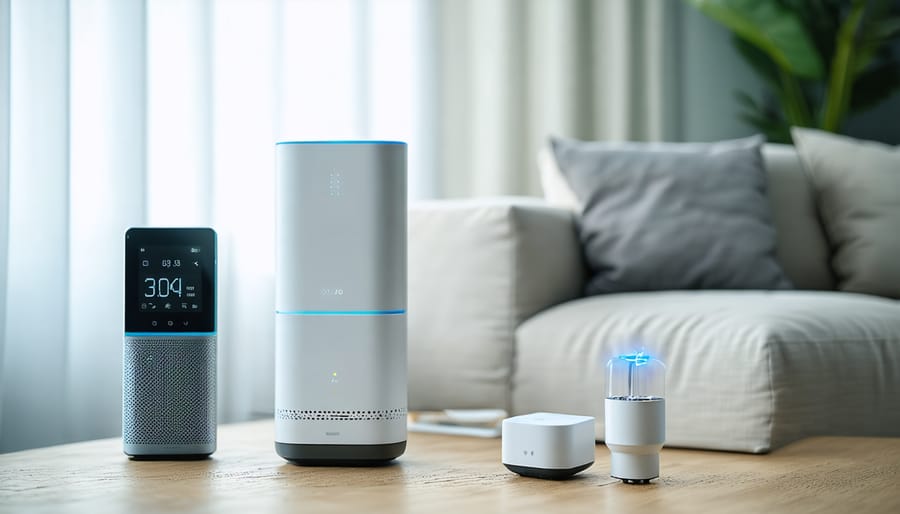
Making the most of nighttime air quality improvements starts with proper technology usage. Air purifiers are most effective when running consistently through the night, as they can take advantage of reduced outdoor pollutants and lower particle movement. For optimal results, position your air purifier in frequently used spaces like bedrooms, and ensure it’s sized appropriately for the room.
Modern smart home monitoring systems can help you track air quality changes throughout the night. These devices measure various pollutants, humidity levels, and particulate matter, allowing you to adjust your air purification strategy accordingly. Many systems even offer automated features that adjust purifier settings based on real-time air quality readings.
To maximize nighttime air quality benefits:
– Set air purifiers to run on a higher setting for the first hour of operation
– Use auto mode features if available to respond to air quality changes
– Clean or replace filters regularly according to manufacturer guidelines
– Position monitors away from direct airflow for accurate readings
– Keep bedroom doors closed to maintain the purified air environment
Consider using timer functions to boost purification during early morning hours when outdoor pollution typically increases. This proactive approach helps maintain better indoor air quality as you transition from night to day. Remember to regularly check and maintain your equipment – clean sensors, verify readings, and ensure all components are functioning properly for the best possible air quality results.
Understanding air quality patterns at night can help you create a healthier home environment. While nighttime generally offers better air quality due to reduced human activity and natural atmospheric processes, it’s important to take advantage of these optimal conditions.
Remember that cooler temperatures, decreased traffic, and lower pollution levels typically make nighttime air cleaner. To maximize these benefits, consider opening your windows during the evening hours when outdoor air quality is at its best. However, be sure to check local air quality reports first, as conditions can vary by location and season.
Take action by creating a nighttime routine that includes air quality optimization. Set up air purifiers to run during peak pollution hours, schedule ventilation during the cleaner nighttime period, and maintain indoor plants that naturally filter air throughout the day and night. You might also want to invest in an air quality monitor to track conditions and make informed decisions about when to ventilate your home.
By understanding and working with natural air quality patterns, you can create a healthier indoor environment for you and your family.