
Transform Your Living Space with Sound: Creating an Audio Oasis at Home
Step into a world where sound shapes reality and transforms ordinary rooms into extraordinary experiences. Today’s audio technology allows us to transform your space into an immersive soundscape that engages all senses and creates lasting memories.
Imagine hosting movie nights where surround sound makes viewers feel like they’re inside the action, or crafting a meditation space where carefully positioned speakers create a cocoon of calming acoustics. From home theaters that rival commercial cinemas to smart living rooms that adjust audio profiles based on your activity, modern sound design has revolutionized how we experience our living spaces.
Whether you’re an audiophile seeking perfect acoustics or a homeowner wanting to enhance your daily environment, creating an immersive sound experience is more accessible than ever. With strategic speaker placement, acoustic treatment, and smart technology integration, you can craft audio environments that don’t just fill a room – they transform it into a destination.
Let’s explore how to create these captivating sound experiences while maintaining the visual harmony of your space, proving that extraordinary audio doesn’t require compromising on style.
The Science Behind Immersive Sound Design
Sound Psychology in Interior Design
Sound has a profound impact on our psychological well-being and behavior at home. Studies show that different types of sounds can trigger specific emotional responses and influence how we use various spaces. For example, gentle water features in a bedroom can promote better sleep, while upbeat background music in a home office can boost productivity and creativity.
When designing your sound environment, consider how different rooms serve different purposes. Living areas benefit from ambient nature sounds or soft instrumental music to encourage relaxation and conversation. Kitchen spaces often work well with more energetic soundscapes that complement the active nature of cooking and entertaining.
The volume and rhythm of sounds also play crucial roles in behavior modification. Lower volumes tend to create intimate atmospheres perfect for reading nooks or meditation corners, while moderate volumes can mask unwanted noise in busy areas. The key is to match sound characteristics with intended activities – gentle sounds for calm spaces, rhythmic beats for exercise areas, and neutral background sounds for work zones.
Remember that personal preferences vary, so create flexible sound zones that can be easily adjusted to suit different moods and activities throughout the day.
Room Acoustics Basics
Room acoustics play a crucial role in creating an immersive sound experience, and understanding how sound behaves in your space is simpler than you might think. Think of sound waves as bouncing balls – they reflect off hard surfaces, get absorbed by soft materials, and can diffuse when hitting irregular shapes.
When sound hits your walls, floors, and ceiling, it either bounces back (reflection), gets absorbed, or passes through the material. Hard surfaces like concrete walls and glass windows create strong reflections, which can lead to echo and reverb. Soft materials like curtains, carpets, and upholstered furniture act as natural sound absorbers, helping to control these reflections.
The shape and size of your room also matter. Large, empty spaces tend to create more echo, while rooms with varied surfaces and textures distribute sound more evenly. Strategic placement of furniture and decor can help manage these acoustic properties. Even simple additions like area rugs, wall hangings, or strategically placed bookshelves can significantly improve your room’s sound quality.
For the best immersive experience, aim for a balance between reflection and absorption – you want enough reflection to maintain sound energy but sufficient absorption to prevent unwanted echo.

Creating Your Sound Environment

Speaker Placement and Sound Zones
Creating an immersive sound experience starts with strategic speaker placement. The classic 5.1 surround sound setup remains popular, with three front speakers (left, center, right) and two rear speakers, plus a subwoofer. For optimal results, position your front speakers at ear level when seated, forming a slight arc around your primary listening area.
Your center channel, crucial for dialogue clarity, should align with your TV or projection screen. Side speakers work best when placed slightly behind your seating area at a 110-degree angle, while rear speakers should sit at 150 degrees for complete immersion. Remember to keep speakers at least 6 inches away from walls to prevent sound reflection issues.
For larger spaces, consider creating distinct sound zones. You might want a primary entertainment zone with full surround sound, while other areas could feature stereo pairs for background music. In-ceiling speakers work wonderfully for ambient sound distribution, especially in open-concept spaces.
Don’t forget about your subwoofer placement – contrary to popular belief, corner placement isn’t always ideal. Try the “subwoofer crawl” technique: place the subwoofer in your primary listening position, then crawl around the room’s perimeter while playing bass-heavy content. Where the bass sounds best is where your subwoofer should go.
Smart Home Integration
Integrating smart home technology with your audio system creates a seamless and intuitive listening experience throughout your home. Modern smart speakers and automation systems allow you to control music, podcasts, and ambient sounds with simple voice commands or smartphone apps.
Start by positioning smart speakers strategically in different rooms, considering both acoustics and daily traffic patterns. Popular options like Amazon Echo, Google Nest, or Sonos speakers can be grouped to create synchronized zones, allowing music to follow you from room to room. Many systems also offer presence detection, automatically adjusting volume levels as you move through your space.
Set up routines that match your lifestyle – wake up to gradually increasing nature sounds, have relaxing music start automatically when you return from work, or create the perfect dinner atmosphere with preset playlists. Integration with other smart devices adds another layer of immersion: lights can dim when movie mode activates, or gentle background music can play when motion sensors detect activity in specific areas.
For optimal results, consider investing in a central hub that coordinates all your audio devices. This ensures consistent performance and makes it easier to manage multiple speakers and sound sources. Remember to configure your Wi-Fi network properly to handle the increased bandwidth demands of whole-home audio streaming.
Natural Sound Elements
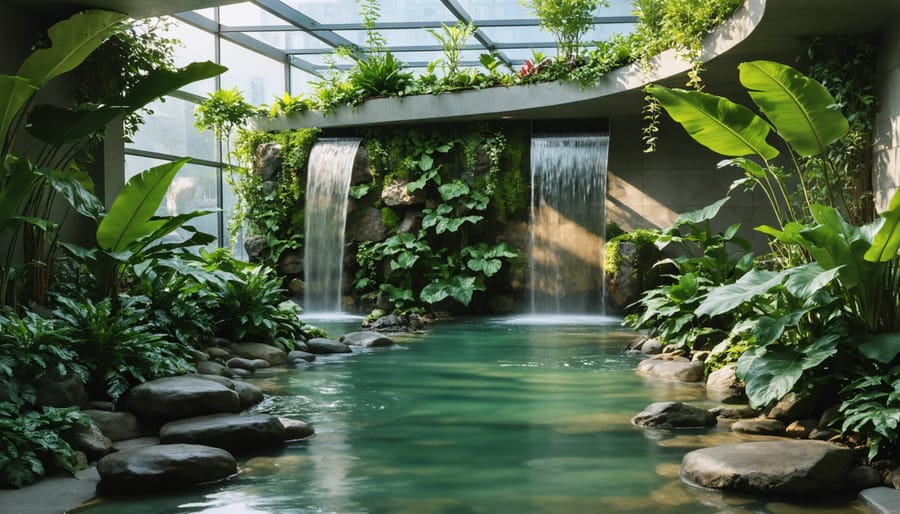
Incorporating natural sounds into your space creates a powerful connection with the outdoors, enhancing your immersive audio environment. Water features, in particular, serve as excellent natural design elements that can transform any room into a tranquil sanctuary. Consider installing a small indoor fountain, which not only provides soothing water sounds but also adds humidity to the air.
Wall-mounted water features offer a space-saving solution while creating gentle trickling sounds that mask unwanted noise. For outdoor spaces, consider installing a cascading water wall or a small pond with a bubbling rock feature. These additions create layers of natural sound that complement your existing audio setup.
Beyond water features, wind chimes strategically placed near windows can introduce melodic tones when gentle breezes flow through your space. Indoor plants with large leaves can create subtle rustling sounds when positioned near air vents or windows. For a more dynamic approach, consider incorporating a terrarium with a small water pump or creating a vertical garden with an integrated drip system.
Remember to balance these natural sound sources with your room’s acoustics. Soft surfaces like indoor plants and living walls can help absorb excess sound while contributing to the overall natural soundscape of your space.
Design Elements That Enhance Sound
Sound-Absorbing Materials
Creating the perfect immersive sound experience starts with choosing the right sound-absorbing materials. Today’s revolutionary materials offer both aesthetic appeal and superior acoustic performance, making it easier than ever to achieve professional-quality sound in your space.
Soft, porous materials are your best friends when it comes to sound absorption. Thick curtains made from velvet or heavyweight cotton can dramatically reduce echo while adding elegance to your room. Consider layering different textiles for maximum effect – combining floor-to-ceiling drapes with plush area rugs can create a cozy atmosphere while improving sound quality.
Acoustic panels don’t have to be eyesores anymore. Modern options include decorative fabric-wrapped panels that double as wall art, textured foam panels that create interesting visual patterns, and even sound-absorbing artwork that combines form and function. For a budget-friendly approach, try mounting thick canvas prints or fabric-covered cork boards on your walls.
Strategic furniture placement using upholstered pieces can also help control sound reflection. Opt for sofas and chairs with thick padding, and consider adding throw pillows and blankets not just for comfort, but for their sound-dampening properties. Bookshelves filled with books create irregular surfaces that help break up sound waves, while also adding character to your space.
For ceiling treatments, consider installing acoustic tiles or fabric-wrapped panels that blend seamlessly with your décor. These overhead solutions can significantly reduce sound bounce while maintaining a clean, professional look.
Furniture Arrangement for Sound
The way you arrange your furniture can dramatically impact your sound experience, turning an ordinary room into an acoustic sweet spot. Start by identifying your primary listening position – typically your favorite chair or sofa – and position it at what audio enthusiasts call the “apex of the triangle.” This means placing your seating about 1.5 times the distance between your main speakers.
For optimal sound distribution, avoid placing your seating directly against walls. Instead, position your main seating area at least 2-3 feet from any wall, which helps prevent sound reflection issues and creates a more immersive listening experience. Large pieces like bookcases or storage units can serve as natural sound diffusers when placed strategically along side walls.
Consider creating conversation areas that don’t interfere with the sound path between speakers and your listening position. Arrange accent chairs at 45-degree angles to promote both social interaction and good acoustics. Coffee tables and ottomans should be positioned to minimize sound reflection while maintaining functionality.
In larger rooms, floating furniture arrangements work best. This means creating distinct zones while keeping pathways clear for sound waves to travel naturally. Avoid placing tall furniture directly in front of speakers, and consider using area rugs to control sound reflection from hard flooring.
Remember that symmetry in furniture arrangement often leads to better sound distribution. If you have a TV setup, align your speakers equidistant from the screen and maintain equal distances from side walls for balanced sound staging.
Budget-Friendly DIY Solutions
Creating an immersive sound experience doesn’t have to break the bank. With some creativity and basic materials, you can significantly improve your room’s acoustics and enhance your listening environment. Here are several budget-friendly solutions that deliver impressive results.
Start with strategic furniture placement, which costs nothing but can make a substantial difference. Position your existing sofas, bookshelves, and heavy curtains to minimize sound reflection and create natural sound absorption. Thick rugs on hard floors can dramatically reduce echo and improve sound quality.
For DIY acoustic panels, you’ll need wooden frames, acoustic insulation, and fabric. Build simple frames using 1×4 lumber, fill them with rockwool or fiberglass insulation, and wrap them in breathable fabric that matches your décor. These panels typically cost $20-30 each to make, compared to $100+ for store-bought versions.
Another effective solution is the book-nook method. Fill empty wall space with floor-to-ceiling bookshelves. Books naturally diffuse and absorb sound, plus they add character to your room. Consider thrifting old hardcover books to keep costs down while maximizing acoustic benefits.
Create bass traps for corners using triangular frames filled with insulation material. These help control low-frequency sound waves that often cause problems in home audio setups. The materials should cost around $40-50 per trap.
Don’t overlook everyday items that can double as acoustic treatment. Hang thick blankets on walls, use decorative tapestries, or mount cork boards in strategic locations. Even egg cartons can serve as temporary diffusers while you save for more permanent solutions.
For optimal speaker placement, use the rule of thirds and experiment with positioning using items you already own. Sometimes, simply adjusting your current setup can dramatically improve sound quality without spending a dime.
Remember to tackle one area at a time and test the results before moving on to the next project. This approach helps you identify what works best for your space while keeping costs manageable.
Creating an immersive sound experience in your space is more accessible than ever before. Whether you’re a homeowner looking to enhance your entertainment room or a business owner aiming to create the perfect ambiance, the possibilities are endless. By carefully considering speaker placement, room acoustics, and technology integration, you can transform any space into an audio paradise. Remember to start small, perhaps with a basic surround sound setup, and gradually expand your system as you become more comfortable with the technology. Don’t be afraid to experiment with different configurations and solutions to find what works best for your specific needs. With the right planning and implementation, you’ll be well on your way to crafting an audio environment that captivates and delights everyone who experiences it. Take that first step today and begin your journey toward creating the perfect soundscape.