Transform Your Home with Japanese Indoor-Outdoor Flow (That Actually Works)
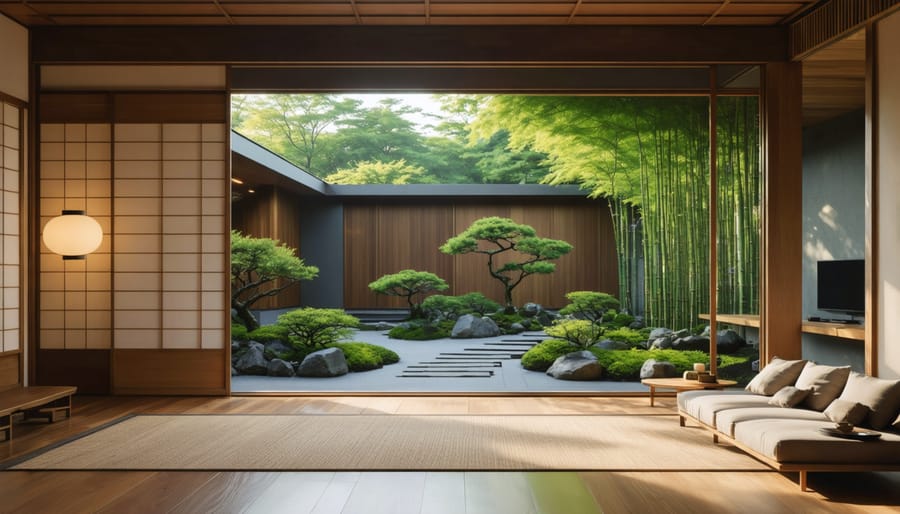
Japanese cultural influences transform modern living spaces through time-tested principles of harmony and simplicity. From the serene minimalism of Zen gardens to the elegant indoor-outdoor flow of traditional homes, these design elements create spaces that feel both grounding and contemporary. The Japanese concept of ‘Ma’ – the conscious pause between elements – teaches us that negative space is as important as the objects we choose to display. Today’s homeowners increasingly embrace these principles, incorporating sliding shoji screens, natural materials, and intentional sight lines that guide the eye from interior spaces to exterior gardens. This cultural fusion offers practical solutions for modern challenges: maximizing small spaces, reducing visual clutter, and creating environments that promote mindfulness and tranquility. Whether adapting a compact urban apartment or redesigning a spacious suburban home, Japanese design principles provide versatile, timeless strategies that enhance both functionality and aesthetic appeal.
The Essence of Japanese Indoor-Outdoor Harmony
Engawa: The Living Threshold
The engawa, a traditional covered corridor or porch that runs along the exterior of Japanese homes, represents the perfect fusion of indoor and outdoor living spaces. This transitional area traditionally served as a buffer between the garden and living quarters, offering a peaceful spot for contemplation and casual gatherings.
In modern homes, you can recreate the engawa concept by adding a covered porch or veranda that connects your interior spaces with the garden. Consider installing sliding glass doors or folding panels that open fully to create that seamless indoor-outdoor flow. Weather-resistant bamboo or composite decking materials make excellent modern alternatives to traditional wooden engawa floors.
For a contemporary twist, incorporate built-in seating along your engawa-inspired space and add outdoor-friendly cushions for comfort. Strategic lighting can extend the usability of this area into the evening hours, while potted plants and hanging gardens help maintain that crucial connection to nature. Even apartment dwellers can capture the engawa spirit by transforming their balconies into transitional spaces using removable deck tiles and portable greenery.
Borrowed Scenery (Shakkei)
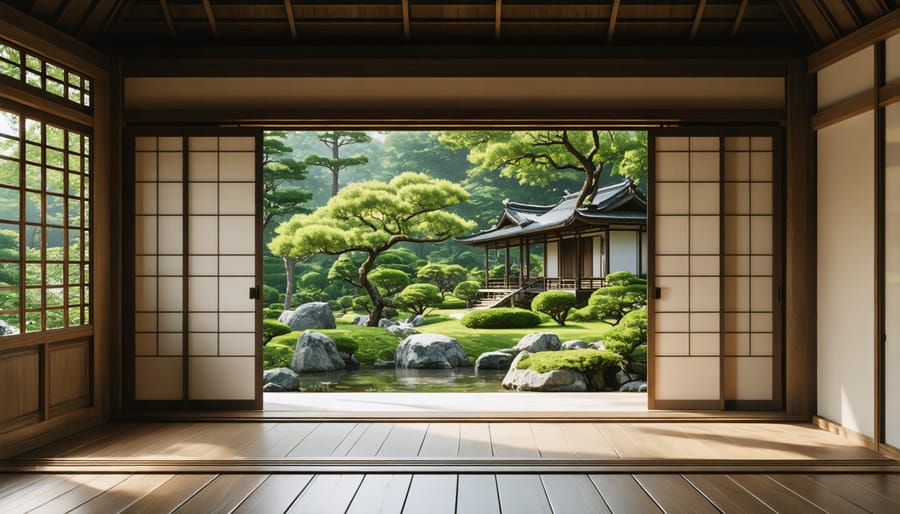
Borrowed scenery, or shakkei, is a masterful Japanese design technique that transforms exterior views into living artwork for your interior spaces. This concept exemplifies biophilic design principles by deliberately framing natural landscapes and distant views through windows, doors, and architectural openings. Imagine sitting in your living room while a carefully positioned window frames a beautiful mountain range or garden view, making it feel like an extension of your indoor space.
To incorporate shakkei in modern homes, consider strategic window placement that captures scenic elements like trees, gardens, or distant landscapes. Even urban dwellers can apply this principle by framing city skylines, neighboring gardens, or architectural features. The key is to position furniture and design elements to direct attention toward these borrowed views, creating a seamless connection between interior and exterior spaces.
This technique not only maximizes your home’s visual appeal but also promotes a sense of spaciousness and tranquility by bringing nature’s beauty indoors. When combined with thoughtful landscaping, shakkei can transform even modest spaces into stunning sanctuaries that celebrate the harmony between built and natural environments.
Key Design Elements for Your Space
Sliding Doors and Screens
Modern homes are increasingly embracing the versatile elegance of Japanese-inspired sliding doors and screens. These adaptable design elements offer a perfect blend of functionality and aesthetic appeal, creating flexible living spaces that can be easily transformed to suit different needs throughout the day.
Today’s interpretation of traditional shoji screens often incorporates durable materials like tempered glass, polycarbonate panels, and aluminum frames, making them more suitable for contemporary living while maintaining their distinctive minimalist appearance. These modern versions provide better insulation and durability while preserving the signature diffused light effect that makes Japanese interiors so distinctive.
Smart home technology has also found its way into sliding door systems, with motorized tracks and remote-controlled operations becoming increasingly popular. Some innovative designs feature built-in sensors for automatic operation or integration with home automation systems, bringing ancient wisdom into the digital age.
For DIY enthusiasts, several manufacturers now offer modular sliding door kits that capture the essence of Japanese design without requiring specialized installation skills. These systems typically come with clear instructions and pre-cut components, making it possible to achieve a professional look on a modest budget.
Whether used as room dividers, closet doors, or patio entries, these modern interpretations of Japanese sliding systems continue to offer the same space-saving benefits and visual harmony that made their traditional counterparts so enduring.
Natural Materials and Textures
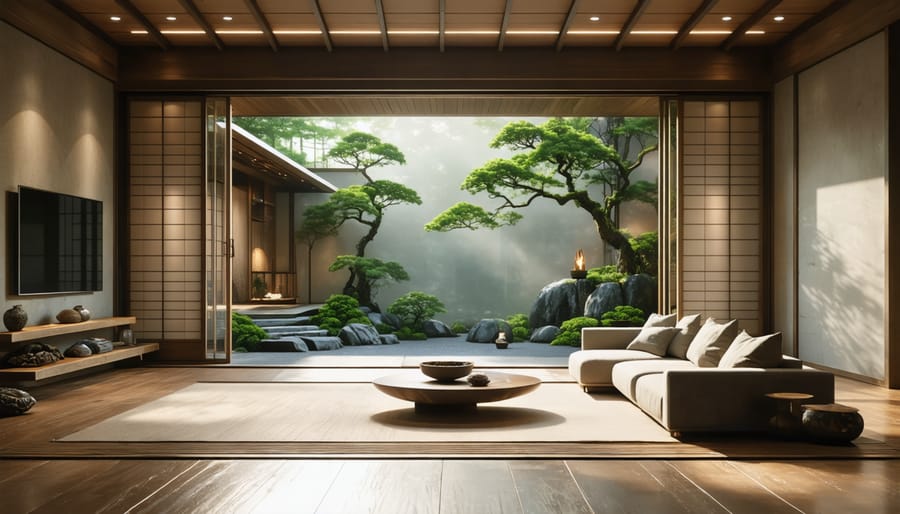
Japanese design philosophy emphasizes the beauty and authenticity of natural materials that last, creating spaces that feel both grounding and serene. The thoughtful incorporation of wood, particularly cedar and cypress, brings warmth and character to both interior and exterior spaces. These materials age gracefully, developing a natural patina that adds to their appeal over time.
Stone elements, such as granite or slate, provide a perfect counterbalance to wooden features. Consider incorporating river rocks in garden pathways or using smooth pebbles in indoor water features. Bamboo, while technically a grass, serves as another versatile material that can be used for screens, flooring, or decorative elements.
For texture variety, consider incorporating tatami mats, which are traditionally made from rice straw, or shoji screens with their distinctive paper panels. These elements add subtle depth while maintaining the clean lines characteristic of Japanese design.
Modern interpretations might include sustainable alternatives like reclaimed wood or engineered bamboo products. The key is to maintain the natural aesthetic while choosing materials suitable for your climate and lifestyle. When selecting materials, focus on those with minimal processing and finish them with natural oils or sealants to preserve their organic beauty while ensuring durability.
Minimalist Furniture Placement
Japanese minimalist furniture placement focuses on creating harmony between living spaces and the natural world outside. This approach emphasizes the strategic positioning of essential pieces to maintain clear sight lines and promote easy movement throughout the room. The key is to arrange furniture along the room’s perimeter, leaving the center open to create a sense of flow and connection with outdoor spaces.
Start by identifying your room’s focal point, typically a window or sliding door that frames an outdoor view. Position larger pieces like sofas or low-profile tables to complement this view rather than obstruct it. Keep furniture low to the ground, following traditional Japanese design principles, which helps maintain visual continuity between indoor and outdoor spaces.
Consider using multi-functional pieces that can be easily moved or stored, such as floor cushions or folding screens. This flexibility allows you to adapt the space according to your needs while maintaining the minimalist aesthetic. Place storage furniture against walls to maximize open floor space and create clean lines that draw the eye toward outdoor elements.
The space between furniture pieces, known as “ma” in Japanese design, is just as important as the furniture itself. Allow for generous pathways and maintain clear sight lines between indoor and outdoor areas. This thoughtful arrangement not only enhances the visual connection to nature but also creates a sense of spaciousness and tranquility in your home.
Creating Your Indoor-Outdoor Sanctuary
Weekend Projects
Transform your living space with these easy weekend projects that capture the essence of Japanese design. Start with a DIY bamboo screen by mounting natural bamboo poles horizontally on a wooden frame, creating an elegant privacy partition for your patio or garden area. For a meditative touch, craft a mini zen garden using a shallow wooden box, fine sand, and carefully selected stones – perfect for your desk or coffee table.
Create a traditional shoji-inspired room divider using wooden frames and rice paper or translucent acrylic sheets. This project adds soft, natural light filtration while defining separate spaces in your home. For outdoor spaces, build a simple wooden bench using cedar or teak, positioning it to frame your garden view – a perfect spot for quiet contemplation.
Consider crafting a kokedama (moss ball planter) by wrapping plant roots in moss and string, creating striking suspended greenery that brings nature indoors. Install a bamboo fountain using readily available materials from your local garden center – the gentle sound of flowing water adds tranquility to any space.
For a modern twist, design LED-illuminated paper lanterns using battery-operated lights and washi paper, perfect for evening ambiance. These projects can typically be completed in a weekend and require basic tools and materials, making them accessible for most DIY enthusiasts while adding authentic Japanese elements to your space.
Plant Selection and Placement
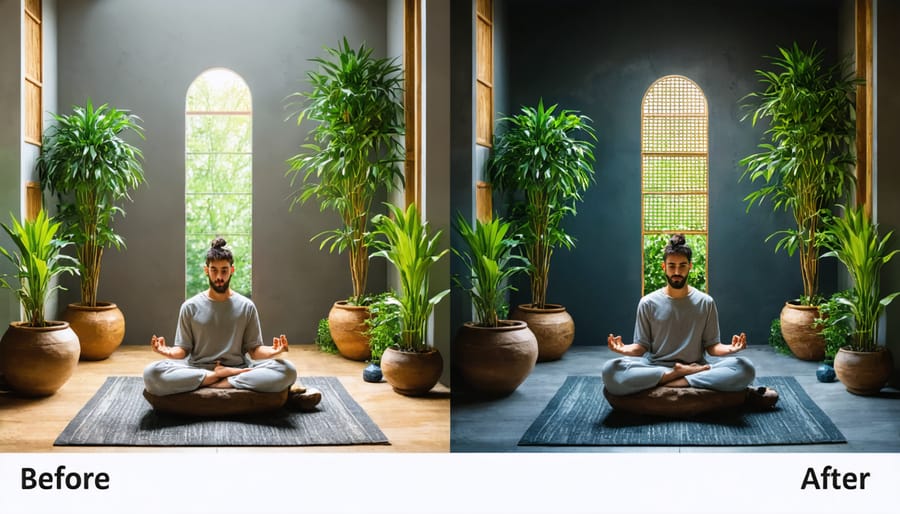
In Japanese-inspired design, selecting the right plants and their placement is crucial for creating an authentic atmosphere. Traditional Japanese gardens prioritize evergreen plants like pine, bamboo, and maples, which provide year-round visual interest and symbolize longevity and resilience.
When choosing plants, focus on creating layers with varying heights and textures. Start with taller plants like Japanese maples or bamboo as focal points, then add medium-height shrubs like azaleas or Japanese holly. Ground-covering plants like moss or small ferns can complete the composition, creating a natural, flowing appearance.
Consider the concept of “borrowed scenery” (shakkei) by positioning plants to frame existing views or create visual corridors. Place more dramatic specimens at key viewpoints, such as entrances or sitting areas, while using smaller, more delicate plants to guide movement through the space.
Remember that Japanese design emphasizes restraint – it’s better to have fewer, carefully chosen plants than an overcrowded space. Group plants in odd numbers, typically three or five, to create more natural-looking arrangements. Also, maintain clean lines and regular pruning to keep plants shaped in a way that complements the overall design while allowing each specimen to retain its natural character.
Modern Technology Integration
Japanese design principles and modern technology might seem at odds, but they can work together beautifully when integrated thoughtfully. The key is to maintain the zen-like simplicity while incorporating convenient features that enhance daily living.
Smart lighting systems can recreate the soft, natural illumination traditionally achieved through shoji screens. Install dimmable LED lights with warm color temperatures, and program them to adjust throughout the day, mimicking natural light patterns. Consider installing motion sensors in corridors and bathrooms for convenience while maintaining minimal visual impact.
For entertainment systems, opt for concealed solutions. Mount TVs behind sliding wooden panels or install projector screens that roll away when not in use. Speaker systems can be integrated into walls or ceilings, maintaining clean lines while delivering modern audiovisual experiences.
Climate control can be seamlessly incorporated using smart thermostats with minimal, unobtrusive designs. Choose models in neutral colors that blend with your walls, and consider floor heating systems instead of visible units – a modern take on the traditional kotatsu concept.
Storage solutions can combine traditional tansu cabinet design with modern organizational systems. Install smart storage units with touch-release mechanisms, eliminating the need for visible handles. For home offices, hide cables and charging stations within furniture pieces that maintain clean Japanese aesthetics.
In the bathroom, high-tech toilets and shower systems can be selected in simple, minimalist designs that align with Japanese aesthetic principles. Look for units with hidden control panels and clean lines.
Remember that technology should enhance, not dominate, your space. When adding modern conveniences, ask yourself if they serve a clear purpose and can be integrated without disrupting the overall harmony and simplicity of your Japanese-inspired design. The goal is to create a space where technology supports daily life while maintaining the peaceful, uncluttered atmosphere that makes Japanese design so appealing.
Embracing Japanese cultural influences in your living space is more than just a design choice – it’s an invitation to transform your daily life through mindful, purposeful elements that promote harmony and tranquility. By incorporating principles like ma (negative space), wabi-sabi (finding beauty in imperfection), and the seamless flow between indoor and outdoor spaces, you can create an environment that nurtures both body and soul.
Remember that you don’t need to completely renovate your home to achieve this transformation. Start small with simple changes like adding natural materials, creating a modest zen garden, or reorganizing your space to maximize functionality and minimize clutter. The key is to focus on elements that resonate with your lifestyle while respecting the core principles of Japanese design.
As you begin this journey, consider how each addition or modification contributes to the overall harmony of your space. Whether you’re a homeowner looking to increase property value, a DIY enthusiast eager to tackle new projects, or simply someone seeking a more peaceful living environment, Japanese design principles offer timeless solutions that adapt beautifully to modern needs.
Take the first step today by choosing one aspect of Japanese design that speaks to you. Perhaps it’s incorporating more natural light, adding a water feature, or simply decluttering your space. Whatever you choose, remember that this transformation is a journey, not a destination, and each small change brings you closer to creating your own sanctuary of peace and tranquility.