70s Design Magic: Bringing Groovy Style Back to Modern Homes
Step into the bold, expressive world of 1970s interior design, where earth-toned palettes and geometric patterns create spaces that feel both nostalgic and surprisingly modern. The 70s home decor comeback isn’t just about revival—it’s about reimagining these distinctive elements for contemporary living.
Think sunken living rooms lined with conversation pits, dramatic sculptural lighting fixtures, and statement-making shag carpets in rich oranges and browns. This era’s design philosophy emphasized comfort and social connection, creating warm, inviting spaces that encouraged gathering and conversation.
Today’s interpretation of 70s design strips away the dated elements while preserving the era’s most compelling features: organic shapes, natural materials, and fearless self-expression. Whether you’re planning a full renovation or simply seeking to incorporate retro touches, the 70s offer a treasure trove of inspiration for creating spaces that are both sophisticated and playful.
From macramé wall hangings to curved furniture pieces, these defining elements of 70s style continue to influence modern interior design, proving that great design truly is timeless.
Signature Elements of 70s Interior Design
Color Palettes That Defined an Era
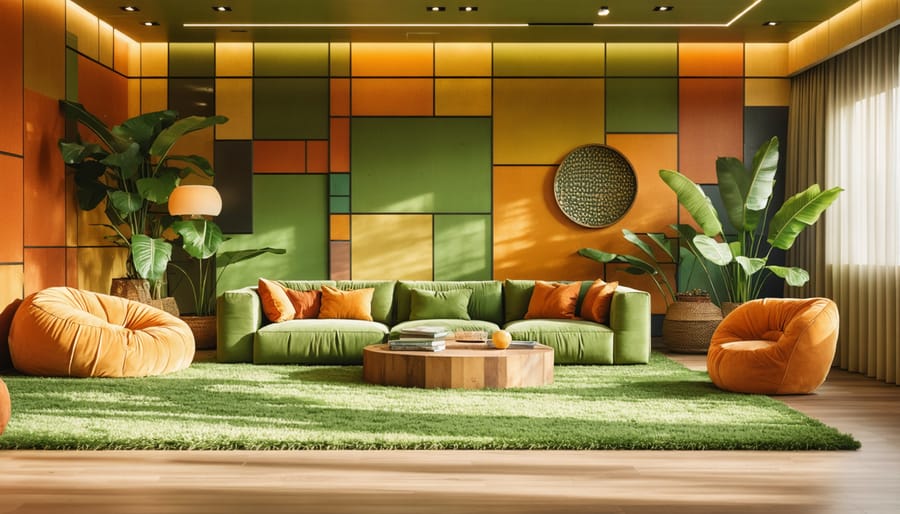
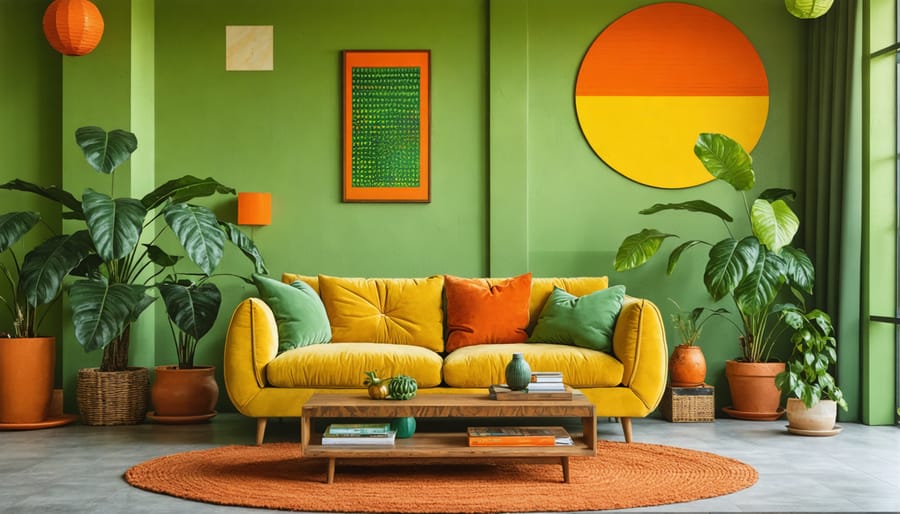
The 1970s palette was bold, earthy, and unmistakably distinctive, with colors that captured the decade’s free-spirited essence. Harvest gold led the charge, warming up kitchens and living spaces with its rich, sunbaked yellow tones. This signature shade often paired with avocado green, a deep, organic hue that adorned everything from appliances to shag carpets.
Burnt orange emerged as another 70s superstar, bringing vibrant energy to walls and furniture while complementing the era’s natural wood elements. Brown dominated the spectrum, appearing in various shades from chocolate to tan, creating a grounding effect in most interior spaces.
Earth tones ruled supreme, with terracotta, mustard yellow, and warm beige creating layered, organic environments. These weren’t just random choices – they reflected the era’s growing environmental consciousness and connection to nature. Olive green and rusty red frequently appeared as accent colors, while deep purple added a touch of psychedelic flair to more adventurous spaces.
The genius of 70s color schemes lay in their surprising versatility. These warm, rich tones created cozy, inviting spaces that felt both dramatic and lived-in. Today, many of these colors are experiencing a revival, albeit in more subdued variations, proving that good design truly stands the test of time.
Iconic Materials and Textures
The 1970s brought a distinctive palette of materials and textures that defined the era’s interior design. Shag carpeting, with its deep, luxurious pile, became the quintessential flooring choice, appearing in bold colors like harvest gold, avocado green, and burnt orange. These plush carpets weren’t just confined to floors – some homeowners even installed them on walls for added drama and acoustic dampening.
Wood paneling dominated wall treatments, with dark-stained variants being particularly popular. Often featuring distinctive vertical lines and a high-gloss finish, these panels created a warm, cozy atmosphere that epitomized the decade’s design aesthetic. Cheaper alternatives included vinyl and laminate panels that mimicked wood grain patterns.
Cork and vinyl flooring offered practical alternatives to carpeting, especially in kitchens and bathrooms. These materials often featured bold geometric patterns or faux brick designs. Plastic became increasingly prevalent, appearing in furniture, decorative elements, and even wall coverings, celebrated for its versatility and modern appeal.
Textured wallpapers, including grasscloth and foil varieties, added visual interest to walls. Fabrics like velvet, corduroy, and crushed velour were extensively used for upholstery and throw pillows, while macramé hangings and woven textiles brought natural elements indoors. These materials not only defined the era’s look but also reflected the period’s embrace of both natural and synthetic materials in home décor.
Key Furniture Pieces and Layouts
Statement Seating
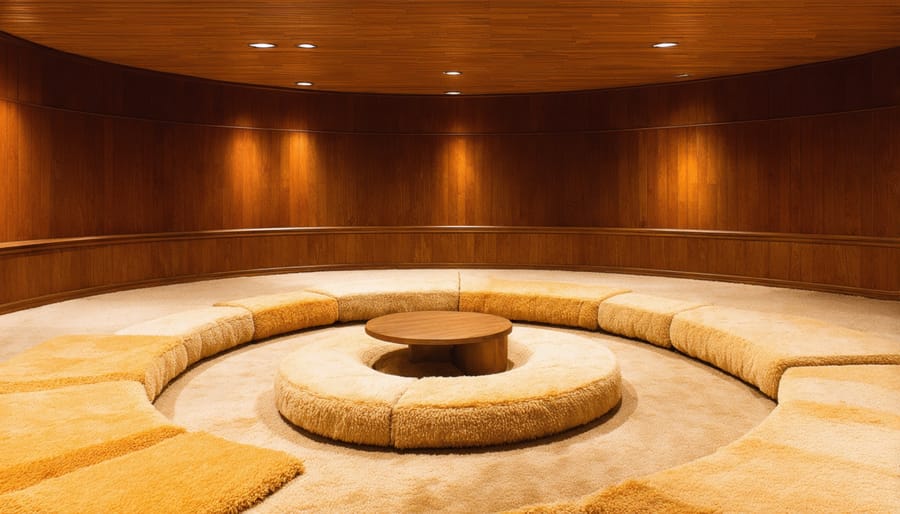
The 1970s revolutionized how we think about social spaces, introducing bold seating arrangements that remain among the most timeless design elements of the era. Conversation pits, those sunken living room areas surrounded by built-in seating, became the ultimate expression of casual entertaining and social connection. These architectural features created intimate gathering spaces that encouraged face-to-face interaction, often complemented by plush cushions and vibrant fabrics.
Sunken living rooms, while similar to conversation pits, extended the concept to entire room layouts. These spaces typically sat a few steps below the main floor level, creating a natural division between social and transitional spaces without the need for walls. The dramatic effect was often enhanced by shag carpeting and modular furniture arrangements.
The 70s also gave rise to iconic chair designs that continue to influence modern interiors. The Egg Chair, with its cocoon-like shape, offered both style and comfort. Meanwhile, the Tulip Chair’s sculptural form brought artistic flair to dining areas. Bean bags emerged as casual seating options, reflecting the era’s relaxed approach to home design. These statement pieces weren’t just furniture; they were conversation starters that captured the decade’s experimental spirit and desire for comfort-focused design.
Room-Defining Features
The 1970s revolutionized home layouts with innovative built-in features that maximized space and functionality. Conversation pits, sunken living rooms, and built-in seating areas became hallmarks of the era, creating natural gathering spaces for family and friends. These architectural elements often featured plush cushions and modular components that could be rearranged to suit different needs.
Room dividers played a crucial role in defining spaces while maintaining an open-concept feel. Popular options included wooden slatted screens, macramé hangings, and geometric shelving units that served both decorative and practical purposes. These versatile dividers allowed homeowners to create distinct zones without sacrificing the era’s characteristic flow and openness.
Built-in storage solutions were particularly ingenious during this period. Wall-to-wall shelving units, often crafted from wood or laminate, provided ample space for books, decor, and entertainment systems. Many homes featured built-in bars, complete with mini-fridges and storage for glassware – perfect for entertaining.
The concept of multifunctional spaces reached new heights in the 70s. Murphy beds, fold-down desks, and modular furniture systems allowed rooms to serve multiple purposes throughout the day. These space-saving solutions were especially popular in urban apartments and smaller homes, where maximizing square footage was essential. Today, these practical design elements continue to inspire modern interpretations, proving that good design truly stands the test of time.
Modern Adaptations of 70s Style
Subtle 70s Touches
Want to embrace the groovy vibes of the 70s without turning your home into a time capsule? The key is incorporating vintage elements in modern spaces thoughtfully and strategically. Start with a neutral base and add subtle 70s touches through carefully chosen accent pieces and materials.
Consider introducing warm earth tones through throw pillows or a single statement wall rather than painting every surface harvest gold. Incorporate geometric patterns in small doses, like a decorative vase or area rug, instead of overwhelming wallpaper. Plants are quintessentially 70s – try a few hanging specimens or a statement fiddle leaf fig rather than filling every corner with greenery.
Texture plays a crucial role in achieving that 70s feel. Add a single macramé wall hanging, or place a shag rug in just one room. Rattan and wicker pieces work beautifully as accent furniture – think side tables or a statement chair rather than complete sets.
For lighting, opt for a single pendant lamp with smokey glass or a brass finish instead of replacing all your fixtures. Display vintage ceramics on a shelf or incorporate a sunburst mirror as wall art. These small touches create visual interest without overwhelming the space.
Remember, the goal is to create a modern space with nostalgic elements, not replicate a Brady Bunch set. By choosing quality pieces and incorporating them thoughtfully, you’ll achieve a sophisticated look that honors the era while remaining thoroughly contemporary.
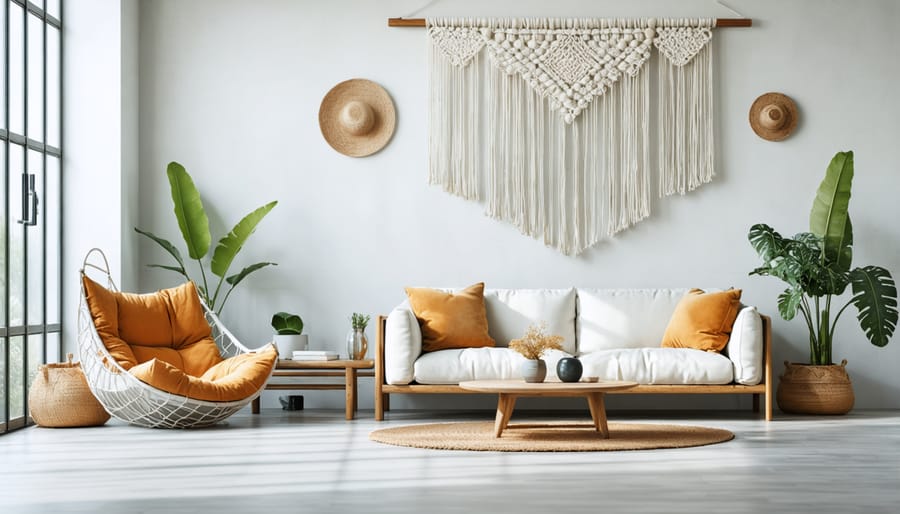
Statement Pieces Worth Investing In
When it comes to authentic 70s design, certain signature pieces can truly transform interior spaces into retro havens. The iconic Ligne Roset Togo sofa, with its distinctive quilted look and low-slung profile, remains a worthy investment that can fetch thousands in vintage condition. For more budget-conscious decorators, quality reproductions offer similar impact at a fraction of the cost.
Oversized arc floor lamps, particularly the Arco design by Achille Castiglioni, continue to command attention and hold their value. These statement pieces work beautifully in modern settings while maintaining authentic 70s appeal. Similarly, chrome and glass coffee tables, especially those by designers like Paul Evans or Vladimir Kagan, are worth the investment for their timeless appeal.
When shopping for authentic pieces, focus on items with original upholstery or finishes, as these command higher resale values. Look for manufacturers’ marks and documentation to ensure authenticity. Key materials to seek include chrome, smoked glass, and high-quality plastics from recognized manufacturers.
For those interested in reproductions, prioritize quality construction and materials that mirror the originals. Wall units in teak or walnut, sunburst mirrors, and geometric area rugs are excellent starting points that offer significant visual impact without requiring massive investment. Remember that mixing authentic vintage pieces with carefully chosen reproductions can create a cohesive look while keeping costs manageable.
Consider starting with smaller authenticated pieces like ceramic table lamps, hanging planters, or original artwork before investing in larger furniture items. These accents can provide instant 70s credibility while you build your collection gradually.
The vibrant spirit of 70s interior design continues to captivate and inspire homeowners today, offering a perfect blend of comfort, self-expression, and artistic flair. By incorporating key elements like warm earth tones, bold patterns, and natural materials, you can create spaces that pay homage to this iconic era while maintaining a contemporary feel.
Remember that you don’t need to completely transform your home to embrace 70s style. Start small with vintage-inspired accessories, a statement piece of furniture, or an accent wall featuring geometric wallpaper. The beauty of 70s design lies in its versatility – you can go all-out with a complete retro makeover or simply add subtle touches that nod to the era’s distinctive aesthetic.
Don’t be afraid to experiment with different combinations of colors, textures, and patterns. The 70s were all about personal expression and breaking design rules. Mix macramé wall hangings with modern furniture, pair vintage light fixtures with contemporary art, or combine shag carpeting with sleek metal accents.
As you explore 70s interior design, focus on creating spaces that feel authentic to your style while incorporating the era’s most enduring elements. Whether you’re drawn to the earthy bohemian look or the glamorous disco aesthetic, there’s a way to make 70s design work in your modern home. Let this influential decade inspire you to create spaces that are both nostalgic and thoroughly contemporary.