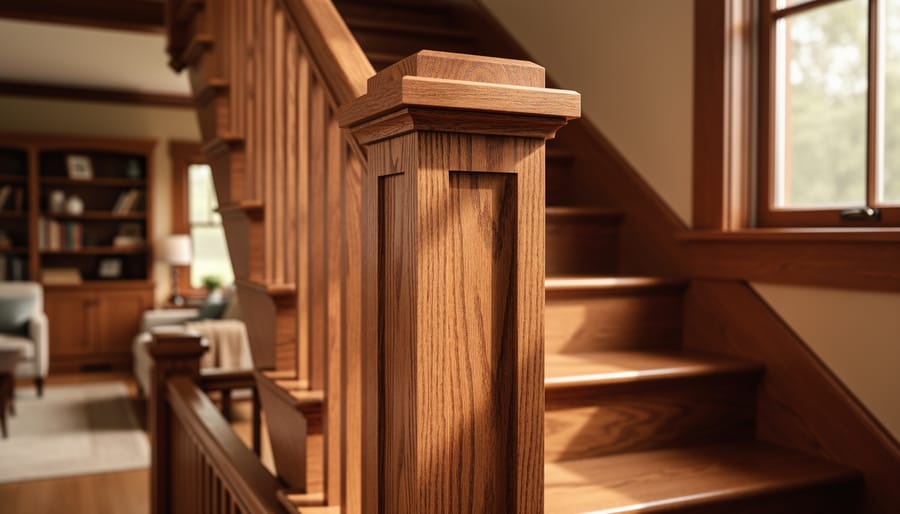
Why Craftsman Style Stair Railings Transform Your Home’s Character
Recognize craftsman style stair railings by their signature squared balusters, substantial newel posts, and horizontal emphasis that echoes the Arts and Crafts movement’s celebration of honest materials and expert joinery. These railings transform ordinary staircases into architectural statements through their clean lines, visible wood grain, and thoughtful proportions that complement both historic bungalows and modern homes seeking warmth and character.
Among popular stair railing styles, craftsman designs stand out for their durability and timeless appeal, featuring quartersawn oak, walnut, or mahogany construction that develops richer patina over decades. This style emerged in early 1900s America as a reaction against ornate Victorian excess, championing simplicity and craftsmanship that resonates with today’s homeowners seeking authentic, lasting design.
Whether you’re renovating a century-old bungalow or adding character to new construction, understanding craftsman railing components, wood selection, and installation requirements helps you make informed decisions that balance aesthetics with budget. Expect to invest in quality materials and precise installation, but gain a feature that enhances your home’s value and provides daily tactile pleasure through smooth, hand-finished surfaces and solid construction that withstands generations of use.
What Makes Craftsman Style Stair Railings Stand Out
Craftsman style stair railings draw their inspiration from the Arts and Crafts movement of the late 1800s and early 1900s, a time when artisans rebelled against mass production and championed handmade quality. If you’ve ever admired a home with warm, natural wood features and thoughtful architectural details, you’ve likely encountered craftsman design.
What makes these railings instantly recognizable? It starts with their honest approach to materials. Craftsman railings celebrate the natural beauty of wood rather than hiding it. You’ll typically see oak, cherry, or mahogany showcasing their rich grain patterns and warm tones. The wood is often finished with stains that enhance rather than obscure its character.
The design principles are refreshingly straightforward. Clean, straight lines dominate the aesthetic, with square or rectangular balusters arranged in simple, rhythmic patterns. Unlike ornate Victorian railings with their elaborate carvings or sleek modern designs with metal cables, craftsman railings strike a perfect middle ground. They’re substantial without being fussy, decorative without being overdone.
Visual characteristics that set them apart include thick, horizontal handrails that feel solid and reassuring under your hand, sturdy newel posts with simple geometric caps, and balusters that might feature subtle tapered details or grouped arrangements. The spacing and proportions follow a “less is more” philosophy, where every element serves both form and function.
Perhaps most importantly, craftsman railings embody visible quality. Joints are tight and precise, finishes are smooth and even, and the overall construction radiates durability. This isn’t about flashy decoration but about creating something beautiful through excellent workmanship and respect for materials. That philosophy resonates today with homeowners who value authenticity and timeless appeal in their living spaces.
Key Features of Craftsman Stair Railings
The Signature Square Balusters
The most recognizable feature of craftsman stair railings is their distinctive square balusters. Unlike the turned spindles you’ll find in traditional or Victorian designs, craftsman balusters are thick, chunky, and decidedly geometric. These substantial posts typically measure 1.25 to 1.75 inches square, creating a bold, honest look that embodies the craftsman philosophy of celebrating straightforward construction.
The spacing between these balusters is equally important to achieving the right aesthetic. Most craftsman designs place balusters fairly close together, typically 3 to 4 inches apart center-to-center, which creates that characteristic solid, grounded appearance. This closer spacing emphasizes the vertical lines and gives the railing visual weight without appearing heavy or closed-off.
What makes these square balusters so visually impactful is their simplicity and repetition. The clean lines create a rhythmic pattern that draws the eye upward along your staircase, while their chunky proportions convey strength and permanence. This design choice reflects the craftsman movement’s rejection of ornate Victorian excess in favor of honest, functional beauty. The result is a railing that feels substantial and welcoming, perfectly complementing the warm woods and natural materials typical of craftsman interiors.
Tapered Posts and Substantial Newels
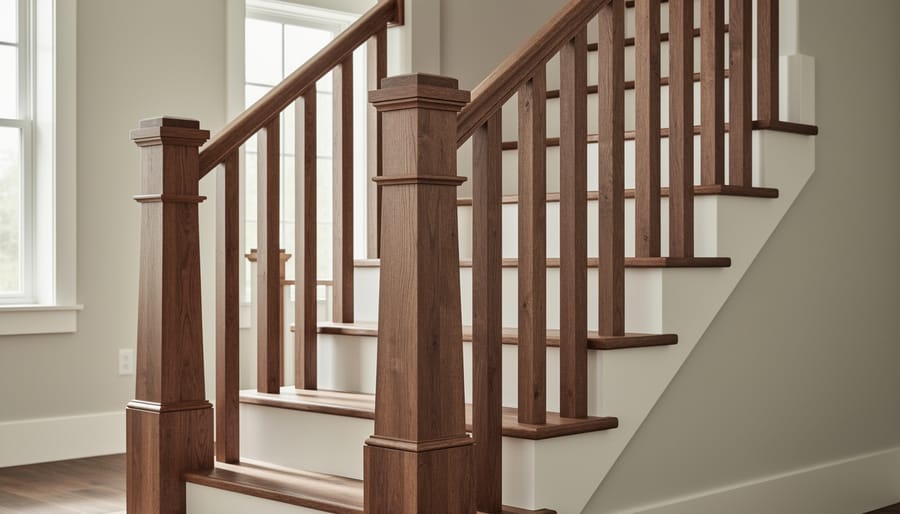
The newel posts in craftsman-style railings are anything but ordinary. These aren’t delicate decorative accents—they’re substantial, solid pillars that command attention and anchor your entire staircase design. Think of them as the foundation of your railing system, built to last generations.
What makes craftsman newels distinctive is their characteristic tapered design. Starting wider at the base and gradually narrowing toward the top, this subtle taper creates visual interest while maintaining that essential sturdy appearance. Some craftsman newels feature chamfered edges instead, where the corners are beveled or cut at an angle, softening the profile without sacrificing the bold, geometric look.
The crowning glory of these posts is their decorative caps. You’ll often see pyramid-shaped tops, squared caps with subtle detailing, or simple beveled designs. These caps aren’t fussy or ornate—they’re clean, purposeful, and perfectly aligned with the craftsman philosophy of honest craftsmanship.
When selecting your stair rail parts, pay attention to the wood species and finish. Quarter-sawn oak was historically popular for its distinctive grain pattern and durability, though you’ll also find beautiful options in maple, cherry, and walnut. The substantial size—typically 4×4 inches or larger—ensures these posts make a statement while providing the structural integrity your railing needs.
Wood Species and Natural Finishes
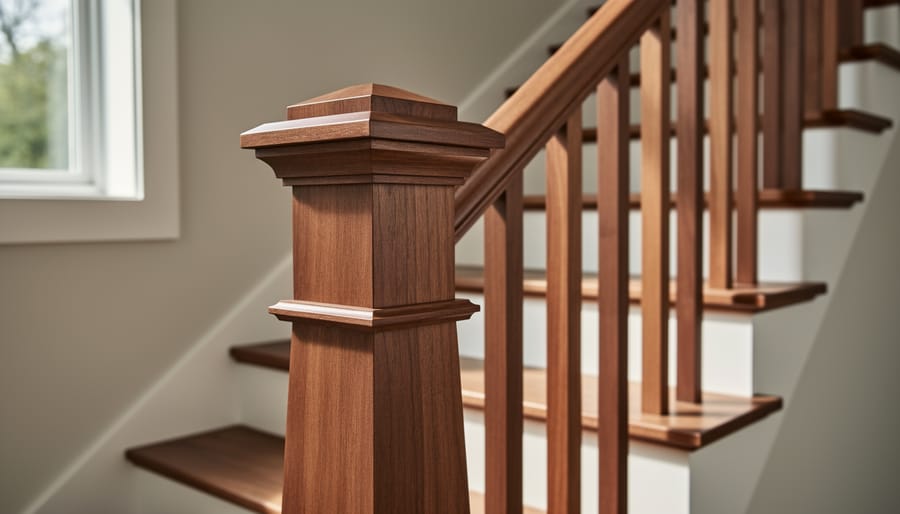
Craftsman railings celebrate the natural beauty of wood, and your choice of species makes all the difference in achieving that authentic look. Oak stands as the traditional favorite, prized for its prominent grain patterns and durability. Its visible texture creates the visual interest that craftsman design is known for. Cherry offers a warmer, reddish tone that deepens beautifully over time, while maple provides a lighter, more subtle grain for those preferring a contemporary twist on the classic style.
The craftsman philosophy emphasizes honest materials, which is why natural wood grains take center stage rather than being hidden. You’ll want to select pieces where the grain patterns are clearly visible and considered a design feature, not a flaw to cover up.
When it comes to stains, think rich and earthy. Medium to dark browns like walnut, chestnut, and mission oak remain popular choices that honor the original craftsman palette. These deeper tones highlight the wood grain while adding warmth to your staircase. For a lighter approach, golden oak and honey tones work beautifully in homes with more natural light. Whatever shade you choose, opt for penetrating oil stains rather than heavy surface finishes. This allows the wood’s natural character to shine through while providing necessary protection. A matte or satin topcoat completes the look without the glossy shine that contradicts craftsman principles.
Craftsman Railings vs. Other Popular Styles
Understanding how craftsman railings stack up against other popular styles helps you make the right choice for your home. Here’s a quick comparison to see where craftsman style fits in today’s design landscape.
Craftsman railings feature thick, square balusters with clean lines and natural wood finishes, typically in darker stains like oak or walnut. They emphasize handcrafted quality and horizontal design elements. In contrast, modern railing styles often use cable, glass, or thin metal bars with minimalist profiles and industrial materials.
Traditional railings typically showcase ornate turned balusters, decorative scrollwork, and painted finishes in white or cream. They’re fancier and more detailed than the straightforward craftsman approach. Contemporary styles blend elements from multiple periods, frequently mixing materials like metal and wood with asymmetrical designs and bold geometric patterns.
The craftsman style works best in bungalows, prairie-style homes, and spaces with natural wood trim and built-in features. It bridges the gap between traditional elegance and modern simplicity without leaning too far in either direction. If you love visible wood grain, sturdy proportions, and timeless appeal, craftsman railings deliver that middle ground.
Choose craftsman if you want warmth and character without fussiness. Pick modern for sleek minimalism, traditional for formal elegance, or contemporary for eclectic mixing. Your home’s existing architecture and your personal taste will guide you to the right fit.
Where Craftsman Stair Railings Work Best
Craftsman stair railings feel most at home in, well, craftsman-style houses. These early 20th-century beauties with their low-pitched roofs, exposed rafters, and natural materials create the perfect backdrop for square balusters and substantial newel posts. The style honors the same design principles throughout, making everything feel cohesive and intentional.
But here’s the good news: you don’t need a 1910 bungalow to pull off craftsman railings successfully. They work beautifully in contemporary homes with clean lines and minimal ornamentation. The geometric simplicity of craftsman balusters actually complements modern aesthetics surprisingly well. Think open floor plans, large windows, and neutral color palettes. The key is keeping the finish streamlined and the proportions balanced with your existing architecture.
Ranch-style homes also welcome craftsman railings with open arms. The horizontal emphasis of ranch architecture pairs naturally with the linear qualities of craftsman design. Prairie-style homes share similar DNA with craftsman architecture, making this combination feel particularly authentic.
Even in traditional or colonial homes, craftsman railings can work if you approach it thoughtfully. The trick is creating a focal point rather than trying to convert your entire home’s style. A craftsman railing can serve as a statement piece that adds warmth and character to an otherwise formal space.
For making craftsman railings work in unexpected settings, consider these approaches: Use stain colors that complement your existing woodwork rather than matching it exactly. This creates visual interest while maintaining harmony. In more eclectic spaces, treat the railing as sculptural element that stands confidently on its own. Mix materials by pairing wood balusters with metal handrails for a transitional look that bridges traditional craftsman and contemporary styles.
DIY Installation: What You Need to Know
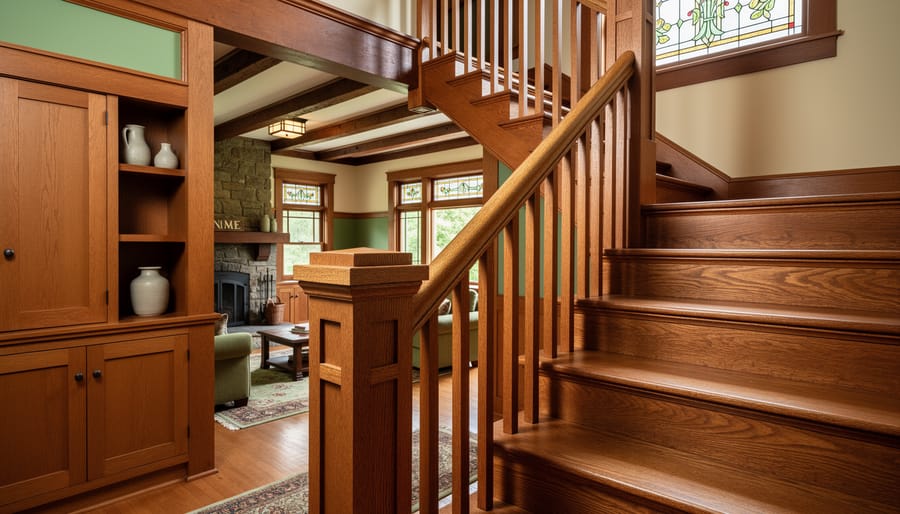
Installing a craftsman-style stair railing can be a rewarding DIY project, but it’s important to honestly assess your skill level before diving in. This isn’t a beginner-friendly project. You’ll need intermediate to advanced carpentry skills, particularly if you’re working with wood joinery and want those characteristic square posts and clean lines that define the craftsman aesthetic.
Required tools include a miter saw, drill with various bits, level, tape measure, wood glue, sandpaper, and finish materials. You’ll also need appropriate fasteners and possibly a router if you’re creating custom profiles. Safety equipment like goggles and gloves is essential.
For confident DIYers, here’s a basic overview of the process:
Start by carefully measuring your staircase and determining the number of posts needed, typically spacing them 4-6 feet apart or per local building codes. Remove your existing railing system completely, ensuring the stair structure beneath is sound.
Install the newel posts first, as these anchor the entire system. They should be plumb and securely fastened to the stair framing. Next, attach the top and bottom railings to these posts, checking that they maintain the proper angle and height (typically 34-38 inches from the stair nosing).
Cut and install your balusters between the top and bottom rails, spacing them no more than 4 inches apart to meet safety codes. This spacing prevents small children from slipping through.
Finally, sand all components thoroughly and apply your chosen finish, whether that’s stain to highlight the wood grain or paint for a more contemporary craftsman look.
When to call a professional? If your stairs are structurally questionable, if local codes seem complex, or if you lack confidence in creating secure connections, hire a licensed contractor. Stair railings are critical safety features, and improper installation can lead to serious injuries. A professional also carries liability insurance and knows local building requirements inside and out.
Buying Your Craftsman Stair Railing: Options and Costs
When you’re ready to purchase your craftsman stair railing, you’ll find several routes to explore, each with different price points and customization levels.
Pre-made kits offer the most budget-friendly option, typically ranging from $200 to $800 for a standard interior staircase. You’ll find these at big box stores like Home Depot and Lowe’s, featuring simplified craftsman designs with tapered balusters and basic newel posts. These kits work well for straightforward staircases and DIYers comfortable with installation.
For more authentic craftsman character, specialty woodworking shops and online retailers like Woodworkers Source or StairSupplies offer higher-quality components. Expect to pay $800 to $2,000 for superior materials and more design options. You can mix and match components to create a semi-custom look without full custom pricing.
Custom builds from local craftsmen or millwork shops deliver the most authentic results, with prices starting around $2,500 and reaching $6,000 or more depending on wood species, design complexity, and staircase length. This route makes sense for period restorations or unique architectural challenges.
Several factors affect your final cost: wood type (oak costs less than quarter-sawn white oak or mahogany), the number of turned or carved details, whether you need matching outdoor stair railings, and installation complexity. Corner landings, curved sections, and non-standard dimensions increase both material and labor expenses. Getting multiple quotes helps you understand your local market and find the best value for your specific project needs.
Craftsman-style stair railings offer a timeless appeal that blends beautifully with both historic homes and modern interiors seeking warmth and character. Their honest construction, natural materials, and attention to detail create a welcoming atmosphere that never goes out of style. As you consider upgrading your staircase, think about whether you want the warmth of wood or the durability of metal, how much maintenance you’re willing to commit to, and whether a DIY approach or professional installation makes sense for your skill level and budget. The beauty of craftsman design lies in its flexibility—you can go full traditional with thick square balusters and rich oak, or adapt the principles to suit a contemporary space with cleaner lines and lighter finishes. Take time to visualize how these elements would complement your existing architecture and lifestyle. Whether you’re restoring a century-old bungalow or adding character to a newer build, craftsman railings provide that perfect balance of functionality and artistry that transforms a simple staircase into a defining feature of your home.