Plant-Based Insulation Could Cut Your Energy Bills in Half (Here’s How)
Plant-based insulation is transforming how homeowners boost energy efficiency while reducing their environmental footprint. Made from materials like hemp, wood fiber, cork, and cellulose, these natural alternatives deliver impressive thermal performance that rivals or exceeds traditional fiberglass and foam options. The best part? You’re not sacrificing comfort or your wallet for sustainability. Modern plant-based insulation products offer R-values comparable to conventional materials, with many options ranging from R-3.5 to R-4 per inch, making them genuinely competitive in real-world applications.
What makes these materials particularly appealing is their practicality for actual installation. Hemp batts install just like fiberglass, cellulose works with standard blown-in equipment, and cork boards cut easily with basic tools. You’ll find options suited for new construction, renovation projects, and even challenging retrofit situations. The upfront cost typically runs 10-30% higher than conventional insulation, but superior moisture management, excellent soundproofing, and potential energy savings often offset that premium within a few years. Whether you’re planning a major renovation or simply looking to improve your home’s performance, understanding these plant-based options gives you practical, proven alternatives that work.
What Makes Plant-Based Insulation Different (And Better)
Plant-based insulation does exactly what the name suggests—it’s made from renewable plant materials instead of synthetic chemicals or mined minerals. Think hemp fiber, recycled newspaper (cellulose), cork bark, wood fiber, and even straw bales. These natural insulation materials have been keeping buildings comfortable for centuries, but modern manufacturing has made them more practical and effective than ever.
So what sets them apart from the pink fiberglass batts or spray foam you might be familiar with? First, the sustainability factor is real. These materials are typically carbon-negative or carbon-neutral, meaning they actually store carbon rather than releasing it during production. They’re also biodegradable at end-of-life, unlike foam insulation that sits in landfills indefinitely.
But here’s what really matters for your home: performance. Hemp insulation offers excellent thermal resistance (R-3.5 to R-4 per inch) while naturally resisting mold and pests without chemical treatments. Cellulose, made from recycled paper, performs similarly to fiberglass (R-3.2 to R-3.8 per inch) but does a better job blocking air infiltration. Cork provides solid insulation (R-3.6 to R-4 per inch) plus superior soundproofing—perfect for noisy urban environments. Wood fiber boards combine insulation with structural support, and they help regulate indoor humidity naturally.
Traditional fiberglass typically rates around R-2.9 to R-3.8 per inch, while spray foam leads the pack at R-6 to R-7 per inch. Plant-based options fall right in that competitive middle range, but they offer something synthetic materials can’t: breathability. They allow moisture to pass through gradually, reducing condensation problems that can plague vapor-barrier systems. This moisture management actually extends the life of your walls and roof structures while maintaining healthier indoor air quality. Plus, installation doesn’t require the same protective gear or ventilation concerns that come with chemical-based alternatives.
The Top Plant-Based Insulation Materials for Your Home
Hemp Insulation: The Fast-Growing Champion
Hemp insulation is gaining serious traction among eco-conscious builders, and for good reason. This material grows incredibly fast—reaching maturity in just 120 days—making it one of the most renewable insulation options available. Hemp fibers are naturally resistant to mold, pests, and fire, so you won’t need chemical treatments that compromise indoor air quality.
When it comes to performance, hemp insulation typically delivers an R-value between 3.5 and 4 per inch, which puts it in the competitive range with fiberglass. It works beautifully in walls, attics, and floors, and it’s particularly excellent at regulating moisture without losing its insulating properties. This breathability helps prevent condensation issues that plague some conventional insulation materials.
Cost-wise, expect to pay $1.50 to $2.50 per square foot—definitely more than fiberglass, but comparable to other premium eco-friendly options. The durability often justifies the investment since hemp insulation can last 50+ years without deteriorating.
Sourcing can be tricky since hemp products are still building market presence in North America. Check specialty green building suppliers, online retailers focused on sustainable construction materials, or inquire at local building supply stores about special orders. Some manufacturers ship directly to consumers, making DIY installation feasible for moderately skilled homeowners.

Cellulose: Your Most Affordable Plant-Based Option
Cellulose insulation deserves serious attention if you’re working with a tight budget. Made primarily from recycled newspaper and treated with non-toxic fire retardants like boric acid, this material typically costs 25-50% less than other plant-based options while delivering solid R-values of 3.2-3.8 per inch.
Installation comes in two main forms: loose-fill blown-in application or damp-spray method. The blown-in approach works great for attics and is genuinely DIY-friendly if you rent the equipment from your local home improvement store. You’ll pay around $50-75 per day for a blower machine. For walls and tight spaces, the damp-spray technique requires professional installation since it involves mixing the cellulose with water and adhesive for better adhesion.
Performance-wise, cellulose settles about 20% over time, so professionals typically account for this by slightly overfilling during installation. It excels at reducing air infiltration thanks to its dense packing, and the boric acid treatment provides excellent resistance to pests, mold, and fire.
The DIY potential here is real, especially for attic projects. With basic safety gear, the rental equipment, and a helper, most homeowners can tackle a standard attic in a weekend, making cellulose an accessible entry point into sustainable insulation.

Cork: Natural Moisture Control Built In
Cork insulation stands out as the premium option in plant-based materials, and there’s good reason for the higher price tag. Harvested from cork oak bark without harming the trees, this material naturally resists moisture, mold, and pests—properties built right into its cellular structure. Each tiny cell acts like a sealed air pocket, creating excellent thermal and acoustic insulation while remaining naturally fire-resistant.
Cork boards and panels work beautifully in basements, bathrooms, and other moisture-prone areas where traditional insulation struggles. You’ll find it particularly effective as underlayment for flooring projects or as exterior wall sheathing. The material also provides superior soundproofing, making it ideal for home theaters or music rooms.
Expect to pay 2-3 times more than fiberglass, but cork delivers decades of maintenance-free performance. It won’t settle, compress, or lose effectiveness over time. For DIY installation, cork boards cut easily with standard tools and don’t require special protective equipment—a nice change from itchy fiberglass. The investment makes sense when you factor in longevity and the elimination of moisture-related issues that plague cheaper alternatives.
Wood Fiber Boards: The Breathable Wall Solution
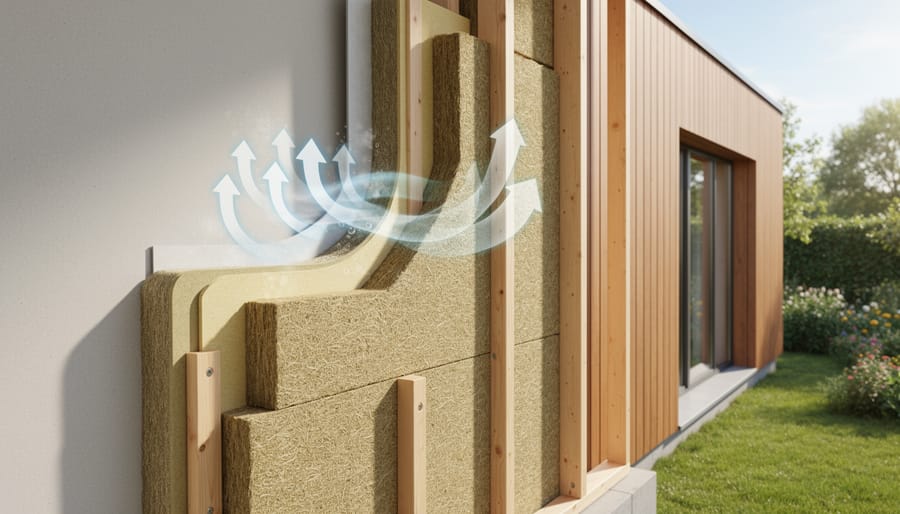
Wood fiber boards bring a unique advantage to the insulation game: they’re breathable. Unlike traditional materials that trap moisture, these compressed panels allow water vapor to pass through while still blocking air infiltration. Think of them as a Gore-Tex jacket for your walls—they keep the weather out while letting your home breathe naturally.
The installation process is refreshingly straightforward, especially for anyone comfortable with basic carpentry. The rigid boards cut easily with a standard circular saw and fit between studs or attach directly to exterior sheathing. You’ll secure them with screws or special fasteners, creating a continuous thermal barrier. Many DIYers appreciate that there’s no itchy fiberglass to deal with and no special protective gear required beyond safety glasses and a dust mask.
These boards truly shine in mixed-humid climates and regions with temperature swings. Their moisture-regulating properties prevent condensation problems that plague vapor barriers in areas like the Pacific Northwest or Mid-Atlantic states. They work exceptionally well in older homes where managing moisture is crucial for structural longevity.
Performance-wise, expect R-values around 3.5-4.0 per inch—solid, though not record-breaking. The real value comes from their density, which provides excellent sound dampening and thermal mass to stabilize indoor temperatures.
Real Performance: How Plant-Based Insulation Stacks Up
Let’s talk numbers. If you’re seriously considering plant-based insulation, you need to know how it actually performs compared to conventional options.
When it comes to thermal performance, plant-based materials hold their own quite well. Cellulose insulation typically delivers R-values between 3.2 and 3.8 per inch, which matches fiberglass pretty closely. Hemp insulation comes in around R-3.5 per inch, while cork delivers approximately R-3.6 to R-4.0 per inch. Cotton insulation? You’re looking at R-3.4 to R-3.7 per inch. These aren’t theoretical numbers—they’re competitive with what you’d get from standard materials, and in some cases, they’re better.
Here’s where things get interesting. Plant-based insulation often outperforms traditional materials in moisture management. Hemp and wood fiber, for example, are breathable and can absorb and release moisture without losing their insulating properties. This characteristic helps prevent mold growth and maintains healthier indoor air quality. Conventional fiberglass, by contrast, can clump and lose effectiveness when wet.
Fire resistance varies among green insulation options. Cellulose is treated with borates, giving it excellent fire resistance and earning Class 1 ratings. Cork naturally resists fire, while cotton requires treatment but still performs well. Hemp typically receives similar fire-retardant treatments.
Pest resistance is another area where plant-based options shine. The same borate treatments that improve fire resistance also deter insects and rodents. Properly treated cellulose and hemp resist pests effectively without toxic chemicals.
As for longevity, quality plant-based insulation can last 20 to 30 years or more when properly installed. That’s comparable to fiberglass and mineral wool, making it a solid long-term investment that won’t need frequent replacement.
The bottom line? Plant-based insulation delivers real performance metrics that match or exceed conventional materials in multiple categories.
The Hidden Benefits Beyond Energy Savings
While everyone talks about energy bills, plant-based insulation delivers some pretty impressive perks that go way beyond your monthly utility statement. Let’s explore what makes these materials stand out from the crowd.
First up is indoor air quality, and this is where plant-based options really shine. Unlike traditional insulation materials that can off-gas volatile organic compounds for years, natural fibers like hemp, cellulose, and sheep’s wool are breathable and help regulate moisture naturally. They don’t trap humidity the way synthetic materials can, which means less risk of mold growth and musty odors. If anyone in your household deals with allergies or respiratory sensitivities, this difference can be genuinely life-changing.
Sound dampening is another hidden gem. The dense, fibrous structure of materials like cork and hemp absorbs sound waves exceptionally well. Homeowners who’ve installed plant-based insulation in shared walls or home offices consistently report noticeable improvements in noise reduction. It’s like getting soundproofing as a bonus feature.
Here’s something most people don’t consider: carbon sequestration. Plant-based materials actually lock away carbon dioxide that was absorbed during the plant’s growth. Installing hemp or wood fiber insulation means your walls are essentially storing carbon rather than releasing it, turning your home into a small-scale carbon sink.
The health benefits extend beyond just air quality too. Many plant-based options are naturally fire-resistant without chemical flame retardants, and they’re free from the itchy fiberglass particles that make traditional insulation installation so unpleasant. For DIY enthusiasts, this means safer handling and installation without specialized protective gear. You’re creating a healthier living environment from the inside out, which is something conventional insulation simply can’t match.
Cost Breakdown: What You’ll Actually Pay
Let’s talk numbers, because eco-friendly choices shouldn’t require you to take out a second mortgage. Plant-based insulation typically costs between $1.50 to $3.00 per square foot installed, compared to $0.50 to $1.50 for traditional fiberglass. Yes, you’ll pay roughly double upfront, but here’s where it gets interesting.
The ROI timeline usually falls between 5 to 10 years, depending on your climate zone and energy costs. In regions with extreme temperatures, homeowners report energy savings of 20-30% annually, which accelerates payback significantly. For a typical 1,500 square foot home, that translates to $300-600 saved per year on heating and cooling bills.
Before you panic about the initial investment, check for incentives. The federal energy efficiency tax credit covers up to 30% of material and installation costs through 2032. Many states and utility companies offer additional rebates ranging from $200 to $2,000. The Database of State Incentives for Renewables and Efficiency website is your best friend here.
Plant-based insulation makes the most financial sense in a few scenarios. New construction projects where you’re already budgeting for insulation, whole-home renovations that qualify for multiple tax credits, and properties in high-energy-cost areas where monthly savings compound quickly. It’s also brilliant for DIY enthusiasts since materials like hemp and cork are easier to handle than fiberglass, potentially saving you thousands in installation fees.
The bottom line? If you’re planning to stay in your home for at least seven years, plant-based insulation pays for itself while improving air quality and comfort. That’s a win worth investing in.
Installation: DIY or Hire a Pro?
Good news for hands-on homeowners: several plant-based insulation options are surprisingly DIY-friendly. Cork boards, hemp batts, and cellulose blow-in are your best bets if you’re comfortable with basic home improvement projects. These materials handle much like traditional fiberglass, though they’re generally more pleasant to work with since they don’t irritate skin or lungs.
For cork board installation, you’ll need a utility knife, adhesive or mechanical fasteners, and a straight edge. Hemp batts fit between standard stud spacing just like fiberglass, requiring only gloves, a sharp knife, and staples. Basic carpentry skills and attention to proper vapor barrier installation are essential for both.
Blown-in cellulose gets trickier. While you can rent the equipment from most home improvement stores, achieving consistent density matters significantly for performance. If you’re tackling an attic, this could be a weekend project. Wall cavities? That’s when professional equipment and experience really pay off.
Definitely call a pro for spray-applied options like hempcrete or mycelium insulation. These require specialized equipment, proper mixing ratios, and training to achieve the right density and coverage. Structural applications always warrant professional installation to ensure building code compliance.
When hiring an installer, ask specifically about their experience with plant-based materials since application techniques differ from conventional insulation. Request references from similar projects and verify they understand moisture management for natural materials. Don’t forget to ask about available rebates and incentives that could offset professional installation costs.
Making the Right Choice for Your Project
Choosing the right plant-based insulation starts with understanding your specific needs and constraints. First, consider your climate zone. If you live in a humid area, hemp and wood fiber excel at moisture management, while cellulose works beautifully in drier climates. For extreme cold regions, prioritize materials with higher R-values per inch like cork or dense-pack cellulose.
Budget plays a crucial role in your decision. Cellulose typically offers the most affordable entry point, especially for attic applications. Cotton batting sits mid-range, while cork and mushroom-based options command premium prices but deliver specialized benefits. Calculate your total project cost including installation—some materials require professional help, while others work perfectly for eco-friendly DIY projects.
Your existing construction matters too. Retrofit projects in older homes often benefit from blown-in cellulose that fills irregular cavities, while new construction allows for batt installation. Renovation scope determines material choice—whole-house projects might justify higher upfront costs for superior performers, while single-room updates favor cost-effective options.
Define your primary goal. For maximum soundproofing, choose dense cotton or hemp batts. Moisture-prone areas like basements need breathable materials such as wood fiber. If achieving the highest R-value matters most, consider layering different materials or selecting cork for thermal mass benefits. Always check local building codes and factor in whether you need vapor barriers or special fire-rated materials for your application.
Plant-based insulation isn’t just a feel-good alternative—it’s a proven performer that holds its own against conventional options while giving you genuine environmental benefits. Whether you choose hemp, wood fiber, cork, or cellulose, you’re investing in materials that regulate moisture naturally, resist mold, and create healthier indoor air quality for your family. The technology has matured significantly over the past decade, meaning you’re not sacrificing R-value or durability for sustainability.
If you’re feeling overwhelmed about where to begin, start small. Pick one project area—maybe that drafty attic or a single room renovation—to test plant-based insulation firsthand. You’ll quickly discover how easy these materials are to work with, especially if you’re tackling a DIY installation. Many homeowners report that handling natural fibers is more pleasant than dealing with fiberglass, and the installation process often feels more intuitive.
The upfront cost might run slightly higher in some cases, but when you factor in energy savings, improved comfort, and the long-term value of sustainable building materials, the investment pays dividends. You’re not just insulating walls—you’re building a more resilient, healthier home that aligns with where construction is heading. Give plant-based insulation a try on your next project.