Metal Etching Transforms Ordinary Decor into Smart Art Pieces
Transform ordinary metal surfaces into stunning beautiful metal art through precision etching techniques that blend traditional craftsmanship with modern technology. Metal etching opens up endless possibilities for creating intricate designs, from delicate botanical patterns to bold geometric statements that catch light and attention. Whether you’re crafting custom jewelry pieces, architectural elements, or statement wall art, this ancient technique has evolved to incorporate digital design tools and smart lighting integration, making it more accessible and versatile than ever before.
The fusion of time-tested etching methods with contemporary design approaches allows artists and DIY enthusiasts to achieve professional-quality results in their home workshops. By mastering the fundamentals of metal preparation, resist application, and controlled chemical exposure, you can create pieces that not only serve as stunning decorative elements but also tell stories through texture and shadow. This transformative process turns simple metal sheets into dynamic, three-dimensional artworks that can enhance any space with their unique interplay of light and pattern.
Metal Etching: Where Art Meets Smart Technology
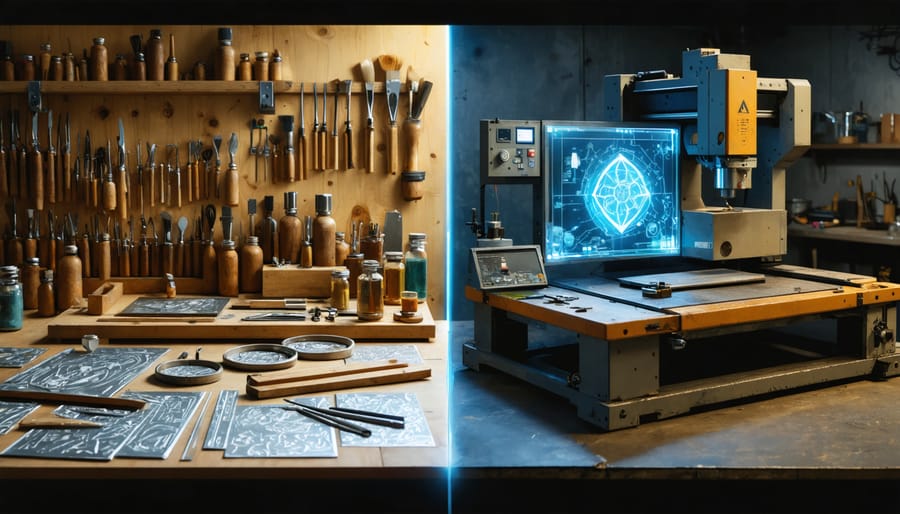
Traditional vs. Digital Etching Methods
Traditional metal etching relies on time-tested chemical processes, where artisans use acid-resistant materials to protect specific areas while allowing acids to eat away at exposed metal surfaces. This hands-on approach offers incredible detail and depth but requires careful handling of chemicals and proper ventilation.
In contrast, modern digital etching methods have revolutionized the craft. Laser etching machines can now precisely carve designs into metal surfaces using concentrated light beams, offering exceptional accuracy and reproducibility. Computer-controlled systems allow for complex patterns that would be challenging to achieve by hand, and they’re much safer to use since they don’t require harsh chemicals.
Both methods have their place in today’s design world. Traditional etching often produces a deeper, more organic feel that many artists prefer for custom pieces. Digital methods excel in consistency and speed, making them ideal for commercial projects or repeated patterns. The choice between the two often depends on the project’s scale, desired aesthetic, and whether you’re prioritizing artisanal charm or precision uniformity.
Smart Design Software and Tools
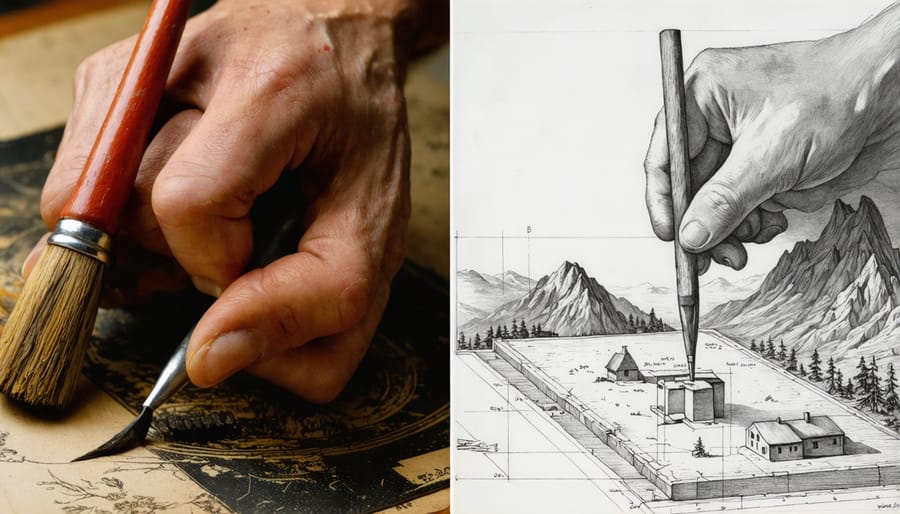
Modern metal etching has evolved beyond traditional hand tools, embracing digital innovation to create stunning tech-enhanced decor. Popular design software like Adobe Illustrator and CorelDRAW now offer specialized tools for creating intricate etching patterns, making it easier for DIY enthusiasts to develop professional-looking designs from home.
Vector-based programs allow you to create precise patterns that can be easily scaled without losing quality. For beginners, user-friendly options like Inkscape provide free alternatives with robust features for metal etching design. These programs come with built-in templates and pattern libraries to help you get started.
Smart cutting machines like Silhouette and Cricut have revolutionized the preparation process, allowing you to create detailed stencils for chemical etching. These devices connect directly to your computer and can accurately cut complex designs onto resist materials.
Mobile apps have also entered the scene, offering pattern generation and design preview features that let you visualize your project before making the first mark. Many of these tools include augmented reality features, helping you see how your etched piece will look in your space.
Popular Metal Etching Designs for Smart Homes
LED-Integrated Etched Panels
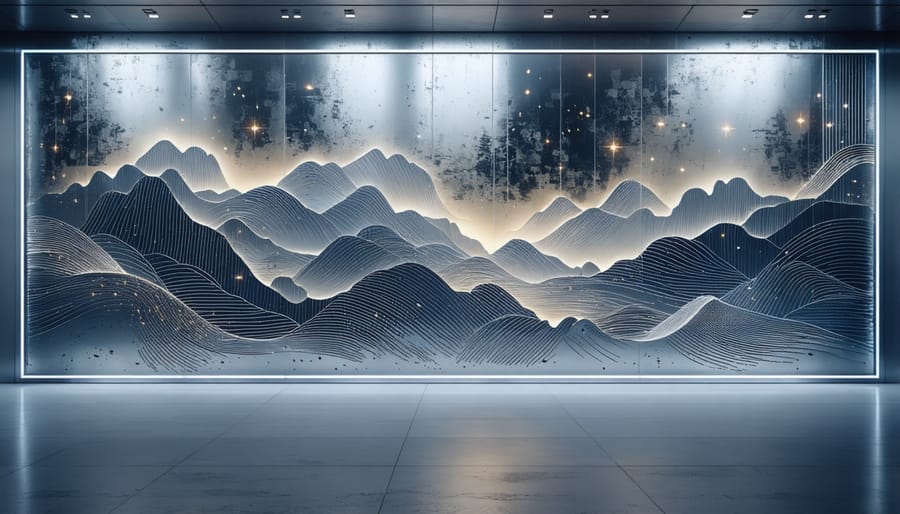
LED-integrated etched metal panels represent the perfect fusion of traditional craftsmanship and modern technology. These innovative pieces combine the timeless beauty of etched metal with strategically placed LED lighting systems, creating stunning visual effects that transform any space from ordinary to extraordinary.
The lighting elements are typically installed behind or within the etched panels, highlighting the intricate patterns and creating depth through shadow play. When the lights are off, you’ll enjoy the classic appeal of etched metal, but when illuminated, these panels come alive with a whole new dimension of visual interest.
Installation options are versatile, ranging from wall-mounted accent pieces to room dividers and even ceiling features. The LED systems can be customized with different color temperatures, from warm white for a cozy ambiance to cool white for a modern feel. Many panels now come with smart home compatibility, allowing you to control brightness and color settings through your smartphone or voice commands.
For maximum impact, consider placing these panels in areas where both natural and artificial lighting can enhance their appearance throughout the day. Popular locations include entryways, living room feature walls, and commercial reception areas. The combination of etched patterns and strategic lighting creates an ever-changing display that serves as both functional lighting and captivating artwork.
Interactive Metal Art Pieces
Metal etching has evolved beyond static designs into captivating interactive art installations that bring spaces to life. Imagine brushing your hand across an etched metal panel to trigger subtle LED lighting effects, or walking past a motion-sensitive piece that changes color based on movement patterns.
Popular examples include copper panels with conductive ink circuits that play musical notes when touched, and aluminum surfaces that reveal hidden patterns through temperature-sensitive pigments. These pieces often incorporate simple sensors and programmable LED strips, making them accessible for DIY enthusiasts with basic electronics knowledge.
One trending design features etched stainless steel panels with embedded touch sensors that control ambient lighting. When guests interact with different areas of the etched pattern, they create unique light shows that transform the room’s atmosphere. Another fascinating application uses motion sensors to activate color-changing elements within geometric etchings, perfect for modern office spaces or home entryways.
For those new to interactive metal art, starting with simple capacitive touch sensors and basic LED responses is recommended. These components can be easily integrated into traditional etched designs, allowing you to experiment with different patterns and responses while maintaining the elegant appearance of classic metal artwork.
DIY Metal Etching Projects
Basic Equipment and Materials
To get started with metal etching, you’ll need several essential tools and materials. First, gather your protective gear: rubber gloves, safety goggles, and a respirator mask for proper ventilation. For the etching process itself, you’ll need etching solution (ferric chloride is commonly used), plastic containers for the solution, and transfer paper or resistant markers to create your designs.
Your metal pieces should be clean, flat sheets of copper, brass, or aluminum – beginners often start with copper as it’s easier to work with. You’ll also need:
– Fine-grit sandpaper (220-400 grit)
– Masking tape
– Cotton swabs or small brushes
– Paper towels
– Clear contact paper or resist
– Sharp craft knife
– Ruler or straight edge
– Baking soda (for neutralizing)
– Cleaning supplies
A well-ventilated workspace is crucial, along with a flat, stable surface to work on. Consider having a timer handy to track etching duration, and keep a spray bottle with water nearby for cleaning. If you’re planning detailed designs, a magnifying glass can be helpful for precise work.
Design Creation Process
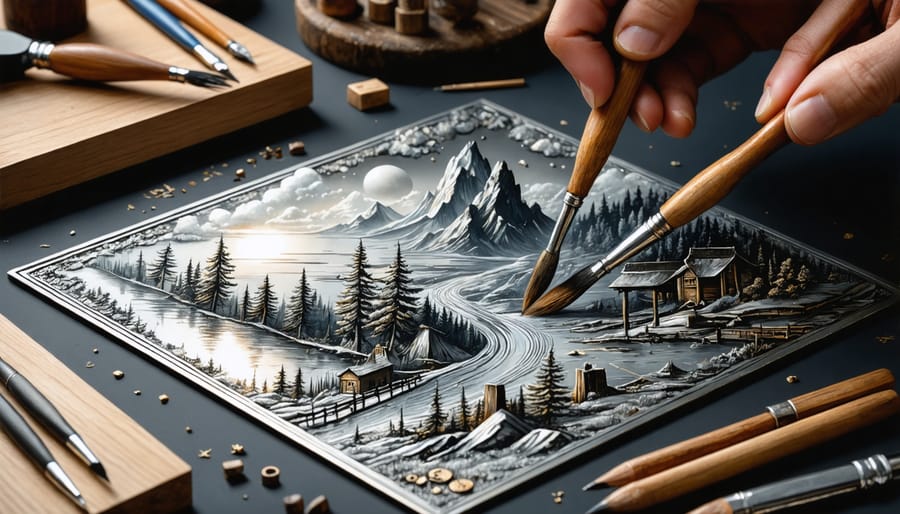
Creating stunning metal etching designs starts with careful planning and preparation. Begin by sketching your design on paper or using digital design software – both methods work well for transferring patterns. If you’re new to this, start with simple geometric patterns or basic nature-inspired motifs before attempting more complex designs.
For digital creation, vector-based software like Adobe Illustrator or free alternatives like Inkscape work best, allowing you to create crisp lines that translate well to precision etching techniques. When designing, remember that fine details and intricate patterns require more skill to execute properly.
To transfer your design onto metal, you’ll need to create a resist pattern. The most common methods include:
– Using transfer paper and permanent marker
– Applying vinyl stencils cut with a craft cutter
– Printing with laser printer transfer paper
– Using photosensitive resist film
Each method has its advantages, but vinyl stencils and photosensitive films typically produce the cleanest lines. For beginners, transfer paper offers a good balance of control and simplicity. Ensure your design is properly sized and positioned before making the transfer, as corrections can be difficult once you begin the etching process.
Remember to mirror your design if it contains text or directional elements – this ensures they’ll appear correctly on the finished piece.
Adding Smart Features
Modern metal etching can go beyond static designs by incorporating smart features that add both functionality and wow factor to your pieces. Consider embedding LED strips behind etched panels for dramatic lighting effects that highlight your design’s intricate details. You can connect these lights to smart home systems for automated control or color-changing capabilities.
For interactive pieces, think about integrating touch-sensitive elements into your etched metal. Conductive paint or copper tape applied to specific areas can create touch points that trigger lights, sounds, or other responses when activated. This works especially well for decorative signage or interactive wall art.
QR codes can be subtly etched into your design, linking to digital content like your portfolio, installation instructions, or even an augmented reality experience. Just ensure the code’s pattern is etched with sufficient contrast and precision to remain scannable.
Remember to plan your tech integration during the design phase. Create dedicated channels or spaces for wiring, and consider how power sources will be concealed while remaining accessible for maintenance. Weather-resistant components are essential for outdoor installations.
Maintenance and Care
Cleaning Tech-Enhanced Etched Surfaces
Keeping your tech-enhanced etched metal surfaces clean requires a delicate balance between preserving the artwork and maintaining the functionality of integrated elements. Start by using a soft, lint-free microfiber cloth to remove dust and fingerprints from the surface. For stubborn marks, lightly dampen the cloth with distilled water – avoid using tap water as minerals can leave residue on the metal.
When cleaning around LED strips or smart sensors, use isopropyl alcohol wipes specifically designed for electronics. Be careful not to let excess moisture seep into connection points or electronic components. For pieces with touch-sensitive areas, apply gentle pressure and avoid harsh scrubbing that could damage the conductive elements.
For regular maintenance, invest in an anti-static duster to prevent dust buildup that could interfere with motion sensors or lighting effects. If your piece includes programmable elements, perform a quick functionality test after each cleaning session to ensure all features are working correctly.
Never use abrasive cleaners, steel wool, or harsh chemicals, as these can damage both the etched design and the integrated technology. For pieces installed in humid areas, consider applying a thin layer of museum-grade protective coating that’s safe for both the metal surface and electronic components, helping to prevent oxidation while maintaining the smart features’ responsiveness.
Troubleshooting Common Issues
Even the most carefully planned metal etching projects can encounter issues, but most common problems have straightforward solutions. If your etched design appears faint or unclear, try increasing the voltage slightly or extending the etching time. For uneven etching results, ensure your metal surface is completely clean and level during the process – any residual oils or tilted positioning can affect the outcome.
When working with LED-integrated designs, flickering lights often indicate loose connections or inadequate power supply. Double-check all wiring connections and verify you’re using the correct voltage for your components. If your smart-enabled etched piece isn’t responding to controls, restart both the piece and your smart home hub, and confirm they’re properly paired.
Rough edges around etched areas typically result from over-etching or using too strong a solution. Reduce either the solution strength or exposure time, and always test on a small area first. For pieces incorporating motion sensors, false triggers can be reduced by adjusting the sensitivity settings and ensuring proper placement away from heat sources or moving objects.
If you notice corrosion developing around electronic components, make sure all connections are properly sealed and consider applying a protective coating. Remember that humidity can affect both the etching process and electronic elements, so maintain appropriate environmental conditions during creation and display.
The marriage of traditional metal etching with modern technology has revolutionized how we approach interior design and decorative elements in our spaces. Today’s tech-enhanced metal etching offers unprecedented precision, customization options, and smart integration possibilities that were unimaginable just a few years ago. From LED-backlit etched panels that create stunning ambient lighting to interactive metal art pieces that respond to touch or movement, the possibilities are truly endless.
The accessibility of digital design tools and automated etching equipment has democratized this art form, making it possible for both professionals and enthusiasts to create sophisticated metal designs. This technological evolution hasn’t just improved the creation process – it’s opened up new possibilities for incorporating these pieces into smart home systems and modern decor schemes.
The benefits are clear: enhanced durability through precise execution, consistent quality across multiple pieces, and the ability to create complex designs that would be challenging to achieve by hand. Moreover, the integration of smart features means these decorative elements can now serve multiple purposes, from mood lighting to interactive art installations.
As we continue to embrace smart home technology and seek unique ways to personalize our spaces, tech-enhanced metal etching stands at the forefront of modern decor solutions, offering the perfect blend of traditional craftsmanship and contemporary innovation. Whether you’re a homeowner looking to add character to your space or a designer seeking cutting-edge decorative elements, modern metal etching provides endless possibilities for creating truly unique and functional art pieces.