How to Choose Luxury Bathroom Accessories: A Brand & Buying Guide
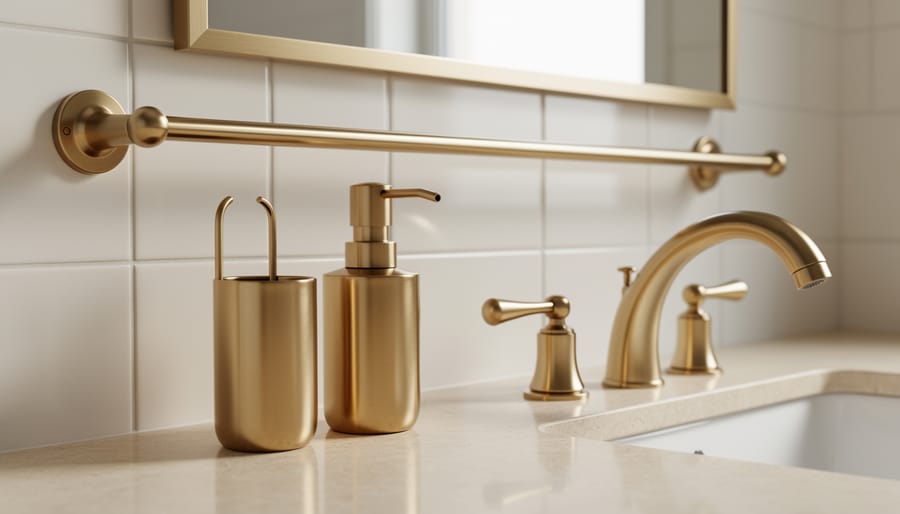
Luxury bathroom accessories brands transform an everyday space into a personal sanctuary, and choosing the right ones means understanding that luxury is defined by exceptional materials, superior craftsmanship, timeless design, and attention to detail that mass-market products simply can’t match. Brands like Waterworks, Lefroy Brooks, Kallista, and Dornbracht consistently deliver hardware and finishes that remain beautiful for decades, not just years.
The difference between a standard towel bar and a luxury piece comes down to solid brass construction versus hollow tubing, hand-applied finishes versus spray coating, and engineering that keeps fixtures tight and aligned over time. You’re investing in pieces that won’t corrode, tarnish, or loosen after a few years of steam and humidity.
For homeowners planning a bathroom refresh in 2026, the luxury accessories market offers more choices than ever. You can find heritage European brands that have perfected their craft over a century, alongside innovative contemporary makers pushing the boundaries of what a soap dispenser or robe hook can be. The challenge isn’t finding options but knowing which brands deliver genuine quality versus inflated price tags riding on marketing alone.
This guide breaks down what actually makes bathroom accessories worth the premium, compares the leading brands across different style categories and price tiers, and walks you through the buying factors that matter most. You’ll learn which mistakes drain budgets without adding real value, and get practical installation tips so your investment looks professionally finished. Whether you’re outfitting a primary suite renovation or selecting pieces for a powder room upgrade, you’ll know exactly what to look for and where to find it.
What Defines a Luxury Bathroom Accessory Brand
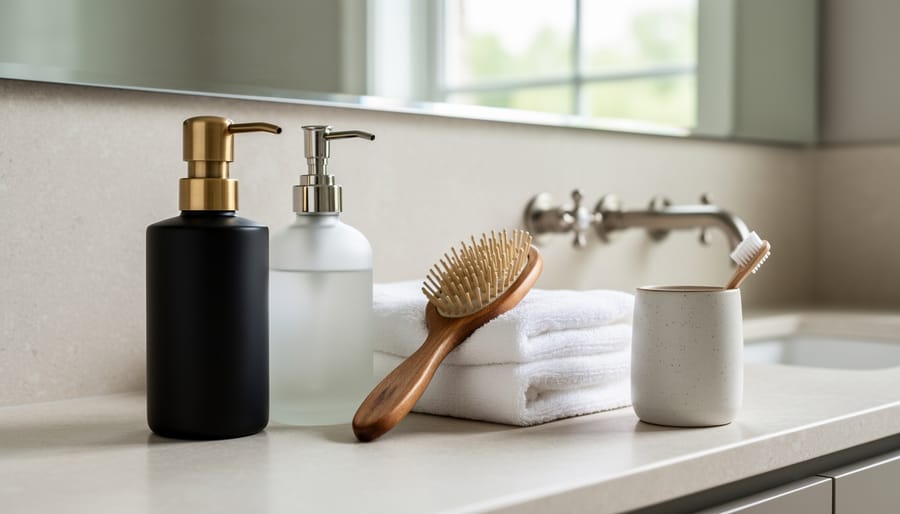
Luxury bathroom accessory brands distinguish themselves through four fundamental pillars that justify their premium pricing and elevate them beyond standard offerings.
The first differentiator is craftsmanship. Luxury brands employ artisans who understand traditional metalworking, glass-blowing, and finishing techniques passed down through generations. Each towel bar, soap dispenser, or robe hook undergoes multiple quality checkpoints rather than mass production shortcuts. You’ll notice the difference in weight, precision joints, and smooth operation, a luxury toilet paper holder has balanced tension and seamless movement, while budget versions feel flimsy and catch.
Material quality separates contenders from pretenders. Premium brands use solid brass (not hollow tubing), genuine marble or travertine (not resin composites), and hand-blown glass rather than molded plastic. The base metal matters because thin zinc alloy corrodes and pits within two years, especially in humid bathrooms. Solid brass construction with proper plating stands up to decades of moisture exposure without degrading. Finishes on luxury pieces involve multiple layers, primer, base coat, top coat, and protective sealant, creating depth and resilience you won’t find on standard chrome-dipped accessories.
Design heritage gives luxury brands recognizable visual signatures. Established manufacturers maintain consistent aesthetic languages across their collections, so your towel bar coordinates perfectly with cabinet pulls, faucets, and lighting from the same line. This design continuity, refined over years or decades, creates bathrooms that feel intentionally curated rather than assembled from mismatched parts.
Finally, warranty support and long-term value set luxury brands apart. While standard accessories come with minimal or no warranties, premium brands back their products with five to ten years of coverage, sometimes lifetime guarantees. This confidence reflects manufacturing quality and positions these pieces as investments. A luxury accessory costing four times more but lasting fifteen years versus replacing cheap versions three times offers genuine value, and retains aesthetic appeal throughout its lifespan rather than looking dated after a bathroom trends cycle.
Essential Factors to Consider When Choosing Luxury Bathroom Accessories
Material Quality and Finish Durability
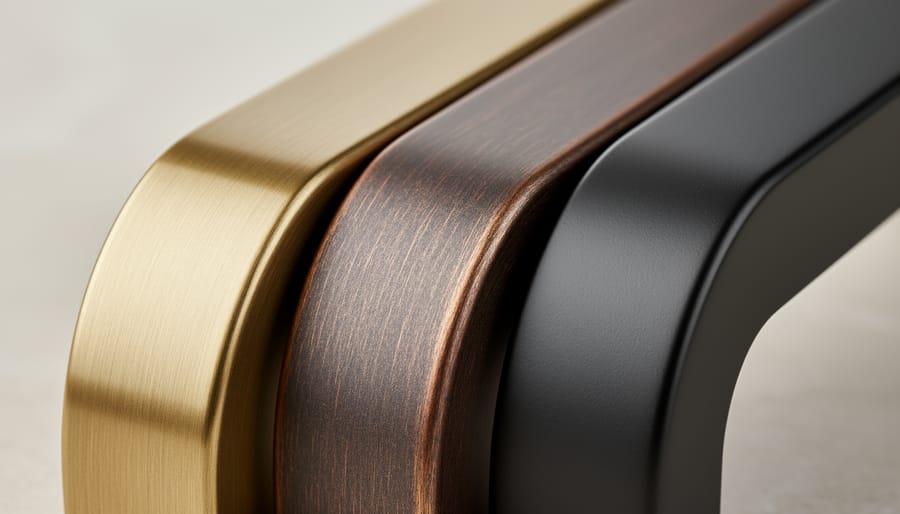
Material choice defines whether your luxury accessories will hold up to daily use or show wear within months. Solid brass remains the gold standard, it’s heavy, corrosion-resistant, and takes finishes beautifully. Stainless steel offers similar durability with rust immunity, making it ideal for humid environments. Natural stone and crystal add sculptural elegance but require careful handling and regular sealing to prevent staining.
The finish you choose matters as much as the base material. Brushed nickel hides fingerprints and water spots better than polished chrome, which requires frequent wiping to maintain its mirror shine. Oil-rubbed bronze develops a living patina that deepens over time, some homeowners love this evolving character, others find it inconsistent. Matte black has surged in popularity for 2026, offering dramatic contrast with minimal upkeep, though lower-quality versions can chip or fade. Gold plating ranges from thin PVD coatings to substantial layering; verify the micron thickness, as anything under 0.2 microns will wear through quickly in high-touch areas.
| Material/Finish | Durability Rating | Maintenance Level | Best Use Case |
|---|---|---|---|
| Solid Brass with Brushed Nickel | Excellent | Low | High-traffic bathrooms, towel bars |
| Stainless Steel (304 grade) | Excellent | Low | Humid spaces, coastal homes |
| Polished Chrome | Very Good | Medium-High | Modern aesthetics, less humid rooms |
| Oil-Rubbed Bronze | Good | Low | Traditional designs, living finish desired |
| Matte Black (PVD) | Very Good | Low | Contemporary spaces, statement pieces |
Always request manufacturer spec sheets listing base material composition and finish warranty terms. A reputable luxury brand will guarantee their finish for at least five years, with many offering lifetime protection against tarnishing, corrosion, or discoloration under normal use.
Design Style and Aesthetic Compatibility
Choosing luxury bathroom accessories isn’t just about quality, it’s about ensuring they complement your existing design scheme. Your accessories should feel like a natural extension of your bathroom’s architectural style rather than an afterthought.
For modern bathrooms, look for brands offering clean lines, geometric shapes, and minimalist profiles in finishes like brushed nickel, matte black, or polished chrome. These spaces work best with accessories that emphasize function through form. Traditional bathrooms demand more ornate detailing: think scrollwork, classical proportions, and warmer finishes like oil-rubbed bronze or polished brass. Transitional spaces blend both worlds, requiring accessories that balance decorative elements with streamlined silhouettes.
If you’re creating a zen bathroom prioritize organic materials like natural stone, bamboo accents, and muted tones. Industrial styles call for exposed hardware, raw metal finishes, and utilitarian shapes that celebrate functionality. Art deco designs shine with glamorous materials, think crystal, polished metals, and bold geometric patterns.
The key to cohesion: select accessories from the same brand collection or match finish families precisely. Even mixing styles works when you maintain consistent metal tones and scale proportions throughout the space.
Functionality and Smart Features
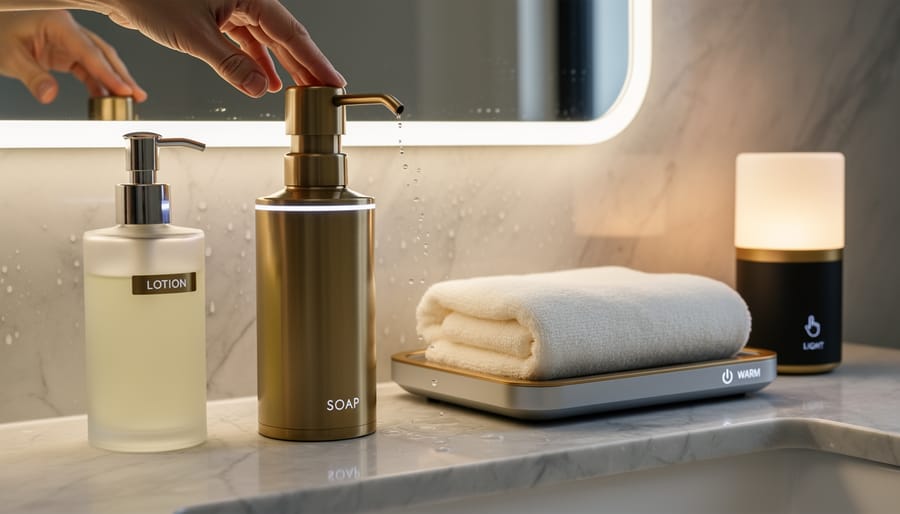
Modern luxury bathroom accessories increasingly incorporate technology that enhances daily routines while maintaining elegant aesthetics. Touchless soap dispensers and faucet sensors reduce cross-contamination and water waste, particularly valuable in household bathrooms shared by multiple people. Heated towel bars now offer programmable timers and precise temperature controls, ensuring warm towels are ready exactly when needed without excessive energy consumption.
LED-lit mirrors have evolved beyond simple illumination. Premium models in 2026 feature adjustable color temperature (warm to cool daylight), built-in defoggers that activate automatically with shower steam, and magnification zones for detailed grooming tasks. Some integrate Bluetooth speakers or voice assistants, though these features add complexity to what should be a straightforward accessory.
Digital controls and app connectivity let you customize settings, monitor energy usage, and coordinate accessories with broader smart home basics. However, consider whether tech features genuinely improve your routine or just add failure points. Smart accessories require firmware updates, occasional troubleshooting, and compatibility checks with your existing systems.
Before investing in tech-enhanced accessories, verify that your bathroom has adequate electrical infrastructure and reliable Wi-Fi coverage. Water-resistant ratings matter significantly. Ask about warranty coverage for electronic components specifically, as these typically fail before the physical hardware.
Budget and Value Proposition
Luxury bathroom accessories span a wide price spectrum. Entry-luxury pieces typically range from $50 to $200 per item, think quality soap dispensers, towel bars, or tissue holders from recognized brands. Mid-luxury accessories cost $200 to $800 and offer superior materials like solid brass construction, hand-applied finishes, or designer collaborations. Ultra-luxury items exceed $800, featuring precious metals, crystal details, or custom fabrication.
Premium pricing is justified when accessories offer tangible durability advantages. A $180 brass towel bar with a lifetime warranty outlasts three $40 replacements over fifteen years, saving money and installation headaches. Superior finishes resist tarnishing and corrosion in humid environments, maintaining their appearance without constant polishing.
Calculate value by dividing cost by expected lifespan. A $400 accessory lasting twenty years costs $20 annually, while a $60 piece replaced every three years costs the same over time but creates more waste and hassle.
Invest most heavily in high-touch items, towel bars, cabinet hardware, faucet accessories, where quality differences are noticeable daily. Decorative pieces like apothecary jars can occupy lower price tiers without compromising your bathroom’s overall luxury feel.
Types of Luxury Bathroom Accessories Compared
Hardware and Fixtures
Luxury hardware and fixtures form the backbone of your bathroom’s accessory collection. Towel bars, robe hooks, toilet paper holders, and grab bars might seem utilitarian, but premium versions transform these necessities into sculptural elements.
What sets luxury hardware apart is solid metal construction, typically brass or stainless steel, rather than hollow tubing or plastic cores hidden beneath plated finishes. You’ll feel the difference immediately in the weight and heft. Standard towel bars might use thin-gauge metals that flex or loosen over time, while luxury options maintain rigid stability even when supporting heavy, wet towels.
Finishes on premium hardware are applied through PVD (Physical Vapor Deposition) or living finishes rather than basic electroplating. This means your brushed nickel or oil-rubbed bronze won’t flake or discolor after a year of use.
High-end brands also engineer concealed mounting systems that hide screws and brackets for clean visual lines. Luxury grab bars, in particular, blend safety with design, no more institutional-looking chrome rails. They’re ADA-compliant but styled to match your towel bars, maintaining aesthetic cohesion while providing necessary support.
Vanity and Counter Accessories
Luxury vanity accessories transform everyday bathroom rituals into elevated experiences through thoughtful design and premium materials. Soap dispensers in high-end collections feature solid brass pumps with ceramic or glass vessels, eliminating the plastic feel of standard options. Toothbrush holders in luxury lines use weighted bases, sealed interiors to prevent water pooling, and antimicrobial finishes that maintain hygiene without constant cleaning.
Tissue box covers in premium materials like lacquered wood, genuine leather, or polished stone conceal mundane packaging while adding sculptural interest to countertops. Vanity trays and containers serve double duty as organization and display pieces, with luxury brands offering hand-blown glass, marble composite, or hammered metal finishes that complement your faucet and hardware.
Most luxury brands design coordinating collections with consistent finishes across all vanity pieces, simplifying the selection process. Look for sets that include matching soap dispensers, toothbrush holders, cotton jar, and tray in unified finishes like brushed gold, matte black, or polished nickel. This coordination creates visual harmony without requiring perfect matching across multiple brands, though mixing complementary textures within the same finish family can add depth to your vanity presentation.
Textile and Soft Goods
Luxury textiles elevate a bathroom from functional to spa-like. Premium towels distinguish themselves through fabric density and construction, look for Egyptian cotton with long-staple fibers (typically 600-900 GSM) or Turkish cotton known for its absorbency and quick-drying properties. Thread count matters less than fiber quality; a 400-thread-count Egyptian cotton towel often outperforms an 800-count inferior variety.
Bamboo textiles offer antimicrobial properties and environmental benefits, though they feel different from traditional cotton, softer and more silky than plush. High-end brands often pre-wash their towels multiple times to maximize absorbency and prevent shedding, a process that adds cost but improves performance from day one.
Bath mats in luxury ranges feature memory foam cores, non-slip backing that won’t damage heated floors, and quick-dry materials that resist mildew. Shower curtains move beyond vinyl to linen, organic cotton, or water-resistant wool blends with weighted hems and rust-proof grommets.
Luxury robes prioritize weight appropriate to climate, heavyweight terry for cooler bathrooms, lightweight waffle weave for warmth. Look for reinforced stitching at stress points, generous sizing, and deep pockets. Coordinating your textile finishes (all matte or all sheen) creates visual cohesion more effectively than matching exact colors.
Lighting and Mirrors
Lighting transforms a luxury bathroom from purely functional to spa-like. Vanity lighting is critical, position sconces on either side of the mirror at eye level rather than overhead to eliminate shadows on your face. LED technology dominates premium fixtures in 2026, offering tunable color temperatures from warm 2700K (relaxing, amber-toned) to bright 5000K (task-focused, daylight). Quality brands integrate CRI ratings above 90 for accurate color rendering when applying makeup or grooming.
Illuminated mirrors with built-in LED strips provide even, shadow-free lighting and often include anti-fog heating elements that activate with a touch sensor. Magnifying mirrors, typically 5x or 10x, are essential for detailed tasks; choose wall-mounted swing-arm models with dual-sided options. When selecting decorative lighting like statement sconces or pendant fixtures, ensure they’re rated for damp or wet bathroom environments and complement your finish palette rather than competing with it.
Storage and Organization
Luxury storage pieces transform clutter into curated displays. Premium ladder racks in brushed brass or walnut wood lean elegantly against walls while holding rolled towels. Woven storage baskets crafted from hand-finished rattan or leather-wrapped wire keep toiletries organized beneath vanities. Glass apothecary jars with polished metal lids showcase cotton swabs and bath salts as decorative elements rather than hiding them away.
The best luxury storage blends smart storage solutions with visual appeal. Floating shelves in marble or solid wood provide functional surface space while serving as design statements. Wall-mounted towel towers in coordinating finishes maximize vertical space without requiring floor clearance. Choose pieces that match your fixture finish and maintain open sightlines rather than overwhelming smaller bathrooms with bulky cabinets.
Top Luxury Bathroom Accessory Brands for 2026
Heritage Luxury Brands
Heritage luxury brands have earned their reputations through decades, sometimes over a century, of consistent quality and design integrity. These manufacturers built their names when craftsmanship mattered more than production speed, and they’ve maintained those standards even as manufacturing has evolved.
Brands like Waterworks, founded in 1978, exemplify American heritage luxury with museum-quality pieces that reference classical European design while incorporating modern engineering. Their solid brass construction and hand-applied finishes develop a natural patina over time, adding character rather than showing wear. Expect accessories starting around $150 for simple towel bars, climbing to $800+ for elaborate multi-arm fixtures.
British heritage names including Samuel Heath have been manufacturing bathroom fittings since the 1820s. Their Fairfield collection remains unchanged since its 1991 debut, reflecting timeless proportions that work in both period homes and contemporary settings. The investment is significant, a complete accessory package often exceeds $2,000, but these pieces routinely outlast the bathrooms they’re installed in.
German manufacturer Dornbracht, established in 1950, bridges heritage and innovation. Their architectural approach to bathroom design yields accessories that feel substantial without being ornate. Finishes like platinum matte and dark bronze offer alternatives to standard chrome, yet remain classic enough to avoid dating quickly.
Contemporary Design-Forward Brands
Contemporary design-forward brands reimagine bathroom accessories as functional art pieces, stripping away ornamentation in favor of clean lines, unexpected materials, and architectural precision. These manufacturers typically emerged in the past two decades and prioritize innovative engineering alongside visual minimalism.
Boffi exemplifies Italian modernism with accessories that feel like sculptural installations. Their wall-mounted systems use concealed mounting hardware and geometric forms in brushed stainless steel or matte lacquered finishes. Prices start around $400 for basic towel bars, with complete collections reaching $3,000+.
Norm Architects’ collaboration lines with brands like Menu bring Scandinavian restraint to bathroom hardware. Expect powder-coated steel in charcoal and sage, with modular components that let you build custom configurations. Mid-range pricing makes them accessible ($150, $600 per piece).
Waterworks Studio Collection bridges traditional craftsmanship with contemporary silhouettes, square profiles, linear geometry, and industrial-inspired materials like blackened steel and raw brass that develop natural patina. Their approach suits transitional spaces where modern meets organic.
Gessi pushes technical boundaries with color-changing LED faucets and accessories, plus their signature “Private Wellness” line featuring chromotherapy lighting integrated into mirrors and shelving. Technology integration without sacrificing refined aesthetics defines their edge.
These brands reward buyers who value design innovation over heritage prestige.
Specialty and Artisan Brands
Specialty and artisan brands occupy a unique space in the luxury bathroom market, appealing to homeowners who want truly distinctive pieces that tell a story. These boutique manufacturers typically produce accessories in small batches or made-to-order, often using traditional craftsmanship techniques passed down through generations. You’ll find hand-forged metal hardware, hand-blown glass soap dispensers, and hand-turned wooden accessories that showcase the maker’s individual skill.
What sets these brands apart is customization potential. Many artisan manufacturers will adjust dimensions, finishes, or design elements to match your specific vision. Want your towel bar two inches longer than standard? Looking for a custom patina on brass fixtures? These makers accommodate requests that mass producers can’t.
Limited availability defines this tier. Production runs might number in the dozens rather than thousands, making each piece somewhat exclusive. You won’t find identical accessories in your neighbor’s bathroom. Expect lead times of four to twelve weeks for custom orders, as these items are crafted on demand rather than stocked in warehouses.
Pricing reflects the labor-intensive process. A handmade soap dispenser might cost $300 to $800 versus $150 for a comparable mass-produced luxury item. You’re paying for uniqueness, superior craftsmanship, and often supporting small businesses or individual artisans. These pieces work beautifully as statement items mixed with more accessible luxury brands throughout your bathroom.
Common Mistakes to Avoid When Buying Luxury Bathroom Accessories
Prioritizing Aesthetics Over Functionality
A stunning brass soap dispenser that’s too heavy to pump with one hand becomes a daily frustration. An elegant towel bar mounted at shoulder height for visual balance forces you to reach awkwardly every morning. These scenarios play out constantly when buyers chase Instagram-worthy bathrooms without testing how accessories perform in real use.
Before purchasing that sculptural toilet paper holder, ask yourself: Can you actually replace the roll easily? Does that minimalist towel hook hold your bath towel securely, or will it slide off? One homeowner spent $800 on an artistic wall-mounted tissue box that required removing the entire fixture to refill, beautiful in photos, maddening in practice.
Test functionality first. Can you operate the accessory when your hands are wet or soapy? Does the design create cleaning challenges with hard-to-reach crevices? Will it accommodate your actual bathroom habits, not just look good unused?
Ignoring Installation and Maintenance Requirements
Luxury finishes often come with installation requirements that catch buyers off guard. That stunning oil-rubbed bronze towel bar might need specialized wall anchors rated for its weight, standard drywall anchors won’t cut it. Heated towel racks require electrical work, which means hiring a licensed electrician and potentially opening walls.
Maintenance costs add up too. Polished brass needs regular buffing with specific non-abrasive cleaners. Matte black finishes show water spots instantly and can’t handle harsh chemicals without degrading. Natural stone accessories require periodic sealing to prevent staining. Some brands specify proprietary cleaning products that cost $20, $40 per bottle. Before buying, ask what installation the piece requires and what cleaning regimen you’ll need to maintain it. A $400 accessory that demands $200 in professional installation plus ongoing specialized care isn’t the same value as one you can mount yourself and wipe clean with standard bathroom cleaner.
Mixing Too Many Finishes or Brands
Coordinating finishes creates visual harmony, but you don’t need everything identical. The sweet spot is two to three finishes maximum throughout your bathroom. Pair brushed nickel faucets with matching towel bars and toilet paper holders, then introduce matte black accents through mirror frames or lighting. This feels intentional.
Mixing four or more finishes, chrome here, brass there, nickel elsewhere, reads as indecision rather than design choice. Similarly, combining multiple luxury brands is fine if they share a design philosophy, but clashing aesthetics (ornate traditional hardware beside stark minimalist accessories) creates visual noise.
The rule: finishes should complement your fixtures and tile, while brands should share a cohesive style language, even if not identical.
Skipping Measurements and Spatial Planning
Even luxury accessories become design mistakes when they don’t fit your space. A stunning oversized towel bar that blocks your door swing or a beautiful soap dispenser positioned where you can’t comfortably reach it wastes money and frustrates daily use.
Before purchasing, measure your available wall space and note existing fixtures, outlets, and door clearances. Standard towel bars need 24-30 inches of wall space, while single hooks require only 3-4 inches. Toilet paper holders should sit 8-12 inches from the toilet bowl’s front edge. Vanity accessories need adequate counter depth, typically 4-6 inches, to avoid crowding sinks or falling into basins.
Photograph your bathroom walls and mark dimensions on the images. Bring these measurements when shopping, or create a scale drawing. This prevents buying a 36-inch towel ladder that won’t fit your 32-inch wall or mounting towel rings where they’ll hit cabinet doors. Proportional sizing matters too: petite accessories look lost in spacious master baths, while oversized pieces overwhelm powder rooms.
DIY Installation Tips for Luxury Bathroom Accessories
Essential Tools and Materials
Before drilling into tile or mounting luxury accessories, gather everything you need to protect your investment. Start with the basics: a quality drill with both standard and masonry bits (for tile or stone walls), a level, measuring tape, and a pencil for marking. You’ll want a stud finder if mounting to drywall, plus anchors rated for your accessory’s weight.
For delicate finishes, protection matters as much as installation. Grab painter’s tape or masking tape to protect surrounding surfaces, and keep soft cloths handy to prevent scratching during handling. A rubber mallet helps seat wall anchors without marring finishes. Include a small container of touch-up paint matching your wall color, and silicone-based lubricant for any moving parts.
Most luxury accessories include proprietary mounting hardware, but have backup screws and anchors in various sizes available just in case.
When Professional Installation Is Worth It
While luxury accessories elevate your bathroom’s style, certain installations demand professional expertise to protect both your investment and your space. Heavy items like marble shelving or substantial towel warmers require precise anchoring into wall studs or blocking, improper installation can cause catastrophic failure and damage expensive surfaces. If your accessories need tile or stone drilling, hire a pro with proper diamond bits and technique; one cracked tile can cascade into a costly repair that exceeds installation fees.
Any electrical work beyond replacing an existing fixture warrants a licensed electrician, especially for hardwired vanity lighting, heated mirrors, or integrated outlets that must meet code. Similarly, plumbing connections for wall-mounted soap dispensers, bidet attachments, or water-fed towel warmers involve shut-off valves and potential leaks, not worth the risk when a plumber ensures watertight installation with proper sealing.
Creating a Cohesive Luxury Bathroom Collection
Building a cohesive luxury bathroom collection requires strategic planning and restraint. Rather than purchasing random pieces as they catch your eye, successful collections follow a deliberate approach that balances visual harmony with practical needs.
Start by selecting your core finish and material palette. Choose one primary finish (brushed nickel, matte black, polished chrome) and commit to it for all metal elements. You can introduce a second finish as an accent, perhaps gold hardware on a primarily chrome bathroom, but limit yourself to two finishes maximum. Trying to incorporate three or more creates visual chaos that undermines the luxury aesthetic you’re investing in.
Next, identify your must-have pieces before branching into decorative elements. A complete luxury bathroom collection typically includes:
- Towel bar and hand towel ring for primary vanity area
- Toilet paper holder and spare roll storage
- Robe hooks or towel hooks for convenient access
- Soap dispenser and toothbrush holder for counter organization
- Tissue box cover for visual continuity
- Wastebasket that coordinates with other accessories
- Tray or organizer for corralling smaller items
- Luxury towels and bath mat in complementary colors
- Illuminated or decorative mirror appropriate to space size
- Storage solutions like ladder racks or floating shelves
- Decorative elements such as apothecary jars or sculptural objects
When purchasing over time, acquire the functional essentials first, towel bars, toilet paper holders, basic storage, then add decorative luxury pieces as budget allows. Take product photos or keep finish samples with you when shopping to ensure new additions match your established palette.
Consider buying from a single brand’s collection when possible. Most luxury manufacturers design coordinating lines with consistent proportions, mounting styles, and finish treatments that create instant cohesion. If mixing brands, look for similar design philosophies, pair minimalist with minimalist, ornate with ornate, rather than combining conflicting aesthetic approaches that fight for attention in your space.
Frequently Asked Questions
Are luxury bathroom accessories really worth the premium price? This question tops the list for homeowners considering the upgrade from standard fixtures. The answer depends on your priorities: if you value superior materials that resist corrosion and tarnishing, finishes that maintain their appearance for decades rather than years, and design details that elevate your daily routine, then yes. Quality luxury accessories typically last 15-20 years with proper care, compared to 5-7 years for budget alternatives. Factor in the cost per year of use, and the investment often makes more financial sense than replacing cheaper items repeatedly.
Can I mix luxury accessories with standard bathroom fixtures?
Yes, but do it strategically. Focus luxury spending on highly visible items like towel bars, faucet hardware, and mirrors, while using quality standard pieces for less prominent storage or behind-the-door hooks. Keep finishes consistent even when mixing price points.
Do luxury bathroom accessories increase home resale value?
High-end accessories contribute to an overall impression of quality but rarely recoup their full cost at resale. They work best as part of a complete bathroom renovation, where premium details support a higher asking price for the entire space.
How should I clean and maintain luxury finishes?
Use only mild soap and water with a soft microfiber cloth for daily cleaning. Avoid abrasive cleaners, ammonia, bleach, or anything acidic, which can damage protective coatings on brass, bronze, or specialty finishes. Dry accessories after cleaning to prevent water spots.
What’s the warranty coverage on luxury bathroom accessories?
Reputable luxury brands typically offer lifetime limited warranties on finish and mechanical components, though terms vary. Always register your products and keep installation receipts, as some warranties require professional installation to remain valid.
Another frequent concern involves whether luxury accessories require special installation. Most premium towel bars, hooks, and hardware install the same way as standard versions, using basic tools and wall anchors. However, heavier items like substantial mirrors or stone shelving may need professional mounting to prevent damage to both your walls and the expensive accessory itself. The weight and value justify the modest installation cost.
Matching finishes across different luxury brands also puzzles buyers. While “brushed nickel” or “matte black” sounds standardized, slight variations exist between manufacturers. Request physical samples when possible, or purchase your entire accessory suite from one brand’s coordinated collection to guarantee perfect matches.
Investing in luxury bathroom accessories transforms an everyday space into a personal retreat while delivering lasting value that justifies the initial cost. The best choices balance aesthetic appeal with practical performance, ensuring your beautiful towel bar or elegant soap dispenser functions flawlessly for years to come.
Your decision should rest on material quality, finish durability, and how well each piece fits your lifestyle and design vision. Don’t overlook functionality in pursuit of beauty, the most successful luxury bathroom collections serve daily needs while elevating the room’s atmosphere. Consider installation requirements and maintenance commitments before purchasing, and remember that cohesive collections create more visual impact than random high-end pieces scattered throughout the space.
Whether you’re drawn to heritage brands with proven craftsmanship or contemporary designers pushing boundaries, choose accessories that reflect your personal style and meet your practical demands. The right luxury bathroom accessories deliver satisfaction every time you use them, making them one of the most rewarding home investments you can make.