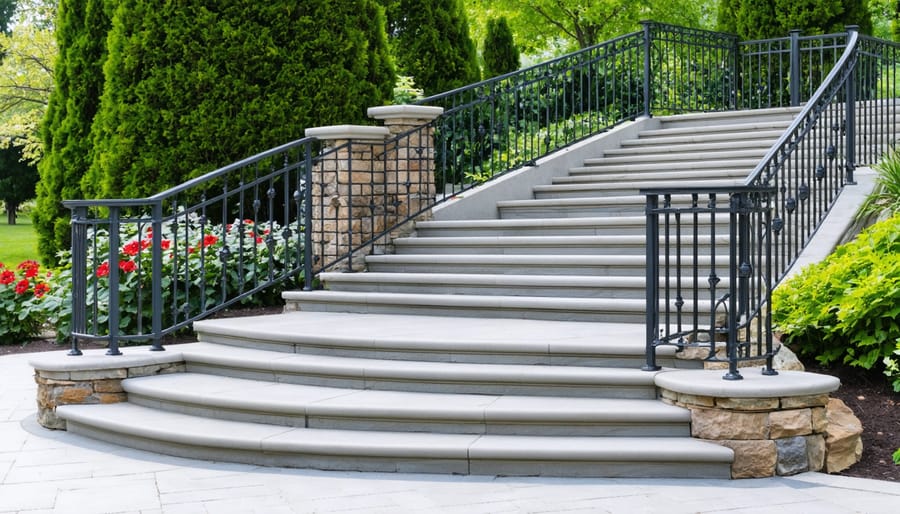
Beautiful Outdoor Stair Railings That Make Your Steps Safe and Stylish
Transform your outdoor steps from a basic necessity into an architectural statement with railings that blend safety with style. Modern outdoor stair railings combine robust materials like powder-coated aluminum, weather-resistant steel, and maintenance-free composites with design elements that complement your home’s exterior. Beyond their crucial safety role, these railings define traffic patterns, create visual anchors, and enhance property value through both function and aesthetics.
Whether you’re replacing dated railings or installing new ones, today’s options range from sleek cable systems that maximize views to traditional wrought iron designs that add timeless elegance. Advanced mounting systems and modular components now make installation more straightforward while ensuring code compliance and long-term stability. Choose materials and designs that not only meet local building requirements but also withstand your climate’s specific challenges while elevating your home’s curb appeal.
Popular Materials for Outdoor Stair Railings
Metal Railings: Wrought Iron and Aluminum
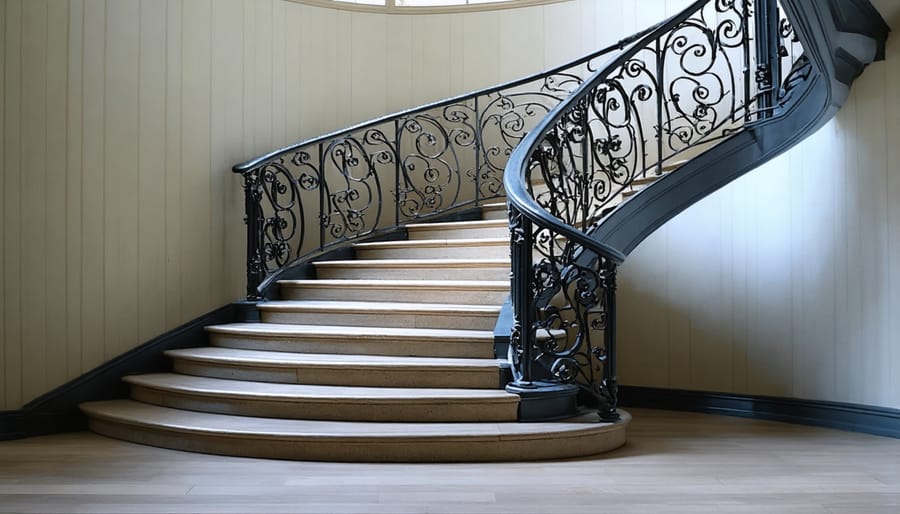
Metal railings offer the perfect blend of durability and style for outdoor stairs. Wrought iron railings bring a timeless, elegant appearance and exceptional strength that can last for generations with proper care. Their customizable nature allows for intricate designs, from classic scrollwork to modern geometric patterns, making them suitable for any architectural style.
Aluminum railings provide a more contemporary alternative, offering excellent weather resistance without the maintenance demands of wrought iron. They’re naturally rust-resistant and significantly lighter, making them easier to install. While they may not match wrought iron’s ornate potential, modern aluminum railings come in various powder-coated finishes and designs that can complement any home’s exterior.
Both materials require different maintenance approaches. Wrought iron needs regular inspection for rust and periodic repainting to maintain its protective coating. Aluminum, however, typically only needs occasional cleaning with soap and water to keep its appearance fresh. For coastal areas or regions with harsh weather, aluminum’s corrosion resistance makes it particularly appealing, while wrought iron’s heavyweight construction might be preferable in areas with strong winds.
Wood Railings: Traditional and Timeless
Wood railings remain a favorite choice for outdoor steps, offering timeless appeal and natural beauty that complements any architectural style. Cedar, redwood, and pressure-treated pine are popular options, each bringing unique characteristics to your exterior design. Cedar and redwood naturally resist decay and insects, while pressure-treated pine offers excellent durability at a more budget-friendly price point.
To protect your wood railings from the elements, proper treatment is essential. A high-quality exterior sealant or stain should be applied initially and reapplied every 2-3 years. This maintenance routine not only preserves the wood but also enhances its natural grain patterns and color.
Design possibilities with wood are virtually limitless. Traditional turned balusters create a classic look, while clean-lined posts and horizontal cables offer contemporary appeal. Custom carved details, decorative post caps, and mixed material combinations with metal or glass can elevate your railing’s design. For added functionality, consider incorporating built-in lighting or planter boxes.
Modern wood preservation techniques have made wooden railings more durable than ever, allowing homeowners to enjoy their natural warmth and character for many years to come.
Glass and Cable Railings: Modern Solutions
Glass and cable railings bring a sleek, contemporary look to outdoor spaces while maintaining essential safety features. Glass panels offer unobstructed views of your landscape and create an elegant, floating appearance that works particularly well with modern architecture. These panels can be frameless or housed in metal frames, depending on your preference and local building codes.
Stainless steel cable railings provide a minimalist alternative that’s both durable and low-maintenance. Horizontal or vertical cables run between posts, creating an almost invisible barrier that’s perfect for deck spaces and outdoor stairs. Both options allow maximum light transmission and can make smaller spaces feel more open and airy. While these modern solutions typically cost more than traditional railings, they offer excellent longevity and can significantly boost your property’s curb appeal.
Design Styles That Enhance Your Home’s Architecture
Classical and Traditional Designs
Classical outdoor stair railings draw inspiration from architectural periods like Victorian, Colonial, and Mediterranean styles, offering elegant stair railing design ideas that never go out of fashion. These designs often feature decorative balusters with intricate scrollwork, sweeping curves, and sophisticated patterns that add character to your home’s exterior.
Popular traditional elements include fluted posts, ball finials, and geometric designs that create visual interest while maintaining structural integrity. These timeless design elements work particularly well with brick, stone, or classic colonial-style homes.
Wrought iron remains a favorite material for classical railings, offering durability and the ability to be crafted into elaborate designs. For a more understated traditional look, wooden railings with turned balusters and carved newel posts provide warmth and sophistication. Many homeowners choose to paint these railings in classic colors like black, white, or deep green to complement their home’s exterior while maintaining the historical aesthetic.
Contemporary and Minimalist Options
Modern homeowners are increasingly gravitating toward clean lines and minimalist designs for their outdoor stair railings. Cable railings lead this contemporary trend, featuring thin stainless steel cables running horizontally between posts, creating an almost invisible barrier that maintains clear sightlines through your outdoor space. These sleek systems pair beautifully with both metal and wooden posts, offering a perfect blend of modern aesthetics and safety.
Glass panel railings represent another striking minimalist option, using tempered glass panels to create an unobstructed view while providing full protection. These systems are particularly popular for elevated decks and patios where preserving the view is paramount.
For those seeking an industrial-modern look, slim-profile aluminum or steel railings with clean geometric patterns make a bold statement. Many contemporary designs feature hidden fasteners and mounting hardware, contributing to their streamlined appearance. LED lighting can be seamlessly integrated into these modern systems, adding both functionality and ambiance to your outdoor space.
Consider powder-coated metal railings in matte black or charcoal gray for a sophisticated touch that complements any architectural style while requiring minimal maintenance.

Transitional and Mixed-Material Styles
Modern outdoor stair railings are breaking traditional design boundaries by combining multiple materials to create unique and eye-catching installations. Popular combinations include wood and metal, glass and stainless steel, or cable wire with wooden posts. These mixed-material designs offer both visual interest and practical benefits, allowing homeowners to maximize the advantages of each material.
A classic transitional approach pairs wooden handrails with metal balusters, offering the warmth of natural wood with the durability of powder-coated steel or aluminum. This combination works particularly well in craftsman-style homes or properties that blend traditional and contemporary elements.
Glass panels set in metal frames represent another stunning mixed-material option, providing unobstructed views while maintaining safety. These installations often feature brushed stainless steel hardware that complements the modern aesthetic while ensuring sturdy support.
For a more industrial look, combining raw steel with reclaimed wood creates a rustic-modern fusion that’s particularly striking. Cable wire systems with wooden posts and top rails offer a similar contemporary feel while maintaining a connection to natural materials.
When planning a mixed-material railing, consider how different elements weather together and ensure all materials are compatible for outdoor use. It’s also important to verify that your chosen combination meets local building codes, as some material pairings may require specific installation methods or additional support structures.
Practical Considerations for Outdoor Railings
Safety Requirements and Building Codes
When it comes to outdoor stair railings, safety isn’t just a suggestion – it’s the law. Most building codes require railings for any stairs with four or more risers, and the requirements are pretty specific. The standard height for exterior railings should be between 34 and 38 inches, measured from the front edge of the stair tread to the top of the railing.
The spacing between balusters (those vertical posts) is crucial – they shouldn’t allow a 4-inch sphere to pass through. This requirement helps prevent small children from getting stuck or falling through. For residential properties, your handrail should be between 1¼ to 2 inches in diameter to ensure a proper grip.
Don’t forget about proper anchoring! Railings must withstand a minimum force of 200 pounds in any direction, which means secure mounting to your house or deck structure is essential. For commercial properties, the requirements are even stricter, typically requiring a 42-inch minimum height and additional mid-rails.
Local building codes can vary, so it’s worth checking with your municipality before starting your project. Many areas have specific requirements for things like weather resistance and slip protection, especially in regions with harsh winters. Some jurisdictions also require permits for railing installation or replacement, so doing your homework upfront can save you headaches later.
Remember, while style is important, safety requirements should guide your design choices. The good news is that modern railing systems are designed to meet these requirements while still looking great.

Weather Resistance and Maintenance
Outdoor stair railings face constant exposure to the elements, making weather resistance and proper maintenance crucial for their longevity. Different materials respond uniquely to environmental challenges – while aluminum and vinyl require minimal upkeep, wood and iron demand more attention to maintain their appearance and structural integrity.
For wooden railings, apply a weather-resistant sealant annually to prevent rot and water damage. Clean the surface thoroughly with a mild detergent solution before reapplication, and inspect regularly for signs of splintering or decay. Metal railings benefit from periodic cleaning with appropriate cleaners to prevent rust and corrosion, especially in coastal areas where salt air can accelerate deterioration.
Vinyl and composite railings are virtually maintenance-free, typically requiring only occasional cleaning with soap and water to maintain their appearance. However, check mounting brackets and fasteners regularly, as these components can loosen over time due to temperature fluctuations and regular use.
In regions with harsh winters, consider installing removable railing covers for added protection. Inspect all railings thoroughly each spring for any damage from freeze-thaw cycles or snow removal activities. Address any loose components, rust spots, or deteriorating finishes promptly to prevent more extensive damage.
Remember that proper drainage around stair areas helps prevent water accumulation, which can compromise railing stability over time. Installing railings slightly above ground level and ensuring proper water runoff can significantly extend their lifespan.
Installation Considerations
Proper installation of outdoor stair railings requires careful attention to several key factors to ensure safety and longevity. First, check your local building codes, which typically specify required heights (usually 34-38 inches), spacing between balusters (maximum 4 inches), and load-bearing requirements. Understanding these stair rail components and regulations is crucial before beginning installation.
Consider your climate when planning attachment points. In regions with freeze-thaw cycles, posts should be anchored below the frost line to prevent shifting. For concrete steps, use expanding masonry anchors or through-bolts for secure mounting. Wooden steps require proper blocking and reinforcement behind mounting locations.
Ensure proper spacing of support posts, typically every 4-6 feet depending on railing material and local codes. Leave adequate clearance (1.5 inches minimum) between the railing and wall for proper gripping. Apply appropriate weather-resistant finishes and sealants to protect against moisture damage.
Professional installation is recommended for complex configurations or when working with challenging materials like wrought iron. If pursuing DIY installation, use a level consistently, pre-drill holes to prevent splitting, and consider using mounting brackets designed specifically for your railing material. Remember to account for proper drainage to prevent water accumulation around mounting points.
DIY vs Professional Installation
The decision between DIY installation and hiring a professional largely depends on your experience level, available time, and the complexity of your project. For simple, straight runs with pre-made components, a DIY approach can save you significant money and provide a sense of accomplishment. However, complex designs, curved railings, or installations requiring concrete work often warrant professional expertise.
If you’re considering the DIY route, ensure you have the necessary tools, including a power drill, level, measuring tape, and appropriate safety equipment. You’ll also need to thoroughly understand local building codes and obtain any required permits. Most home improvement stores offer ready-to-install railing kits that come with detailed instructions, making the process more manageable for experienced DIYers.
Professional installation typically costs between $700 and $2,500, depending on material choice and project scope. While this represents a larger upfront investment, professionals bring expertise in code compliance, proper anchoring techniques, and efficient installation methods. They also typically offer warranties on both materials and workmanship.
Consider hiring a professional if:
– Your steps are irregularly shaped or curved
– You need custom fabrication
– The installation requires concrete work
– You’re working with heavy materials like wrought iron
– The installation height exceeds 6 feet
– You lack experience with structural installations
Choose the DIY approach if:
– You’re working with pre-made components
– The installation is straightforward
– You have experience with similar projects
– You’re comfortable with basic power tools
– The project involves standard measurements and angles
Choosing the right outdoor stair railing is a significant decision that impacts both your home’s safety and curb appeal. We’ve explored various materials, from classic wrought iron to modern glass and cable systems, each offering unique benefits for different settings and budgets. Remember to prioritize durability and weather resistance while selecting materials that complement your home’s architectural style. Always ensure your railing meets local building codes and ADA requirements for height and spacing. Whether you opt for professional installation or tackle it as a DIY project, proper planning and maintenance will extend your railing’s lifespan. By considering these key factors – materials, design, safety standards, and installation methods – you’ll create a secure and stylish outdoor stairway that enhances your property’s value and provides years of reliable service.