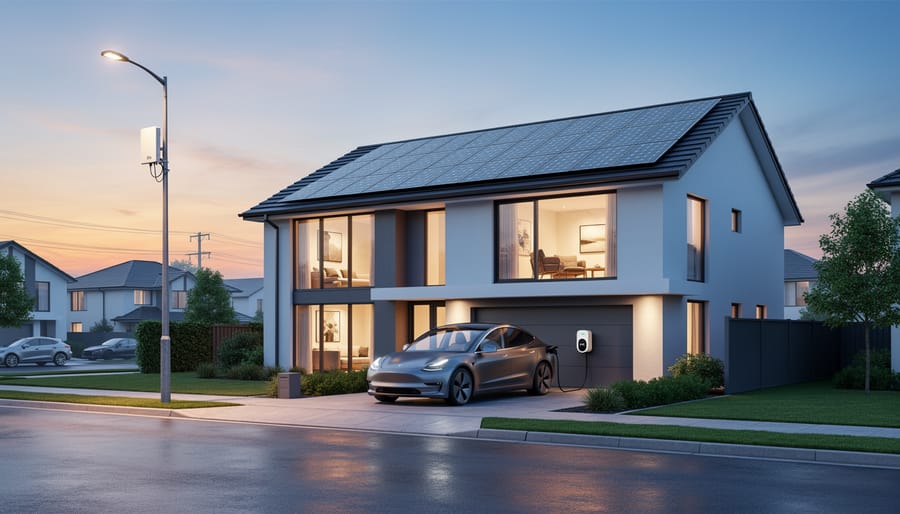
Why Your Smart Home Needs 5G Before the Power Grid Gets Smarter
Your smart home is about to get exponentially smarter, faster, and more responsive than you ever imagined possible. 5G technology isn’t just about streaming movies at lightning speed—it’s the missing piece that finally makes truly intelligent home automation a reality. While your current Wi-Fi network struggles to keep twenty devices connected simultaneously, 5G networks can seamlessly handle up to one million devices per square kilometer with virtually zero lag time.
This breakthrough matters for your home because it eliminates the frustrating delays that have plagued smart home technology since its inception. Picture your security cameras transmitting crystal-clear 4K footage instantly to your phone, your smart thermostat adjusting temperatures in real-time based on actual occupancy patterns, and your entire home responding to voice commands without that awkward pause we’ve all grown accustomed to. The difference between controlling devices over traditional Wi-Fi versus 5G is like comparing a congested highway to a private expressway.
The smart grid integration possibilities are equally impressive. With 5G connectivity, your home can communicate directly with utility providers to optimize energy consumption during off-peak hours, potentially slashing your monthly bills by 30% or more. Your solar panels, battery storage systems, and major appliances can work together as one coordinated system, automatically making cost-saving decisions without requiring your constant attention.
The technology is here, it’s proven, and it’s ready for your home right now.
What Makes a Home ‘Smart Grid-Ready’ (And Why 5G Matters)
A smart grid-ready home isn’t as complicated as it sounds. At its core, it means your house can have a two-way conversation with your utility company instead of just receiving power and getting billed later. Think of it like upgrading from sending letters to having a video call—the information flows both ways, and it happens in real time.
Here’s what makes this possible: smart grid-ready technologies include devices that monitor your energy use as it happens, not days later when you open your bill. Your smart thermostat, water heater, and major appliances can receive signals from the power company about when electricity costs less or when demand is high. The system can then automatically adjust—running your dishwasher during off-peak hours or slightly raising your AC temperature during a heat wave when the grid is strained.
This is where 5G becomes essential. While your home Wi-Fi might work fine for streaming movies, smart grid systems need something more reliable. They’re constantly sending and receiving data about energy usage, pricing signals, and grid conditions. That requires ultra-low latency, meaning virtually no delay between sending and receiving information.
Traditional Wi-Fi can get congested when multiple devices compete for bandwidth, and 4G connections weren’t designed for the sheer number of connected devices in modern homes. 5G handles dozens of simultaneous connections without breaking a sweat, with response times measured in milliseconds rather than seconds.
Why does this matter for you? When your utility company needs to reduce load during peak demand, a 5G-connected system can respond instantly and seamlessly. Your home automatically shifts energy use without you lifting a finger, potentially earning you credits on your bill while helping prevent blackouts in your community. That split-second communication makes the difference between a smart home and a truly intelligent one.
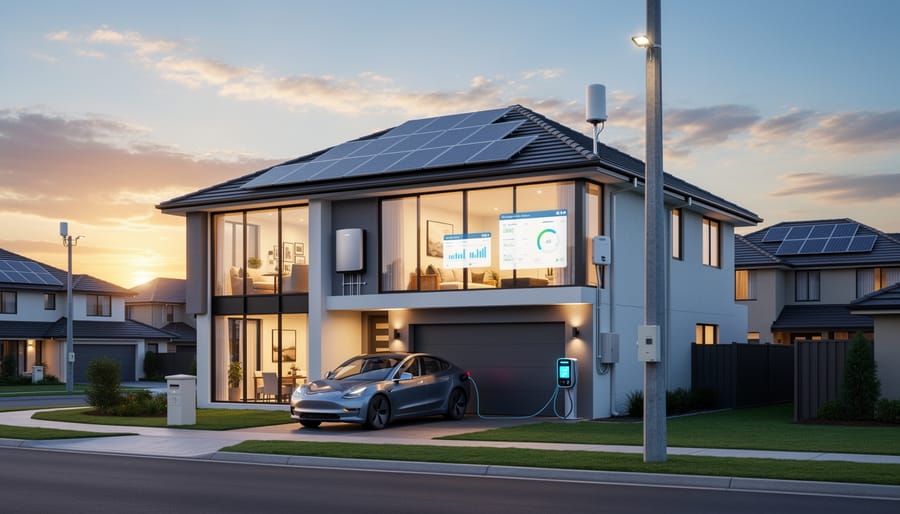
The 5G Advantage: Speed That Actually Changes How Your Home Works
Think of 5G as upgrading from a single-lane road to a multi-lane highway for your home’s internet traffic. The difference isn’t just about speed—it’s about what that speed enables your home to actually do.
Here’s what makes 5G a game-changer for smart homes: it can handle 100 times more connected devices per square kilometer than 4G. In practical terms, this means your smart thermostat, security cameras, lighting system, appliances, and entertainment devices can all communicate simultaneously without competing for bandwidth. No more slowdowns when everyone’s home streaming videos while your smart home runs its evening routine.
The response time—called latency—drops to just one millisecond with 5G. That might sound technical, but here’s why it matters: when your energy management system detects peak electricity rates, it can instantly adjust your thermostat, defer your dishwasher cycle, and dim non-essential lights. With older technology, these decisions took seconds. With 5G, they happen faster than you can blink.
Reliability improves dramatically during those critical moments when you need it most. During evening hours when everyone’s streaming, cooking, and running devices, 4G networks often struggle. 5G maintains consistent performance even when every home on your block is online.
For DIY enthusiasts, this opens exciting possibilities. You can confidently add more smart devices without worrying about overloading your network. That security camera system you’ve been considering? The whole-home audio setup? They’ll integrate seamlessly into your existing smart home ecosystem. The network capacity is finally catching up with our connected home ambitions, making those Pinterest-worthy automated homes actually achievable without requiring a computer science degree to manage them.
Smart Home Devices That Benefit Most From 5G Connectivity
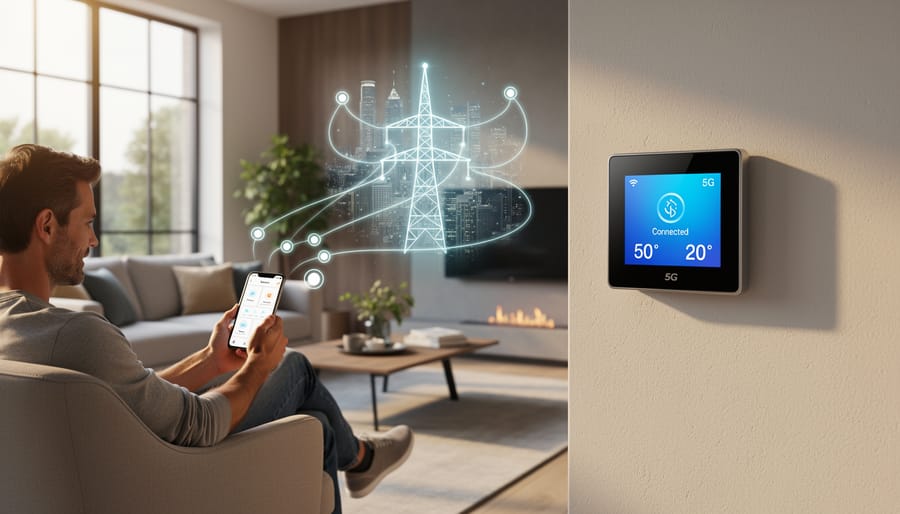
Smart Thermostats and HVAC Systems
5G connectivity transforms how smart thermostats manage your home’s climate and energy costs. Unlike traditional Wi-Fi systems that update every few minutes, 5G allows your HVAC system to communicate with your utility provider in real-time, receiving pricing signals and grid demand updates within milliseconds.
Here’s how it works in practice: when energy demand spikes during peak hours, your thermostat receives an instant signal through the 5G network. It can automatically adjust your temperature by a degree or two, shifting your usage to off-peak times when electricity is cheaper. You’ll barely notice the difference in comfort, but you’ll see real savings on your monthly bill.
The ultra-low latency of 5G also enables predictive climate control. Your system can coordinate with weather forecasts, your daily schedule, and current grid conditions to pre-cool or pre-heat your home during the most cost-effective windows. Some utility companies even offer rebates for homeowners who allow their systems to respond to demand-response programs, adding another layer of savings to your 5G-enabled setup.
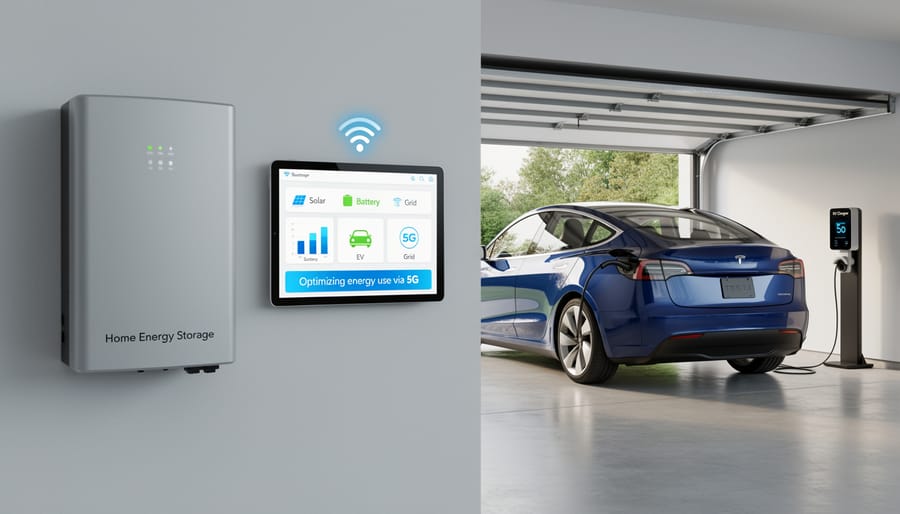
Home Battery Storage Systems
Home battery storage is getting a serious upgrade with 5G connectivity, transforming your stored solar energy into a revenue-generating asset. These intelligent smart home energy systems use 5G’s lightning-fast speeds to communicate with your utility company in real-time, automatically deciding when to store power, use it, or sell it back to the grid.
Here’s how it works: During peak hours when electricity rates skyrocket, your battery system taps into stored energy instead of pulling from the grid. When demand and prices drop, it recharges. Even better, if your utility offers time-of-use pricing or buyback programs, your system can sell excess power during high-demand periods and buy it back when rates are lowest.
The 5G advantage means these decisions happen instantly, without noticeable lag. Your battery responds to grid signals in milliseconds, maximizing savings opportunities you’d miss with slower connections. Some homeowners report reducing their electricity bills by 30-50% while contributing to grid stability during peak demand.
Smart Appliances and Load Management
Your everyday appliances are about to become much smarter money-savers. With 5G connectivity, major home appliances like refrigerators, washing machines, dryers, and water heaters can now communicate directly with your utility company in real-time to automatically shift their operation times.
Here’s how it works: When electricity demand is high (typically during peak afternoon hours), rates are expensive. When demand drops at night, rates are much cheaper. Your 5G-connected water heater can receive grid signals and automatically heat water during these off-peak hours instead of running during expensive peak times. The same goes for your dishwasher or dryer—they can delay their cycles by a few hours to take advantage of lower rates without any effort on your part.
The best part? You’ll barely notice the difference. You load your washing machine in the morning, and it runs automatically during the cheapest time window. Modern smart appliances include settings that let you override these schedules when needed, so you’re always in control. Many homeowners report saving 10-30% on their energy bills simply by letting their appliances optimize their own schedules based on real-time pricing data delivered through 5G networks.
EV Charging Stations
Your electric vehicle deserves smarter charging, and 5G technology makes that possible in ways you might not expect. When you install a 5G-enabled EV charging station at home, you’re getting more than just a power outlet—you’re adding an intelligent device that works with your entire smart home ecosystem.
These advanced charging stations communicate in real-time with your utility company through 5G networks, monitoring grid capacity and electricity rates throughout the day. Instead of charging your vehicle at a flat rate whenever you plug in, the system automatically schedules charging during off-peak hours when electricity is cheapest. You could save hundreds of dollars annually just by letting your charging station pick the optimal times to power up your car.
The real game-changer? Vehicle-to-home (V2H) technology. During power outages, your 5G charging station can reverse the flow, using your EV’s battery to power essential appliances in your home. Think of your car as a backup generator that’s already sitting in your garage. Some homeowners are even selling excess power back to the grid during peak demand periods, turning their vehicles into mini power plants.
Setting up a 5G EV charging station is straightforward. Most systems connect to your home’s Wi-Fi initially, then link to nearby 5G networks for faster, more reliable communication with utility providers. The installation typically takes a licensed electrician a few hours, and you’ll manage everything through a smartphone app that shows charging schedules, cost savings, and energy flow in real-time.
Setting Up Your 5G Smart Home: A Practical Roadmap
Step 1: Evaluate Your Current Home Network
Before diving into 5G-enabled smart home upgrades, take stock of what you already have. Start by checking your current internet speed using a free online speed test—most smart home devices work perfectly well with speeds of 100-200 Mbps, which standard fiber or cable can provide.
Next, find out if 5G home internet is even available in your area. Visit carrier websites like Verizon, T-Mobile, or AT&T and enter your address to check coverage. Keep in mind that 5G availability varies significantly by neighborhood, not just city.
Consider whether you actually need 5G. If you’re experiencing frequent buffering, slow device responses, or have more than 20 connected devices, it might be worth exploring. However, if your current setup handles your smart lights, thermostat, and security cameras without issues, upgrading may not be necessary yet.
If 5G isn’t available, don’t worry. Alternatives like fiber optic internet or upgraded cable packages often provide comparable speeds and reliability for smart home automation at a lower cost.
Step 2: Choose a 5G Home Gateway or Router
Selecting the right 5G gateway is simpler than you might think. Start by confirming your chosen carrier supports 5G home internet in your area and offers compatible equipment. Most providers either include a gateway with your plan or recommend specific models.
When evaluating options, look for these key features: support for Wi-Fi 6 (which works beautifully with 5G speeds), at least four ethernet ports for hardwired connections to your smart home hub, and dual-band capability. Check that the device supports the latest security protocols like WPA3 to protect your connected devices.
Compatibility matters tremendously. Your gateway should work seamlessly with popular smart home platforms like Google Home, Amazon Alexa, or Apple HomeKit. Review the manufacturer’s specifications to ensure it can handle multiple simultaneous connections—typically 50 or more devices for a fully automated smart home.
Consider future-proofing too. Choose equipment that receives regular firmware updates and has a solid track record for reliability. Reading customer reviews specific to smart home integration can reveal real-world performance insights you won’t find in spec sheets.
Step 3: Prioritize Your Smart Grid Upgrades
Not all smart grid upgrades deliver equal value, so start with the devices that offer the biggest bang for your buck. Think of it like renovating your home—you tackle the projects with the highest impact first.
Your smart thermostat should be at the top of your list. These devices typically deliver 10-23% savings on heating and cooling costs, which means they often pay for themselves within a year. They learn your schedule, adjust temperatures automatically, and can respond to grid signals during peak demand periods when electricity costs more.
Next up is battery storage, especially if you have solar panels or live in an area with time-of-use electricity rates. Modern battery systems let you store cheaper off-peak power or excess solar energy to use during expensive peak hours. While the upfront cost is higher, the long-term savings and energy independence make it a smart second investment.
After these heavy hitters, consider smart plugs and energy monitors to identify which appliances are energy hogs. Then add smart lighting, which offers convenience and modest savings. Finally, upgrade major appliances like water heaters and HVAC systems as they reach the end of their lifespan—retrofitting working appliances rarely makes financial sense.
Remember, you don’t need to do everything at once. Start with high-ROI devices and expand your smart grid ecosystem gradually as your budget allows.
Real-World Benefits: What You’ll Actually Save and Gain
Let’s talk real numbers. According to industry studies, homeowners with 5G-enabled smart homes typically see a 15-30% reduction in monthly energy bills. That translates to $50-$200 in monthly savings for an average household, depending on your current usage and climate zone.
The magic happens through intelligent automation. Your 5G-connected thermostat learns your schedule and adjusts heating and cooling precisely when needed, while smart lighting systems ensure you’re never paying to illuminate empty rooms. Water heaters can operate during off-peak hours when electricity rates are lower, and appliances communicate with your local smart grid to optimize their energy consumption automatically. By optimizing energy efficiency through these connected systems, you’re putting money back in your pocket every month.
Initial investment varies widely based on your approach. A basic setup with smart thermostat, lighting, and a few sensors runs around $500-$1,000. More comprehensive systems can reach $3,000-$5,000. The good news? Most homeowners hit their break-even point within 2-4 years through utility savings alone.
Beyond monthly savings, there’s another compelling benefit: property value. Homes equipped with smart grid infrastructure and 5G connectivity are selling for 3-5% more than comparable properties without these features. That’s potentially $15,000-$25,000 added value on a $500,000 home. Real estate agents report that tech-forward buyers actively seek these features, viewing them as modern necessities rather than luxury add-ons.
The convenience factor also delivers daily value. No more wondering if you left lights on or adjusting thermostats before returning home. Everything responds instantly through 5G connectivity, making home management genuinely effortless.
Common Concerns and How to Address Them
We totally get it—jumping into 5G smart home technology can feel overwhelming. Let’s tackle the big concerns head-on so you can move forward with confidence.
Security worries top most homeowners’ lists, and rightfully so. The good news? 5G networks actually offer improved encryption compared to older Wi-Fi standards. To maximize protection, always change default passwords on your devices, enable two-factor authentication wherever possible, and keep firmware updated. Think of it like locking your front door—simple steps make a huge difference.
Privacy concerns are equally valid. Your data matters. Stick with reputable manufacturers who clearly outline their data policies. Many devices let you control what information gets shared and stored. Reading those privacy settings takes just a few minutes and gives you real control over your digital footprint.
Worried about installation complexity? Here’s the reality: most 5G home devices are designed for DIY setup. We’re talking plug-and-play systems that connect through user-friendly apps. Start small with one or two devices to build your confidence before expanding your network. You don’t need a computer science degree—just a smartphone and willingness to follow straightforward instructions.
Is the technology mature enough? Absolutely. Major carriers have rolled out extensive 5G coverage, and smart home manufacturers have spent years perfecting compatibility. Prices continue dropping while features improve. The infrastructure is here, devices are proven, and early adopters are already enjoying the benefits. You’re not guinea-pigging; you’re smart-timing your investment.
Getting your home ready for the future doesn’t have to happen overnight. Preparing your space for 5G-enabled smart grid technology is one of the smartest investments you can make today. Not only will you see real savings on your monthly energy bills, but you’ll also boost your home’s market value as buyers increasingly seek properties with modern, efficient systems already in place.
The beauty of this transition is that you don’t need to transform your entire home at once. Start small. Maybe that means installing a smart thermostat this month or upgrading to LED bulbs with smart controls. Pick one or two key areas where you’ll notice the biggest impact on your comfort or budget, and build from there. Each upgrade you complete brings you closer to a fully integrated, energy-efficient home that practically runs itself.
The technology is ready, the infrastructure is expanding, and the benefits are proven. The only question left is: when will you take that first step? Your future self, enjoying lower utility bills and seamless home automation, will thank you for starting today.