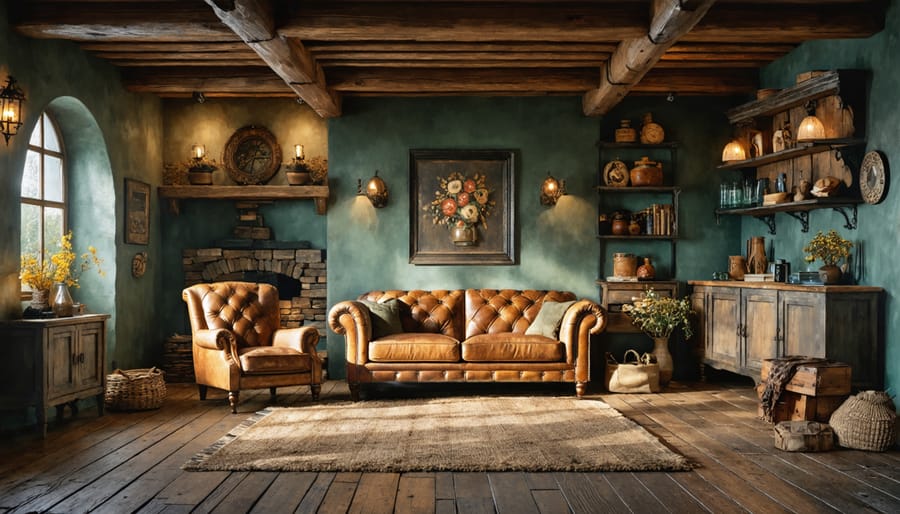
Transform Your Home into a Cozy Time Capsule with Rustic Vintage Charm
Transform your living space into a timeless sanctuary by blending weathered wood beams, vintage metal fixtures, and hand-scraped hardwood floors. Rustic vintage design marries the raw charm of countryside living with carefully curated antique pieces, creating spaces that feel both lived-in and luxurious. The style’s enduring appeal lies in its ability to tell stories through distressed furniture, salvaged architectural elements, and authentic period pieces that carry the patina of generations.
Mix natural textures like burlap, aged leather, and wrought iron with soft, worn textiles to achieve the perfect balance of rugged comfort and refined nostalgia. Hunt for authentic farmhouse tables, industrial light fixtures, and weather-beaten storage pieces at flea markets and antique shops – these foundational elements anchor the rustic vintage aesthetic while providing practical functionality. Layer in personal touches through vintage photographs, primitive tools repurposed as wall art, and handcrafted accessories that showcase the beauty of imperfection.
This design approach celebrates the intersection of history and home, where every scratched surface and time-worn finish contributes to a space that feels both grounded and graceful. Master the art of rustic vintage design by embracing authenticity over perfection, choosing pieces that tell stories, and creating rooms that honor the past while serving present-day needs.
The Heart of Rustic Vintage Style
Natural Materials and Textures
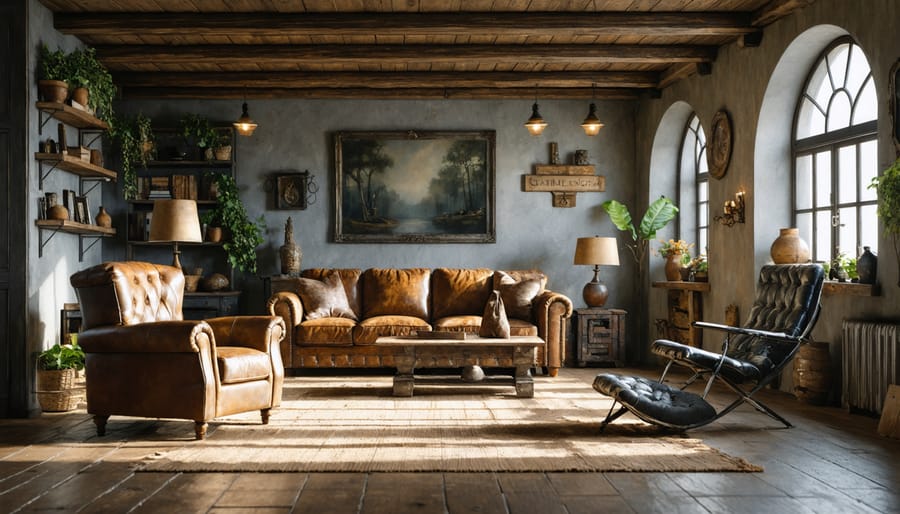
Natural materials form the foundation of timeless vintage design ideas, with reclaimed wood taking center stage. Look for weathered barn boards, distressed flooring, and exposed wooden beams that tell a story through their imperfections. Raw or aged metals add industrial charm – think wrought iron fixtures, copper accents, and brass hardware with natural patina.
When selecting textiles, prioritize natural fibers like cotton, wool, and linen in muted, earthy tones. Vintage grain sacks, burlap, and worn leather bring authentic character to upholstered pieces. Layer different textures by combining rough-hewn wood with smooth leather, or pairing nubby wool throws with crisp linen curtains.
Consider incorporating stone elements through exposed brick walls or a weathered fireplace surround. Woven materials like rattan and jute add warmth while maintaining the natural aesthetic. For maximum impact, mix these materials thoughtfully – perhaps a reclaimed wood coffee table atop a vintage wool rug, or iron wall sconces mounted on exposed brick. Remember, each material should feel lived-in and authentic, avoiding anything too polished or perfect.
Color Palettes That Tell Stories
The heart of rustic vintage design lies in its warm, earthy color palette that whispers stories of well-loved antiques and pastoral charm. Start with a foundation of creamy whites and soft beiges, which create an airy canvas that lets your vintage pieces shine. Layer in rich browns, from cognac leather to weathered wood tones, representing the natural materials essential to this style.
For depth and character, incorporate muted sage greens and dusty blues – colors that feel like they’ve gracefully aged over time. These softer hues work beautifully with rustic elements while maintaining an elegant vintage appeal. Accent with touches of rust, terracotta, and burnished gold to add warmth and a lived-in quality to your space.
When combining these colors, follow the 60-30-10 rule: use your neutral base for 60% of the space, add your secondary color (like sage or blue) for 30%, and finish with your accent color for the remaining 10%. This creates a balanced, cohesive look that feels both intentional and naturally evolved. Remember, the key is to choose colors that appear slightly faded, as though they’ve been gently sun-kissed over the years.
Essential Furniture Pieces
Statement Antique Pieces
When selecting statement antique pieces for your rustic vintage interior, authenticity is key. Look for furniture with genuine patina, natural wear patterns, and original hardware. Farmhouse tables, weathered armoires, and vintage dressers make excellent focal points, especially when they show signs of their history through gentle distressing and original paint layers.
Start your hunt at local antique stores, estate sales, and flea markets, where you’re more likely to find genuine pieces with character. Pay attention to construction quality – dovetail joints, solid wood construction, and hand-forged hardware are telltale signs of authentic vintage furniture. Don’t shy away from pieces that need minor repairs; often, these can be restored while maintaining their original charm.
When incorporating statement pieces, follow the “less is more” principle. One or two larger antique items per room create more impact than multiple smaller pieces. Position them where they’ll naturally draw attention, such as placing a vintage hutch against a prominent wall or using an antique workbench as a kitchen island.
Mix your statement pieces with more subdued vintage and contemporary items to create balance. This prevents your space from feeling like a museum while maintaining the rustic vintage aesthetic. Remember to consider scale – ensure your statement pieces don’t overwhelm the room but rather complement its proportions and flow.
Proper placement and lighting can enhance your antiques’ presence. Use directed lighting to highlight unique details and create ambient warmth that emphasizes the natural beauty of aged wood and worn finishes.
Modern Meets Vintage
Creating a harmonious blend of old and new pieces is the cornerstone of successful modern vintage design elements. The key lies in striking the perfect balance between comfort and style, allowing both contemporary and vintage pieces to shine without overwhelming the space.
Start by selecting anchor pieces that set the tone. A sleek, modern sofa can beautifully complement an antique coffee table, while vintage armchairs can be refreshed with contemporary upholstery. Consider maintaining a 70/30 ratio between modern and vintage pieces to ensure your space feels current while honoring its historical elements.
For functionality, incorporate modern technology thoughtfully. Hide smart home devices in vintage cabinets, or mount your flat-screen TV above a restored fireplace mantel. Modern lighting fixtures can work wonders when paired with vintage sconces or table lamps.
When mixing furniture periods, use color as your unifying element. A consistent color palette helps bridge the gap between old and new pieces. Try pairing industrial-style shelving with vintage storage trunks, or place a contemporary dining table alongside restored vintage chairs.
Remember that comfort shouldn’t be sacrificed for style. Choose pieces that serve both form and function, like ergonomic office chairs paired with antique desks, or memory foam mattresses dressed with vintage quilts and linens. This thoughtful combination ensures your space remains both livable and visually appealing.
DIY Rustic Vintage Projects
Weathering and Distressing Techniques
Transform new furniture into charming vintage pieces with these time-tested weathering techniques. Start by sanding your piece with medium-grit sandpaper, focusing on edges and high-contact areas where natural wear occurs. For wooden furniture, create authentic-looking wear patterns by gently striking the surface with chains or hammers wrapped in cloth.
To age painted surfaces, apply a base coat of paint and let it dry completely. Then, apply a second coat in a different color. Once dry, sand strategic areas to reveal the base coat beneath, mimicking years of use. For an antiqued look, mix one part water with one part white vinegar and lightly brush it onto raw wood – the solution reacts with the tannins to create a weathered gray patina.
Create a distressed finish by applying candle wax to areas you want to preserve before painting. After the paint dries, use steel wool or sandpaper to remove paint where the wax was applied. For metal pieces, spray with vinegar and leave outdoors for natural oxidation, or use specialty aging solutions available at hardware stores.
Final touches might include rubbing coffee grounds or tea into raw wood for color variation, or applying dark wax to carved details and crevices. Remember to seal your finished piece with appropriate protective coating to preserve your artistically aged creation while ensuring it remains functional for daily use.
Upcycling Modern Items
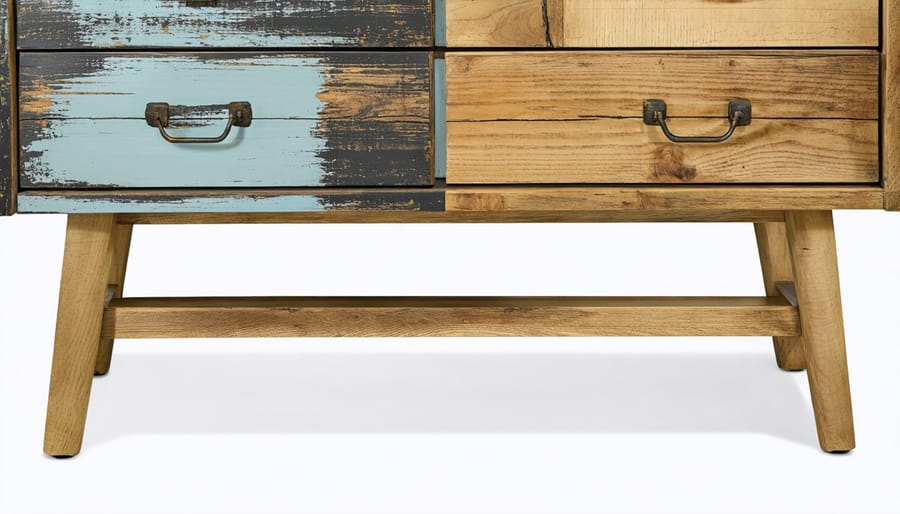
Looking to blend old with new? Modern items can be transformed into rustic vintage pieces with some creative DIY techniques. Start by distressing painted furniture using sandpaper and steel wool to create authentic-looking wear patterns. Add character to plain wooden pieces by applying a vinegar and steel wool solution for an instant aged patina.
Transform sleek metal fixtures by applying copper or bronze spray paint, then gently sanding certain areas to create a time-worn appearance. Modern light fixtures can be given vintage charm by replacing plain glass shades with mason jars or antique-style Edison bulbs.
Consider updating IKEA or other contemporary furniture with vintage-style hardware, like brass handles and copper hinges. Apply chalk paint to smooth surfaces, then distress edges to simulate years of use. Modern frames can be weathered using coffee grounds or tea staining techniques.
For electronic devices, create custom wooden covers or repurpose vintage items as concealment. A modern smart speaker could be housed in an antique radio cabinet, while flat-screen TVs can be framed with reclaimed barn wood.
Remember that the key to successful upcycling is maintaining balance – pieces should look authentically aged rather than artificially distressed. Focus on high-impact areas and items that naturally show wear in vintage pieces.
Styling and Accessorizing
Vintage Textiles and Patterns
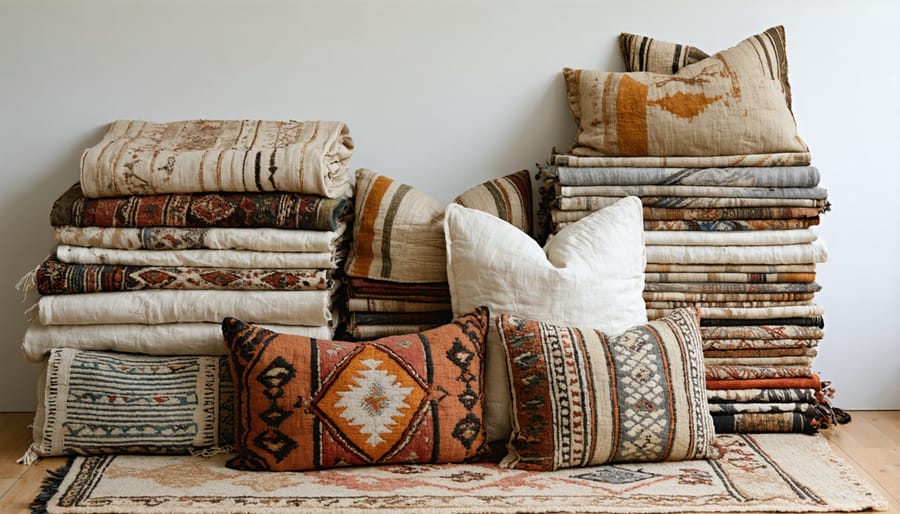
Textiles and patterns play a crucial role in creating an authentic rustic vintage atmosphere, adding layers of warmth and character to your space. Start with natural fabrics like linen, cotton, and wool, which not only look appropriate for the style but also offer durability and comfort.
Consider incorporating vintage-inspired florals and botanical prints, particularly those reminiscent of farmhouse or cottage designs from the 1930s and 1940s. These patterns work beautifully on throw pillows, curtains, and upholstery, adding visual interest without overwhelming the space. Look for faded or muted colors that suggest age and history.
When it comes to rugs, opt for worn Persian or tribal designs, braided wool rugs, or simple jute options. Layer different textures and patterns to create depth – try placing a smaller vintage rug over a larger natural fiber piece. Don’t shy away from rugs showing some wear; these imperfections add to the authentic vintage appeal.
Wallpaper can transform a room’s character instantly. Choose designs featuring subtle stripes, delicate florals, or toile patterns in weathered colorways. If full wall coverage feels too bold, consider using wallpaper on a single accent wall or inside cabinet backs for a surprise vintage touch.
Mix in ticking stripes, grain sack patterns, and simple plaids for authentic farmhouse charm. These classic patterns work particularly well on bedding, throw blankets, and accent pieces. Remember to incorporate handmade elements like quilts or crocheted throws – these personal touches make the space feel lived-in and genuinely vintage rather than staged.
Authentic Decorative Elements
The heart of rustic vintage design lies in its authentic decorative elements, which bring character and story to your space. Start with genuine vintage photographs in weathered wooden frames, displaying family histories or local landscapes. Consider incorporating antique farming tools, carefully restored and mounted as wall art – think vintage grain scoops, hand planes, or worn wooden rakes that tell tales of simpler times.
Mason jars, whether original blue glass or clear varieties, make perfect vessels for dried flowers or practical storage while adding instant vintage charm. Seek out period-appropriate metal signs, particularly those with faded advertisements or farm-related themes. For decorative artwork placement, mix botanical prints in distressed frames with vintage maps and architectural drawings.
Layer your space with authentic textiles – think hand-stitched quilts, grain sack pillows, and worn leather accents. Old wooden crates can serve as both storage and display pieces, while vintage scales, copper kettles, and enamelware add functional charm to kitchen areas. Consider incorporating salvaged architectural elements like window frames, shutters, or corbels as wall décor.
Don’t overlook the power of vintage lighting fixtures – original oil lamps (converted to electric), industrial pendant lights, or traditional lanterns can serve as stunning focal points. Complete the look with carefully chosen smaller accessories: vintage books, antique clocks, weathered picture frames, and found natural elements like pinecones or dried herbs in authentic vintage containers.
Embarking on a rustic vintage interior design journey is an exciting way to create a space that’s both timeless and deeply personal. By combining weathered wood elements, antique treasures, and modern comforts, you can craft a home that tells your unique story while maintaining that coveted lived-in charm.
Remember that successful rustic vintage design isn’t about following strict rules – it’s about creating harmony between old and new, rough and refined. Start small by incorporating a few key pieces, like a distressed wooden coffee table or vintage metal signs, and gradually build your collection as you discover items that speak to you.
Don’t be afraid to mix different textures, patterns, and eras. The beauty of rustic vintage style lies in its imperfections and the personal touches that make your space uniquely yours. Whether you’re hunting for authentic antiques at flea markets or creating your own DIY weathered finishes, each element adds character to your home’s narrative.
Most importantly, let your space evolve naturally. The most captivating rustic vintage interiors are those that develop over time, layer by layer, story by story. With the principles and tips we’ve explored, you’re well-equipped to begin transforming your home into a welcoming haven that celebrates both history and comfort. Start your rustic vintage journey today, and watch as your space transforms into a charming retreat that you’ll love coming home to.