Bring Your Past Back Home: How Nostalgic Interior Design Creates Comfort
Transform your home into a sanctuary of cherished memories by layering textures and colors from eras that resonate with your personal history. Start with a signature piece—perhaps a refurbished mid-century credenza or your grandmother’s armchair—and build your room’s narrative around it, allowing that anchor point to dictate your color palette and complementary furnishings.
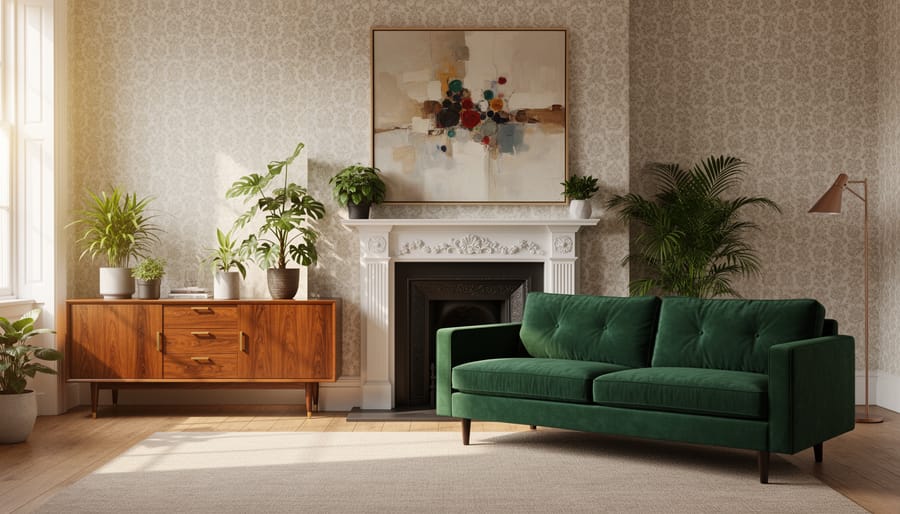
Mix time periods strategically rather than creating a museum display. Pair a 1970s velvet sofa with contemporary lighting fixtures, or place modern artwork above a Victorian mantelpiece to create visual tension that feels collected over time rather than decorated in a single shopping trip. This approach keeps nostalgic spaces feeling lived-in and relevant to today’s lifestyle needs.
Source authentic pieces from estate sales, antique markets, and online vintage marketplaces, but don’t overlook reproduction items that capture the spirit of an era while offering modern durability and comfort. Many vintage design ideas can be achieved through careful attention to details like brass hardware, patterned wallpaper, or subway tile backsplashes that reference specific decades.
Document your family’s aesthetic history through photographs of childhood homes, relatives’ houses, or places that hold emotional significance. These images become your personalized mood board, ensuring your nostalgic design choices reflect genuine memories rather than generic retro trends. The most powerful nostalgic interiors tell your specific story, creating spaces where every object sparks connection to moments and people that shaped who you are today.
What Makes Interior Design Feel Nostalgic?
The Emotional Power of Familiar Design
There’s something magical about walking into a room and feeling instantly at home. That warm, fuzzy feeling often comes from design elements that tap into our memories—whether it’s the floral wallpaper that reminds you of grandma’s kitchen or a mid-century lamp similar to one from your childhood home.
This emotional connection isn’t just sentimental—it’s powerful. When we surround ourselves with familiar design elements, our brains release feel-good chemicals that reduce stress and create genuine comfort. It’s why vintage patterns, classic color schemes, and retro furniture pieces resonate so deeply with us.
The beauty of nostalgic design is that it works on two levels. Personal nostalgia connects to your individual memories and experiences, while collective nostalgia taps into shared cultural moments—think the cozy farmhouse aesthetic or the bold colors of the 1970s that entire generations remember fondly.
By intentionally incorporating these familiar elements into your space, you’re not just decorating—you’re crafting an environment that supports your emotional well-being. Your home becomes more than a place to live; it transforms into a sanctuary filled with stories, memories, and genuine meaning.
Era-Specific Nostalgia: Finding Your Sweet Spot
Your connection to a particular era often depends on when you grew up or which period speaks to your aesthetic sensibilities. The 1950s brought us pastel colors, chrome accents, and atomic-age patterns that feel optimistic and cheerful. Think mint green appliances and starburst clocks.
The 1960s introduced bold geometric patterns and mod furniture with clean lines. Fast forward to 70s decor, where earthy tones, macramé wall hangings, and sunburst mirrors dominated. Harvest gold and avocado green were kitchen staples, while shag carpeting added texture underfoot.
The 1980s burst onto the scene with neon accents, Memphis design patterns, and glass block features. Mauve and teal color schemes were everywhere, along with brass fixtures and vertical blinds.
The 90s interior design revival brings back sponge-painted walls, hunter green accents, and oak everything. Country themes with geese motifs and floral patterns also defined this decade.
Choose the era that resonates with your personal memories or simply appeals to your design preferences. You can mix elements from different decades to create your unique nostalgic blend.
Key Elements That Make Nostalgia Work in Modern Homes
Furniture That Tells a Story
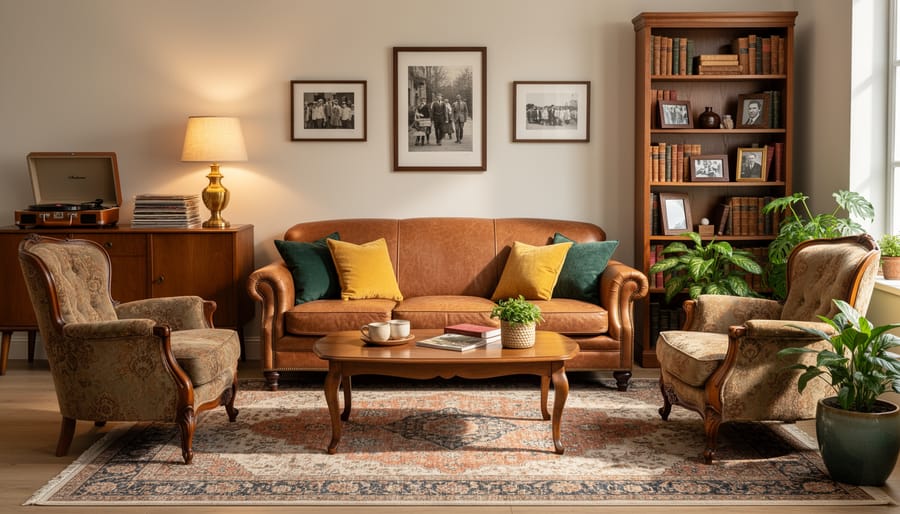
The furniture you choose is the foundation of any nostalgic interior, and each piece has the power to transport you to another time. Vintage treasures found at estate sales, flea markets, or antique shops bring authentic character that new furniture simply can’t replicate. A well-worn leather armchair with patina that took decades to develop, or a mid-century credenza with original brass hardware, these items carry stories within their scratches and imperfections.
Heirloom pieces passed down through generations add deeply personal meaning to your space. That dining table where your grandparents hosted Sunday dinners or the vanity your mother used becomes a conversation starter and emotional anchor in your home. Don’t worry if these pieces show their age; those marks are part of their charm.
If authentic vintage furniture is outside your budget or hard to find, quality reproductions can deliver the nostalgic aesthetic you’re after. Many manufacturers now create retro-inspired pieces that capture the essence of past eras while incorporating modern construction techniques and materials. Mix reproduction pieces with genuine vintage finds to create an eclectic, collected-over-time look that feels authentic rather than staged. The key is choosing furniture that resonates with your personal memories and the era that speaks to you most.
Colors and Patterns from Memory Lane
Color is one of the quickest ways to transport yourself back in time. Each decade has its signature palette that instantly triggers memories and emotions. The 1950s brought us cheerful pastels like mint green, powder blue, and bubblegum pink, often paired with bold primary colors. The 1970s embraced earthy tones—harvest gold, avocado green, and burnt orange—alongside natural wood finishes.
To incorporate vintage colors without making your space feel dated, try the accent wall approach. Paint one wall in a retro shade while keeping others neutral, or use vintage hues in smaller doses through throw pillows, artwork, and accessories. This gives you that nostalgic punch without overwhelming the room.
Patterns tell stories too. Geometric prints defined mid-century modern design, while floral wallpapers dominated Victorian and cottage styles. Today, you can find peel-and-stick wallpaper in vintage-inspired patterns—a perfect DIY project that requires no professional installation. Simply measure your wall, cut to size, and apply. This temporary solution lets you experiment with bold retro patterns without permanent commitment, making it ideal for renters or anyone who likes refreshing their space seasonally.
Textures and Materials That Feel Like Home
The materials you choose can instantly transport you back in time. Natural wood, especially with visible grain and imperfections, brings an organic warmth that connects us to simpler eras. Think oak dining tables, walnut credenzas, or pine shelving—each telling its own story through knots and color variations.
Brass and aged metals add character without trying too hard. Whether it’s a vintage-style faucet or lamp fixture, these finishes develop a beautiful patina over time, much like the treasured pieces in your grandparents’ home. Don’t shy away from mixing metals; homes from previous decades weren’t curated to match perfectly, and that’s part of their charm.
Ceramics and pottery offer tactile comfort that plastic simply can’t replicate. Hand-thrown mugs, ceramic vases, and glazed tile backsplashes introduce texture and authenticity. Look for pieces with subtle imperfections—they feel more personal and lived-in.
Textiles deserve special attention for creating cozy nostalgia. Natural fabrics like linen, cotton, and wool feel familiar against your skin. Layer vintage-inspired quilts, crochet throws, or embroidered pillows for depth. Even small touches like cloth napkins or woven baskets contribute to that homey feeling we’re chasing. These materials don’t just look good—they invite you to touch, use, and create new memories alongside the old.
Room-by-Room Nostalgic Design Ideas
Creating a Cozy Nostalgic Living Room
Your living room is where memories happen, so why not design it to celebrate them? Start with vintage-inspired seating like a tufted velvet sofa in jewel tones or a cozy armchair with turned wooden legs. These pieces instantly add character while remaining comfortable for modern living.
Create an entertainment center that doubles as a display area. An old credenza or mid-century console works perfectly for housing your TV while showcasing treasured photographs, vintage cameras, or record collections. Open shelving units let you rotate displays seasonally, keeping the space fresh yet familiar.
Layer in nostalgic décor through thoughtful details. Hang framed family photos in mismatched vintage frames, display your grandmother’s china on floating shelves, or add throw pillows in retro patterns. A vintage trunk serves as both coffee table and storage.
For a simple DIY project, transform an old ladder into leaning display shelving. Sand it lightly, apply a coat of stain or paint, and lean it against the wall to hold blankets, books, or plants. This adds vertical interest while maintaining that collected-over-time aesthetic that makes nostalgic spaces feel genuinely lived-in and loved.
Kitchen Nostalgia: Retro Appliances and Vintage Charm
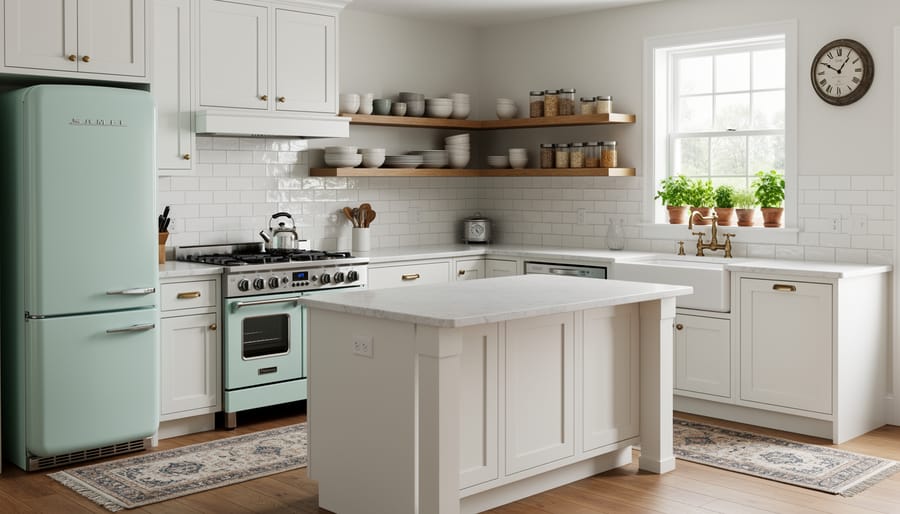
The kitchen is the heart of the home, making it the perfect place to blend vintage charm with today’s convenience. Start with a statement piece like a refurbished retro refrigerator in cheerful mint green or classic cherry red. These eye-catching appliances bring instant character while offering modern efficiency.
For a budget-friendly approach to retro kitchen design, focus on smaller details. Swap out cabinet hardware for vintage-inspired pulls and knobs in brass or ceramic. Open shelving with antique brackets lets you display heirloom dishware and vintage glassware as functional decor.
Mix eras thoughtfully by pairing farmhouse sinks with smart faucets, or installing subway tile backsplashes alongside modern induction cooktops. Add finishing touches with period-appropriate lighting fixtures like schoolhouse pendants or industrial-style sconces. A vintage clock, enamelware canisters, and colorful tea towels complete the nostalgic atmosphere while keeping your kitchen perfectly practical for everyday cooking and gathering.
Bedrooms That Feel Like Childhood Comfort
Your bedroom should wrap around you like a favorite childhood blanket. Start with vintage-inspired linens—think chenille bedspreads, embroidered pillowcases, or quilts that remind you of grandma’s guest room. These textures instantly transport you back to simpler times.
Choose furniture with classic lines. A wooden bedframe with turned spindles, a brass headboard, or a vintage vanity can anchor your nostalgic design. Scout thrift stores and estate sales for authentic pieces, or look for reproduction furniture that captures that timeless feel without the hefty price tag.
Create a memory wall with framed family photos, old postcards, or childhood artwork. Mix vintage frames in different finishes for an collected-over-time look. Keep a nightstand drawer dedicated to keepsakes like old letters or ticket stubs—small treasures that spark joy when you rediscover them.
For a simple DIY project, repurpose an old dresser with a fresh coat of paint in a soft, nostalgic hue like mint green or dusty rose. Add vintage glass knobs for an authentic finishing touch that makes getting ready each morning feel special.
Bathrooms with Vintage Character
Bathrooms are perfect spaces for nostalgic design touches that blend old-world charm with modern convenience. Start with fixtures that nod to the past—consider pedestal sinks with classic porcelain finishes, clawfoot tubs, or cross-handle faucets in oil-rubbed bronze or brushed nickel. These elements instantly transport you to another era while remaining fully functional.
Tile patterns offer endless opportunities for vintage appeal. Black and white checkerboard floors, hexagonal mosaics, or subway tiles with dark grout lines create that timeless look. For a DIY project, frame your mirror with decorative molding painted in a soft, aged finish to add character without major renovation.
Accessorize thoughtfully with apothecary jars for cotton balls, vintage-style soap dispensers, and framed botanical prints. Install a medicine cabinet with a mirror door reminiscent of the 1920s, or repurpose an antique dresser as a vanity for a truly unique statement piece. Small touches like brass towel bars, reproduction light fixtures, and patterned shower curtains complete the nostalgic atmosphere while keeping your bathroom practical for everyday use.
DIY Projects to Add Nostalgic Touches
Upcycling Vintage Finds into Statement Pieces
Thrift stores and flea markets are treasure troves for nostalgic design lovers. With a little creativity, you can transform secondhand finds into statement pieces that tell a story.
Start with vintage frames. Give mismatched frames a cohesive look with matching paint colors, then create a gallery wall featuring family photos or vintage postcards. For a modern twist, remove the glass and backing to create decorative wall sculptures.
Old suitcases make charming storage solutions. Stack two or three vintage cases to create a unique nightstand or side table. You can also mount a single suitcase on the wall with brackets for quirky shelving.
Transform antique windows into decorative mirrors by adding mirror panels behind the panes. Leave the original paint intact for authentic character, or refresh with a soft chalk paint for a farmhouse feel.
Repurpose vintage tins and glass jars as organizational tools in your kitchen or bathroom. Clean them thoroughly, then use them to store utensils, craft supplies, or toiletries. Add custom labels for a personalized touch.
Don’t overlook worn furniture pieces. A dated dresser becomes stunning with new hardware, fresh paint, and updated drawer liners. Sand lightly to reveal layers of old paint for a distressed, time-worn appearance that perfectly captures nostalgic charm while serving modern needs.
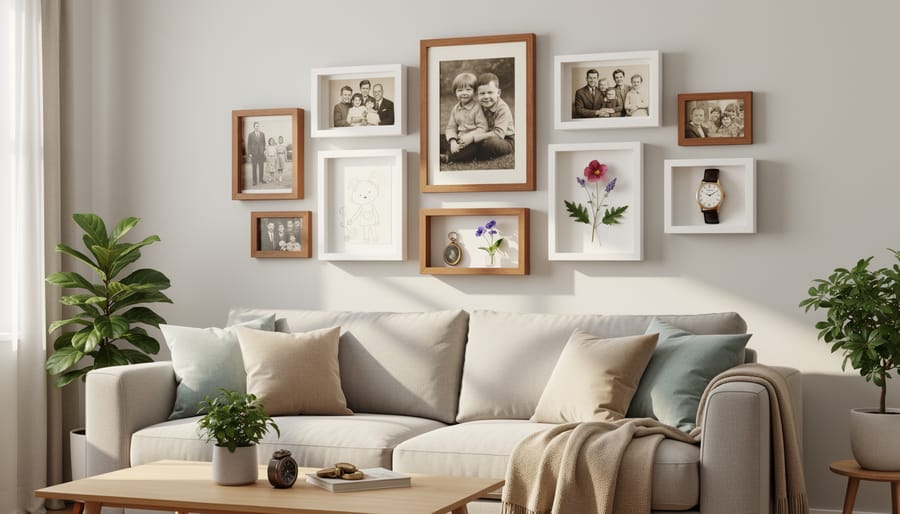
Creating a Memory Wall Display
A memory wall transforms your most treasured moments into a stunning focal point that tells your unique story. Start by gathering your materials: vintage photographs, framed heirlooms, old postcards, antique mirrors, and any meaningful memorabilia you’d like to showcase.
Begin by laying everything out on the floor to experiment with arrangements before committing to wall placement. Mix different frame sizes and styles for visual interest, combining ornate vintage frames with simpler designs. This creates depth and keeps the display from looking too matchy-matchy.
Choose your wall location carefully. Consider spaces where you’ll frequently see the display, like a hallway, staircase wall, or above a console table. Use painter’s tape to mark frame positions on the wall, ensuring proper spacing of 2-3 inches between pieces.
Start hanging from the center and work outward, keeping the middle of your display at eye level (approximately 57-60 inches from the floor). For a cohesive look, maintain consistent spacing and align some edges, whether top, bottom, or side.
Tech tip: Use a digital level app on your smartphone to ensure frames hang straight. You can also photograph your floor arrangement before hanging to reference your planned layout.
Layer in three-dimensional items like shadow boxes containing vintage jewelry, old keys, or inherited pocket watches to add texture and dimension to your nostalgic display.
Balancing Nostalgia with Modern Living
Blending Old and New Without Losing Functionality
The key to successful blending vintage with modern is hiding today’s necessities in plain sight. Start by choosing vintage-style appliances that offer modern efficiency—think retro refrigerators with energy-efficient technology or classic-looking ranges with smart features.
Conceal contemporary electronics inside vintage cabinets or armoires. Mount your flat-screen TV within an ornate picture frame, or tuck WiFi routers and charging stations inside decorative vintage boxes. This keeps your space functional without breaking the nostalgic atmosphere.
For lighting, install dimmer switches behind vintage wall plates to control LED bulbs in antique fixtures. This gives you energy efficiency and ambiance control while maintaining period charm.
Technology Integration Tip: Smart home devices now come in vintage finishes. Look for voice assistants in fabric covers, thermostats with classic dial designs, and outlet covers that match historical styles.
Update old furniture with modern comfort by adding ergonomic cushions covered in period-appropriate fabrics. Restore vintage pieces to working order rather than keeping them purely decorative—a refurbished radio cabinet can house your sound system while maintaining its original character.
Hiding Modern Technology in Vintage Spaces
The secret to successful nostalgic design lies in keeping modern technology hidden while maintaining functionality. Start with your television by housing it inside a vintage armoire or cabinet with doors that close when not in use. Look for antique pie safes, wardrobe cabinets, or credenzas that can be retrofitted with ventilation holes and cable management systems.
For smart home devices, consider vintage-style light switches and outlet covers that conceal modern USB ports and dimmer controls. You can also tuck smart speakers inside decorative vintage radios or phonograph cabinets, letting the old-fashioned exteriors blend seamlessly with your nostalgic aesthetic.
Modern appliances present unique challenges in vintage kitchens. Panel-front dishwashers and refrigerators let you match cabinetry, making them disappear into the design. Alternatively, seek out appliance brands offering retro-styled ranges and refrigerators in classic colors like mint green or buttercream yellow that combine modern efficiency with vintage charm.
Hide charging stations inside vintage desk drawers or decorative boxes on nightstands. Mount flat-screen TVs inside ornate vintage frames to disguise them as artwork when powered off. Cable management is crucial—use vintage-looking fabric cord covers or route wires through baseboards and walls. With these simple solutions, you’ll enjoy modern conveniences without compromising your nostalgic vision.
At its heart, nostalgic interior design isn’t about copying a specific decade or following a trend—it’s about creating a space that tells your story. The most successful nostalgic interiors are deeply personal, filled with elements that spark joy and transport you back to meaningful moments in your life.
Take time to identify what nostalgia means to you. Maybe it’s the floral wallpaper from your grandmother’s house, the smell of worn leather from your first apartment, or the warm glow of Edison bulbs that remind you of cozy family dinners. These touchstones are uniquely yours, and they’re what will make your space feel authentic rather than staged.
Don’t feel pressured to commit to one era or aesthetic. Mix the vintage record player that reminds you of lazy Sunday mornings with modern smart home technology that makes daily life easier. Layer textures and colors that evoke emotion alongside functional pieces that serve your current lifestyle. The beauty of nostalgic design is its flexibility—you’re the curator of your own memories, and your home should reflect the experiences and moments that shaped who you are today.