Transform Your Space: Modern Tactile Surfaces That Elevate Interior Design
Touch transforms spaces into experiences. In our increasingly digital world, tactile design has emerged as a powerful counterforce, bringing physical dimension and sensory richness to our environments. From subtly textured wall panels to interactive surfaces that respond to human contact, tactile design bridges the gap between visual aesthetics and physical engagement.
Modern tactile design goes beyond traditional texturing, incorporating smart materials that change temperature, pattern, or form in response to touch. These innovations are revolutionizing how we interact with our surroundings, whether in homes, offices, or public spaces. Designers now layer different textures and materials to create multisensory experiences that enhance spatial awareness and emotional connection.
The rise of biophilic design has further elevated tactile elements, introducing natural textures and materials that satisfy our innate need for connection with nature. Cork walls, living moss panels, and stone-textured surfaces aren’t just visually striking – they create environments that invite exploration through touch, promoting wellness and reducing stress through sensory engagement.
As we push the boundaries of architectural and interior design, tactile elements have become essential tools for creating spaces that don’t just look good but feel right, literally. This marriage of innovation and instinct is reshaping how we think about and interact with our built environment.
The Psychology of Touch in Interior Design
Sensory Design Principles
Successful tactile design revolves around three core principles: contrast, rhythm, and balance. Contrast creates interest through opposing textures, like pairing smooth surfaces with rough ones. This deliberate juxtaposition helps define spaces and creates visual-tactile landmarks that enhance the user experience.
Rhythm in tactile design refers to the repetition of textural elements that guide people through a space. Think of how alternating soft and firm flooring materials can naturally direct foot traffic or how a sequence of textured wall panels can create movement along a corridor.
Balance is about distributing tactile elements throughout a space in a way that feels harmonious. Too many competing textures can overwhelm the senses, while too few can make a space feel flat and uninspiring. The key is finding the sweet spot where different textures complement each other without creating sensory overload.
When implementing these principles, consider both the practical and emotional impacts of your chosen textures. Smooth surfaces in high-traffic areas provide easy maintenance, while richly textured materials in rest areas can create a sense of comfort and warmth.
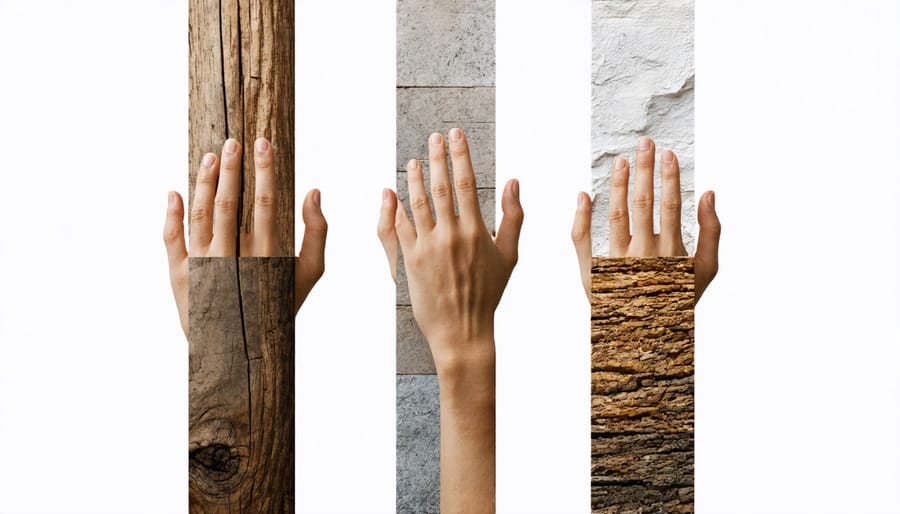
Creating Emotional Connections
Textures have a remarkable ability to improve wellbeing through design by creating powerful emotional connections in our spaces. Smooth surfaces often evoke feelings of calm and sophistication, while rough textures can create a sense of authenticity and groundedness. Think about how running your hand across a polished marble countertop feels different from touching a natural stone wall – each creates its own emotional response.
Soft, plush textures like velvet and wool typically trigger feelings of comfort and security, making them perfect for relaxation areas. In contrast, sleek, metallic surfaces can spark excitement and modernity, ideal for contemporary spaces wanting to make a bold statement. Natural wood grains tend to foster warmth and connection to nature, while geometric patterns can stimulate mental engagement and creativity.
By strategically combining different textures, you can create spaces that not only look appealing but also feel emotionally resonant. Consider how a leather accent wall might add sophistication to an office, or how cork flooring can bring warmth and acoustic comfort to a meditation room.
Breakthrough Materials in Tactile Design

Smart Tactile Materials
Smart tactile materials represent the cutting edge of surface design, combining traditional textures with responsive technology. These innovative materials can change their physical properties in response to touch, temperature, or programmed settings, creating dynamic and interactive environments. From walls that light up when touched to interactive flooring solutions that track movement, these surfaces are revolutionizing how we experience our spaces.
One popular application is thermochromic surfaces, which change color based on temperature variations from hand contact. These materials are perfect for creating playful accent walls in modern homes or engaging displays in retail spaces. Another breakthrough is pressure-sensitive panels that can trigger lighting changes or sound effects when pressed, making them ideal for entertainment rooms or children’s spaces.
For homeowners looking to incorporate smart tactile elements, several user-friendly options are available. Self-adhesive smart tiles that respond to touch with gentle illumination can be easily installed as kitchen backsplashes or bathroom accents. Textured wallpapers embedded with LED elements offer a subtle way to add interactive elements to any room.
The latest developments include surfaces with haptic feedback technology, which can simulate different textures on command. Imagine wall panels that can switch from feeling like smooth marble to rough stone, or countertops that provide tactile cues for specific functions. These materials are particularly valuable in universal design, helping create more accessible spaces for people with visual impairments.
When selecting smart tactile materials, consider their practical applications alongside their interactive features. Look for options that are durable, easy to clean, and compatible with your home’s existing systems. Many of these materials can be integrated with smart home networks, allowing for customized programming and automated responses to different types of touch interaction.
Sustainable Textured Solutions
As sustainability takes center stage in modern design, eco-friendly textured materials are revolutionizing how we approach tactile surfaces. These innovative solutions not only provide engaging sensory experiences but also minimize environmental impact. Natural materials like cork, bamboo, and reclaimed wood offer unique textures while incorporating biophilic design elements that connect us with nature.
Recycled materials are making waves in the tactile design world. Compressed paper products create stunning wall panels with varied textures, while recycled glass and plastic composites offer durable, touch-friendly surfaces perfect for high-traffic areas. These materials often require less energy to produce than their traditional counterparts and can be recycled again at the end of their lifecycle.
Living walls and moss installations provide both texture and environmental benefits, naturally purifying the air while creating striking tactile features. Similarly, natural fiber composites made from hemp, jute, or coconut husks deliver interesting textures while being completely biodegradable.
New manufacturing processes are also enabling the creation of bio-based polymers that mimic premium textures without harmful environmental impacts. These materials can be molded into various patterns and shapes, offering designers unlimited creative possibilities while maintaining eco-friendly credentials.
For DIY enthusiasts, many of these sustainable materials come in easy-to-install formats like peel-and-stick panels or interlocking tiles. This accessibility makes it simple to incorporate environmentally conscious tactile elements into any space without professional installation.
Practical Applications for Your Home
Wall Treatments
Today’s modern wall coverings go far beyond traditional textures, offering innovative ways to engage our sense of touch while creating visually stunning spaces. From 3D textured panels to tactile wallpapers, these treatments transform ordinary walls into interactive surfaces that invite exploration.
Natural materials like cork, grasscloth, and carved wood panels add organic texture while creating a connection to nature. For a more contemporary approach, dimensional ceramic tiles and metallic surfaces offer bold geometric patterns that catch both light and fingertips. Textile wall coverings, including velvet and woven materials, bring warmth and softness to spaces while dampening sound.
Recent innovations include smart textured surfaces that change appearance when touched, and thermochromic materials that respond to temperature changes. These interactive elements create dynamic spaces that evolve throughout the day. For DIY enthusiasts, textured painting techniques using specialized rollers or trowels can achieve custom patterns and depths.
When selecting wall treatments, consider both visual impact and practical tactile experience. High-traffic areas benefit from durable, easy-to-clean surfaces, while private spaces can feature more delicate textures. Layer different materials strategically to create zones within a room and guide movement through the space.
Remember to balance bold textures with smoother surfaces to prevent sensory overload and maintain visual harmony in your design scheme.
Furniture Surfaces
Furniture selection offers endless opportunities to incorporate engaging tactile elements that enhance both the aesthetic and sensory experience of your space. From plush velvet sofas to rough-hewn wooden coffee tables, each surface texture creates a unique interaction point that adds depth to your interior design.
When selecting furniture pieces, consider mixing materials to create a rich tactile landscape. Smooth leather armchairs can contrast beautifully with nubby wool ottomans, while sleek glass tabletops provide a cool, smooth counterpoint to textured base materials. Natural wood grain, especially in unfinished or lightly finished pieces, offers an inherently tactile surface that connects users with nature.
Modern furniture designers are increasingly incorporating innovative textures through techniques like embossing, 3D printing, and mixed material applications. Look for pieces that feature intentional texture variations, such as ribbed cabinet fronts, hammered metal surfaces, or woven rattan details. These elements not only add visual interest but also create memorable touch experiences.
For custom pieces, consider working with materials like:
– Brushed or hammered metals
– Textured fabrics (bouclé, chenille, or corduroy)
– Natural stone with varying finishes
– Carved or laser-etched wood
– Recycled materials with unique surface patterns
Remember that durability is crucial when selecting textured furniture surfaces, especially for high-traffic areas. Choose materials that maintain their tactile qualities while standing up to regular use and cleaning.
Floor Textures
Floor textures play a crucial role in tactile design, offering both functional and aesthetic benefits to any space. The strategic placement of different textures can guide movement, enhance safety, and create distinct zones within a room without the need for visible barriers.
In high-traffic areas, slip-resistant textures like brushed concrete or textured vinyl provide essential safety features while maintaining a modern appearance. For transitional spaces, subtle changes in texture can help visually impaired individuals navigate more effectively, such as switching from smooth hardwood to slightly raised rubber tiles near entrances or stairs.
Luxury spaces often incorporate mixed-texture flooring, combining materials like polished stone with areas of natural wood grain. This thoughtful contrast not only adds visual interest but also creates a rich sensory experience underfoot. In commercial settings, carpet tiles with varying pile heights can define separate work areas while adding acoustic benefits.
Modern innovations have introduced smart textured flooring that changes its grip level when wet, making it ideal for bathrooms and kitchens. There’s also a growing trend toward sustainable materials that offer unique textures, such as cork flooring or recycled rubber tiles, which provide both environmental benefits and distinctive tactile qualities.
When selecting floor textures, consider the space’s primary function, traffic patterns, and maintenance requirements. The right combination of textures can transform a simple floor into an integral part of your overall design strategy while enhancing safety and functionality.
DIY Tactile Design Projects
Weekend-Friendly Projects
Transform your space with these weekend-friendly tactile design projects that won’t break the bank or require professional help. Start by creating a textured accent wall using peel-and-stick wallpaper with raised patterns – perfect for renters and homeowners alike. For a more hands-on approach, try applying textured paint techniques using tools like combs or stippling brushes to create unique patterns.
Give your furniture an instant upgrade by adding tactile elements like fabric-wrapped drawer pulls or leather cabinet handles. Transform plain throw pillows with chunky knit covers or add tassels and pom-poms for instant texture. Create a sensory-rich environment by mixing different materials in your decor – combine smooth ceramics with rough jute, sleek metal with plush fabrics.
For a quick bathroom refresh, install textured shower curtains or swap out standard bath mats for wooden slate ones. In the kitchen, update cabinet fronts with textured contact paper or add dimensional tile stickers to create a faux backsplash. These simple projects can be completed in a weekend, bringing depth and interest to any room while engaging the sense of touch.
Maintenance Tips
Proper maintenance is key to keeping your tactile surfaces looking and feeling their best. For everyday care, use a soft microfiber cloth to dust textured surfaces, working in the direction of the pattern to avoid debris buildup in grooves. Weekly cleaning can be done with a mild, pH-neutral cleaner and warm water – avoid harsh chemicals that might damage the surface texture.
For wooden tactile elements, apply a protective coating annually to prevent wear and maintain the integrity of the texture. Metallic surfaces benefit from regular polishing with appropriate metal cleaners to prevent oxidation and preserve their tactile qualities. For fabric-based textures, vacuum regularly and treat stains immediately to prevent permanent damage.
In high-traffic areas, consider applying a clear, protective sealant that won’t diminish the tactile effect. Watch for signs of wear, such as smoothing of textures or color changes, and address these issues promptly. For outdoor tactile surfaces, inspect regularly for weather damage and apply weather-resistant treatments as needed.
Keep a maintenance schedule and document any specific cleaning requirements for different textured materials in your space. This proactive approach will help extend the life of your tactile design elements while preserving their intended sensory impact.
Tactile design offers endless possibilities for creating engaging, multi-sensory spaces that truly stand out. By incorporating different textures, materials, and surface treatments, you can transform any environment into a more immersive and memorable experience. Whether you’re planning a small DIY project or a complete renovation, remember that successful tactile design balances visual appeal with practical functionality. Start small by experimenting with textured wallpapers or 3D wall panels, then gradually expand your creative horizons as you become more comfortable with different materials and techniques. Don’t be afraid to mix traditional and modern elements, and always consider how your chosen textures will interact with lighting and other design elements. With the growing availability of innovative materials and smart surfaces, there’s never been a better time to explore the world of tactile design in your space.