Interior Design Secrets That Transform Any Room (Professional Tips)
Transform any room into a masterpiece by mastering the basic design principles that professional designers use every day. Start with balance, creating visual equilibrium through symmetrical or asymmetrical arrangements of furniture and decor. Establish a clear focal point—whether it’s a striking piece of artwork, an architectural feature, or a statement furniture piece—to anchor your space and guide the eye. Layer your lighting with ambient, task, and accent sources to create depth and functionality while setting the perfect mood.
Scale and proportion form the backbone of successful interior design, determining how pieces work together in your space. Consider the rule of thirds when arranging artwork and furniture, and maintain consistent proportions throughout your room to create harmony. Color theory drives emotional response and spatial perception—use the 60-30-10 rule to balance dominant, secondary, and accent colors effectively.
These timeless principles work together to create spaces that feel both intentional and effortlessly elegant, whether you’re designing a cozy living room or a dynamic office space. By understanding and applying these foundational concepts, you’ll develop the confidence to make bold design choices that transform ordinary rooms into extraordinary living spaces.
Balance and Proportion: The Foundation of Beautiful Spaces
Symmetrical vs. Asymmetrical Balance
Balance in interior design comes in two main forms: symmetrical and asymmetrical. Symmetrical balance creates a mirror-like effect, where one side of a room perfectly matches the other. Imagine a living room where identical sofas face each other across a coffee table, or matching bedside tables and lamps flanking a bed. This traditional approach creates a sense of formality and order that works beautifully in classic or formal spaces.
Asymmetrical balance, on the other hand, achieves equilibrium through visual weight rather than identical placement. For example, a large sectional sofa on one side of a room might be balanced by a collection of smaller pieces—like an accent chair, side table, and floor lamp—on the other. While more challenging to master, asymmetrical balance offers greater creative freedom and creates dynamic, contemporary spaces.
To experiment with both styles, start with symmetrical balance in smaller areas like entryways or dining rooms. Place matching console tables against opposing walls, or arrange dining chairs evenly around a table. For asymmetrical arrangements, try grouping items of similar visual weight but different sizes and shapes. Remember that color, texture, and scale all contribute to the overall balance of a space, regardless of which approach you choose.

Scale and Proportion Made Simple
Scale and proportion are like a delicate dance in interior design, where every piece needs to complement the others while fitting perfectly within your space. When choosing furniture, start by measuring your room’s dimensions and leaving adequate pathways of at least 30 inches for comfortable movement. A sofa shouldn’t overwhelm a small living room, just as a tiny coffee table would look lost in a spacious area.
Consider the 2/3 rule when pairing items: your coffee table should be about two-thirds the length of your sofa, while artwork should occupy about two-thirds of the wall space above furniture. For ceiling height, pendant lights should hang roughly 30-36 inches above tables in dining rooms, adjusting slightly based on ceiling height and room size.
Layer your decor from large to small, creating visual interest at different heights. Mix larger anchor pieces with medium-sized accessories and smaller decorative items. In bedrooms, nightstands should reach approximately the same height as your mattress top, while table lamps should sit at eye level when you’re seated.
Remember that properly scaled furniture makes rooms feel balanced and livable, while mismatched proportions can create awkward, uncomfortable spaces. When in doubt, use painter’s tape to outline furniture dimensions on your floor before making purchases.
Color Theory in Action

Creating Color Schemes That Work
Creating a successful color scheme starts with understanding color harmony in interior design. Begin by selecting a base color that resonates with your space’s purpose and natural lighting. This could be drawn from existing elements like flooring or architectural features.
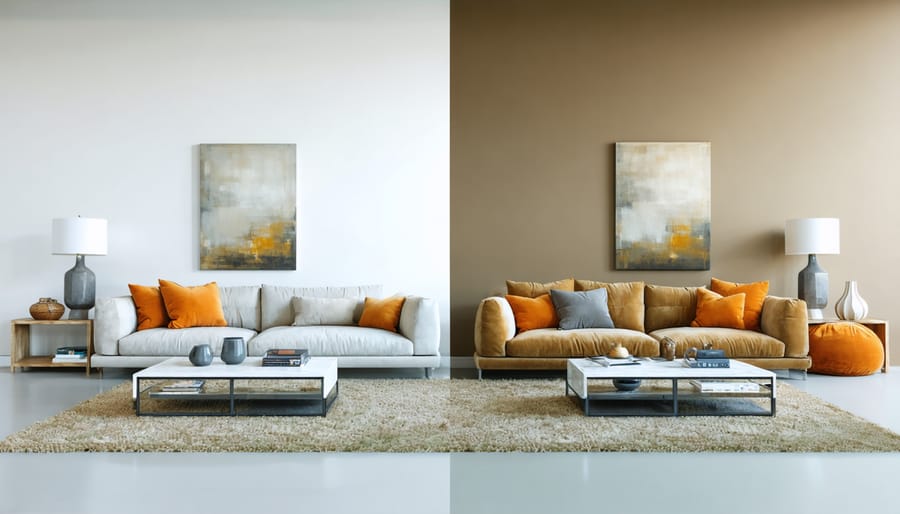
Next, use the 60-30-10 rule as your guide: 60% should be your dominant color (walls and large furniture), 30% your secondary color (upholstery and textiles), and 10% your accent color (accessories and artwork). This creates visual balance while maintaining interest.
Consider using the color wheel to find complementary or analogous combinations. For a safe approach, choose colors that are next to each other on the wheel. For more drama, opt for colors opposite each other.
Test your choices with paint samples and fabric swatches in your space, observing how they look during different times of day. Remember that colors can affect mood – blues and greens promote calm, while yellows and oranges energize. Start with neutral foundations if you’re unsure, then build your palette gradually with accessories and accent pieces.
Psychology of Color in Home Design
Color plays a powerful role in setting the mood and atmosphere of your living spaces. Warm colors like red, orange, and yellow can energize a room and create a welcoming atmosphere, making them perfect for social spaces like living rooms and kitchens. Red stimulates appetite and conversation, while orange adds a burst of enthusiasm and creativity.
Cool colors such as blue, green, and purple tend to have a calming effect. Blue promotes relaxation and tranquility, making it an excellent choice for bedrooms and bathrooms. Green connects us with nature and can reduce stress, while purple adds a touch of luxury and sophistication to any space.
Neutral colors like white, beige, and gray serve as versatile foundations. White creates an illusion of space and cleanliness, while beige offers warmth without overwhelming the senses. Gray acts as a sophisticated neutral that pairs well with both bold and subtle accent colors.
When selecting colors, consider the room’s purpose and natural lighting. Dark colors can make spaces feel cozy but smaller, while lighter shades open up rooms and reflect more light. Remember that colors can also affect perception of temperature – warm hues can make a room feel cozier, while cool tones can create a refreshing atmosphere.
Rhythm and Movement
Just as music flows through time, rhythm and movement in interior design guide the eye through space, creating a harmonious journey throughout your room. Professional designers use these visual-spatial design tricks to create spaces that feel dynamic and engaging.
You can establish rhythm through repetition of colors, patterns, or objects. For example, try placing three identical frames along a wall, or use the same accent color in different spots throughout the room. This creates a visual beat that leads the eye naturally from one area to another.
Movement can be achieved through several techniques. Diagonal lines, curved pathways, and graduated elements (like ascending shelf heights) encourage the eye to travel through the space. Even your furniture arrangement can create movement – position pieces to guide traffic flow and create natural pathways through the room.
Consider these practical applications:
– Use a repeating pattern in throw pillows, artwork, or textiles
– Arrange decorative items in graduating sizes
– Install light fixtures that create a visual path
– Place architectural elements like columns or beams to create rhythm
– Position furniture to create natural circulation patterns
Remember that successful rhythm shouldn’t feel forced or obvious. The goal is to create subtle visual cues that make your space feel cohesive and intentional. Too much repetition can become monotonous, while too little can feel chaotic. Strike a balance by varying your rhythmic elements while maintaining a consistent theme throughout the space.
Focal Points and Emphasis
Natural vs. Created Focal Points
Every room has natural focal points – architectural features that naturally draw the eye, like a stunning fireplace, large windows with a view, or built-in shelving. These existing elements give you a head start in your design journey. When working with natural focal points, enhance them through complementary furniture arrangements, lighting, or decorative elements that highlight their inherent beauty.
However, sometimes a room lacks a strong natural focal point, or you might want to create additional interest. In these cases, you can establish created focal points through strategic design choices. A large piece of artwork, an accent wall with bold wallpaper, or a statement light fixture can serve as an artificial focal point. Even a thoughtfully arranged furniture grouping or an eye-catching media center can become the room’s centerpiece.
The key is balance – whether working with natural or created focal points, avoid competing elements that might confuse the eye. In larger spaces, you might incorporate both types, ensuring they work together harmoniously rather than fighting for attention. Remember, successful focal points guide the eye and create a sense of order in your space.
Accent Piece Selection
Accent pieces are the exclamation points of interior design, adding personality and visual interest to your space. When selecting these statement elements, focus on pieces that complement your existing color scheme while introducing new textures or patterns. A good rule of thumb is the 60-30-10 principle: 60% dominant color, 30% secondary color, and 10% accent color.
Choose accent pieces that serve both functional and aesthetic purposes. Consider items like decorative throw pillows, striking artwork, unique lamps, or eye-catching vases. These elements should draw attention without overwhelming the space. For maximum impact, limit accent pieces to two or three per room and vary their heights and sizes.
Strategic placement is crucial. Position accent pieces at natural focal points or create new ones by grouping items together. In living rooms, try placing a bold piece of art above the sofa or adding colorful cushions to a neutral chair. In bedrooms, consider an ornate mirror or a statement headboard. Remember that negative space around accent pieces helps them stand out and prevents the room from feeling cluttered.
Test different arrangements and trust your instincts – if something feels off, it probably is. The best accent pieces reflect your personality while enhancing the room’s overall design scheme.
Unity and Harmony
Creating spaces that feel naturally connected and well-balanced is essential for successful interior design. Harmony in interior design occurs when all elements work together to create a sense of completeness and visual peace.
To achieve unity in your space, start by selecting a consistent color palette that flows from room to room. This doesn’t mean using the same colors everywhere, but rather choosing hues that complement each other and create a natural progression throughout your home. Consider using a 60-30-10 rule: 60% dominant color, 30% secondary color, and 10% accent color in each room.
Repeating elements is another powerful way to create unity. This could be through consistent materials, such as using the same wood finish on furniture pieces, or through recurring patterns in textiles and décor. Even small details like matching metal finishes on hardware can tie a space together.
Think of your home as a story, where each room is a chapter that contributes to the larger narrative. Use transitional elements like area rugs, artwork, or architectural features to create smooth visual connections between spaces. When selecting furniture and accessories, maintain similar style characteristics while allowing for subtle variations that keep the design interesting.
Remember that unity doesn’t mean uniformity. Create harmony by balancing different elements while maintaining a clear visual relationship between them. This might involve mixing textures within the same color family or combining modern and traditional pieces that share common design elements.
Texture and Pattern
Textures and patterns are powerful tools that can transform a flat, uninspiring space into a rich, multi-dimensional environment. By layering different textures, you create visual and tactile interest that engages both the eye and touch. Start by combining smooth surfaces with rough ones – perhaps a sleek leather sofa with a chunky knit throw blanket, or glossy ceramic vases alongside natural woven baskets.
When working with patterns, follow the 60-30-10 rule: use your dominant pattern in about 60% of the design, a secondary pattern in 30%, and an accent pattern in 10%. This creates balance while preventing visual overwhelm. Mix large-scale patterns with smaller ones, and remember that geometric patterns often work well with organic, flowing designs.
Consider the room’s purpose when selecting textures and patterns. Bedrooms benefit from soft, plush textures that create a cozy atmosphere, while kitchens might feature a mix of smooth countertops and textured backsplashes. Don’t forget vertical surfaces – textured wallpaper, grasscloth, or even fabric wall panels can add depth to your walls.
For a foolproof approach, start with a neutral base and layer in textures through:
– Throw pillows and blankets
– Area rugs
– Window treatments
– Natural elements like plants
– Woven or carved accessories
– Textured artwork or wall hangings
Remember, subtle texture variations can be just as effective as bold pattern combinations in creating visual interest.

Interior design principles are powerful tools that can transform any space from ordinary to extraordinary. By understanding and applying these fundamental concepts – balance, harmony, rhythm, emphasis, and proportion – you can create rooms that not only look beautiful but also function effectively. Remember that successful interior design isn’t about following strict rules, but rather using these principles as guidelines to inform your decisions and enhance your creative vision.
As you begin implementing these principles in your own space, start small and experiment with different approaches. Try rearranging furniture to achieve better balance, play with color schemes to create harmony, or add a bold focal point to establish emphasis. Don’t be afraid to make mistakes – they’re valuable learning opportunities that will help you develop your design intuition.
Whether you’re a homeowner looking to refresh your living space or a professional designer seeking to refine your approach, these timeless principles provide a solid foundation for creating beautiful, functional interiors. Take what you’ve learned and make it your own – after all, the best-designed spaces reflect both proven principles and personal style.