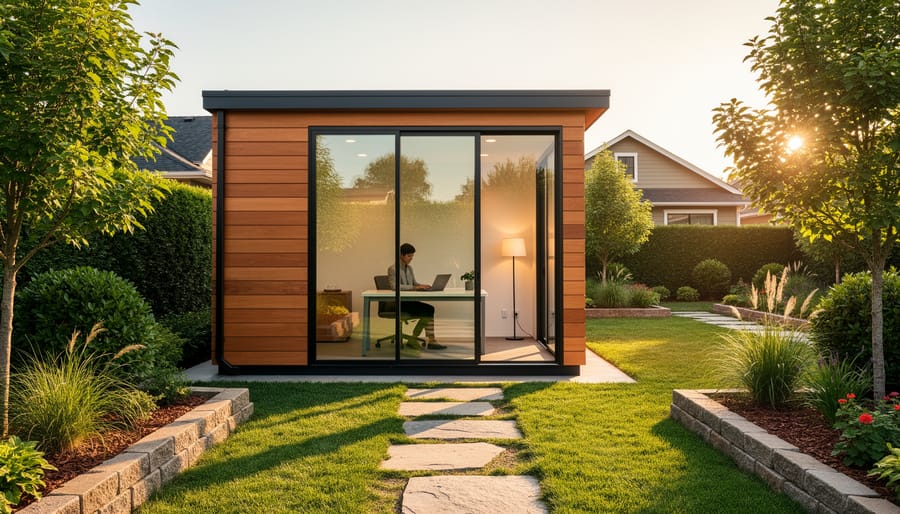
Why a Modular Outdoor Office Beats Converting Your Spare Room
Your home office doesn’t need four walls anymore. Working from home has transformed from temporary solution to permanent lifestyle, and the cramped corner of your bedroom or makeshift dining table setup just isn’t cutting it. Enter the modular outdoor office: a dedicated, customizable workspace that sits in your backyard, giving you the separation you need without the hassle of moving or converting your spare room into something it wasn’t designed to be.
Think of modular outdoor offices as sophisticated garden sheds that actually want to be there. These pre-fabricated structures arrive in sections, assemble in days rather than months, and cost a fraction of traditional home additions. You’re looking at a real office with insulation, electricity, internet connectivity, and climate control, all without touching your house’s existing footprint or navigating complex building permits.
The appeal goes beyond pandemic-era work-from-home arrangements. Freelancers gain client-meeting spaces that separate professional from personal. Parents reclaim dining tables from laptop takeover. Property values increase with functional square footage. And unlike traditional construction, you can take your office with you if you move or reconfigure it as your needs change.
Whether you’re drowning in video calls from your kitchen or dreaming of a creative studio steps from your back door, modular outdoor offices deliver professional workspace without the traditional headaches of home renovation.
What Makes an Outdoor Office ‘Modular’?
Key Features of Modular Design
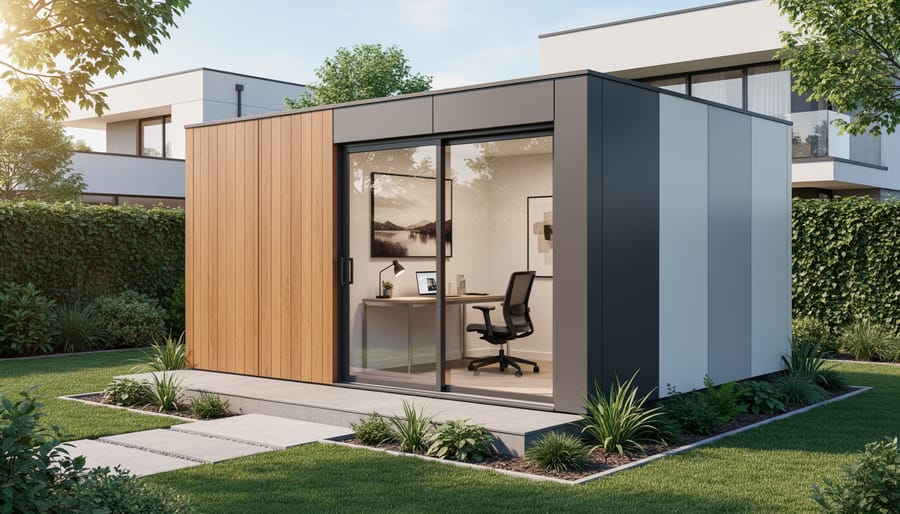
One of the biggest advantages of choosing a modular outdoor office is how these structures come together like sophisticated building blocks designed specifically for adults. Instead of complex construction projects, you’re working with interchangeable components that fit together seamlessly, making both initial setup and future modifications surprisingly straightforward.
The panels themselves snap together using intuitive connection systems, eliminating the need for specialized tools or professional contractors for basic assembly. Most quality modular offices feature insulated wall panels that lock into place, providing excellent temperature control year-round while maintaining that clean, modern aesthetic you’d expect from a professional workspace.
Scalability is another game-changer. Starting small with an 8×10 space for solo work? Great. Need to expand next year when your business grows? Simply add modules to extend your office without tearing anything down or starting from scratch. This flexible sizing means your investment grows with your needs rather than becoming obsolete.
Pre-wired electrical systems take the guesswork out of power management. Many modular designs include built-in channels for running cables, pre-installed outlets, and mounting points for lighting fixtures. You’re essentially getting a plug-and-play solution that connects to your home’s power supply through a single junction point, making technology integration remarkably simple even for DIY enthusiasts.
Modular vs. Custom-Built: What’s the Difference?
Understanding the difference between modular and custom-built outdoor offices helps you make the right choice for your needs and budget.
Modular outdoor offices are prefabricated units built in sections at a factory, then delivered and assembled on your property. They typically cost 30-50% less than custom builds, with prices ranging from $10,000 to $50,000 depending on size and features. Installation takes just days rather than weeks or months, meaning you can start working in your new space almost immediately. Most modular units come with standard layouts and designs, though many manufacturers offer customization options for finishes, windows, and interior configurations.
Custom-built outdoor offices are constructed from scratch on your property, designed specifically to your requirements. While they offer unlimited design flexibility and can match your home’s architecture perfectly, they come with higher costs, longer timelines, and more complex permit processes.
For resale considerations, modular units have an advantage since they’re typically removable and can move with you. Custom-built structures become permanent fixtures that may or may not appeal to future buyers. Modular options make particular sense if you’re looking for a quick, budget-friendly solution with professional results.
The Real Benefits You’ll Notice Daily
Instant Work-Life Separation
Walking just twenty feet from your back door can completely transform your workday mindset. When you physically leave your home and enter a separate structure, your brain automatically shifts into professional mode. This simple act of commuting, even for thirty seconds, establishes work-life boundaries that working from your kitchen table simply can’t provide. You’ll find yourself more focused during work hours and truly present with family afterward. No more answering emails at the dinner table or feeling guilty about household chores during meetings. Your kids quickly learn that when you’re in the office, you’re at work, reducing interruptions and teaching healthy boundaries. At day’s end, closing that office door becomes a powerful ritual signaling work is done, helping you mentally disconnect and enjoy your personal time without the nagging pull of your laptop in the next room.
Comfort in All Seasons
Working year-round in your modular outdoor office is totally achievable with the right weatherproofing measures. Most quality units come with thick insulation in the walls, floor, and ceiling, keeping temperatures comfortable regardless of the season. Think of it like a well-built tiny home rather than a basic shed.
For climate control, you have several practical options. Mini-split HVAC systems are energy-efficient favorites, providing both heating and cooling without requiring extensive ductwork. Alternatively, portable heaters and air conditioners work well for smaller spaces. Many homeowners also install ceiling fans to improve air circulation during milder months.
Weatherproofing is essential. Look for units with proper sealing around windows and doors, moisture-resistant materials, and adequate ventilation to prevent condensation buildup. Double-paned windows help with temperature regulation while reducing outside noise. With these features in place, your outdoor office becomes a comfortable workspace every single day, whether you’re dealing with summer heat or winter chill.
Property Value and Future Flexibility
One of the smartest aspects of investing in a modular outdoor office is its incredible versatility. Today it’s your productive workspace, but tomorrow it could easily transform into a home gym, art studio, yoga retreat, or comfortable guest room. This flexibility means you’re not locked into a single purpose, which is especially valuable as your lifestyle evolves.
From a real estate perspective, adding a quality modular office can genuinely boost your property’s appeal and value. Potential buyers love seeing functional square footage that doesn’t crowd the main house. It’s an attractive selling point that sets your home apart in competitive markets. Real estate agents often highlight these structures as bonus spaces that offer buyers immediate solutions for remote work needs or personal hobbies.
The key is choosing a well-built unit with proper insulation, electrical systems, and finishing touches that make repurposing simple. With minimal adjustments like swapping out furniture or adding equipment, your outdoor office adapts to whatever life throws your way while protecting your investment.
Planning Your Modular Office: Size, Placement, and Permissions
Sizing It Right for Your Work
Finding the right size for your modular outdoor office depends entirely on how you’ll use the space. For basic desk work and video calls, a compact 8×10 foot unit provides plenty of room for a workstation and chair with comfortable movement. If you regularly host client meetings or collaborative sessions, consider stepping up to 10×12 or 12×14 feet, which accommodates a desk area plus a small meeting table with seating.
Storage needs often get overlooked during planning. If you require filing cabinets, bookshelves, or equipment storage, add an extra 2-3 feet to your width or length. A 10×16 layout works beautifully for comprehensive workspace with dedicated storage zones.
The most common sizing mistake? Going too small to save money, then feeling cramped daily. Walk through your current workspace and measure the footprint you actually use, including chair push-back space (add 3 feet behind your desk minimum). Another pitfall is forgetting clearance around the structure. Leave at least 18-24 inches on all sides for maintenance access and proper ventilation.
Before finalizing dimensions, place stakes with string where your office will sit. Spend time within that footprint to ensure it feels right. This simple step prevents costly sizing regrets.
Where to Place Your Garden Studio
Finding the perfect spot for your modular outdoor office makes all the difference in your daily work experience. Start by observing how sunlight moves across your yard throughout the day. Morning sun can energize your workspace, while harsh afternoon glare might require strategic placement or window treatments.
Privacy matters when you’re taking calls or video meetings. Position your studio away from neighbors’ direct sightlines and busy sidewalks. Consider natural screening from existing trees or plan to add landscaping later.
Think practically about utility access too. You’ll likely need electricity for computers, lighting, and climate control. Placing your office within reasonable distance of your main house simplifies running power lines and internet cables. Some homeowners even add plumbing for a small sink or bathroom.
Foundation requirements vary by size and local codes. Most modular offices work well on concrete pads, gravel bases, or deck blocks. Check your municipality’s setback requirements before finalizing placement, as some areas require structures to sit a minimum distance from property lines.
Finally, don’t place it too far away. You want easy access during bad weather, but enough separation to create that important mental boundary between home and work life.
Permits, Regulations, and Neighbor Relations
Before installing your modular outdoor office, check with your local building department about permit requirements. Most municipalities require permits for structures over a certain size, typically 120-200 square feet, though rules vary widely by location. You’ll need to consider setback requirements, which dictate how far your office must sit from property lines, usually between 5-10 feet. If you’re in an HOA community, review your association’s guidelines early in the planning process, as they may have specific restrictions on outdoor structures, colors, or placement.
Being proactive with neighbors goes a long way. Share your plans before construction begins, addressing concerns about noise during installation, visual impact, or shade. A simple conversation explaining your project’s purpose and timeline can prevent future disputes. Consider factors like window placement to respect privacy and ensure your office won’t block anyone’s views or sunlight. Taking time to navigate these regulations upfront saves headaches and potential removal costs down the road.
Must-Have Features for a Functional Outdoor Office
Power and Connectivity Solutions
Getting power and internet to your modular outdoor office is easier than you might think. For electricity, you have two main routes: running a dedicated circuit from your main house or exploring solar power options. A dedicated circuit requires hiring an electrician but provides reliable, unlimited power. Solar panels work great for basic needs like lighting and charging devices, though you’ll need battery backup for cloudy days.
Internet connectivity depends on your distance from the house. WiFi extenders handle short distances up to 150 feet, while mesh network systems provide stronger signals across larger properties. For the most reliable connection, run ethernet cable underground in conduit. This DIY-friendly project just requires digging a shallow trench and protecting the cable properly.
Don’t forget backup power solutions. A small uninterruptible power supply protects your computer and equipment during outages, automatically switching to battery power within milliseconds. For extended outages, consider a portable generator sized appropriately for your office’s power needs.
Climate Control That Actually Works
Keeping your modular office comfortable year-round doesn’t require complex systems. The beauty of these compact spaces is that they’re easier to heat and cool than traditional rooms.
For heating, mini-split systems are your best bet. These ductless units mount on the wall, provide both heating and cooling, and are incredibly energy-efficient for small spaces. Installation is straightforward since they only require a small hole through the wall for refrigerant lines. If you’re working with a tighter budget, a quality space heater with a thermostat can maintain comfortable temperatures, though you’ll want to ensure your electrical setup can handle the load.
Cooling options follow similar logic. That same mini-split handles summer heat beautifully, or you can opt for a window unit if your modular office design includes appropriately sized windows. Don’t overlook passive ventilation strategies either. Position windows to create cross-breezes, add a ceiling fan to circulate air, and consider installing vents near the roofline to let hot air escape naturally.
For truly efficient climate control, focus on insulation first. Properly insulated walls and ceiling make any heating or cooling system work better and cost less to operate. Add weatherstripping around doors and windows to prevent drafts, and you’ll create a workspace that stays comfortable without breaking the bank on energy bills.
Lighting and Windows for Productivity
Getting your lighting right makes all the difference between productive workdays and constant screen glare headaches. Start with natural light placement by positioning windows on the side of your desk rather than directly in front or behind, which creates uncomfortable reflections on your monitor. Consider installing adjustable blinds or curtains to control brightness throughout the day.
For task lighting, go with LED desk lamps that offer adjustable brightness and color temperature settings. Position them opposite your dominant hand to minimize shadows while writing or working with documents. Ceiling-mounted LED panels provide even ambient lighting without creating harsh shadows or hotspots.
Energy efficiency matters when your office runs daily. Choose ENERGY STAR certified fixtures and consider solar-powered options for exterior lighting. Motion sensors for entryway lights reduce waste, and dimmer switches let you adjust lighting based on time of day and task requirements. Smart lighting systems can automate these adjustments, syncing with your work schedule for maximum comfort and minimum energy consumption.
DIY Setup Tips and Technology Integration
Foundation Prep You Can Do Yourself
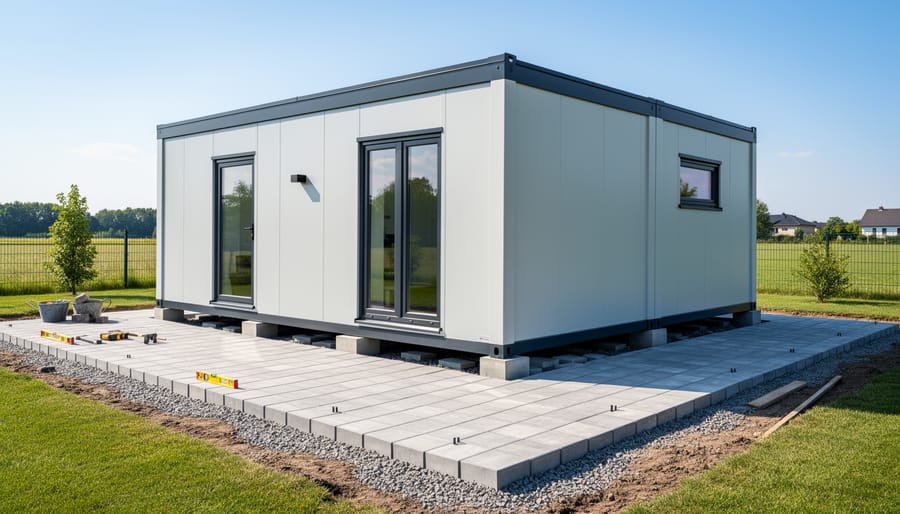
You don’t need a full concrete slab to create a stable foundation for your modular office. Three simple options work beautifully for most installations, and you can tackle them yourself over a weekend.
A gravel base is the easiest approach. Excavate the area 4-6 inches deep, extending about 12 inches beyond your office footprint. Add landscape fabric to prevent weed growth, then fill with crushed gravel. Use a tamper or plate compactor to pack it down firmly, checking with a long level as you go. Top with a layer of fine gravel for a smooth finish.
Concrete pavers offer a clean, level surface. Prepare a 2-3 inch sand bed over compacted soil, then lay pavers in your desired pattern. Tap them into place with a rubber mallet and sweep sand between joints to lock everything together.
Concrete deck blocks provide the quickest solution. Set them on leveled ground in a grid pattern matching your office dimensions. Use a post level to ensure each block sits perfectly level and at the same height. Add shims underneath if needed.
Whichever method you choose, proper leveling is essential. Take your time with this step, as it prevents door alignment issues and ensures your office remains stable for years to come.
Smart Office Technology to Add
Upgrading your modular outdoor office with smart office technology transforms it from a simple shed into a productivity powerhouse. Start with a smart thermostat like the Nest or Ecobee, which learns your schedule and adjusts temperatures automatically. This is especially valuable in outdoor offices where temperature fluctuations can be more dramatic than inside your main home.
Automated lighting makes a huge difference for those early morning work sessions or late afternoon deadlines. Smart bulbs from Philips Hue or LIFX let you adjust brightness and color temperature throughout the day, supporting your natural circadian rhythm. You can even set schedules so lights turn on as you approach your office.
Security is essential for a detached workspace. Install outdoor-rated security cameras like Ring or Arlo to monitor your office remotely. Motion-activated floodlights add an extra layer of protection while helping you navigate safely after dark.
Voice-controlled devices like Amazon Alexa or Google Home streamline your workflow. Control music, set timers, manage your calendar, or adjust your environment without breaking focus from your work. The installation is straightforward for most DIYers: most smart devices connect via WiFi and use simple apps for setup.
Remember to ensure your outdoor office has strong WiFi coverage, possibly requiring a mesh network extender. With these technologies integrated, your modular office becomes as functional and comfortable as any premium indoor workspace.
What to Look for When Shopping
Quality Markers That Matter
When shopping for a modular outdoor office, understanding quality markers helps you avoid costly mistakes and ensures long-term comfort.
Start with insulation ratings. Look for walls with an R-value of at least R-13 to R-19, and ceiling insulation around R-30. These numbers directly impact your heating and cooling costs year-round. If you’re in an extreme climate, higher ratings mean better comfort and lower energy bills.
Window quality matters tremendously since you’ll spend hours looking through them. Double-pane, Low-E glass windows provide excellent thermal performance while reducing glare on your computer screen. Check for proper sealing and good locking mechanisms.
For exterior materials, fiber cement siding or high-quality vinyl offers durability and minimal maintenance compared to basic wood alternatives. These materials resist moisture, pests, and warping far better.
Don’t overlook warranties and certifications. Reputable manufacturers offer at least 10-year structural warranties. Look for certifications like those from the International Code Council or local building code compliance stamps, which ensure your structure meets safety standards.
Ask about construction methods too. Welded steel frames typically outlast basic wood framing, especially in humid environments. Understanding these quality markers empowers you to compare options confidently and invest wisely.
Budget Reality Check
Expect to invest between $5,000 and $15,000 for a basic 8×10 foot modular office pod. Mid-range units with better insulation and electrical packages typically run $15,000 to $30,000, while premium models with climate control, high-end finishes, and smart technology can exceed $40,000. Base prices usually include the shell structure, basic windows, and door. You’ll likely pay extra for electrical wiring, HVAC systems, flooring upgrades, and interior shelving. Don’t overlook hidden costs like site preparation, foundation pads or decking, permit fees averaging $500 to $2,000, delivery charges that can add $1,000 or more, and professional installation if you’re not tackling it yourself. Internet connectivity solutions and ongoing utility costs also deserve a spot in your budget planning.
Modular outdoor offices offer an incredibly flexible and practical solution for today’s work-from-home lifestyle. These adaptable spaces combine the comfort of a dedicated workspace with the refreshing benefits of being outdoors, all while keeping your home’s interior free from work distractions. Whether you’re a remote worker needing a professional environment for video calls or a creative professional seeking inspiration beyond four walls, a modular outdoor office can transform how you approach your workday.
Take some time to assess your backyard space, budget, and specific work requirements. Consider how much customization you need, whether you’ll tackle installation yourself or hire professionals, and what features are non-negotiable for your productivity. Remember that this isn’t just another expense—it’s a long-term investment in your career, mental well-being, and property value. Many homeowners find that a well-designed outdoor office pays for itself through increased productivity and the added appeal it brings to their property.
The beauty of modular construction means you can start simple and expand as your needs grow, making this solution accessible regardless of where you are in your work-from-home journey.