Uneven Floors: When Should You Really Start Worrying?
Uneven floors pose serious safety hazards that extend far beyond mere aesthetic concerns. When floorboards dip, tilt, or create unexpected level changes, they significantly increase the risk of trips, falls, and injuries – particularly for elderly residents and young children. Understanding the common causes of uneven floors is crucial, as these issues often signal deeper structural problems that can compromise your home’s integrity. From subtle slopes that strain joints and muscles during daily activities to severe unevenness that destabilizes furniture and appliances, floor irregularities demand immediate attention. While minor variations might seem harmless, even small differences in floor level can create dangerous tripping hazards, especially in low-light conditions or high-traffic areas. Identifying and addressing these issues promptly isn’t just about maintaining your home’s value – it’s about protecting the safety and well-being of everyone who walks through your doors.
Signs Your Uneven Floor Could Be Dangerous
Visible Signs of Floor Damage
When inspecting your floors for potential hazards, several visible signs can indicate serious structural issues. The most obvious sign is noticeable sloping or dipping in your floor surface – if you place a marble on the floor and it rolls consistently in one direction, that’s a red flag. Watch for expanding gaps between your floorboards or tiles, as these can signal shifting foundation problems.
Cracks in your floor surface deserve immediate attention, especially if they’re wider than 1/8 inch or appear to be growing. In homes with hardwood floors, look for boards that squeak excessively, feel spongy when walked on, or show signs of rotting. Tile floors might display cracked or loose tiles, while carpet may develop ripples or bumps that weren’t there before.
Pay attention to where your floor meets the walls – separating baseboards, visible gaps, or molding that’s pulling away from the wall are all warning signs. In basements or ground floors, keep an eye out for moisture damage, which often appears as dark staining, mold growth, or a musty smell. These visible indicators shouldn’t be ignored, as they often point to underlying structural issues that require professional evaluation.

Hidden Dangers to Watch For
While uneven floors can present obvious signs like visible sloping or creaking, there are several less noticeable indicators that could signal serious structural problems. Watch for doors that stick or don’t close properly, as this might mean your home’s foundation is shifting. Pay attention to gaps between walls and baseboards, or between the floor and wall junctions – these can be early warning signs of structural movement.
Look for hairline cracks in walls, especially near door frames or windows, which could indicate the floor’s unevenness is affecting the entire structure. Check if your furniture tends to migrate in a particular direction over time, or if items regularly roll to one side of a surface. In bathrooms and kitchens, watch for water pooling in unusual spots, as this can reveal subtle floor slopes you might not notice otherwise.
Be alert to any musty odors or increased humidity in your basement or crawl space, as these could point to moisture issues affecting your floor’s structural integrity. Also, notice if floor tiles are becoming loose or if hardwood planks are starting to separate – these could be signs of underlying problems requiring immediate attention.
Safety Risks of Uneven Floors
Trip and Fall Hazards
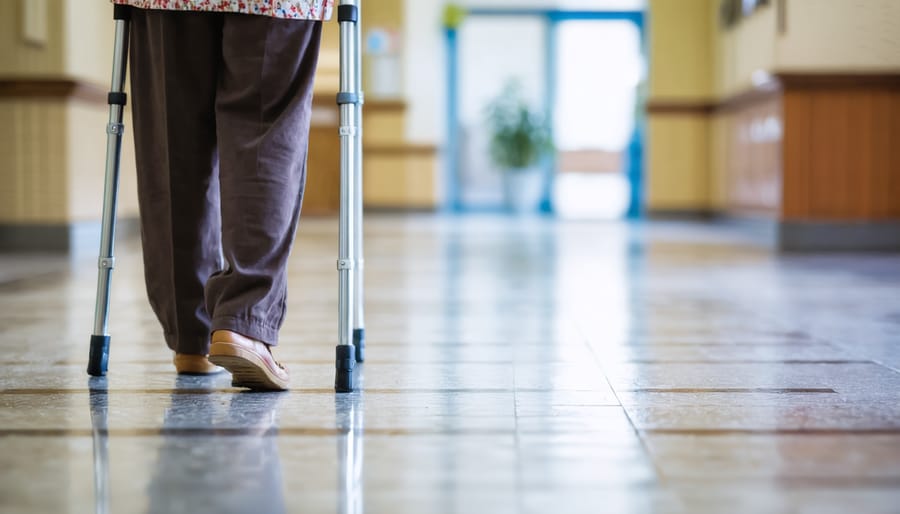
Uneven floors present significant trip and fall hazards, particularly for vulnerable household members. The elderly are especially at risk due to reduced balance and slower reaction times, making even slight floor irregularities dangerous obstacles. Children, who often run and play without paying attention to their surroundings, can easily stumble on unexpected floor variations.
These hazards become more pronounced in low-light conditions or during nighttime bathroom visits. The risk increases when carrying items that obstruct vision or when walking while distracted. Common accident scenarios include catching a toe on raised floorboards, stumbling on transitional areas between different flooring materials, or losing balance on sloping sections.
For seniors, a fall caused by uneven flooring can have severe consequences, potentially leading to hip fractures or other serious injuries. Children might experience less severe injuries but are more likely to trip repeatedly in problem areas. Even able-bodied adults can be caught off guard, especially when wearing socks on wooden floors or carrying heavy items.
To minimize risks, ensure adequate lighting in problem areas, mark significant level changes with visible indicators, and consider installing handrails in particularly challenging sections. Remember that what might seem like a minor irregularity can pose a major safety risk for some household members.
Structural Concerns
Uneven floors often signal more than just surface-level issues. When your floors start to slope or sag, it could indicate serious structural problems that require immediate attention. Foundation settling, damaged floor joists, and compromised support beams are common culprits behind uneven flooring, and these issues can worsen over time if left unchecked.
Water damage is a particularly concerning cause of structural deterioration. Leaks from plumbing, poor drainage, or flooding can weaken wooden support structures and create ideal conditions for destructive wood rot and mold growth. In older homes, termite damage might be lurking beneath those uneven surfaces, silently compromising your home’s structural integrity.
Load-bearing wall problems can also manifest as uneven floors. If previous renovations removed or modified these crucial walls without proper engineering, the floor above might begin to sag. Similarly, undersized beams or improperly spaced floor joists can lead to floor deflection, especially in areas that bear heavy weights like appliances or furniture clusters.
These structural issues don’t typically resolve themselves and can lead to more severe problems, including:
– Cracked walls and ceilings
– Stuck doors and windows
– Separated trim and molding
– Compromised roof structure
– Potential building code violations
When to Take Immediate Action
Emergency Situations
Several situations require immediate professional attention when dealing with uneven floors. If you notice sudden changes in floor levelness, especially after severe weather events or earthquakes, this could indicate serious structural issues. Cracks wider than 1/4 inch, particularly if they’re growing larger, are major red flags that shouldn’t be ignored.
Watch out for bouncing or springy floors, which might suggest compromised floor joists or support beams. If doors begin sticking or windows become difficult to open, this could mean your foundation is shifting dangerously. Gaps between walls and floors, especially when accompanied by cracking drywall or tilting chimneys, demand urgent expert evaluation.
Water damage presents another critical scenario – if you spot water stains, mold, or feel sponginess underfoot, call a professional immediately. This could indicate rot that’s compromising your floor’s structural integrity. For homes with basements or crawl spaces, any visible sagging of floor joists or beams requires immediate assessment by a structural engineer to prevent potential collapse.
Remember, these issues typically worsen over time, so addressing them promptly can prevent more extensive damage and costly repairs.
DIY Assessment Tips
Want to check if your uneven floors pose a safety risk? Here are some simple tests you can perform at home. Start with the marble test: place a marble on different spots of your floor and watch if it rolls – this reveals slope direction and severity. For a more precise measurement, use a standard level tool, placing it in various directions across your floor.
Look for visible gaps between the floor and baseboards, and check if doors swing freely or stick. Pay attention to any squeaking or creaking sounds when walking, as these can indicate structural issues. Test floor stability by walking the entire area, noting any bouncy spots or sections that feel different underfoot.
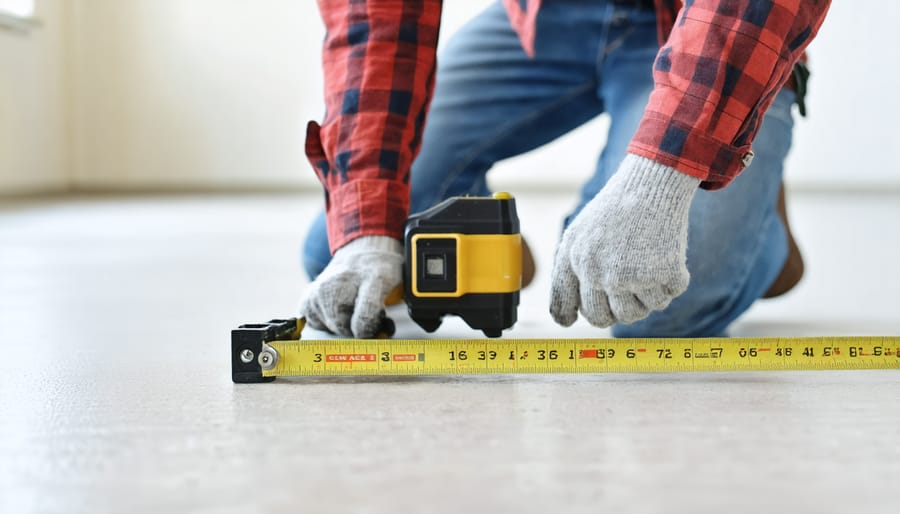
Measure floor slope using a straight piece of wood and ruler: place the wood across the floor and measure the gap underneath at its widest point. As a general rule, slopes greater than 1-2 inches over 15 feet warrant professional attention. Document your findings with photos and measurements to track changes over time or share with professionals if needed.
Temporary Safety Measures
While waiting for professional repairs or exploring permanent fixes for uneven floors, there are several immediate steps you can take to improve safety. Start by marking hazardous areas with brightly colored tape or paint to make uneven spots more visible. This simple solution can prevent trips and falls, especially in low-light conditions.
Consider installing temporary non-slip mats or runners in high-traffic areas. These provide extra traction and can help bridge minor height differences. For more significant gaps, especially when addressing floor threshold issues, temporary wooden or rubber transition strips can create smoother pathways.
Ensure proper lighting throughout your space by adding battery-operated motion sensor lights or plug-in night lights near problem areas. This increased visibility is particularly important for elderly residents or children who might be less aware of floor irregularities.
Rearrange furniture to create clear pathways that avoid the most problematic areas. Consider blocking off severely uneven sections if possible, and inform all household members and visitors about potential hazards. For areas where furniture might wobble due to floor unevenness, use furniture levelers or shims as a temporary solution.
Keep in mind that these measures are only short-term solutions. While they can help prevent accidents, they shouldn’t delay necessary professional assessment and repairs, especially if the unevenness is severe or worsening over time.
Uneven floors pose significant safety risks that shouldn’t be ignored. From trip hazards and increased fall risks to potential structural issues, these problems can lead to serious consequences if left unaddressed. We’ve explored how uneven floors can impact both residential and commercial spaces, affecting everything from daily activities to property values.
Remember, the key to managing uneven floor issues lies in early detection and prompt action. Whether you notice slight slopes, visible dips, or creaking sounds, it’s crucial to investigate these warning signs immediately. While some minor issues might be manageable with temporary DIY solutions, significant floor problems require professional assessment and repair.
Don’t wait until a small issue becomes a major problem. Regular floor inspections, maintenance, and quick response to any changes can help prevent accidents and costly repairs down the line. Your safety and property value depend on maintaining level, stable floors throughout your space. If you’re unsure about the severity of your floor issues, always err on the side of caution and consult with a qualified professional who can provide expert guidance and solutions.