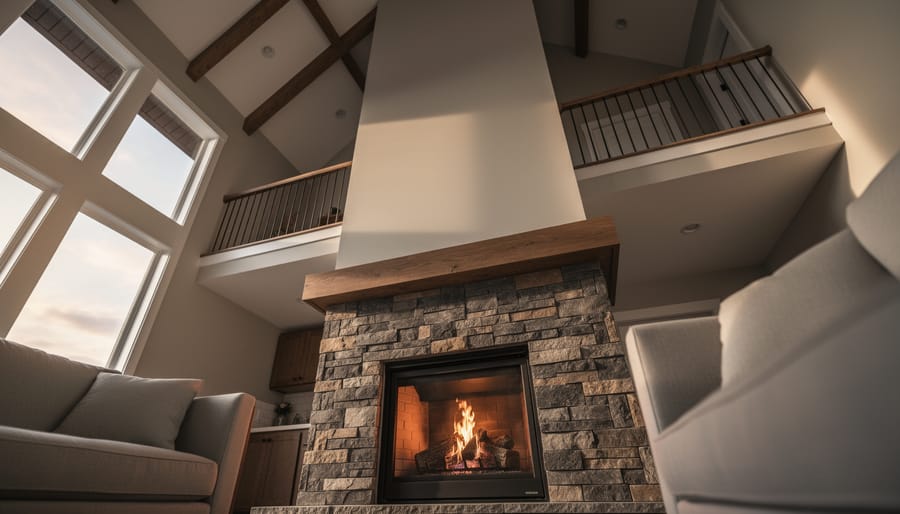
Build a Stunning Two-Story Fireplace That Won’t Cost a Fortune
Transform your living space into a showstopping focal point by choosing a two-story fireplace that draws the eye upward and creates architectural drama few other features can match. These vertical statement pieces do more than provide warmth—they anchor your entire home’s design while making even modest-sized rooms feel grand and luxurious.
Before diving into specific designs, understand that two-story fireplaces range from surprisingly manageable DIY projects to complex installations requiring professional contractors. If you’re comfortable with DIY fireplace basics like framing, drywall work, and following local building codes, you can tackle the surround and finishing work yourself while hiring certified professionals for gas lines, chimney installation, and structural modifications.
The investment varies widely—expect anywhere from $3,000 for a basic prefabricated gas insert with DIY finishing to $25,000+ for custom stone installations with structural changes. Your specific cost depends on fuel type, materials, whether you’re working with existing structure or creating new openings, and how much professional help you need.
This guide walks you through eight distinct two-story fireplace designs, from sleek modern glass installations to rustic stone masterpieces. You’ll discover which elements you can confidently handle yourself, where to call in experts, and how to make smart material choices that balance beauty with your budget and skill level.
Understanding Two-Story Fireplace Construction Basics
Structural Support Requirements
A two-story fireplace is a stunning focal point, but it’s also a serious structural undertaking that requires careful planning from the ground up. Before you fall in love with a design, you need to understand what’s happening beneath the surface.
First things first: the foundation. A standard fireplace weighs between 3,000 to 6,000 pounds, but a two-story version can easily exceed 10,000 pounds when you factor in the chimney, masonry, and hearth materials. This means you’ll likely need a dedicated concrete footing that extends below the frost line. If you’re adding this feature to an existing home, a structural engineer will need to assess whether your current foundation can handle the load or if additional reinforcement is necessary.
Weight distribution is equally critical. The load doesn’t just sit in one spot—it needs to transfer efficiently through your floor system to the foundation. For existing homes, this often means installing additional support beams, joists, or even steel columns in the basement or crawl space. New construction gives you more flexibility to plan these supports from the start.
Here’s the bottom line: this is definitely a “call the professionals” situation. A structural engineer’s assessment typically costs $500 to $1,500 but prevents catastrophic and expensive mistakes. Most jurisdictions require engineered plans and permits for projects of this scope anyway, so budget for professional guidance alongside your design dreams.
Permits and Code Compliance
Before breaking ground on your two-story fireplace project, you’ll need to navigate some important regulatory requirements. Building codes for fireplaces vary by location, but most jurisdictions follow the International Residential Code (IRC) as a baseline. Your local building department will require permits for both the structural work and the fireplace installation itself.
Key clearance specifications typically include maintaining at least 2 inches between combustible materials and the fireplace framing, though this varies based on your specific fireplace type. You’ll also need proper hearth extensions—usually 16 to 20 inches in front of the fireplace opening and 8 inches on the sides. For two-story installations, chimney height requirements dictate that the flue must extend at least 3 feet above the roof penetration point and 2 feet higher than any roof surface within 10 feet horizontally.
Expect multiple inspections throughout your project: foundation or structural framing inspection, rough-in inspection before closing walls, and final inspection once installation is complete. Professional fireplace installers can often handle permit applications and coordinate inspections, which may be worth the investment given the complexity involved. Don’t skip this step—unpermitted work can complicate insurance claims and future home sales.
DIY vs. Professional Tasks
Understanding your capabilities before getting started helps ensure a safe, successful project. You can tackle cosmetic elements like painting surrounding walls, installing mantels, arranging furniture, and adding decorative touches such as artwork or mirror placement. Simple stone or tile facing installation is also manageable for confident DIYers with proper research.
However, always hire licensed professionals for gas line installation, electrical work for built-in lighting or outlets, structural modifications that affect load-bearing walls, chimney construction or alterations, and fireplace insert installations. These tasks require permits, specialized knowledge, and safety certifications. Attempting them yourself risks serious injury, code violations, and insurance issues. For two-story fireplaces specifically, professional assessment is essential since they involve complex venting systems and structural considerations that impact your home’s safety and integrity.
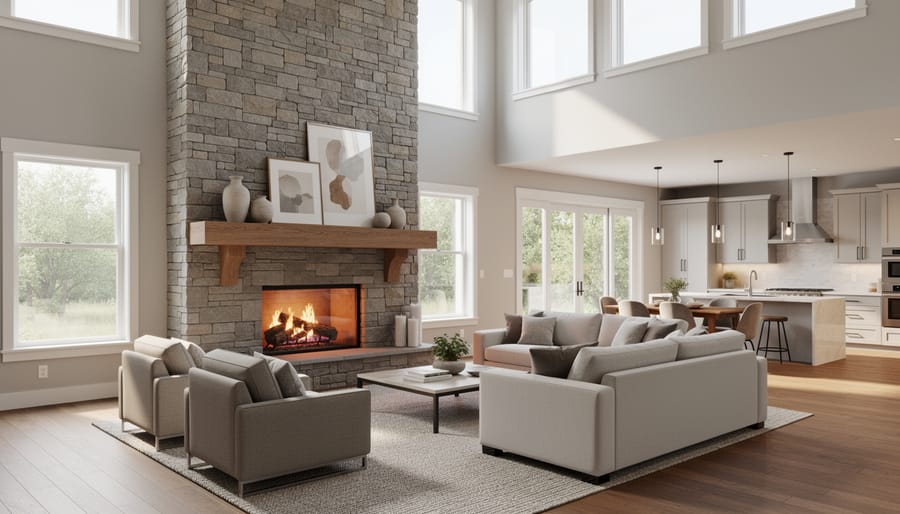
Design Idea #1: The Classic Stone Column Fireplace
Material Selection and Costs
Choosing the right material for your two-story fireplace dramatically impacts both your budget and the overall aesthetic. Natural stone remains the premium choice, offering authentic texture and timeless appeal. Expect to pay $25-50 per square foot for materials like limestone or granite, with installation pushing total costs to $100-200 per square foot. For a typical two-story fireplace covering 200-300 square feet, you’re looking at $20,000-60,000 professionally installed.
Manufactured stone veneer provides a budget-friendly alternative at $6-12 per square foot for materials. It’s significantly lighter than natural stone, making it more DIY-friendly and easier to install on existing walls. Total installed costs typically run $15-30 per square foot, bringing your project to $3,000-9,000 for a similar-sized fireplace.
Traditional brick offers another attractive option, priced at $10-25 per square foot installed. It works beautifully in farmhouse and industrial designs, and experienced DIYers can tackle brick veneer projects themselves with proper preparation.
For DIY installations, manufactured stone veneer offers the best balance of affordability, workability, and visual impact. Natural stone typically requires professional installation due to its weight and specialized cutting requirements.
DIY Installation Steps
Before diving in, it’s important to acknowledge that a two-story fireplace project requires careful planning and, in most cases, professional help for structural elements, gas lines, and venting. However, there are several finishing tasks you can tackle yourself to save money and add personal touches.
Start with stone veneer application if you’re upgrading an existing fireplace structure. Begin at the bottom and work your way up, applying mortar to both the wall and the back of each stone piece. Use spacers to maintain consistent gaps, and mix stone sizes for a natural look. Allow each section to set before moving higher, especially important on tall installations.
Creating or refreshing the hearth involves selecting appropriate materials like tile, stone, or brick. Ensure your base is level and properly supported. Apply thinset mortar evenly, set your materials with slight twisting motions to eliminate air pockets, and use tile spacers for consistent grout lines. Allow proper curing time before grouting.
For finishing touches, install a mantel at a safe distance from the firebox opening, typically 12 inches minimum. Secure it to wall studs using heavy-duty brackets. Add accent lighting above or beside the fireplace to highlight the stonework and create ambiance during evening hours.
Seal all stonework with an appropriate penetrating sealer to protect against soot and moisture. Apply grout sealer to tile hearths for easier maintenance. These final steps ensure your two-story fireplace looks professionally finished while standing up to regular use.
Design Variations to Consider
Personalizing your two-story fireplace starts with choosing the right materials and features. Stone patterns can dramatically change the look—try stacked ledgestone for a modern rustic vibe, smooth river rock for organic warmth, or classic brick in herringbone patterns. You can also mix materials, combining stone with wood beams or metal accents for visual interest.
Mantel placement offers another customization opportunity. Install a traditional mantel at the first-floor level for displaying decor, add floating shelves at staggered heights for a contemporary feel, or skip mantels entirely for a sleek, minimalist appearance. Some homeowners add a second mantel on the upper level to create symmetry and additional display space.
Consider accent features that make your fireplace truly unique. Built-in niches beside the fireplace provide storage for firewood or decorative items. Integrated lighting—whether recessed spotlights highlighting the stonework or LED strips behind stone panels—adds ambiance and dimension. For tech-savvy DIYers, installing a TV mount with concealed wiring creates a functional entertainment focal point while maintaining clean lines.
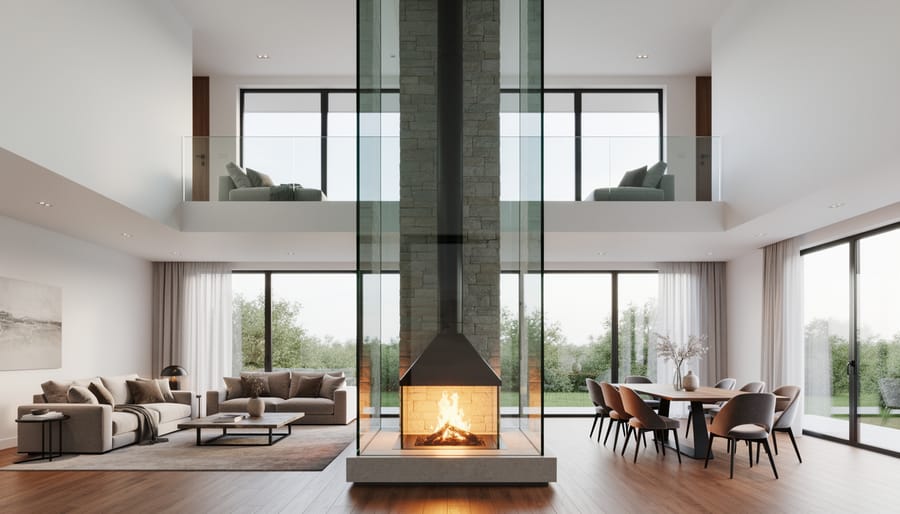
Design Idea #2: Modern Linear See-Through Design
Choosing the Right Firebox Unit
Selecting the right firebox is crucial for a two-story fireplace installation. For dramatic visual impact, consider see-through or double-sided units that allow viewing from multiple rooms. These designs work beautifully between living and dining areas or can create a stunning focal point in an open-concept space.
When shopping for your firebox unit, prioritize safety certifications from recognized testing laboratories. Look for units specifically rated for two-story installations with proper clearance specifications for combustible materials. Modern prefabricated fireboxes come with built-in safety features like heat shields and air-cooled systems that protect surrounding walls and framing.
Size matters significantly in tall installations. Your firebox should be proportional to the wall height—a small unit can look lost in a two-story space. Most manufacturers offer fireboxes ranging from 36 to 60 inches wide, with some custom options extending even larger.
Consider fuel type carefully. Gas fireboxes offer easier installation with existing gas lines and don’t require extensive venting systems. Wood-burning units provide authentic ambiance but demand more complex chimney systems and regular maintenance. Electric units are the most DIY-friendly option, requiring only electrical connections, though they may lack the presence needed for grand two-story designs. Always verify local building codes before purchasing.
Framing and Surround Construction
Building the frame for your two-story fireplace starts with establishing a sturdy structure using 2×4 studs anchored to both floors and the ceiling joists. You’ll want to frame out the chase (the vertical column that houses the chimney) at least 16 inches on all sides from the flue pipe, following local building codes for proper clearances. Metal studs work great for this application since they’re fire-resistant and won’t warp.
For a clean, modern look, apply fire-rated drywall directly to the framing. Use at least 5/8-inch Type X drywall, which offers critical fire protection. Tape and mud the seams just like any standard wall, but pay extra attention to creating perfectly straight vertical lines since any imperfections will be magnified across two stories.
The minimal surround comes together with strategic material choices. Consider running large-format porcelain panels or concrete board from floor to ceiling for a seamless appearance. These materials mount directly to the drywall using thinset mortar. For floating shelves or mantel elements, install blocking between studs during the framing stage to ensure solid anchoring points. This prep work makes the final installation much cleaner and eliminates the need for visible brackets that would interrupt your modern aesthetic.
Finishing with Tile or Metal
Modern materials bring sleek sophistication to two-story fireplaces. Large-format tile creates stunning visual impact with minimal grout lines – think 24×48-inch porcelain panels in concrete gray or marble patterns that stretch from floor to ceiling. This approach works wonderfully as a DIY project since larger tiles mean fewer pieces to install, though you’ll need a helper for handling oversized pieces.
Metal panels offer industrial-chic appeal and surprising versatility. Blackened steel creates dramatic contrast in contemporary spaces, while brushed stainless steel or copper adds warmth. For DIYers, metal panel systems with clips or adhesive backing simplify installation significantly. Consider adding smart LED strips behind metal panels for ambient backlighting you can control from your phone.
Concrete finishes deliver raw, minimalist beauty. While poured concrete requires professional expertise, concrete-look porcelain tiles or micro-cement overlay products let you achieve this aesthetic yourself. These materials handle heat well and age beautifully. Pair with a linear gas insert for maximum contemporary impact. The key with any of these finishes is proper substrate preparation – ensure your wall can support the weight and that heat barriers are correctly installed behind the fireplace opening.
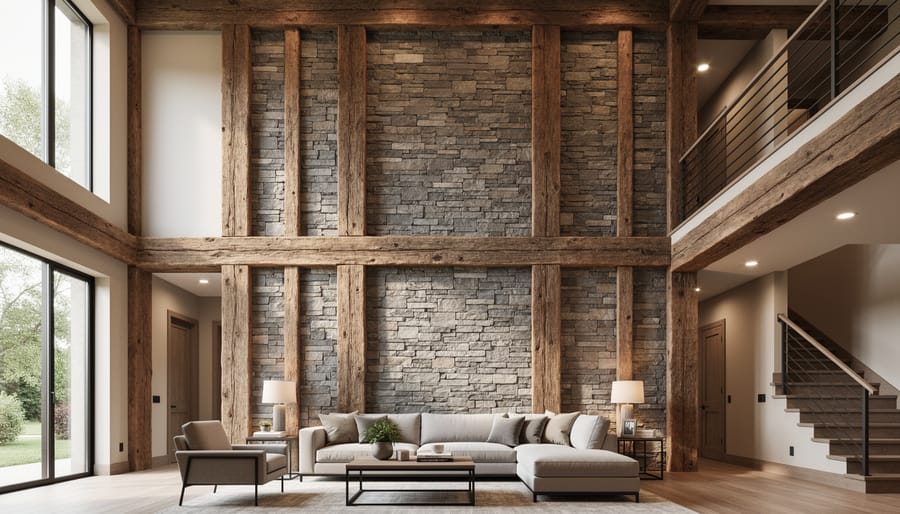
Design Idea #3: Rustic Wood and Stone Combination
Sourcing and Preparing Reclaimed Materials
Finding quality reclaimed wood starts with architectural salvage yards, deconstruction companies, and specialty lumber dealers who focus on vintage materials. Old barns, factories, and warehouses often yield gorgeous beams with character that new wood simply can’t match. Online marketplaces and local classifieds can also connect you with homeowners demolishing structures who are happy to part with materials.
Before installing any reclaimed wood near your fireplace, proper preparation is essential. Start by inspecting pieces for nails, screws, and metal hardware that could pose safety hazards. Remove all fasteners and clean surfaces thoroughly with a stiff brush to eliminate dirt, debris, and any potential pest concerns. Check for rot or structural weakness, especially if using beams for mantel support.
Fire safety is non-negotiable when incorporating reclaimed materials around a two-story fireplace. Apply intumescent fire-retardant coatings designed specifically for wood near heat sources. These treatments expand when exposed to high temperatures, creating a protective barrier. Most building codes require mantels and surrounds to maintain specific clearances from the firebox, typically 6 to 12 inches depending on your location. Consider installing a non-combustible backing board between reclaimed wood and the fireplace structure for added protection. Always verify local fire safety requirements before finalizing your design.
Creating the Statement Mantel
Installing a statement mantel on your two-story fireplace requires careful planning and solid anchoring to handle the weight safely. Start by locating the wall studs using a stud finder, marking at least two positions for your mounting brackets. Heavy timber mantels typically weigh 50-100 pounds, so you’ll need lag bolts that penetrate at least 3 inches into the studs.
Cut your timber to size, leaving at least 6 inches of clearance from the firebox opening to meet fire codes. Sand the wood thoroughly and apply your chosen finish before installation. For the mounting system, use heavy-duty steel brackets rated for twice the mantel’s weight. Position brackets 16-24 inches apart, drilling pilot holes to prevent wood splitting.
Secure the brackets with 3/8-inch lag bolts and washers, ensuring they’re level before final tightening. Have a helper support the mantel while you attach it to the brackets from below using wood screws. Check for level in both directions, making minor adjustments with shims if needed. Finish by concealing the brackets with decorative corbels or leaving them exposed for an industrial look that complements the two-story scale beautifully.
Balancing Materials Across Two Stories
The key to a stunning two-story fireplace is achieving visual balance from top to bottom. Start by selecting one primary material as your foundation—either wood or stone—and use it to anchor the design. If you’re working with stone, consider using larger, more textured pieces at the base and transitioning to smaller, smoother stones as you move upward. This creates a natural visual flow that draws the eye without overwhelming the space.
For a harmonious look, apply the rule of thirds: dedicate the lower third to your heaviest material, the middle section to a transition or accent material, and the upper third to lighter elements. A popular approach is installing stacked stone from floor to mantel height, then switching to smooth plaster or painted drywall with wood beam accents for the upper story. This prevents the fireplace from feeling too heavy while maintaining its presence.
When mixing materials, stick to a cohesive color palette. Warm gray stones pair beautifully with natural wood tones, while white-painted brick complements both rustic beams and modern metal details. Remember that less is often more—combining more than three materials can create visual chaos rather than cohesion.
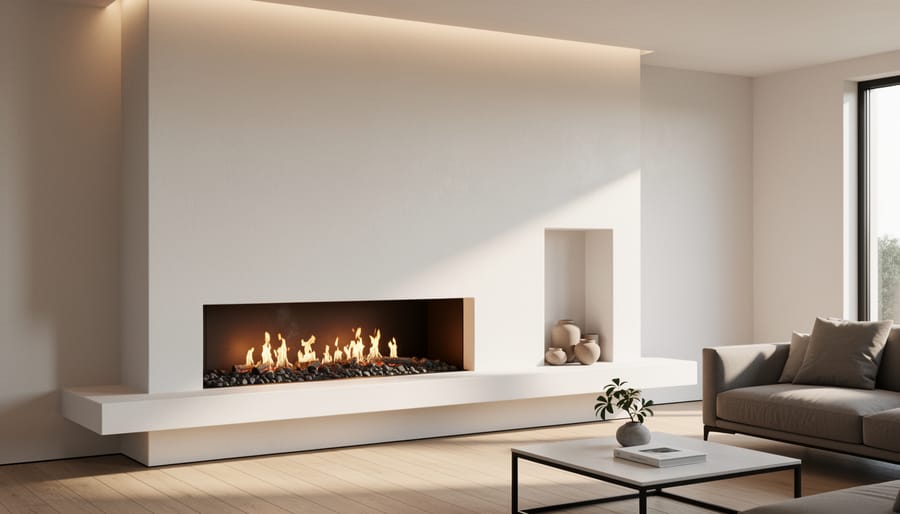
Design Idea #4: Sleek Contemporary Stucco or Plaster Finish
DIY Plaster Application Techniques
Adding texture to your two-story fireplace creates dramatic visual impact, and the good news is that many plaster techniques are surprisingly approachable for DIYers. Before starting, you’ll want to complete your basic step-by-step fireplace construction and ensure all surfaces are clean and primed.
For a smooth venetian plaster finish, you’ll need a stainless steel trowel, joint compound or premixed venetian plaster, and fine-grit sandpaper. Apply thin layers at 45-degree angles, allowing each coat to dry completely. Skill level: intermediate, as it requires patience and practice on sample boards first.
A rougher, old-world texture is more forgiving for beginners. Using a hawk and trowel, apply joint compound in irregular strokes, leaving natural peaks and valleys. You can soften the texture with a damp sponge before it fully dries.
Essential tools include drop cloths, painter’s tape, mixing buckets, and a sturdy scaffold or extension ladder for reaching the upper portions safely. Budget 2-3 full days for application and drying time. Practice your technique on cardboard first to build confidence before tackling your showpiece fireplace.
Creating Visual Interest Without Clutter
A towering two-story fireplace doesn’t need excessive decoration to make an impact. Instead, focus on thoughtful design elements that add dimension without overwhelming the space. Consider incorporating built-in niches on either side of the fireplace at staggered heights. These alcoves create natural display spots for artwork or plants while breaking up the vertical expanse.
Texture variations work wonders too. Mix materials like smooth stacked stone with recessed horizontal bands of contrasting tile, or alternate between polished and rough-hewn finishes in the same stone type. This creates visual rhythm without adding physical clutter.
Integrated storage is your secret weapon for maintaining clean lines. Frame the fireplace with floor-to-ceiling cabinetry that includes closed compartments for media equipment and open shelving for curated displays. Built-in benches flanking the hearth offer seating while hiding firewood or blankets underneath. Paint these built-ins the same color as your walls for a seamless look, or choose a complementary shade to gently define the fireplace zone without competing with its dramatic height.
Essential DIY Construction Considerations
Chimney and Venting Solutions
Your chimney choice significantly impacts both the cost and complexity of your two-story fireplace project. Traditional masonry chimneys offer timeless appeal and durability, but they require substantial structural support and professional expertise. These brick or stone chimneys can add $8,000-$15,000 to your project and necessitate a proper foundation extending below the frost line.
For DIY enthusiasts, prefab metal chimneys present a more approachable option. These factory-built systems cost $2,000-$5,000 and feature double or triple-wall insulated pipe that’s lighter and easier to install. You’ll need to secure the chimney pipe vertically through both floors, maintaining proper clearances from combustible materials (typically 2 inches for Class A chimneys).
When installing a metal chimney system yourself, always start from the fireplace and work upward. Each section locks into the one below, with support brackets anchored to framing every 6-8 feet. You’ll need a roof flashing kit and storm collar where the chimney penetrates the roof. Remember to extend the chimney at least 3 feet above the roof penetration and 2 feet higher than anything within 10 feet.
Regardless of which system you choose, local building codes require inspection, so factor permit costs and potential professional consultation into your budget.
Heat Distribution and Efficiency
Getting heat to circulate effectively in a two-story fireplace design requires smart planning. The biggest challenge is that heat naturally rises, which means your upper floor might get toasty while the main level stays chilly.
Installing a quality blower system is your best friend here. These fans push warm air out from the firebox and into your living spaces, rather than letting it all escape up the chimney. Look for variable-speed models so you can adjust airflow based on your needs.
Heat-resistant materials like soapstone or heavy masonry surrounding your firebox act as thermal mass, absorbing heat during the fire and radiating it for hours afterward. This creates more even, lasting warmth throughout your home.
Consider adding floor vents or registers on the second story to allow heat distribution. Some homeowners install ceiling fans near the fireplace to push warm air down and improve circulation. For wood-burning fireplaces, keep your damper properly adjusted to maximize efficiency while maintaining safe ventilation. Glass doors also help retain heat in the room rather than losing it up the flue when the fire dies down.
Budget Planning and Phasing
A two-story fireplace represents a significant investment, typically ranging from $5,000 to $25,000 depending on materials and complexity. Budget for stone or brick veneer ($15-30 per square foot), a quality firebox or insert ($2,000-8,000), and professional chimney installation ($3,000-10,000). Don’t forget structural support, which may require steel beams and foundation work adding $2,000-5,000.
If your budget is tight, consider phasing the project. Start with the essential structural work and basic firebox installation in phase one. Complete the surround with simpler materials like drywall and paint, then upgrade to stone or tile veneer in phase two once funds allow. You can also initially install a direct-vent gas fireplace, which requires less extensive chimney work, and add decorative elements like built-in shelving or a custom mantel later. Technology features like smart thermostats or ambient lighting systems make excellent phase-three additions that enhance functionality without holding up the core construction.
Technology Integration for Modern Two-Story Fireplaces
Modern two-story fireplaces have come a long way from simple wood-burning structures. Today’s technology transforms these dramatic focal points into smart, efficient systems you can control from your smartphone or voice assistant.
Remote-controlled gas fireplace systems are game-changers for tall installations. Instead of climbing ladders to adjust settings, you can control flame height, heat output, and even turn the fireplace on or off from anywhere in your home. Many systems integrate with popular smart home platforms like Google Home and Amazon Alexa, letting you adjust the ambiance with simple voice commands.
Smart thermostats designed specifically for two-story fireplaces help manage heat distribution efficiently. These systems monitor temperature at multiple levels and adjust output accordingly, preventing the common problem of overheating the upper floor while the lower level stays cool. Some models learn your preferences over time and automatically create heating schedules that match your lifestyle.
Ambient lighting integration adds another layer of customization. LED strips installed within the fireplace surround or behind glass panels can change colors to match your mood or holiday themes. Many systems synchronize lighting with the flame effects, creating a cohesive visual experience that enhances the fireplace’s presence in your space.
For DIY enthusiasts, retrofitting existing fireplaces with smart features is often surprisingly straightforward. Many wireless control systems install without major construction, using battery-powered remotes or Wi-Fi modules that connect to existing gas valves. Professional installation is recommended for gas line modifications, but mounting control panels and programming apps typically falls within comfortable DIY territory.
Most smart fireplace systems include safety features like automatic shut-off timers, child locks, and overheat protection, giving you peace of mind alongside convenience. When planning your two-story fireplace project, budget an additional 500 to 2,000 dollars for quality smart technology integration.
Creating a stunning two-story fireplace is absolutely within your reach as a DIY project. With thoughtful planning, the right materials, and a phased approach to construction, you can transform your space with this dramatic focal point. Start by selecting a design that matches your skill level and budget, then break the project into manageable stages. Remember, even if you handle the framing and stonework yourself, there’s no shame in calling professionals for the chimney installation or gas line work when safety is paramount.
The key to success lies in careful preparation. Take time to research local building codes, gather your materials, and maybe even practice techniques on a smaller scale first. Whether you choose a rustic stone facade, sleek modern panels, or classic brick, your two-story fireplace will become the centerpiece that draws everyone together. Don’t rush the process. Quality work takes time, but the result will be a stunning architectural feature that adds warmth, character, and value to your home for years to come. Your dream fireplace is just a well-planned project away.