Transform Your Space: The Calming Magic of Zen Minimalist Design
Transform your living space into a sanctuary of peace by embracing Japanese minimalist design principles. Clear countertops and surfaces of non-essential items, maintaining only objects that serve a specific purpose or bring genuine joy. Select furniture with clean lines and natural materials, positioning each piece with intention to create clear pathways and open spaces that allow energy to flow freely. Choose a neutral color palette dominated by whites, warm grays, and earth tones, incorporating natural textures through bamboo, wood, and stone elements to add depth without visual clutter.
Let natural light flood your rooms through sheer window treatments, complemented by subtle ambient lighting that creates calm, diffused illumination. Design each room around a single focal point – whether it’s a carefully placed art piece, a minimalist water feature, or a thoughtfully arranged meditation corner. This intentional simplicity doesn’t just create aesthetic harmony; it establishes a sense of tranquility that transforms your home into a mindful retreat from the chaos of modern life.
Core Principles of Zen Minimalist Design
Balance and Harmony
Creating balance and harmony in zen minimalist spaces requires thoughtful consideration of both positive and negative space. Think of your room as a canvas where every element plays a crucial role in the overall composition. Start by establishing a focal point in each room, such as a striking piece of furniture or artwork, and arrange other elements to complement rather than compete with it.
The key to perfect balance lies in symmetry and asymmetry working together. While symmetrical arrangements create a sense of order, introducing subtle asymmetrical elements adds visual interest without disrupting the peaceful atmosphere. For example, pair matching side tables with differently sized lamps, or offset a centered sofa with an asymmetrically placed accent chair.
Consider the visual weight of objects when arranging your space. Dark colors and heavy materials carry more visual weight than lighter ones. Balance these elements by distributing them evenly throughout the room. Remember to incorporate the five natural elements – wood, fire, earth, metal, and water – through materials, textures, or symbolic representations to achieve true zen harmony.
Leave adequate breathing room between furniture pieces and decor items. This creates natural pathways and allows each element to stand on its own while contributing to the collective peaceful atmosphere.
Simplicity and Purpose
At the heart of zen minimalism lies the art of purposeful design. Every element in your space should serve a specific function or bring genuine joy, aligning with various minimalist design styles. This approach isn’t about creating an empty, sterile environment – it’s about curating a space that breathes and flows naturally.
Start by evaluating each item in your room with intention. Ask yourself: Does this piece contribute to the room’s functionality? Does it enhance the space’s peaceful atmosphere? If the answer is no, consider removing it. This deliberate decluttering process helps create a sanctuary where your mind can rest and reset.
Remember that simplicity doesn’t mean sacrificing personality. Choose fewer, but higher-quality pieces that reflect your aesthetic while maintaining clean lines and uncluttered surfaces. The goal is to achieve a balance where every element has room to shine, creating a harmonious environment that promotes both physical and mental well-being.
Focus on creating spaces that support your daily activities while maintaining a sense of serenity. This might mean keeping your coffee station minimal but functional, or designing a meditation corner with just the essentials.

Essential Elements of Zen Minimalist Spaces
Natural Materials and Textures
Natural materials and textures form the foundation of zen minimalist design, creating a harmonious connection between indoor spaces and the natural world. Wood elements, particularly those with clean lines and natural finishes, bring warmth and organic beauty to your space. Consider incorporating light-toned bamboo flooring, oak furniture with simple designs, or cedar accent walls to establish this connection.
Stone elements add another layer of natural sophistication while maintaining the minimalist aesthetic. Consider a slate feature wall, marble countertops with subtle veining, or river rock details in bathrooms. These elements not only provide visual interest but also create a grounding effect that’s essential in zen design.
Natural fabrics play a crucial role in softening the overall look while maintaining the peaceful atmosphere. Choose organic cotton, pure linen, or raw silk for window treatments, bedding, and upholstery. Stick to neutral colors and subtle textures that complement rather than compete with other elements in the space.
When combining these materials, focus on balance and restraint. A room might feature a simple wooden platform bed, topped with crisp linen bedding, while a single stone vessel sits atop a wooden bedside table. This thoughtful layering of natural elements creates depth without clutter, embodying the essence of zen minimalism while maintaining a welcoming, lived-in feel.

Light and Space
Natural light and open spaces are the cornerstones of zen minimalist design, working together to create a sense of tranquility and flow throughout your home. Large windows, unobstructed by heavy curtains or unnecessary decorations, serve as portals for sunlight while connecting indoor spaces with the natural world outside.
To maximize natural light, opt for sheer window treatments or leave windows completely bare where privacy isn’t a concern. Strategic mirror placement can help bounce light deeper into rooms, making spaces feel larger and more inviting. Consider replacing solid doors with glass alternatives in areas where privacy isn’t essential, allowing light to flow freely between rooms.
Creating open spaces requires thoughtful furniture placement and decluttering. Start by establishing clear pathways through rooms and maintaining empty space around furniture pieces. This “negative space” is as important as the items you choose to keep, allowing energy to flow smoothly throughout your home.
For rooms with limited natural light, layer your artificial lighting with a combination of ambient, task, and accent lights. Choose fixtures with clean lines and minimal designs that complement your zen aesthetic. LED strips behind furniture or under cabinets can create a soft, floating effect that enhances the room’s peaceful atmosphere.
Remember that the goal isn’t just to create brightness, but to achieve balance. Some areas can remain softer and more subdued, creating natural rhythm and visual interest throughout your space.
Color Philosophy
In zen minimalist interior design, the thoughtful use of color plays a vital role in creating a serene and balanced atmosphere. The foundation of this style relies heavily on a cohesive color scheme built around neutral tones, primarily whites, beiges, and soft grays.
White serves as the primary canvas, reflecting natural light and creating an open, airy feeling throughout the space. Consider using warm whites rather than stark ones to maintain a welcoming atmosphere while avoiding a clinical feel. Earthy neutrals like sand, stone, and pale wood tones add warmth and ground the design, creating a connection to nature that’s essential in zen aesthetics.
Accent colors should be used sparingly and intentionally. Opt for muted versions of natural colors like sage green, dusty blue, or warm terra cotta. These subtle touches can be introduced through textiles, artwork, or small decorative elements without overwhelming the peaceful atmosphere.
The key is to limit your palette to no more than three main colors, with one or two accent shades. This restraint helps maintain visual calm while preventing the space from feeling flat or monotonous. When selecting colors, consider how they appear in both natural and artificial light, as this can significantly impact the overall mood of your space.
Practical Implementation Tips
Room-by-Room Transformation
Let’s explore how to apply clean design principles in different areas of your home, creating a harmonious flow throughout your space.
Living Room: Start by selecting a low-profile sofa in neutral tones, complemented by no more than two accent chairs. Keep surfaces clear, with only essential items like a simple coffee table and minimalist lighting fixtures. Incorporate natural elements through a single potted plant or bamboo accent piece.
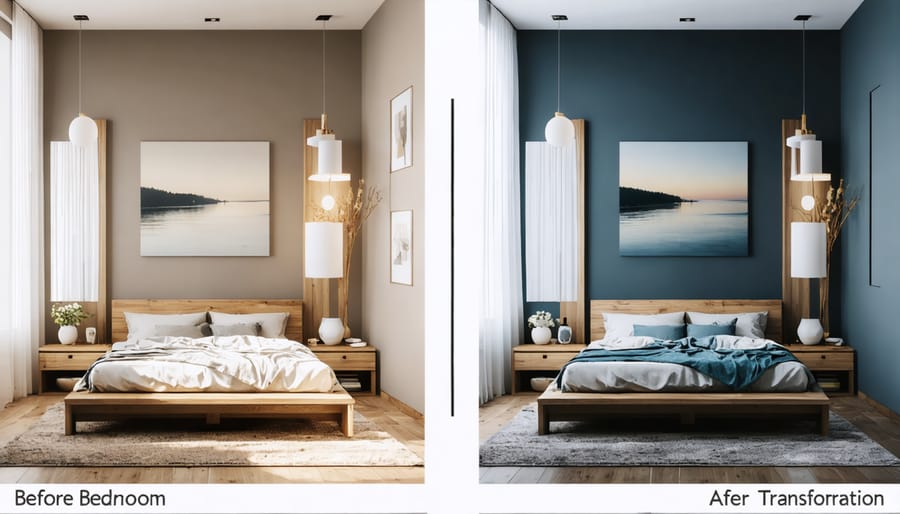
Bedroom: Create a peaceful sanctuary by choosing a platform bed with clean lines and removing unnecessary furniture. Stick to solid-colored bedding in earth tones, and limit decorative items to one striking piece of wall art. Use built-in storage or under-bed solutions to maintain clutter-free surfaces.
Kitchen: Embrace the “less is more” philosophy by keeping countertops clear except for frequently used items. Install simple hardware on cabinets, and consider open shelving for displaying a carefully curated selection of dishes. Use pull-out organizers inside cabinets to maintain order while hiding necessities.
Bathroom: Select sleek fixtures and maintain a monochromatic color scheme. Use wall-mounted storage solutions and keep products minimal. A single orchid or air plant can add life without overwhelming the space. Consider installing a floating vanity to create a sense of openness.
Home Office: Choose a desk with minimal ornamentation and built-in storage. Implement digital solutions to reduce paper clutter, and use cable management systems to keep technology tidy. A single inspiring artwork and a small desk plant can provide focus without distraction.
By addressing each room with intention, you create a cohesive zen minimalist atmosphere that flows naturally throughout your home, promoting peace and tranquility in every space.
Smart Storage Solutions
In a zen minimalist space, clever storage solutions are essential for maintaining the peaceful, uncluttered atmosphere while keeping everyday items within easy reach. The key is to integrate storage seamlessly into your design, making it virtually invisible to the casual observer.
Built-in cabinets that blend with wall surfaces create a smooth, continuous look while maximizing storage potential. Consider installing floor-to-ceiling cabinets painted in the same color as your walls, or opt for push-to-open mechanisms that eliminate the need for visible handles. Under-stair storage solutions can transform otherwise wasted space into valuable storage areas without disrupting the room’s clean lines.
Furniture pieces that serve dual purposes are particularly valuable in minimalist spaces. Look for platform beds with built-in drawers, ottoman coffee tables with hidden compartments, or window seats that open to reveal storage space. These multifunctional pieces maintain the room’s simplified aesthetic while providing practical storage solutions.
Floating shelves and recessed wall niches offer storage opportunities without adding visual bulk to your space. When installing these elements, align them with your room’s architectural features to create a natural, intentional look. For frequently used items, consider creating a designated “hidden zone” – a small closet or pullout cabinet that keeps essential items organized and easily accessible while remaining out of sight.
In the kitchen, streamline your space with handleless cabinets and appliance garages that keep counter surfaces clear. Use drawer dividers and cabinet organizers to maintain order behind closed doors, ensuring that opening a cabinet doesn’t reveal chaos that contradicts your minimalist exterior.
For home offices or creative spaces, implement a system of mobile storage solutions that can be completely tucked away when not in use. Rolling carts, collapsible desks, and wall-mounted drop-down workstations allow you to maintain productivity without compromising your zen aesthetic.
Remember, the goal is to create storage that supports your lifestyle while preserving the calm, uncluttered environment that makes minimalist design so appealing.
Common Mistakes to Avoid
While zen minimalist design appears simple, it’s easy to make mistakes that can disrupt the peaceful atmosphere you’re trying to create. One common error is confusing minimalism with sterility – your space shouldn’t feel cold or unwelcoming. Remember, the goal is to create a calm environment, not an empty one.
Many people also fall into the trap of eliminating too much, leaving their space feeling uncomfortable and impractical. Zen minimalism should enhance functionality, not sacrifice it. Keep essential items that serve a purpose and bring genuine value to your daily life.
Another frequent mistake is choosing the wrong color palette. While neutral colors are fundamental to zen design, using only pure white can create a clinical feeling. Instead, incorporate warm neutrals and natural tones to maintain a welcoming atmosphere.
Overcrowding with “minimal” decorative items is another pitfall. Just because something is minimalist in style doesn’t mean you should display multiple versions of it. Be selective and intentional with your choices.
Neglecting texture is also problematic. Some homeowners focus solely on clean lines and forget to include different textures, resulting in a flat, uninviting space. Balance smooth surfaces with natural textures like wood, stone, or woven materials to create depth and interest while maintaining simplicity.
Lastly, avoid rushing the decluttering process. True zen minimalism requires thoughtful curation over time, not hasty elimination of belongings.
Embarking on your zen minimalist journey doesn’t have to be overwhelming. By focusing on simplicity, natural elements, and mindful design choices, you can transform your space into a peaceful sanctuary that promotes both physical and mental wellbeing. Remember to start small, perhaps with a single room, and gradually expand your minimalist approach throughout your home. The key is to be intentional with your choices, keeping only what truly adds value to your space and life. Whether you’re redesigning your entire home or making subtle changes, the principles of zen minimalism can help create a more balanced, harmonious living environment. Take the first step today by decluttering one area of your home and experience the transformative power of zen minimalist design for yourself.