How to Create Aromatherapy for You: Personalized Home Setup, Room by Room
You can set up aromatherapy at home in about 30 minutes, with no special skills: pick one scent, choose a diffuser that suits the room, start with a few drops, and adjust from there. That’s the whole method. What makes it work is matching the scent and the gear to the space you’re actually living in, not copying someone else’s setup.
A calm bedroom, a busy kitchen and a home office all ask different things of a fragrance. A light citrus might wake up a desk corner, while a soft lavender suits a bedside table. Small rooms need less. Open layouts need a bit more planning. And because scent is part of how a room feels, it works best when it fits your decor and daily routine, not against it.
We’ll walk through what you need, the safety basics (including when to stop), the setup steps, and simple ways to check that it’s working, plus a few smart-home tricks like timers and plugs that keep things hands-off. This is about comfort and atmosphere, not medical treatment, so you can relax and enjoy the process.
Choosing Your Scents and Gear: Tools and Materials for Home Aromatherapy
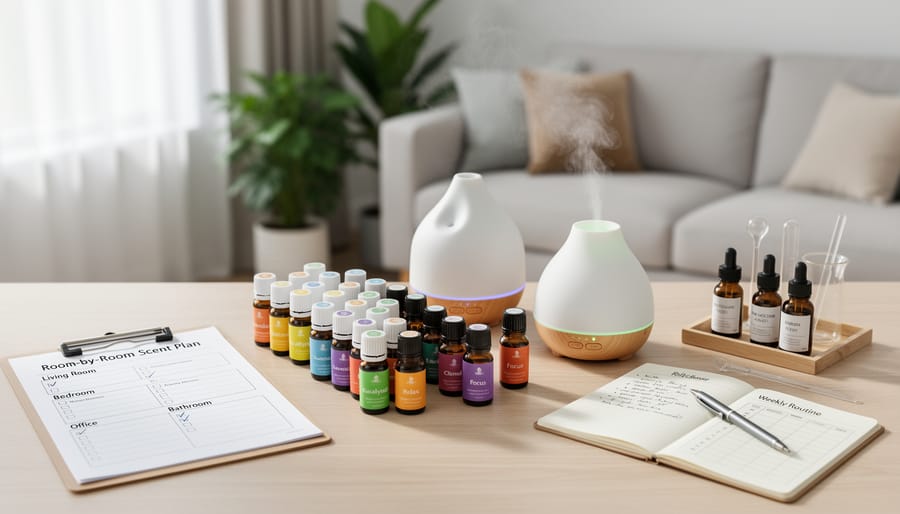
Matching Scents to Moods and Rooms
Start with the feeling you want, then think about where you’ll be when you want it. Calm, focus, energy and fresh air cover most everyday goals, and each one pairs naturally with certain rooms.
For calm, lavender and cedarwood suit bedrooms and quiet reading corners. If sleep is your goal, it’s worth knowing that research suggests Lavender improves sleep quality for some people, though results vary from person to person. For focus and energy, bright citrus oils like lemon or sweet orange work well in kitchens and home offices. For fresh air, eucalyptus is a classic in bathrooms, where its crisp scent pairs nicely with steam and clean towels.
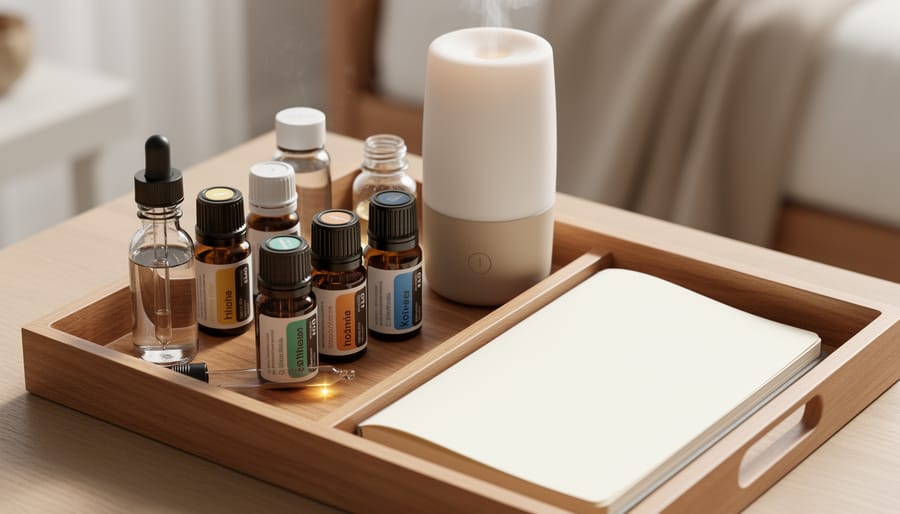
Here’s a simple checklist so you can gather everything before you start:
- A diffuser sized for your room
- Two to three starter oils, one for each mood you want
- Distilled water for the diffuser tank
- A small measuring dropper
- Labeled storage bottles for any blends you mix
- A notebook to jot down what you tried and how it felt
Keep one rule above all the others: personal preference wins. A scent that’s supposed to be relaxing but reminds you of a place you dislike won’t help you unwind. Sniff a few oils first, trust your nose, and choose what makes the room feel like yours.
Picking a Diffuser That Fits Your Space
Start with the size of the room. A small ultrasonic diffuser with a 100 to 150 ml tank suits a bedroom or bathroom, while a living room or open-plan space does better with a larger tank or a nebulizing model that pushes scent farther. If you try to scent a big room with a tiny unit, you’ll just keep adding drops and still not smell much.
Noise matters more than you’d think, especially at night. Ultrasonic models are usually quietest, though a few gurgle as the water level drops. Nebulizers hum a bit louder, so they’re better in a hallway or living area than beside your pillow.
Check run time and shut-off features before you buy. Look for an automatic shut-off when the water runs out, and intermittent settings that cycle on and off, which stretch a tank and keep the scent from building up. Long continuous runs aren’t necessary for a pleasant result.
Now the fun part: technology integration. A basic smart plug turns almost any diffuser with a physical power button into a scheduled one, so it can switch on thirty minutes before you wake or off at bedtime. Many diffusers also have their own apps for schedules and light settings. Pair either with a voice assistant and you can say, “Start the diffuser for 45 minutes,” and skip the fiddling entirely.
Safety First: Keeping Your Home, Family, and Pets Comfortable
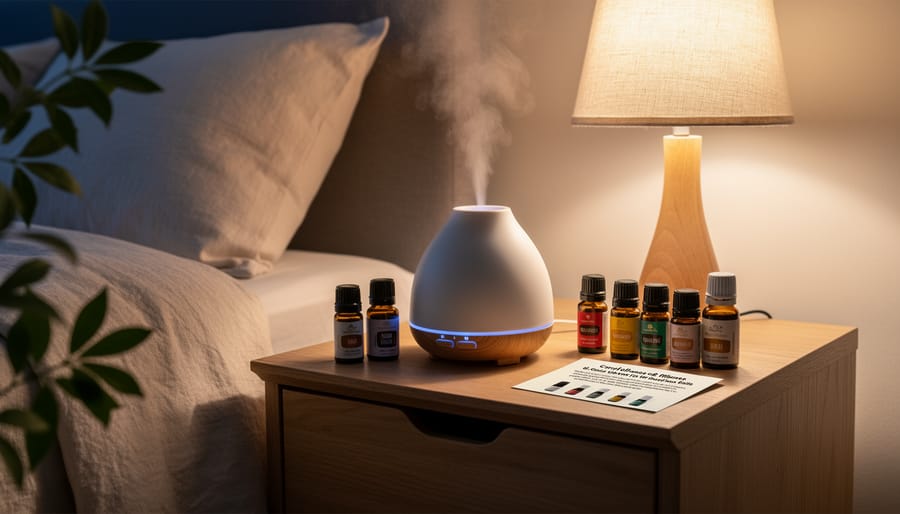
Before you set anything up, let’s cover the safety basics. Aromatherapy should make your home feel better, and a few simple habits keep it that way.
Start with ventilation. Run a diffuser in a room with some airflow, and don’t let it go all day in a closed space. If you’re already working to improve indoor air, treat scent as one small piece of that picture, not a replacement for fresh air. It also helps to understand how heating and air quality interact, since dry, stuffy winter rooms can make strong scents feel heavier.
Use oils only as directed on the label. More drops don’t mean more benefit, and a faint scent is plenty. Never apply essential oils to skin undiluted, and keep every bottle capped and out of reach of children. Keep diffusers and oils well away from open flames, candles, and heat sources, too.
Pets need extra thought. Cats and birds are especially sensitive to many essential oils, so skip diffusing around them, or keep them in a separate, well-ventilated space. If you have other pets, watch how they react.
If you’re pregnant, have asthma, allergies, or another health condition, check with a healthcare provider before you start.
Coughing, dizziness, or skin irritation are also your cue to stop. Switch the diffuser off, get some fresh air, and wait until you feel normal before trying again with a weaker setup or a different oil.
Step-by-Step: Build Your Personalized Aromatherapy Setup
Placing Your Diffuser for the Best Scent Spread
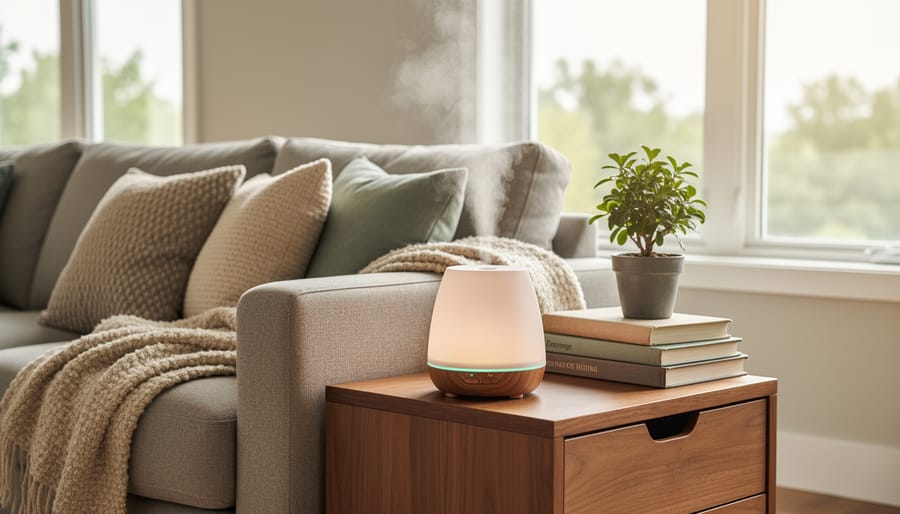
Where you put your diffuser matters almost as much as which oil you pick. Aim for a spot at about chest to shoulder height, like a dresser, console, or bookshelf, so the scent drifts through the room instead of pooling at your ankles. Keep it a few feet from where you sit or sleep, not right beside your pillow, and give it some open air rather than tucking it into a corner where the scent gets trapped.
Moisture and oil residue can stain wood and damage electronics, so skip unfinished wood furniture, laptops, and speakers. Set the diffuser on a ceramic tray, a slate coaster, or a glass-topped table instead. A pretty tray also works as a styling moment: pair the diffuser with a candle and a small plant, or tuck it onto a shelf among books and decor so it blends right in.
Here’s a simple first setup:
- Decide your goal for the room, such as calm, focus, or fresh air.
- Choose one or two oils that match that goal.
- Place the diffuser on a stable, water-safe surface away from walls and fabrics.
- Add water and 3 to 5 drops of oil, following the manufacturer’s directions.
- Run it in short intervals rather than all day.
- Set a schedule with a timer or smart plug so it turns off on its own.
- Clean the diffuser after use so oil doesn’t build up.
Once it’s in place, give it a day or two before moving it around.
Creating Simple Routines by Time of Day
Think of your day in three scent moments. In the morning, run a bright citrus or peppermint blend while you make coffee and get dressed. For the workday, switch to something steadier like rosemary or lemon, which keeps a home office feeling fresh without being distracting. Around dinner, start winding down with lavender or cedarwood in the living room, then move a diffuser to the bedroom about 30 minutes before bed.
You don’t have to remember any of this. Plug your diffuser into a smart plug and set a schedule: on at 7 a.m., off at 9, back on at 1 for a couple of hours, and a short evening run. A voice assistant timer works too if you’d rather say “run the diffuser for 45 minutes.”
If you’re curious how scent fits with the rest of your evening routine, it’s worth reading about air cleaner at night, since overnight airflow affects how long a scent lingers. Start with one routine, and add the others once it feels natural.
Checking That It’s Working and What to Try Next
A good scent level is one you notice when you first walk into the room, then stop thinking about within a few minutes. If you can smell it strongly from the next room, or it lingers in your clothes, dial it back. If you can’t pick it up at all, add a drop or two or run it a little longer.
Treat your first week or two as a test run. Keep a small notebook by the diffuser and jot down the date, scent, number of drops, how long it ran, and how you felt afterward. Maybe the citrus blend made your morning emails easier, or the lavender felt a bit heavy. Patterns show up quickly once they’re on paper.
Adjust one thing at a time. Change the drops first, then the run time, and only then swap the oil. Always keep the room aired out, and our ventilation tips are a handy refresher for keeping fresh air moving while you diffuse.
Your blends can shift with the seasons, too. Think brighter citrus and mint in spring and summer, then warmer cedarwood or vanilla-leaning blends as the weather cools.
Once your first room feels right, try a second one, like a calm bedroom blend to pair with your focused home office scent. You can also make a simple DIY reed diffuser by pouring a few tablespoons of carrier oil mixed with essential oil into a small jar and adding reed sticks. Finally, rinse your diffuser regularly according to the manufacturer’s instructions so old residue never muddies a fresh scent.
Common Questions About Aromatherapy at Home
How long should I run my diffuser?
Start with 30 to 60 minutes at a time, then take a break. Constant diffusing can tire your nose and make a scent feel stronger than it is.
Can I mix different essential oils?
Yes. Start with two or three oils you already like, and add one drop at a time. Jot your favorite combinations in your notebook so you can recreate them.
How do I clean my diffuser?
Empty the water, wipe the tank with a soft cloth and a little white vinegar or rubbing alcohol, then rinse and dry. Do this weekly if you use it often.
Will scents work in a big open space?
They can, but you’ll need a larger diffuser or a second one placed in a different zone. Don’t just add more drops to one unit.
What if the scent is too strong?
Turn the diffuser off and open a window. Next time, use fewer drops or shorter run times.
A personalized scent plan can make every room in your home feel a little more welcoming. A soft lavender note by the bed, a bright citrus whiff in the kitchen, a clean eucalyptus hint in the bathroom: small touches like these add up to a home that feels thoughtfully put together.
Start simple. Pick one room and one oil, run it for a week, and notice how the space feels. If it works, add another room or try a new blend.
At Accent Interiors, we believe a great home engages every sense, and scent is one of the easiest layers to add.