Creative Home Furniture That Thinks Ahead: Smart and Adaptive Design for Modern Living
Creative home furniture and design transforms living spaces through pieces that adapt to your lifestyle, combining aesthetic innovation with practical function. In 2026, the smartest furniture choices do more than look beautiful: they reconfigure for different uses, integrate technology seamlessly, and maximize every square foot without sacrificing style.
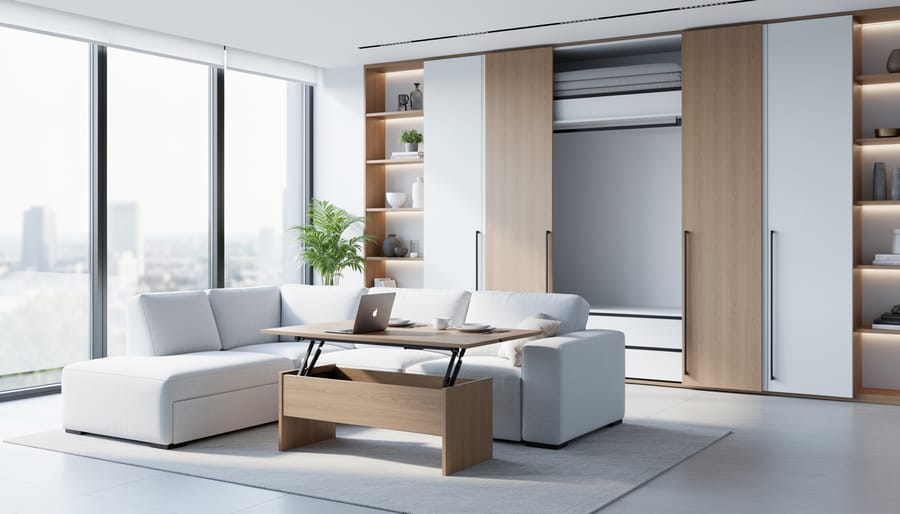
The shift toward adaptive furnishings reflects how we actually live. Work-from-home arrangements demand multipurpose rooms. Smaller urban spaces require flexibility. Growing families need furniture that evolves. Homeowners and designers are responding with solutions that fold, expand, and transform: coffee tables that rise to dining height, murphy beds concealed in sleek cabinets, and modular seating that rearranges for any occasion.
What makes furniture truly creative isn’t just novelty. It’s thoughtful design addressing real problems. A window seat with hidden storage solves two challenges at once. A charging station built into an end table keeps devices powered without visible cords. Wall-mounted desks that disappear when not needed preserve open floor plans in compact apartments.
This guide walks you through the landscape of smart, adaptive furniture for 2026. You’ll discover what defines genuinely innovative design, see specific examples that balance form and function, and learn how to integrate technology into your furniture choices. We’ll also share DIY projects for hands-on enthusiasts who want to customize pieces themselves, plus practical buying advice to help you invest in furnishings that work as hard as they look good. Whether you’re furnishing your first apartment or reimagining a longtime home, creative furniture design makes every room more livable.
What Makes Home Furniture ‘Smart and Adaptive’
Smart and adaptive furniture represents a fundamental shift in how we approach creative home furniture and design. Unlike static pieces that serve a single purpose throughout their lifetime, these forward-thinking furnishings respond dynamically to your changing needs, spaces, and daily routines.
At its core, smart furniture integrates technology to enhance functionality. This might mean built-in sensors that detect when you’re sitting and adjust lumbar support accordingly, or wireless charging surfaces that eliminate cable clutter. Adaptive pieces go a step further by physically transforming, think dining tables that expand to seat extra guests or wall beds that fold away to reclaim floor space during the day.
- Adaptive Furniture
- Pieces designed to physically change configuration, size, or function in response to different spatial needs or user requirements.
- Smart Integration
- The embedding of technology, sensors, connectivity, automation, directly into furniture to enhance comfort, convenience, or control.
- Responsive Design
- Furniture that reacts to user behavior, environmental conditions, or spatial constraints through automatic or easily triggered adjustments.
- Modular Systems
- Component-based furniture that homeowners can rearrange, expand, or reconfigure as their living situations evolve.
What truly sets these pieces apart is their user-centered approach. Traditional furniture expects you to adapt to it, but creative adaptive designs work the other way around. A convertible sofa serves as seating by day and a guest bed by night. Height-adjustable desks move between sitting and standing positions with a button press. Modular shelving grows room by room as your storage needs increase.
Space responsiveness distinguishes thoughtful adaptive furniture from mere gimmicks. The best pieces anticipate how rooms get used differently throughout the day and across seasons. They maximize square footage without sacrificing style, letting small apartments function like much larger homes. This practical creativity makes adaptive furniture particularly valuable in today’s flexible living environments where home offices double as guest rooms and kitchens serve as homework stations.
Creative Furniture Solutions That Adapt to Your Space
Transforming Pieces for Multi-Use Rooms
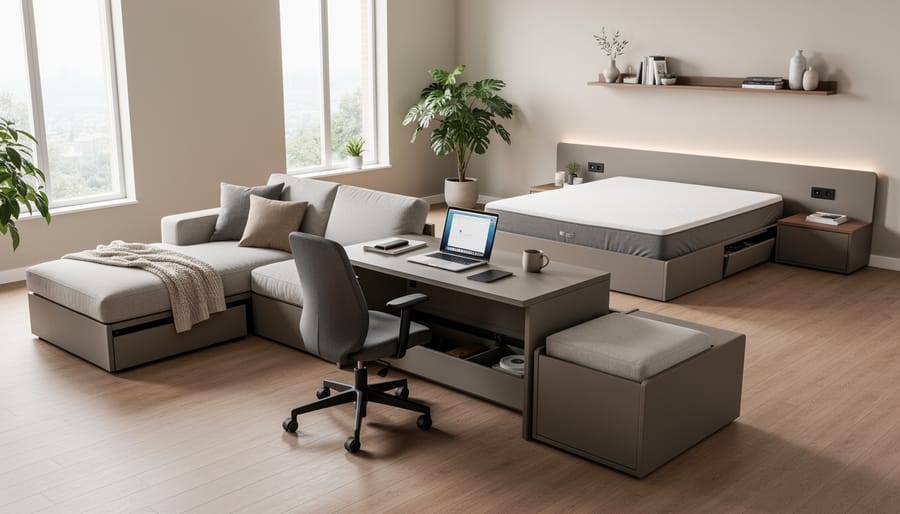
When your living room needs to double as a guest bedroom or your dining area transforms into a workspace by day, furniture that shifts between roles becomes essential rather than just clever. Transforming pieces solve real problems for real people, especially those working with limited square footage or managing multiple functions in the same room.
Murphy beds remain the gold standard for space conversion. Modern versions bear little resemblance to the clunky wall beds of decades past. Today’s designs fold seamlessly into cabinetry that looks like an attractive wardrobe or shelving unit when closed. Some include integrated desks or sofas that automatically shift position as the bed lowers, letting a home office small spaces convert to a guest room in seconds. Hydraulic lift mechanisms make operation smooth enough for daily use without wrestling with bulky frames.
Expandable dining tables have evolved beyond simple drop-leaf designs. Butterfly-leaf tables conceal extra surface area within the table itself, extending from four seats to eight without storing separate pieces. Console tables that telescope into full dining surfaces can live against a wall as a slim sideboard, then expand when dinner guests arrive, ideal for studio apartments where every inch counts.
Convertible sofas now span a spectrum from sleeper sofas with hidden mattresses to modular systems that reconfigure entirely. Sectionals with movable components let you create a traditional sofa for movie night, then separate into individual chairs for conversation or push together into a daybed. Wall-mounted desks that fold flat when not in use disappear completely, offering a full work surface during office hours without claiming permanent floor space in a multi-purpose room.
Modular Systems You Can Reconfigure
Modular furniture gives you the power to redesign your space without buying new pieces every time your life shifts. Unlike fixed furniture, these systems break down into interchangeable components, cubes, panels, seats, shelves, that you can rearrange, stack, or separate as your household grows or your routines change.
Modular shelving is the backbone of adaptable innovative home storage. Brands like IKEA’s Kallax and Elfa’s customizable systems let you add vertical sections when you need more book space, insert drawers when loose items pile up, or remove a unit to create an open flow. You’re not locked into the original layout; next year, when the kids’ toy collection expands or you convert a corner into a workspace, the same cubes can form a new configuration entirely.
Modular seating follows the same logic. Sectional sofas with moveable ottomans and armless chairs let you create an L-shape for movie night, separate into individual seats for a party, or form a U-configuration when extended family visits. Some systems include storage compartments under the seats, so the furniture itself holds what it surrounds.
For home offices that double as guest rooms, modular desks with detachable side tables or stackable storage carts keep everything mobile. When a project demands more surface area, you expand. When guests arrive, you collapse and tuck away. The furniture grows with you.

Height-Adjustable and Ergonomic Designs
Height-adjustable furniture transforms how you interact with your living and working spaces throughout the day. Sit-stand desks lead this category, letting you switch between seated and standing positions with a button press or manual crank, reducing fatigue and supporting better posture during long work sessions. These desks suit home offices where multiple family members share the same workspace, as each person can set their preferred height in seconds.
Adjustable kitchen islands bring the same flexibility to cooking and meal prep. With hydraulic or electric lift systems, you can lower the counter for comfortable chopping while seated, then raise it for standing tasks like kneading dough. This adaptability proves invaluable for households with users of different heights or mobility needs.
Ergonomic seating rounds out this category with chairs featuring adjustable lumbar support, armrest height, and seat depth. Premium models include tension controls that adapt to your body weight and movement patterns. These office ergonomics adjustments aren’t just for dedicated work chairs, dining chairs and lounge seating now incorporate similar features, ensuring comfort whether you’re working, eating, or relaxing. The investment pays off in reduced back pain and sustained comfort across all daily activities.

Smart Technology Integration in Modern Furniture

Furniture with Built-In Charging and Connectivity
Modern furniture pieces now come equipped with dedicated charging and connectivity features that eliminate the tangle of cords and adapters cluttering your living spaces. Nightstands with built-in wireless charging pads let you simply place your phone on a designated spot, often marked with a subtle LED indicator, while you sleep. Tables integrate Qi-compatible charging zones into their surfaces, sometimes disguised beneath wood or glass finishes that preserve the design aesthetic while transmitting power.
USB ports built into sofa armrests, bed frames, and console tables give you multiple charging points exactly where you use devices most. Look for furniture offering both USB-A and USB-C ports to accommodate all your electronics without hunting for adapters. Higher-end pieces include smart ports that detect device type and adjust power output automatically, protecting batteries from overcharging.
Cable management has evolved beyond basic grommets. Contemporary desks and media consoles feature hidden channels, flip-up panels, and magnetic cable clips that route cords invisibly from your devices to wall outlets. Some entertainment centers incorporate power strips directly into their backing, so every component connects internally, no exposed plugs or cables trailing down the wall.
The result is furniture that powers your connected life without sacrificing visual simplicity. When shopping, verify charging pad compatibility with your devices, check port placement matches your actual usage patterns, and confirm weight limits for wireless charging surfaces.
App-Controlled and Voice-Activated Features
Voice commands and mobile apps are reshaping how we interact with furniture, shifting pieces from static objects into responsive systems. Adjustable beds lead the charge here: you can dial in your ideal firmness zone-by-zone from a smartphone app, save separate settings for partners with different preferences, or program automatic adjustments that change overnight as your sleeping position shifts. Some models integrate sleep tracking and gradually raise the head at wake-up time, turning the bed into a personalized wellness tool.
Recliners have evolved beyond manual levers, many now store memory presets for each household member’s preferred recline angle, lumbar support, and heat settings. Tap a button on your phone or ask Alexa to switch to “reading position,” and the chair adjusts in seconds. Lighting-integrated furniture takes this further: sofas with built-in LED strips shift colour temperature on command, and coffee tables with ambient under-lighting can match your mood or sync with movie scenes through app control.
The real advantage lies in routine automation. Set your desk lamp to brighten gradually each morning, program your recliner to lift to standing height at the end of a TV episode, or have bedroom furniture dim lights and adjust to sleep mode with a single voice command. These features eliminate repetitive manual adjustments and create seamless transitions between activities, making your furniture anticipate needs rather than wait for instructions.
Sensor-Driven Comfort Adjustments
Sensor-equipped furniture reads your body’s signals and adapts in real time to support your wellbeing. Office chairs with posture sensors gently vibrate when you slouch, prompting you to adjust before discomfort sets in. Smart beds track sleep stages and automatically raise or lower firmness, elevate the head to reduce snoring, or warm specific zones when you shift positions at night.
Temperature-responsive seating uses embedded sensors to heat or cool surfaces based on your body temperature, maintaining your perfect comfort zone without manual controls. Some recliners monitor how long you’ve been sitting and suggest position changes through subtle alerts on connected apps, encouraging movement to improve circulation.
Usage-pattern sensors learn your habits over time. A smart desk might remember that you stand from 10 to 11 each morning and automatically rise before you reach for the controls. Sofas with weight-distribution sensors adjust cushion support when extra guests sit down, preventing sagging and maintaining even comfort across all seats. These invisible adaptations reduce daily friction, turning furniture from passive objects into responsive partners in your home environment.
Creative Design Trends Shaping Adaptive Furniture in 2026
The furniture industry in 2026 has embraced a philosophy where adaptability and beauty aren’t competing values but complementary forces. Designers are creating pieces that evolve with your life while making bold aesthetic statements that reflect contemporary values and technological possibilities.
Sustainable materials have moved from niche offering to industry standard, with adaptive furniture leading the charge. Reclaimed wood frames support motorized mechanisms, recycled ocean plastics form durable modular connectors, and mycelium-based foams provide shape-memory cushioning that adjusts to each sitter. These materials don’t just reduce environmental impact, they often perform better than traditional alternatives, with natural fibers offering superior breathability in climate-responsive upholstery and bamboo composites providing the strength needed for transformation mechanisms.
Biophilic design principles now inform adaptive furniture in practical ways beyond adding a plant holder. Living walls integrate into room dividers that slide and reconfigure, natural wood grains remain visible on tech-enabled surfaces, and organic curves replace the harsh angles of earlier smart furniture. Circadian lighting systems built into shelving units mimic natural daylight patterns, while air-purifying materials embedded in convertible pieces improve indoor environments as they transform throughout the day.
The best smart tech decor in 2026 has become genuinely invisible. Charging coils hide beneath seamless tabletops, motors tuck into furniture frames without visible panels, and touch controls blend into wood grain or fabric texture. When technology does show itself, it does so intentionally, a slim LED strip that indicates charging status, a minimalist interface that feels like jewelry rather than gadgetry.
Customization has expanded beyond choosing fabric colors. Modular systems now offer hundreds of configuration possibilities, 3D-printed connectors create unique joinery tailored to specific room dimensions, and adaptive mechanisms come with multiple speed and resistance settings to match individual preferences. Some manufacturers offer digital tools that let you visualize exactly how a piece will transform in your actual space before purchase, ensuring the adaptability you’re buying actually fits your lifestyle and floor plan.
DIY Projects: Adding Smart Features to Existing Furniture
Install Wireless Charging in Your Nightstand
Adding wireless charging to your nightstand transforms a basic piece into creative home furniture and design that meets modern needs, no expensive replacements required. This straightforward project takes about two hours and requires minimal electrical knowledge.
What You’ll Need:
A wireless charging pad (Qi-compatible), drill with spade bit or hole saw, jigsaw, electrical tape, wire stripper, power cord with switch (or USB adapter if your pad has one), sandpaper, pencil, and ruler.
Safety First:
Work on an unplugged nightstand away from moisture. Wear safety glasses when drilling. If routing power directly to an outlet rather than using a USB adapter, consider consulting an electrician, this project assumes a low-voltage USB setup for DIY safety.
- Measure your charging pad’s diameter and mark the installation spot on your nightstand’s top surface where your phone naturally rests at night.
- Drill a pilot hole at the center mark, then use a spade bit or hole saw sized to your pad’s diameter (typically 3-4 inches) to cut the recess, go slow to prevent splintering.
- Use the jigsaw to refine edges if needed, then sand the opening smooth to protect both the pad and your furniture finish.
- Route the charging pad’s cable through the nightstand’s back or underside, drilling a small cable pass-through hole if necessary.
- Secure the pad in the recess with adhesive backing or furniture-safe glue, keeping it flush with the surface.
- Connect the cable to a power source, either an existing outlet behind the nightstand or a small power strip mounted inside a drawer.
- Test functionality by placing a compatible phone on the pad and confirming charging begins before reassembling any drawers or panels.
This upgrade keeps cables hidden while maintaining your nightstand’s appearance, proving that creative home furniture and design solutions don’t require starting from scratch. Once installed, you’ll wonder how you managed the nightly tangle of charging cords.
Create a Convertible Coffee Table with Lift Mechanism
This project transforms a basic coffee table into a versatile surface that rises to desk or dining height, perfect for small apartments where every piece needs to earn its keep. You’ll need a lift-top hardware kit (available online for $40, $80), a drill, screwdriver, measuring tape, pencil, and wood screws. Choose a kit rated for your table’s weight; most support 50-100 pounds.
Start by removing your table’s top. Flip it upside down and mark the center point lengthwise, then measure 3-4 inches in from each side edge. Position the lift mechanism’s mounting plates at these marks, ensuring they’re parallel and the hinged end faces the table’s front. Trace screw holes with your pencil.
Drill pilot holes at each mark to prevent wood splitting, then attach the mounting plates with the included screws. Most kits use spring-loaded or pneumatic pistons, confirm the pistons face the correct direction before tightening everything down. Flip the base upright and attach the mechanism’s lower brackets to the table frame, aligning them with the top plates. Double-check that the lift action moves smoothly without binding.
Test the mechanism several times empty before adding weight. Adjust tension screws if the top feels too stiff or drops too quickly. For a polished finish, add felt pads underneath to protect floors and keep cables tidy with adhesive clips along the table’s underside.
This upgrade pairs well with interior design automation strategies, imagine controlling integrated LED strips or charging ports you add later. The entire project takes two hours and costs under $100, giving you a multi-height surface that adapts as your day shifts from coffee to laptop to dinner plate.
Buying Guide: What to Look for in Smart and Adaptive Furniture
Buying smart and adaptive furniture requires more thought than choosing traditional pieces. These investments blend aesthetics with technology, so you’ll want to evaluate several criteria before committing your budget.
Start with compatibility. If you’re adding app-controlled or voice-activated furniture, confirm it works with your existing smart home ecosystem, whether that’s Apple HomeKit, Google Home, or Amazon Alexa. Nothing’s more frustrating than discovering your new adjustable bed frame won’t sync with the rest of your connected devices. Check the manufacturer’s specs for required Wi-Fi standards, too. Older routers may struggle with furniture that needs constant connectivity.
Build quality deserves close attention when furniture includes moving parts or electronics. Examine lift mechanisms, hinges, and motorized components in person if possible. Are they made from metal or plastic? Metal typically lasts longer under repeated use. For transforming pieces like Murphy beds or convertible sofas, test the motion yourself, smooth, quiet operation suggests better engineering. Read reviews specifically mentioning durability after six months or a year of daily use.
| Feature Type | What to Check | Why It Matters | Typical Price Range |
|---|---|---|---|
| Built-in charging | Wattage output, Qi certification | Fast charging capability, device safety | $50, $200 premium |
| App connectivity | Platform compatibility, update frequency | Long-term usability as tech evolves | $100, $500 premium |
| Motorized adjustment | Motor brand, noise level, speed | Reliability and daily comfort | $300, $1,200 premium |
| Modular components | Connection method, available configurations | Future expansion options | $75, $300 per module |
Warranty terms tell you how much the manufacturer stands behind their product. For smart furniture, look for separate coverage on electronics versus the frame itself. A five-year structural warranty paired with just one year on electrical components might signal the tech isn’t expected to last. Companies confident in their engineering often offer three years or more on all systems.
Budget realistically by considering total cost of ownership. A modular shelving system priced at $800 might seem steep until you factor in ten years of use and the ability to reconfigure it twice without buying new furniture. Conversely, a $400 coffee table with a cheap lift mechanism that breaks in eighteen months costs more in the long run. Calculate cost per year of expected use, not just the sticker price.
Finally, measure your space with adaptive features in mind. That transforming desk needs clearance to extend, and a wall-mounted fold-down table requires specific wall stud placement. Bring exact dimensions and photos of your room when shopping, and don’t rely on “it should fit” estimates.
Real-World Applications: Who Benefits Most from Adaptive Furniture
Adaptive furniture isn’t just clever design, it solves real problems for people whose living situations demand more from their spaces. If your home feels like it’s working against you rather than with you, smart and adaptive pieces can make a dramatic difference.
Small apartment dwellers face the biggest space puzzles. When your living room doubles as a bedroom, office, and dining area, furniture that transforms becomes essential rather than optional. A sofa that converts into a guest bed, a dining table that folds against the wall, or a desk that disappears when work hours end, these aren’t luxuries. They’re practical solutions that let you reclaim square footage throughout the day. One convertible piece can eliminate the need for two or three static furniture items, freeing up both physical space and visual breathing room.
Remote workers need furniture that supports productivity without turning their homes into permanent offices. Height-adjustable desks let you switch between sitting and standing during long workdays, while modular storage systems can separate work materials from personal belongings. Furniture with built-in cable management keeps technology organized but out of sight when the workday ends, helping maintain boundaries between professional and personal life.
Seniors aging in place benefit enormously from furniture that adjusts to changing physical needs. Recliners with power lift functions make standing easier. Beds that raise and lower reduce strain on joints. Chairs with adjustable heights accommodate walkers or wheelchairs. These adaptive features let people stay in homes they love longer, maintaining independence without major renovations.
Families with young children need furniture that evolves as kids grow. Cribs that convert to toddler beds, changing tables that become dressers, and adjustable-height chairs that accommodate children from toddler years through teenage growth spurts deliver long-term value. Modular storage systems reorganize easily as toy collections transform into sports equipment and study supplies.
People with mobility challenges find adaptive furniture removes daily obstacles. Touch-activated or voice-controlled features eliminate the need to bend, reach, or strain. Adjustable surfaces bring work zones to comfortable heights. Furniture on casters moves aside to create wheelchair pathways when needed.
Smart, adaptive furniture isn’t just about keeping up with technology, it’s about creating a home that works *with* you rather than against you. When your furniture can transform, adjust, and respond to how you actually live, you’re not just filling rooms. You’re building spaces that support your daily routines, adapt as your needs change, and make better use of every square foot.
The beauty of creative home furniture and design lies in its flexibility. A single Murphy bed opens up an entire room during the day. A modular shelving system grows alongside your book collection or shifts to accommodate new hobbies. An adjustable desk supports your posture whether you’re answering emails at 7 a.m. or sketching ideas late at night. These aren’t minor conveniences, they’re fundamental shifts in how your home functions.
You don’t need to overhaul everything at once. Start with one adaptive piece that addresses your biggest pain point. Maybe it’s a convertible sofa for a multipurpose guest room, or a charging-enabled nightstand that eliminates cord clutter. Experience how that single change ripples through your routine, then build from there.
Your home should evolve as you do. With smart and adaptive furniture, you’re not locked into a static layout or outdated functionality. You’re creating a living environment that anticipates tomorrow while serving you beautifully today, and that’s the real power of thoughtful, creative design.