What Is New Insulation Technology (and How Does It Work)?
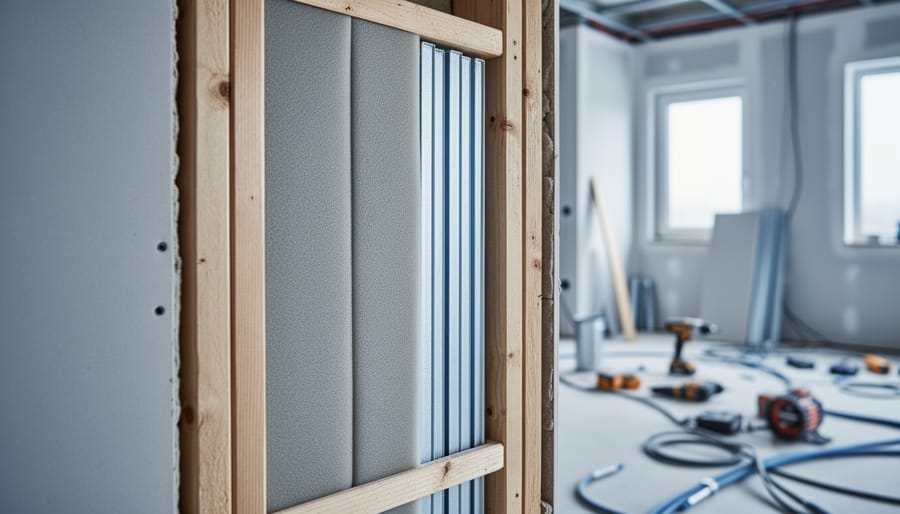
New insulation technology refers to advanced materials and methods that deliver superior thermal performance, moisture control, and energy efficiency compared to traditional fiberglass batts. These innovations include aerogel blankets, vacuum insulation panels, spray foam hybrids, and phase-change materials that actively regulate temperature by absorbing and releasing heat as conditions shift.
For homeowners planning renovations and builders searching for better performance, these technologies solve real problems. Traditional insulation often leaves gaps, settles over time, or fails in tight spaces where you need protection most. Modern alternatives fill those gaps with materials that insulate up to ten times more effectively per inch, block air infiltration that drives up energy bills, and resist mold growth in humid climates.
The investment question matters. While aerogel and vacuum panels cost more upfront, they save space in thin-wall applications and cut heating and cooling costs by 30 to 50 percent in well-documented case studies. Spray foam hybrids combine air sealing with insulation in one step, reducing labor and eliminating the need for separate vapor barriers. Phase-change materials stabilize indoor temperatures without constant HVAC cycling, extending equipment life.
This guide walks through how each technology works, where it makes sense for your project, and what to expect during installation. You’ll see the performance data that helps you compare R-values, payback periods, and moisture management, plus real examples from residential retrofits and new construction. Whether you’re upgrading an attic, insulating a basement, or designing a net-zero home, understanding these options ensures you choose the right solution for your budget and climate.
What Is New Insulation Technology?
New insulation technology refers to advanced materials and systems developed within the past decade that significantly outperform traditional fiberglass batts and foam boards in thermal resistance, environmental impact, or adaptive capabilities. These innovations emerged from materials science breakthroughs, sustainability demands, and smart-home integration, fundamentally changing how we think about building envelopes.
For decades, fiberglass and spray foam dominated insulation choices. They worked, but they had limitations: fiberglass loses effectiveness when compressed or wet, while traditional foam often contains chemicals that raise environmental concerns. The new generation of insulation materials addresses these shortcomings head-on. Aerogel insulation, for example, delivers R-values of R-10 per inch compared to fiberglass’s R-3 to R-4, fitting far more thermal protection into tight spaces. Vacuum insulated panels push this further, achieving R-30 or higher per inch by eliminating air entirely from sealed cores.
Understanding the terminology helps clarify what sets these materials apart:
- R-value
- The measure of thermal resistance; higher numbers mean better insulation performance per inch of thickness.
- Thermal bridging
- Heat loss through structural elements like studs that bypass insulation, which advanced materials minimize through superior coverage and conductivity.
- Phase change materials
- Substances that absorb or release heat as they transition between solid and liquid states, actively regulating indoor temperatures.
- Aerogel
- An ultra-lightweight solid made from 90-99% air trapped in a nanoporous structure, offering exceptional insulation in minimal thickness.
- Vacuum insulated panels
- Rigid boards with evacuated cores that eliminate convective heat transfer, providing the highest R-values available today.
- Bio-based insulation
- Materials derived from renewable sources like hemp, mushroom mycelium, or recycled denim that reduce carbon footprints while insulating effectively.
What truly distinguishes new insulation technology is its integration of multiple benefits. Many of these materials combine superior thermal performance with lower environmental impact, reduced installation complexity, or smart monitoring capabilities that weren’t possible with older options. They represent a shift from passive barriers to active, responsive building components.
How New Insulation Technology Works
Thermal Performance Principles
Traditional insulation works by trapping pockets of still air within fibrous or foam materials. Air itself is a poor conductor of heat, so the more air you can trap in place, the better the insulation performs. But conventional materials reach a practical limit: they need thickness to hold enough air, and their fibers or foam cells can still transfer some heat through conduction.
New insulation technologies break through this barrier by fundamentally changing how heat moves through a material. Aerogels, for instance, use nanoscale structures to create incredibly small air pockets, thousands of times tinier than those in fiberglass, which drastically reduces conduction. Vacuum insulated panels go further by removing air entirely from a sealed core, eliminating convection and conduction almost completely. This allows a one-inch VIP to match the performance of six inches of traditional fiberglass.
Phase change materials take a different approach. Instead of just blocking heat, they absorb thermal energy as they melt, storing it temporarily and releasing it later when temperatures drop. This molecular-level energy storage means the material actively regulates temperature rather than passively resisting it, achieving effective thermal performance with minimal thickness.
Smart and Adaptive Features
Smart insulation systems represent a leap beyond passive thermal barriers. Phase-change materials (PCMs) embedded in walls or ceiling panels actively regulate indoor temperature by absorbing excess heat when a room warms up and releasing it when temperatures drop. These materials transition between solid and liquid states at specific trigger temperatures, typically between 68°F and 78°F, storing thermal energy during the phase change. The result is fewer temperature swings and reduced HVAC cycling, which translates to measurable energy savings.
Some advanced insulation products now incorporate IoT sensors that track thermal performance in real time. These monitoring systems measure heat flow, moisture levels, and surface temperatures, transmitting data to smartphone apps or home automation platforms. Homeowners receive alerts when insulation performance degrades or when moisture intrusion threatens structural integrity. In commercial applications, building managers use this data to optimize HVAC schedules and identify problem areas before they escalate into costly repairs. This combination of adaptive materials and digital monitoring transforms insulation from a static component into an active participant in building energy management.
Types of New Insulation Technology
Aerogel Insulation
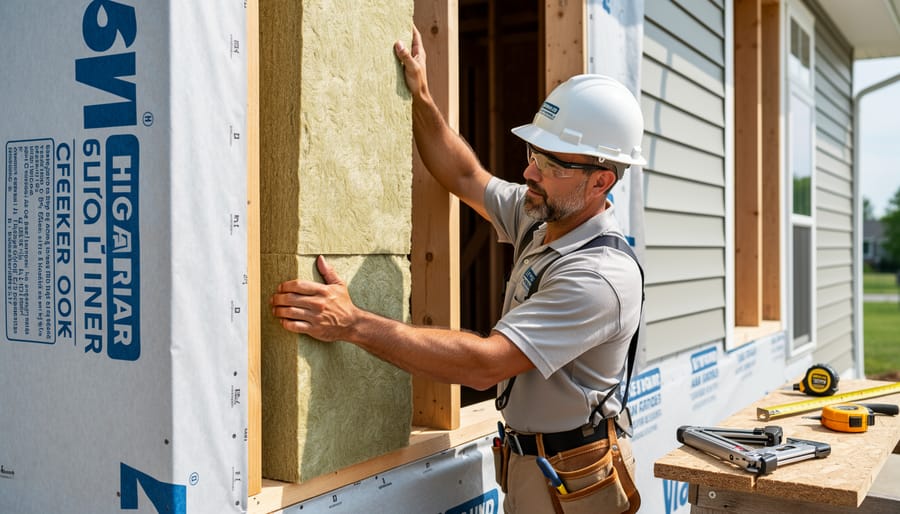
Aerogel insulation stands as one of the most remarkable innovations in thermal performance, delivering R-values of R-10 to R-14 per inch, roughly three times better than traditional fiberglass. This translucent, solid foam consists of 90-99% air trapped within a silica structure, making it incredibly lightweight yet exceptionally effective at blocking heat transfer.
Installation typically involves aerogel blankets or panels applied to walls, attics, or foundations. The material cuts easily with standard tools, though installers should wear dust masks since the fine particles can irritate airways. Unlike spray foam, aerogel doesn’t expand, so precise measuring matters.
Cost remains the primary barrier: expect $2, $4 per square foot, compared to $0.50, $1 for fiberglass. However, aerogel shines in space-constrained scenarios where traditional insulation can’t fit, think historic renovations with shallow wall cavities or compact urban apartments where every inch counts. Its hydrophobic properties also make it ideal for damp basement applications where moisture resistance is non-negotiable. For most whole-home projects, the premium price limits aerogel to targeted problem areas rather than blanket coverage.
Vacuum Insulated Panels (VIPs)
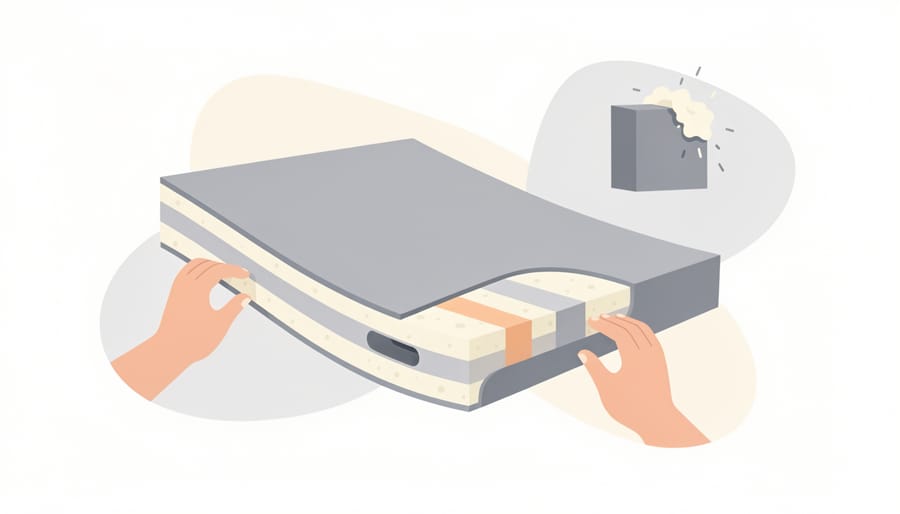
Vacuum insulated panels achieve R-values between R-30 and R-60 per inch by removing nearly all air from a core material encased in a gas-tight barrier film. This near-vacuum environment eliminates convection and conduction, making VIPs five to ten times more thermally efficient than conventional insulation. A typical panel is just 20mm thick yet outperforms 100mm of fiberglass.
However, VIPs have strict limitations. Puncturing the barrier destroys the vacuum seal and drops thermal performance to that of the core material alone. You can’t cut them onsite or drill through them for wiring or fixtures. They’re also expensive, typically costing $40 to $80 per square foot installed.
VIPs excel in space-constrained applications where every inch matters. Refrigerator manufacturers use them to maximize interior volume. In residential settings, they’re ideal for insulating thin partition walls between units, upgrading historic building envelopes without changing exterior profiles, or fitting high-performance insulation into shallow roof assemblies. Just plan meticulously before installation since modifications aren’t possible after the fact.
Phase Change Materials (PCMs)
Phase change materials store and release thermal energy by changing states, typically from solid to liquid and back, at specific temperatures. When your room heats up beyond the PCM’s melting point, the material absorbs excess heat as it liquefies, keeping the space cooler. As temperatures drop, it solidifies and releases that stored warmth back into the room.
Manufacturers embed PCMs in wallboard panels, ceiling tiles, or specialized insulation batts. Some systems use microencapsulated paraffin wax or salt hydrates sealed within building materials. This creates a passive temperature buffer that reduces HVAC cycling and smooths out daily temperature swings without any moving parts or electricity.
PCMs work best in climates with significant day-night temperature differences, they need that cooling period to reset. A room with PCM-enhanced drywall might stay 3-5°F more stable throughout the day compared to standard materials. The technology pairs well with passive solar design, absorbing daytime heat gain and releasing it during cooler evenings, which can cut heating and cooling costs by 15-30% in optimal conditions.
Bio-Based and Recycled Insulation
Bio-based and recycled options represent the sustainable frontier of modern insulation. Mushroom mycelium insulation grows into custom shapes using agricultural waste, creating a fully compostable material with impressive thermal and acoustic properties. Hemp fiber batts offer natural moisture regulation and pest resistance while sequestering carbon during growth. Recycled denim insulation repurposes textile waste into safe, non-toxic batts that install like fiberglass without the itch or respiratory concerns.
Cellulose made from recycled paper remains a cost-effective option that’s been refined with better fire retardants and tighter packing methods. Sheep’s wool insulation naturally wicks moisture and purifies indoor air by absorbing VOCs. These plant-based insulation and recycled materials typically achieve R-values of 3.0 to 4.0 per inch, competitive with fiberglass while offering better environmental profiles and healthier indoor air quality. Many natural insulation materials work well for DIY installation in wall cavities, attics, and crawl spaces where moisture management matters.
Smart Insulation Systems
Smart insulation systems represent the intersection of traditional building materials and modern home automation. These products embed IoT sensors directly into insulation panels or boards, creating a network that tracks thermal performance throughout your home’s envelope.
The sensors continuously measure temperature, humidity levels, and heat transfer rates at multiple points within walls, attics, or crawl spaces. This data feeds into a dashboard, typically accessible via smartphone app or home automation platform, showing you exactly where energy is escaping and how your insulation performs under different weather conditions.
Some systems send alerts when moisture accumulates behind walls, catching potential mold problems before they become visible. Others integrate with smart thermostats to optimize heating and cooling schedules based on actual insulation effectiveness rather than guesswork.
Installation mirrors standard insulation methods, with the added step of connecting sensors to your home’s Wi-Fi network. While significantly more expensive than passive insulation options, smart systems appeal to homeowners who want quantifiable proof of their energy efficiency improvements and early warning of building envelope failures.
Uses and Applications of New Insulation Technology
Residential Applications
Homeowners upgrading to new insulation technology see tangible benefits in both renovation and new construction projects. In renovations, aerogel blankets and spray-applied PCMs fit into tight spaces without major structural changes, making them ideal for upgrading wall cavities, attics, and basements. These materials dramatically reduce heat loss through walls while improving year-round comfort.
For new builds, integrating VIPs or bio-based options during framing maximizes R-value without sacrificing interior square footage. Most homeowners report noticeable reductions in HVAC runtime within the first season, translating to 20-30% lower energy bills. The upfront premium for green insulation typically pays back in five to eight years through savings, with added resale value as energy-efficient homes command higher market prices.
Smart insulation systems with monitoring capabilities let homeowners track performance through mobile apps, identifying problem areas before they become costly repairs. Whether tackling a single room or a whole-house retrofit, modern materials offer flexibility that traditional fiberglass can’t match.
Commercial and Sustainable Architecture
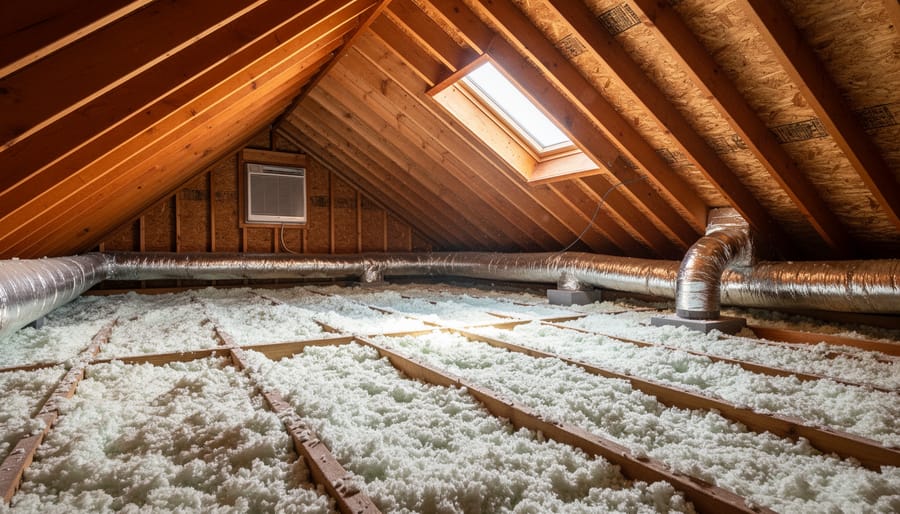
Commercial buildings account for nearly 40% of U.S. energy consumption, making advanced insulation a cornerstone of sustainable architecture. Architects and developers now specify aerogel panels, VIPs, and phase-change materials to achieve LEED Platinum ratings and net-zero energy targets that were impractical just five years ago.
These materials deliver the thermal performance required for ultra-efficient building envelopes without adding bulk. A downtown office tower in Seattle reduced HVAC loads by 35% using vacuum insulated panels in curtain walls, earning innovation credits under LEED v4.1. Net-zero schools and hospitals similarly rely on bio-based insulation with integrated monitoring to validate real-time energy savings for certification audits.
Advanced insulation also transforms historic building upgrades where space constraints and preservation codes limit traditional approaches. Thin aerogel blankets preserve interior square footage while meeting modern energy codes, critical for adaptive reuse projects converting warehouses into mixed-use developments. The upfront cost premium, typically 20-40% over conventional insulation, pays back through utility savings and green building incentives within seven to ten years on commercial timelines.
DIY vs. Professional Installation
Most new insulation technologies demand professional installation due to specialized handling requirements and precision placement. Aerogel blankets represent the rare DIY-friendly option, you can cut them with scissors and fit them between studs without protective gear beyond gloves and a dust mask. However, vacuum insulated panels require expert handling because any puncture destroys their effectiveness permanently. Phase change materials often integrate into building systems during construction, making retrofits complex. Smart insulation systems need electrical expertise for sensor installation and network configuration.
Safety concerns escalate with bio-based options; mushroom mycelium panels resist mold, but improper moisture barriers void warranties. If you’re tackling a small attic project with aerogel, DIY works. For whole-home upgrades or wall cavities, hire certified installers who understand vapor barriers, thermal bridging, and manufacturer specifications, mistakes with advanced materials cost significantly more to fix than traditional insulation errors.
Benefits and Considerations
New insulation technology delivers measurable advantages that traditional materials can’t match. The most immediate benefit is superior thermal performance, aerogel and vacuum insulated panels achieve R-values 2 to 5 times higher than fiberglass in the same thickness, translating to lower heating and cooling bills and faster payback on energy costs. Homeowners report comfort improvements too: fewer drafts, more consistent room temperatures, and reduced noise transmission from outside.
Sustainability matters to many buyers in 2026. Bio-based options like mycelium and hemp carry significantly lower embodied carbon than petroleum-based foams, and recycled materials divert waste from landfills. Phase change materials stabilize indoor temperatures without increasing HVAC runtime, cutting both energy use and utility expenses. For properties pursuing green certifications, these advanced materials often contribute points toward LEED or Passive House standards.
Smart insulation systems add a layer of accountability. Real-time monitoring reveals exactly where thermal losses occur, letting you prioritize repairs and verify that your investment performs as promised.
The considerations are practical. Cost remains the primary hurdle: aerogel and VIPs can run three to ten times more per square foot than standard batts, though prices have dropped as production scales up. Installation complexity varies. Some new materials require specialized contractors, adding labor expenses and limiting your local options. Vacuum panels are fragile; puncturing the seal destroys their effectiveness, so they’re unsuitable for high-traffic or impact-prone areas.
Compatibility with existing structures matters. Retrofitting old walls with certain advanced materials may require removing finishes or addressing moisture issues first. Weigh the upfront investment against realistic energy savings for your climate zone, and confirm warranties cover both material defects and performance guarantees over time.
Frequently Asked Questions About New Insulation Technology
Are you hesitating to upgrade to new insulation technology because you’re not sure about the costs, installation requirements, or whether these materials will work in your existing home? Here are answers to the most common questions homeowners and designers ask when considering advanced insulation options.
How much more expensive is new insulation technology compared to traditional materials?
Aerogel and vacuum insulated panels typically cost 3-5 times more per square foot than fiberglass, while bio-based options like hemp or recycled denim are often only 20-30% more expensive. The higher upfront cost is often offset by superior performance and energy savings over time.
Can I install advanced insulation in my older home without major renovations?
Yes, many new technologies work well in existing homes. Aerogel blankets can fit into tight wall cavities during partial renovations, and phase-change materials can be added to walls without removing all existing insulation. Vacuum insulated panels are trickier because they require careful handling and can’t be cut on-site.
What’s the typical payback period for upgrading to new insulation technology?
Most homeowners see payback in 7-12 years through reduced heating and cooling costs, though this varies based on climate, energy prices, and which technology you choose. Bio-based materials typically have longer payback periods than aerogel or VIPs.
Where can I purchase these advanced insulation materials?
Aerogel products are available through specialty building supply retailers and online distributors, while bio-based options like hemp and recycled denim are increasingly stocked at major home improvement stores. Vacuum insulated panels usually require ordering through commercial suppliers or specialized contractors.
Fire safety and moisture resistance vary by material type. Aerogel is naturally fire-resistant and doesn’t absorb water, making it ideal for humid climates. Most bio-based insulation is treated with fire retardants and borate solutions to prevent mold and pests. Phase-change materials are typically encapsulated in fire-rated containers. Always check product certifications and local building codes before installation, especially in older homes where moisture management and fire safety standards may differ from new construction requirements.
Types or components
Modern insulation technology relies on several key components working together to deliver superior thermal performance. Understanding these elements helps you evaluate products and make informed choices for your project.
Base Material Matrix forms the foundation, whether aerogel particles, vacuum-sealed core panels, or bio-based fibers, and determines the insulation’s fundamental thermal resistance properties.
Vapor Barriers and Membranes control moisture movement while maintaining breathability, preventing condensation that degrades performance over time. Advanced polymers in newer systems adapt to humidity levels automatically.
Fastening and Adhesive Systems secure the insulation without creating thermal bridges. Specialized clips, tapes, and foams designed for these materials maintain integrity at joints and seams where traditional methods fail.
Protective Facings shield sensitive materials from physical damage, UV exposure, or chemical reactions. Some facings incorporate reflective surfaces that boost radiant heat deflection.
Smart Components (in higher-end systems) include embedded sensors, data transmitters, and monitoring interfaces that track temperature differentials and alert you to performance changes. These transform passive insulation into an active building management tool.
New insulation technology represents a genuine leap forward in how we think about home comfort and energy efficiency. These advanced materials, from aerogel’s remarkable thinness to PCMs that actively regulate temperature, offer performance levels that traditional fiberglass simply can’t match. For homeowners planning renovations or new construction, the investment in these innovations pays dividends through lower energy bills, improved comfort, and reduced environmental impact.
The right choice depends on your specific project constraints: budget, available space, installation complexity, and performance goals. Start by assessing which areas of your home lose the most energy. Attics, exterior walls, and rim joists are often the best candidates for upgrading to advanced insulation. Even if budget concerns limit you to insulating just one area, you’ll notice the difference.
As these technologies become more mainstream and costs continue decreasing, early adopters position themselves at the forefront of sustainable home design. Whether you’re pursuing LEED certification, targeting net-zero energy consumption, or simply want a more comfortable living space, new insulation technology offers practical solutions that were science fiction a decade ago. Your next project is the perfect opportunity to experience these benefits firsthand.