How Minimalism Transformed Modern Homes (From Zen to Marie Kondo)
Minimalism’s journey from ancient Zen Buddhism to modern-day design philosophy reveals humanity’s enduring quest for simplicity and purpose. Born from spiritual practices emphasizing the elimination of excess, minimalism emerged as an art movement in the 1960s before revolutionizing architecture, interior design, and lifestyle choices worldwide. Today’s minimalist movement transcends mere aesthetic appeal, representing a conscious rejection of consumerism and a return to intentional living.
The philosophy gained momentum in post-World War II America, where artists like Donald Judd and Dan Flavin stripped their work to essential elements, inspiring architects and designers to embrace clean lines, functional spaces, and uncluttered environments. This artistic revolution coincided with rising environmental awareness and mounting criticism of excessive consumption, creating perfect conditions for minimalism to evolve from an artistic statement into a comprehensive lifestyle approach.
As our lives become increasingly complex and digitally saturated, minimalism’s promise of clarity and purpose resonates more powerfully than ever. Its principles of thoughtful curation, purposeful design, and sustainable living offer a compelling antidote to modern chaos, proving that this ancient philosophy remains remarkably relevant in addressing contemporary challenges.
Ancient Roots: Zen Philosophy and Simple Living
Japanese Zen Influence
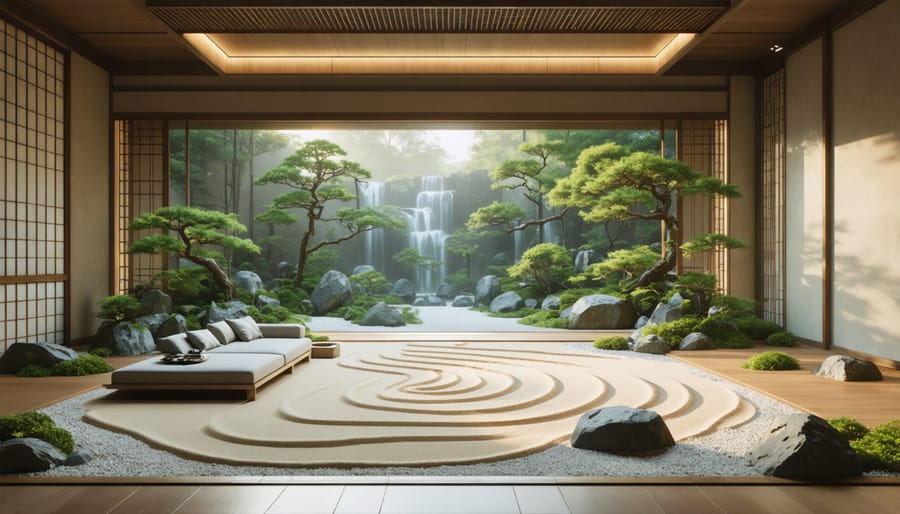
Japanese Zen principles have profoundly shaped modern minimalist design, bringing a spiritual and philosophical dimension to the aesthetic. During the 6th century, Zen Buddhism introduced concepts like simplicity, mindfulness, and the beauty of empty spaces, which continue to influence minimalist interiors today.
The Zen aesthetic emphasizes the idea of “less is more” through elements like clean lines, natural materials, and uncluttered spaces. Traditional Japanese homes exemplified these principles with their tatami mats, sliding shoji screens, and carefully curated décor, where each item served a purpose and contributed to the overall harmony of the space.
Key Zen concepts that transformed minimalist design include “Ma” (the conscious use of negative space) and “Wabi-sabi” (finding beauty in imperfection and simplicity). These principles encouraged designers to create peaceful environments by removing unnecessary elements and focusing on essential items that bring both function and tranquility to a space.
Today, these Japanese influences can be seen in minimalist homes through neutral color palettes, natural textures, and thoughtfully arranged furniture that allows room for both movement and meditation.
Traditional Japanese Design Elements
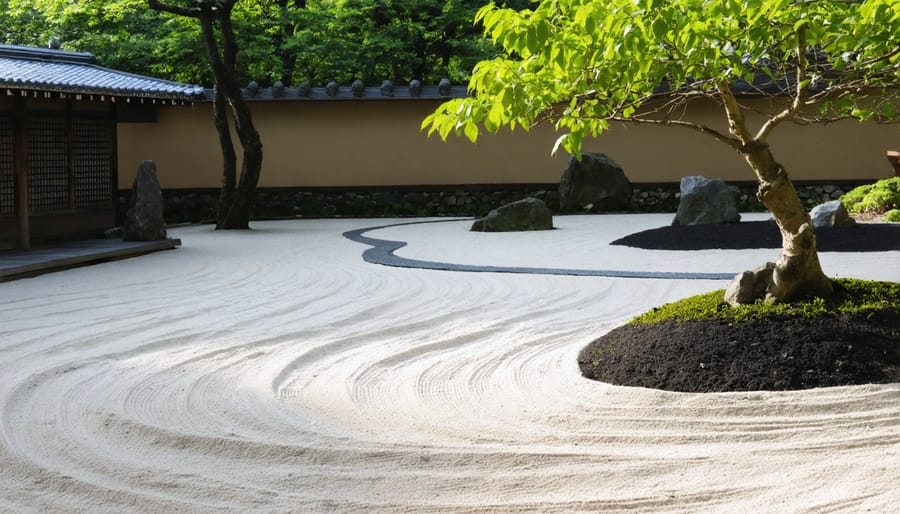
Traditional Japanese design principles have significantly shaped modern minimalism, with their emphasis on simplicity, natural materials, and purposeful spaces. The concept of “Ma,” which represents the meaningful use of negative space, remains a cornerstone of Japanese minimalist design. This Asian design influence can be seen in features like sliding shoji screens, which serve both practical and aesthetic purposes while maintaining clean lines and light-filled spaces.
Key elements include low-profile furniture, natural wood textures, and the strategic use of bamboo and paper materials. The traditional tatami mat system demonstrates how Japanese design naturally incorporates modular spacing and proportional harmony. These spaces typically feature neutral color palettes, emphasizing earth tones and natural lighting, while incorporating elements like rock gardens and water features to connect interior spaces with nature.
The philosophy of “wabi-sabi,” which finds beauty in imperfection and simplicity, continues to inspire modern minimalist designers who seek to create serene, uncluttered environments that promote mindfulness and tranquility in everyday living spaces.
The Modernist Movement: Less Becomes More
Bauhaus and Minimalist Design
The Bauhaus movement, which emerged in Germany during the 1920s, revolutionized the way we think about design and laid the groundwork for modern minimalism. Founded by Walter Gropius, the Bauhaus school championed the philosophy that form should follow function, stripping away unnecessary ornaments to focus on clean lines and practical design.
This influential school introduced key principles that still shape minimalist design today: the use of simple geometric shapes, a focus on functionality, and the thoughtful combination of industrial materials like steel and glass with natural elements. The famous motto “less is more,” coined by Bauhaus architect Mies van der Rohe, became the cornerstone of minimalist design philosophy.
Bauhaus designers created furniture and spaces that emphasized utility without sacrificing beauty. Their signature style featured straight lines, basic shapes, and a limited color palette – typically focusing on neutrals with occasional bold primary colors as accents. These elements continue to influence modern homes, where we see similar approaches in everything from kitchen cabinets to lighting fixtures.
The school’s impact extends beyond aesthetics – it fundamentally changed how we approach interior design. By teaching that spaces should be both beautiful and practical, Bauhaus principles help today’s homeowners create living environments that are both visually appealing and highly functional, proving that simplicity doesn’t mean sacrificing style or comfort.
Mid-Century Minimalism
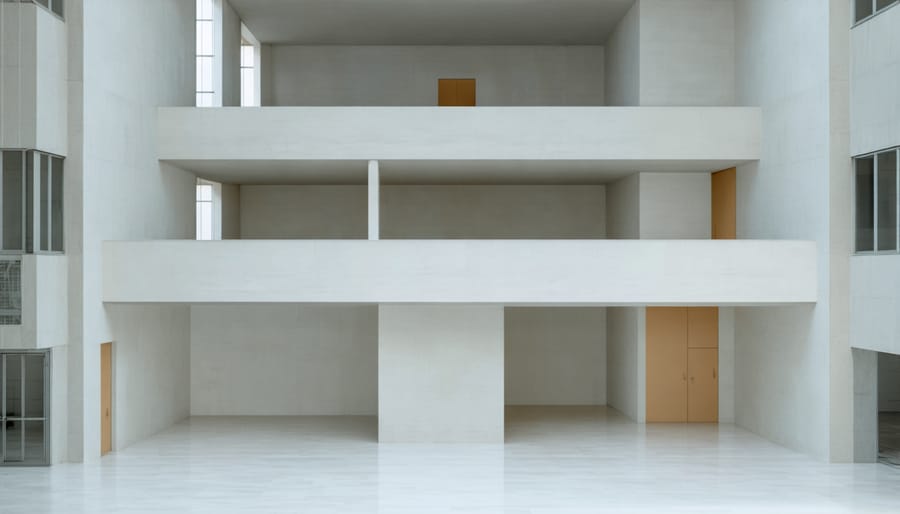
The mid-20th century marked a transformative period for minimalism, as post-war optimism and technological advances sparked a revolution in design thinking. Architects and designers like Ludwig Mies van der Rohe championed the “less is more” philosophy, creating spaces that emphasized clean lines, open floor plans, and timeless design elements.
This era saw the rise of modular furniture, simple geometric shapes, and the elimination of unnecessary ornamentation. The movement was particularly influenced by the Bauhaus school’s principles, which merged functionality with aesthetic simplicity. Homes began featuring large windows, neutral color palettes, and built-in storage solutions that maximized space while maintaining visual clarity.
The influence of Japanese design principles became more pronounced during this period, with architects incorporating concepts like ma (negative space) and wabi-sabi (finding beauty in imperfection) into Western minimalist designs. Materials like steel, glass, and concrete took center stage, while natural elements were thoughtfully integrated to create balance and warmth.
This mid-century interpretation of minimalism continues to inspire contemporary design, offering practical solutions for modern living while maintaining an enduring aesthetic appeal. The period’s emphasis on quality over quantity and purposeful design choices remains relevant for today’s homeowners seeking to create serene, uncluttered spaces.
Digital Age Minimalism
Tech-Driven Simplicity
In today’s digital age, technology has become a driving force behind minimalist design, reshaping how we approach simplicity in our living spaces. Smart home systems now allow us to eliminate physical clutter while maintaining functionality – imagine controlling your entire home’s lighting, temperature, and security through a single sleek device.
The rise of wireless technology has helped eliminate visible cables and bulky entertainment centers, leading to cleaner wall spaces and more streamlined room layouts. Built-in charging stations and hidden tech hubs have become standard features in modern minimal homes, keeping necessary devices accessible yet inconspicuous.
Digital storage solutions have revolutionized how we handle paperwork and media collections. Cloud storage has made it possible to maintain extensive libraries without physical storage space, while digital photo frames can display thousands of memories without cluttering walls with multiple frames.
Innovative furniture designs now incorporate technology seamlessly – from beds with built-in USB ports to coffee tables with wireless charging capabilities. Even kitchen appliances have evolved, with touch-sensitive panels replacing traditional knobs and smart refrigerators eliminating the need for paper calendars and sticky notes.
This tech-driven approach to minimalism proves that living simply doesn’t mean living without modern conveniences – it’s about integrating them thoughtfully and invisibly into our spaces.
Smart Storage Solutions
As minimalism gained momentum in contemporary design, innovative modern storage solutions became essential to maintaining clutter-free spaces. Today’s minimalist storage emphasizes functionality without sacrificing aesthetics, featuring built-in cabinets that blend seamlessly with walls and furniture that serves multiple purposes. Popular solutions include floating shelves, hidden compartments, and modular systems that adapt to changing needs.
Technology has revolutionized storage efficiency, with smart closet systems featuring motion-sensor lights and automated organization. Multi-functional furniture pieces, such as ottoman storage beds and wall-mounted desks, maximize space while maintaining clean lines. Japanese-inspired solutions, like vertical storage and compact compartmentalization, have significantly influenced modern minimalist organization.
The key to successful minimalist storage lies in thoughtful planning and regular maintenance. Many homeowners now incorporate designated zones for different activities, using clear containers and labeled systems to maintain order. Digital organization complements physical storage, with apps helping track possessions and maintain minimal environments. This evolution in storage solutions demonstrates how minimalism continues to adapt to contemporary living while staying true to its core principle of intentional simplicity.
Global Influence and Cultural Impact
Scandinavian Minimalism
Scandinavian minimalism emerged in the 1950s as a distinct design movement that would later become one of the most influential global design influences. The Nordic interpretation of minimalism beautifully combines functionality with clean aesthetics, emphasizing natural materials, light colors, and simple forms.
What sets Scandinavian minimalism apart is its focus on creating warm, inviting spaces despite its stripped-back approach. Unlike other minimalist styles, it embraces organic elements like wood, wool, and natural light, making spaces feel cozy and lived-in rather than stark or clinical. This practical yet beautiful philosophy stems from the Nordic region’s long, dark winters, where bright, uncluttered interiors help combat seasonal darkness.
Key characteristics include white walls, wooden floors, and furniture with clean lines and practical purposes. The style popularized iconic pieces like the Egg Chair by Arne Jacobsen and Hans Wegner’s Wishbone Chair, which exemplify the perfect balance of form and function. Modern interpretations often incorporate subtle textures, neutral color palettes, and abundant natural light to create serene, welcoming environments.
Today, Scandinavian minimalism continues to influence contemporary interior design, offering a timeless approach to creating peaceful, functional living spaces that prioritize quality over quantity.
Modern Minimalist Movement
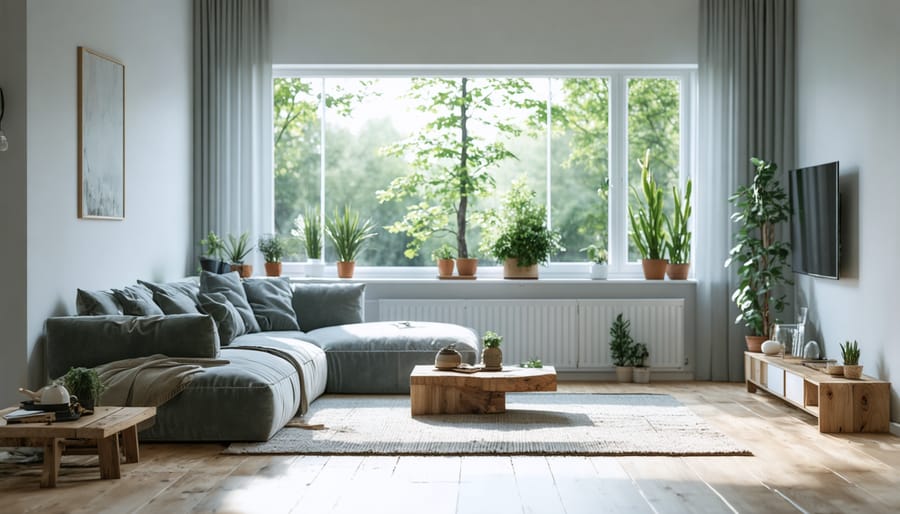
Today’s minimalist movement has evolved into a versatile and practical approach to living and design. Unlike its earlier interpretations, modern minimalism embraces functionality while maintaining simplicity, making it particularly appealing to urban dwellers and busy professionals.
The rise of tiny house living, micro-apartments, and smart storage solutions has pushed minimalism into mainstream consciousness. Social media influencers and organization experts like Marie Kondo have popularized the “less is more” philosophy, encouraging people to evaluate their possessions based on joy and utility rather than quantity.
Digital minimalism has emerged as a significant trend, with people applying minimalist principles to their virtual spaces and online presence. This includes decluttering digital files, maintaining clean desktop interfaces, and creating streamlined smart home systems.
In interior design, modern minimalism often features neutral color palettes with occasional bold accents, multi-functional furniture, and carefully curated decorative elements. Natural materials like wood, stone, and organic textiles are frequently incorporated to add warmth and texture to otherwise sparse spaces.
The movement has also embraced sustainability, with many minimalists adopting eco-friendly practices and choosing quality over quantity. This approach extends to fashion, with capsule wardrobes and sustainable clothing choices becoming increasingly popular among minimalism enthusiasts.
Practical Applications for Today’s Homes
Implementing minimalist principles in today’s homes doesn’t mean stripping away all personality or comfort. Start by decluttering each room, keeping only items that serve a purpose or bring genuine joy. Choose furniture with clean lines and multi-functional capabilities, like ottoman storage or fold-down tables, to maximize space efficiency.
Color plays a crucial role in modern minimalism. Opt for a neutral base palette of whites, grays, or earth tones, then add subtle pops of color through carefully chosen accessories. This creates a calm, cohesive environment while maintaining visual interest.
Storage solutions become essential in minimalist spaces. Consider built-in cabinets that blend seamlessly with walls, under-bed storage systems, and floating shelves that keep floors clear. Digital solutions can help reduce physical clutter – scan important documents, streamline entertainment systems, and embrace smart home technology that eliminates the need for multiple controllers and devices.
In the kitchen, clear countertops and organized cabinets are paramount. Install pull-out organizers, use uniform containers for pantry items, and keep only frequently used appliances visible. Bathroom spaces benefit from wall-mounted fixtures and hidden storage solutions for toiletries and linens.
Remember that minimalism is personal – what works for one household might not work for another. Focus on creating systems that maintain organization while supporting your lifestyle. Regular maintenance through the “one-in-one-out” rule helps prevent clutter from accumulating. When purchasing new items, consider quality over quantity, choosing pieces that will last longer and serve multiple purposes.
Minimalism’s journey from ancient philosophies to modern design continues to shape how we create and live in our spaces. Today’s interpretation blends traditional principles of simplicity with smart technology and sustainable practices, offering a practical approach to contemporary living. As we look to the future, minimalism is evolving beyond just aesthetic choices to embrace mindful consumption and purposeful design. The movement’s emphasis on quality over quantity, combined with growing environmental awareness, suggests that minimalist principles will remain influential in home design. Whether through decluttered spaces, multifunctional furniture, or eco-friendly materials, minimalism offers enduring solutions for modern living challenges while maintaining its core values of simplicity, functionality, and intentional design.