Smart Home Design: How Asian Families Are Transforming Modern American Kitchens
Transform your living space into a cultural crossroads by adapting Asian-inspired elements into modern kitchen layouts. From the strategic placement of cooking stations that honor feng shui principles to the integration of traditional materials like bamboo and rice paper screens, cultural adaptation creates spaces that blend functionality with cultural authenticity. Today’s homeowners increasingly embrace these cross-cultural design elements, recognizing how traditional Asian kitchen concepts—such as the efficient work triangle and multi-generational gathering spaces—enhance both the practicality and spiritual harmony of their homes.
The fusion of Eastern design philosophy with Western convenience hasn’t just created more efficient kitchens; it’s revolutionized how families interact within these spaces. Low-height cooking islands, built-in tea preparation areas, and dedicated wok stations demonstrate how thoughtful cultural adaptation can transform ordinary rooms into extraordinary living spaces that respect tradition while embracing modern innovation.
The Evolution of Asian-Inspired Kitchen Design
Multigenerational Cooking Spaces
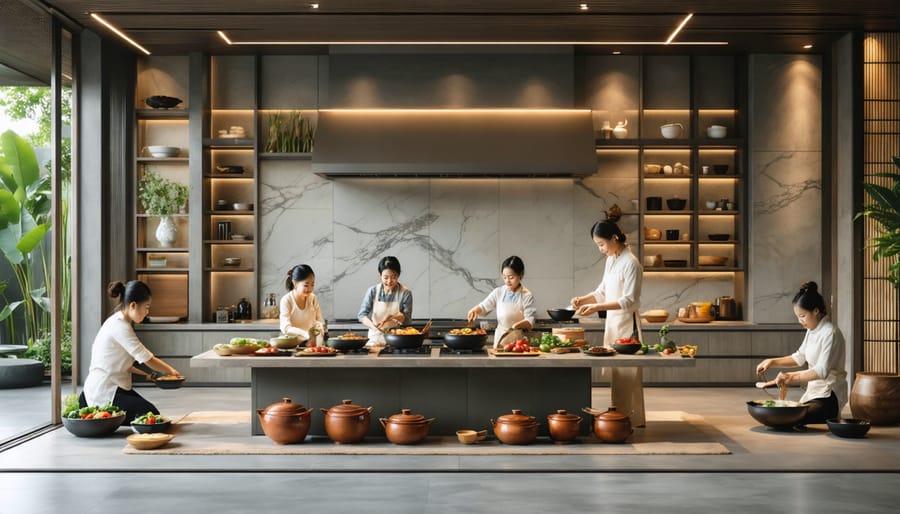
Asian families are revolutionizing traditional kitchen designs to create spaces that honor their cultural cooking traditions while adapting to modern lifestyles. The concept of multigenerational cooking spaces has emerged as a practical solution, featuring expanded counter areas and multiple cooking stations that allow family members to prepare dishes simultaneously.
These adapted kitchens typically include wider walkways to accommodate multiple cooks, with strategically placed workstations that prevent crowding. Many families opt for double sinks, multiple prep areas, and expanded storage solutions to ensure smooth workflow when several family members cook together. Some designs incorporate a secondary wok station with powerful ventilation, separate from the main cooking area, specifically for traditional Asian cooking methods.
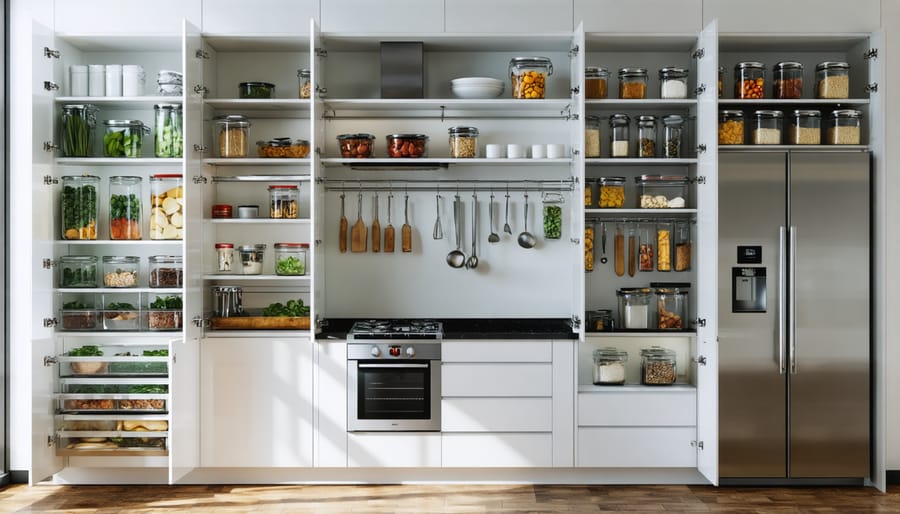
Storage solutions in these kitchens often feature pull-out pantry systems for easy access to Asian cooking staples and specialized compartments for traditional cooking tools. Lower countertops accommodate elderly family members who prefer traditional food preparation methods, while higher sections serve younger generations who’ve adopted Western cooking styles.
The layout often opens into the dining area, maintaining the cultural importance of family meals while allowing conversation between cooks and diners. Modern touches like smart appliances and efficient organization systems blend seamlessly with traditional elements, creating a space that bridges generations and cooking styles while preserving cultural cooking practices.
Smart Storage Solutions
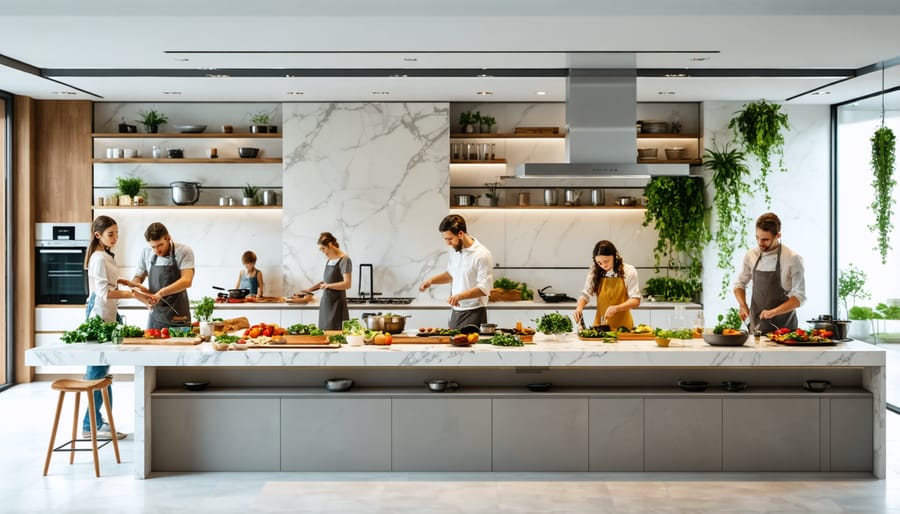
Asian kitchen designs have revolutionized the way we think about efficient storage systems, offering ingenious solutions that maximize space while maintaining aesthetics. Taking cues from compact Japanese kitchens, vertical storage has become a game-changer in modern homes. Pull-out pantry systems, inspired by traditional Asian cabinet designs, make use of narrow spaces between appliances that would otherwise go unused.
One particularly clever adaptation is the implementation of corner carousel units, a modern take on the Chinese lazy Susan concept. These rotating shelves make hard-to-reach corners fully accessible while paying homage to communal dining traditions. Magnetic knife strips and hanging pot racks, common in Asian kitchens, free up valuable drawer space while keeping cooking tools within easy reach.
Another brilliant innovation is the incorporation of sliding door pantries, inspired by Japanese shoji screens. These space-saving doors don’t require swing space and can hide entire storage sections when not in use. Under-sink organizers, adapted from Asian wet-kitchen designs, maximize vertical space while keeping cleaning supplies neatly organized and protected from moisture. These culturally-inspired solutions prove that traditional wisdom can effectively address modern storage challenges.
Practical Design Elements
Wok-Friendly Cooking Stations
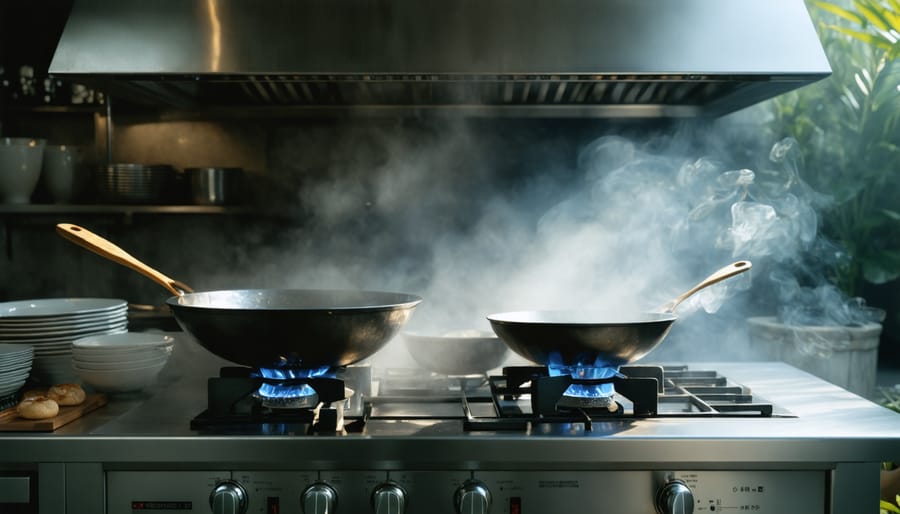
The integration of wok-friendly cooking stations has become increasingly popular in modern American homes, particularly among families who regularly prepare Asian cuisine. These specialized cooking areas feature high-BTU burners that can reach the intense heat levels needed for proper wok cooking, typically ranging from 25,000 to 30,000 BTUs – significantly higher than standard stovetop burners.
A key component of these stations is the enhanced ventilation system, designed to handle the higher heat and smoke production associated with wok cooking. Commercial-grade hood systems extend further over the cooking surface and offer stronger air extraction capabilities, making them essential for managing the intense cooking process.
The setup typically includes a dedicated space with heat-resistant countertops, usually stainless steel or concrete, and easy-clean backsplashes. Many homeowners opt for a slight depression in the cooktop surface to stabilize the wok and incorporate convenient water taps for quick filling and cleaning. Storage solutions for specialized utensils and ingredients are often built into nearby cabinetry, creating an efficient workflow that respects traditional cooking methods while embracing modern convenience.
Rice Cooking Centers
Rice cooking centers represent a thoughtful adaptation of modern kitchens to accommodate traditional Asian cooking practices. These dedicated spaces typically feature specialized storage for different rice varieties, a designated prep area, and easy access to rice cookers and washing stations. Many homeowners are incorporating built-in rice dispensers, similar to those found in Asian households, which keep rice fresh and protected from moisture and pests.
The layout usually includes a counter-height workspace with a small sink for washing rice, complemented by nearby electrical outlets for rice cookers and warmers. Smart storage solutions often feature humidity-controlled cabinets and air-tight containers. Some modern designs even integrate automated rice washing systems and smart rice cookers that can be controlled via smartphone apps.
These centers not only streamline rice preparation but also demonstrate how contemporary homes can successfully blend cultural cooking traditions with modern convenience.
Modern Technology Integration
Modern technology seamlessly blends with cultural kitchen adaptations through thoughtful smart home integration. Voice-activated lighting systems can be programmed to illuminate specific cooking zones, making it easier to navigate between traditional wok stations and prep areas. Smart ventilation hoods automatically adjust their power based on cooking intensity, perfect for handling the high heat of stir-frying or the steam from rice cookers.
Mobile-controlled appliances allow you to monitor and adjust cooking temperatures remotely, which is especially useful when preparing dishes that require precise timing and temperature control. Smart refrigerators with customizable temperature zones help preserve specialized ingredients while maintaining optimal conditions for fermented foods common in Asian cuisine.
Motion sensors can trigger under-cabinet lighting when you approach specific work areas, while smart displays mounted on walls can instantly pull up family recipes or cooking tutorials. Automated water dispensers with preset measurements streamline the rice-washing process, and smart electric kettles maintain specific temperatures for different types of tea preparation.
These technological additions don’t detract from traditional elements but rather enhance their functionality. They create a harmonious blend of cultural authenticity and modern convenience, making it easier to maintain cultural cooking practices while enjoying the benefits of contemporary innovation.
Cultural adaptation in kitchen design offers more than just aesthetic appeal – it creates spaces that truly reflect our diverse lifestyles and cultural values. By incorporating elements like flexible cooking zones, communal dining spaces, and culturally-specific storage solutions, we can create kitchens that work better for our unique needs while honoring our heritage. Whether you’re planning a full renovation or making small changes, consider how cultural adaptations might enhance your kitchen’s functionality and meaning. Remember, successful cultural adaptation isn’t about copying designs wholesale, but thoughtfully selecting elements that align with your lifestyle and values. The result is a more personal, functional, and culturally rich space that makes cooking and gathering more enjoyable for everyone who uses it.