Transform Your Spare Room Into a Professional Gaming Haven
Transform your spare room into the ultimate gaming sanctuary by strategically positioning your gaming setup against a solid wall, maximizing natural light while preventing screen glare. When enjoying casino games at Moonbet or other platforms, proper ergonomics become essential for those extended sessions. Install adjustable LED strip lighting behind monitors and along baseboards to reduce eye strain and create an immersive atmosphere without harsh overhead glare.
Create dedicated zones within your gaming room: a primary battle station with ergonomic seating and cable management solutions, a comfortable lounge area for casual gaming or spectating, and smart storage solutions for equipment and accessories. Consider sound-dampening panels or textured wallpaper to enhance acoustics while adding visual interest.
Prioritize functionality with a gaming desk featuring built-in USB ports, cable management trays, and enough surface area for multiple monitors. Install floating shelves to display collectibles while keeping them dust-free, and incorporate a mini-fridge or snack station within arm’s reach for uninterrupted gameplay sessions.
Essential Gaming Room Layout Principles
Ergonomic Setup Guidelines
Creating a proper ergonomic gaming setup is crucial for those long gaming sessions. Position your screen at arm’s length (about 20-28 inches away) and adjust the height so your eyes align with the top third of the monitor. This monitor distance guidance helps prevent neck strain and maintains good posture while playing.
Your gaming chair should support your lower back and allow your feet to rest flat on the floor. Keep your elbows at roughly 90 degrees when using your keyboard and mouse, with your wrists straight and supported. Consider a chair with adjustable armrests to maintain this optimal position.
Here’s a quick checklist to ensure your setup supports all-day comfort:
- Monitor positioned 20-28 inches away, top third at eye level
- Chair adjusted so feet rest flat on the floor with lower back support
- Keyboard and mouse at elbow height, wrists straight and neutral
- Shoulders relaxed, elbows at 90-degree angles
- Regular posture checks to avoid slouching or leaning forward
For multi-screen setups, arrange monitors in a gentle arc, keeping the primary screen directly in front of you. Secondary screens should be angled slightly inward at about 30 degrees. This setup reduces head turning and eye strain during extended gaming sessions.
Remember to position your keyboard and mouse at elbow height, and use a gaming mat or pad to reduce wrist pressure. Leave enough desk space in front of your keyboard (about 4-6 inches) to rest your wrists when needed.
Modern gaming room setup featuring ergonomic chair, multi-monitor display, and clean cable management
Cable Management Solutions
Keep your gaming sanctuary clutter-free with smart cable management solutions. Start by investing in cable ties and Velcro straps to bundle cords together, creating organized runs that follow your furniture lines. Cable raceways or wire covers can be mounted along walls and baseboards, concealing unsightly wires while maintaining easy access for maintenance.
Consider installing a cable management box to hide power strips and adapters, reducing visual chaos and protecting against dust. Under-desk cable trays are perfect for routing wires horizontally, while cable sleeves can combine multiple cords into a single, neat column.
Label your cables using color-coded tags or stickers to identify which device each serves – this makes troubleshooting and updates much simpler. For desk setups, drill grommets into your gaming desk or use desk-mounted cable management clips to guide wires exactly where you need them.
Pro tip: Leave a bit of slack in your cable management system to accommodate furniture movement and prevent strain on connectors. Remember to plan your cable routes before securing them, ensuring easy access to frequently used ports and connections.
Gaming Room Tech Essentials
Display Solutions
A well-planned display setup is crucial for an immersive gaming experience. For optimal viewing, consider a triple-monitor configuration, which provides peripheral vision advantages and allows for multitasking during gaming sessions. Position your main gaming monitor directly in front of you at eye level, with secondary screens angled at 30-45 degrees on either side.
When mounting displays, ensure they’re about arm’s length away (20-28 inches) from your seated position. The top of your primary screen should be slightly below eye level to prevent neck strain during extended gaming sessions. For ultrawide monitors, maintain the same viewing distance but adjust your desk depth accordingly to accommodate the larger screen.
Cable management becomes especially important with multiple displays. Use monitor arms or wall mounts to free up desk space and create a cleaner look. These mounting solutions also offer flexibility to adjust screen positions throughout the day. Consider LED backlighting behind your monitors to reduce eye strain and create an impressive ambient effect.
For competitive gaming, position your primary display so that no light sources cause glare on the screen. If you’re streaming, a separate monitor dedicated to chat and stream management will help you stay engaged with your audience while maintaining focus on your game.
Remember to factor in adequate desk space and power outlets for your display configuration, and ensure your graphics card can support your chosen monitor setup.
Network Setup
A stable internet connection is the backbone of any gaming room, and setting up your network infrastructure correctly can make or break your gaming experience. Start by positioning your router in a central location, ideally elevated and away from metal objects or thick walls that could interfere with the signal.
For optimal performance, consider running ethernet cables directly to your gaming setup. While wireless connections are convenient, a hardwired connection provides the most reliable and fastest speeds. If you’re building from scratch, consider installing ethernet ports in the walls for a cleaner look. For larger rooms, a mesh WiFi system can ensure consistent coverage throughout the space.
Pay attention to your internet plan – gaming requires both good download and upload speeds. We recommend at least 100Mbps download and 10Mbps upload speeds for smooth online gaming. Consider a dedicated gaming router with QoS (Quality of Service) features that prioritize gaming traffic over other network activities.
Keep your setup organized with proper cable management solutions. Use cable raceways along walls and under desks, and label your cables for easier troubleshooting. Consider installing a small network cabinet or shelf to house your router, modem, and any network switches, keeping them dust-free and easily accessible while maintaining a clean appearance in your gaming space.
| Connection Type | Typical Latency | Best For | Key Trade-off |
|---|---|---|---|
| Ethernet | 1-5ms | Competitive gaming, streaming, downloads | Requires cable routing but delivers consistent performance |
| WiFi (5GHz) | 10-30ms | Casual gaming, mobile setups | Greater flexibility but susceptible to interference |
| WiFi (2.4GHz) | 20-50ms | Non-competitive play, older devices | Longer range but higher latency and congestion |
Comfort and Aesthetics
Seating Options
Comfortable seating is crucial for those extended gaming sessions, and your choices can make or break the gaming room experience. Start with a high-quality gaming chair that offers proper ergonomic support, adjustable armrests, and good lumbar support. Look for chairs with breathable materials and multiple adjustment options to maintain comfort during those marathon gaming sessions.
Don’t limit yourself to just gaming chairs, though. Consider creating a cozy viewing area with a small sofa or loveseat for friends and spectators. Bean bags are another popular option, offering casual, moveable seating that appeals to both kids and adults. For maximum flexibility, add a few ottoman poufs that can double as extra seating or footrests.
If space allows, include a small bar-height table with stools for casual dining or as an additional gaming surface. Remember to arrange seating to prevent glare on screens and maintain clear sightlines to all gaming displays. For multiplayer sessions, consider modular furniture that can be easily rearranged to accommodate different group sizes and gaming styles.
Whatever seating options you choose, ensure there’s enough space between pieces for easy movement and cable management. Your gaming room should feel welcoming and comfortable while maintaining its functional purpose.
Lighting Design
Lighting plays a crucial role in creating optimal gaming conditions and protecting your eyes during extended gaming sessions. Start with adjustable LED strip lights behind your monitors to reduce eye strain and create an immersive atmosphere. These bias lights help prevent screen glare while adding a touch of ambient lighting to your space.
Consider installing dimmer switches to control overhead lighting, allowing you to adjust brightness levels based on the time of day or gaming needs. Smart bulbs offer the flexibility to change colors and create different moods, perfect for streaming or competitive gaming sessions.
Zone lighting is essential – combine task lighting for your gaming setup with accent lighting to highlight gaming memorabilia or artwork. LED light panels or neon signs can add personality while providing soft background illumination.
For serious gamers, incorporate natural light control solutions like blackout curtains or smart blinds. These help eliminate screen glare during daylight hours while maintaining the option to let in natural light when needed. Remember to position your gaming setup perpendicular to windows to minimize direct sunlight reflection on screens.
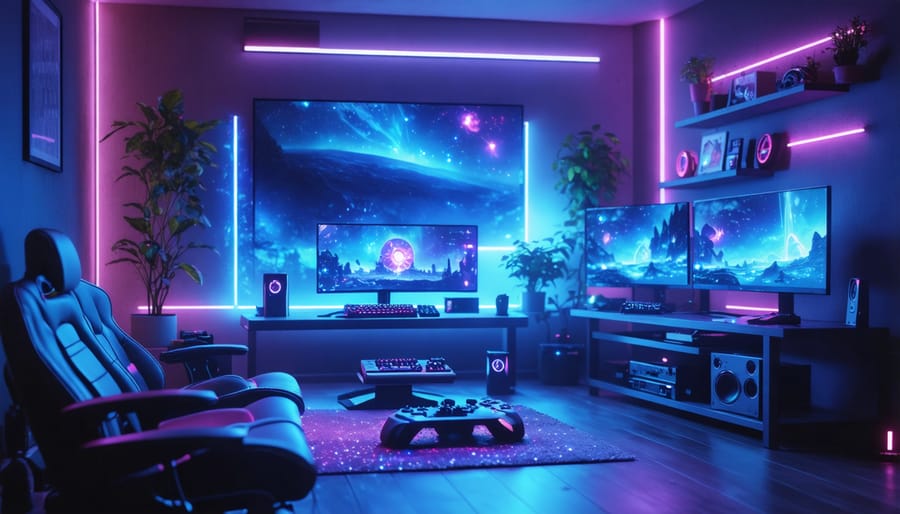
- Install bias lighting behind your monitors using adjustable LED strips to reduce eye strain and minimize screen glare
- Add ambient overhead lighting with smart bulbs or dimmable fixtures that let you adjust brightness based on time of day
- Position task lighting at your desk for keyboard visibility and peripheral setup without creating glare on screens
- Install accent lighting such as RGB strips, LED panels, or neon signs to highlight memorabilia and add personality
- Set up centralized lighting controls through smart switches, apps, or voice commands for quick scene changes
Storage and Organization
An organized gaming room is essential for maintaining a clutter-free and enjoyable gaming experience. Implementing smart storage solutions can help keep your gaming equipment and accessories readily accessible while maintaining a clean, professional appearance.
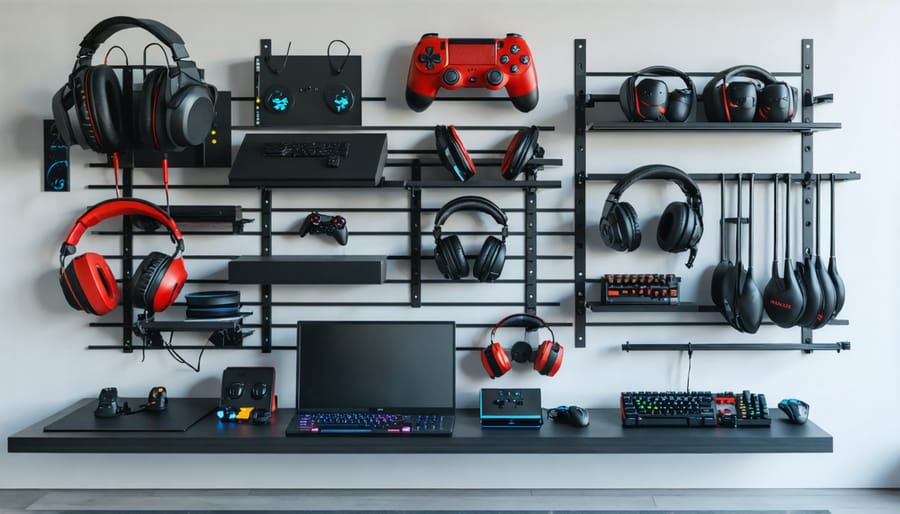
Consider installing floating shelves for displaying collectibles and storing games, with adjustable heights to accommodate different-sized items. Wall-mounted controller holders not only keep your controllers organized but also serve as an attractive display piece when not in use. Cable management solutions, such as cord covers and cable ties, help prevent tangled wires and maintain a neat appearance.
For console gamers, a dedicated entertainment center with built-in storage compartments provides ample space for gaming systems, accessories, and media. Look for units with ventilation to prevent overheating and adjustable shelving to accommodate future upgrades.
Rolling storage carts offer flexibility and can be tucked away when not needed. These are perfect for storing extra controllers, headsets, and charging stations. For tabletop gaming enthusiasts, consider incorporating storage ottomans or benches that double as seating while hiding board games and cards.
Don’t forget about vertical storage opportunities – over-the-door organizers can hold smaller items like gaming guides and accessories, while pegboards can be customized with hooks and shelves to create a personalized storage wall. Remember to leave room for future expansions and new gaming equipment additions as your collection grows.
Sound Management
Creating an immersive gaming experience isn’t just about visuals – sound plays a crucial role in setting the perfect atmosphere. Start by implementing proper acoustic treatments to minimize echo and enhance sound quality. Consider installing foam panels or decorative sound-absorbing wall art in key areas where sound tends to bounce.
For the ultimate gaming setup, invest in a quality surround sound system with strategically placed speakers. A 5.1 or 7.1 system will create an enveloping audio experience, while a powerful subwoofer adds depth to explosions and bass-heavy effects. Mount speakers at ear level when seated, and position the subwoofer in a corner for optimal sound distribution.
Don’t forget about soundproofing to keep the peace with other household members or neighbors. Weather stripping around doors, thick curtains on windows, and dense carpeting can help contain sound within your gaming space. For serious sound isolation, consider installing double-layered drywall or adding mass-loaded vinyl barriers during construction.
A gaming headphone station with both wireless and wired options ensures you can switch between immersive personal audio and room-filling sound when desired. Include a headphone stand to keep your gear organized and easily accessible while adding a stylish touch to your setup.
Creating your perfect gaming room doesn’t have to be overwhelming or expensive. By focusing on key elements like proper lighting, comfortable seating, and efficient storage solutions, you can transform any space into an impressive gaming sanctuary. Remember to prioritize ergonomics and functionality while incorporating your personal style through themed décor and ambient lighting. Start with the essentials – a quality gaming chair and desk setup – then gradually add elements like sound-proofing, cable management, and decorative touches. Whether you’re working with a small corner or an entire room, the key is to create a space that’s both comfortable and practical for those long gaming sessions. Take your time to plan and implement these ideas, and you’ll soon have a gaming room that perfectly balances form and function while reflecting your gaming passion.