Transform Your Home with Traditional Craftsmanship: The Beauty of Cultural Heritage Decor
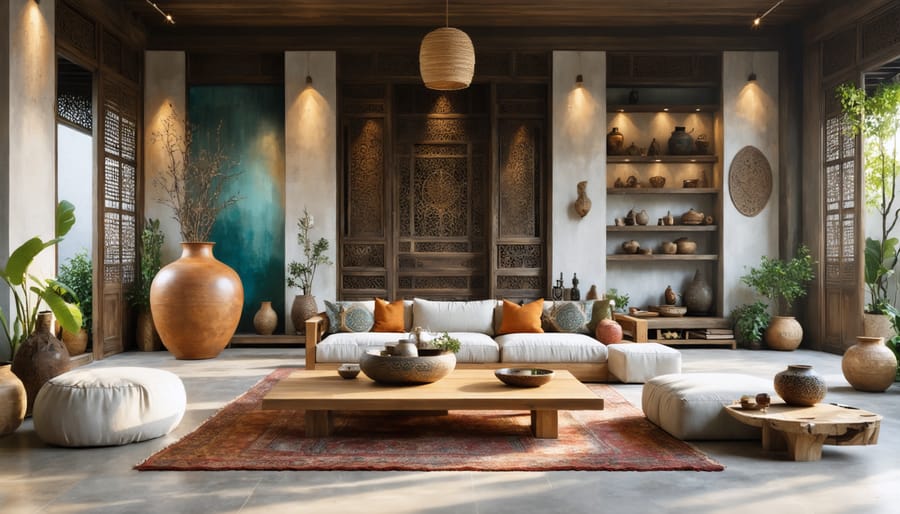
Transform your living space with the timeless appeal of artisanal decor, where each handcrafted piece tells a story of cultural heritage and artistic mastery. From intricately woven textiles to hand-thrown ceramics, these authentic creations bring warmth, character, and sustainable luxury to modern interiors. Unlike mass-produced alternatives, artisanal decor pieces carry the distinct marks of their makers, reflecting generations of traditional techniques while adapting to contemporary design sensibilities.
Today’s artisanal movement represents more than just beautiful objects—it’s a conscious choice to support skilled craftspeople, preserve cultural traditions, and create spaces that feel genuinely personal and lived-in. Whether you’re drawn to Mexican talavera pottery, Japanese wabi-sabi ceramics, or Moroccan textile art, incorporating these pieces does more than enhance your home’s aesthetic; it connects your space to rich cultural narratives and sustainable design practices.
This growing appreciation for handcrafted decor reflects a broader shift toward mindful consumption, where homeowners increasingly value the story, sustainability, and authenticity behind their decorative choices. As we explore the world of artisanal decor, you’ll discover how these unique pieces can transform ordinary rooms into extraordinary spaces that reflect both global artistic traditions and your personal style.
The Rich Heritage Behind Artisanal Decor
Traditional Techniques in Modern Homes
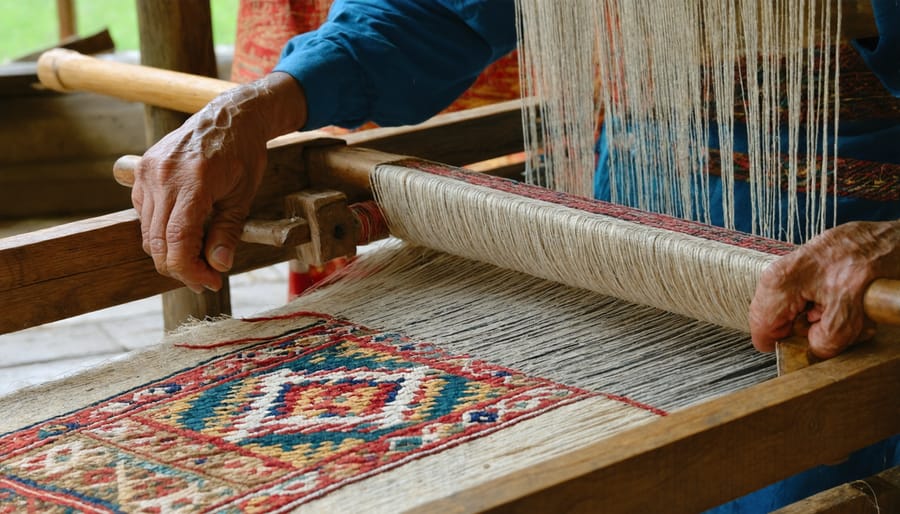
Traditional crafting methods are experiencing a remarkable revival in modern homes, with artisans skillfully adapting age-old techniques to complement contemporary spaces. Hand-woven textiles now grace minimalist sofas, while centuries-old pottery techniques produce sleek, modern vessels that feel both timeless and fresh. These pieces create compelling focal points while telling stories of cultural heritage.
Many homeowners are incorporating traditional techniques through statement pieces like hand-carved wooden screens that double as room dividers, or naturally dyed textiles used as wall hangings. The beauty of these items lies in their imperfections – each piece carries subtle variations that make it unique, adding character to otherwise uniform modern spaces.
The key to successfully blending traditional crafts with contemporary design is balance. Consider pairing hand-blown glass pendants with clean-lined furniture, or displaying traditional ceramic pieces on modern floating shelves. The contrast between old and new creates visual interest while honoring ancestral craftsmanship.
Artisans are also updating traditional methods with modern tools and materials, creating hybrid pieces that bridge the gap between past and present. This evolution ensures these time-honored techniques remain relevant and continue to enhance our living spaces for generations to come.
Regional Influences and Styles
Artisanal decor draws inspiration from diverse cultural traditions worldwide, each bringing unique techniques, materials, and storytelling elements to home design. From intricate Moroccan metalwork to Japanese wabi-sabi ceramics, these UNESCO-inspired artisanal treasures reflect centuries of craftsmanship passed down through generations.
Mediterranean influences bring warm terracotta, hand-painted tiles, and woven textiles, while Scandinavian artisans contribute clean lines and natural materials like wood and wool. Latin American decor often features vibrant colors, indigenous patterns, and handwoven textiles, whereas African artisanal pieces showcase bold geometrics, natural fibers, and carved wooden elements.
Asian influences introduce delicate porcelain, bamboo crafts, and intricate embroidery, while Native American artisanal traditions contribute beautiful pottery, beadwork, and woven baskets. Each regional style offers unique ways to add authenticity and character to your space, whether through statement pieces or subtle accents that tell stories of cultural heritage and artistic tradition.
Incorporating Artisanal Pieces in Your Space
Statement Pieces vs. Accent Items
When planning your custom artisanal decor, it’s essential to understand the difference between statement pieces and accent items. Statement pieces are the showstoppers – large, eye-catching items that command attention and serve as focal points in your space. These might include a hand-carved wooden dining table, an oversized ceramic vase, or a dramatic wall tapestry.
Accent items, on the other hand, are the supporting cast. These smaller pieces complement your statement pieces and help create a cohesive look. Think handwoven throw pillows, small pottery pieces, or artisanal candleholders. The key is striking the right balance – too many statement pieces can make a room feel overwhelming, while too few might leave it lacking impact.
A good rule of thumb is to choose one to two statement pieces per room, then build around them with three to five accent items. Consider the scale of your space when making these decisions. Larger rooms can handle more substantial statement pieces, while smaller spaces might benefit from more subtle focal points.
Remember to create breathing room around your statement pieces. This allows them to shine while giving your accent items space to contribute to the overall aesthetic without competing for attention. The goal is to create a harmonious blend that showcases the beauty of artisanal craftsmanship without overwhelming your space.

Color and Material Harmony
Creating a harmonious blend with artisanal pieces is easier than you might think, especially when you focus on color coordination and material compatibility. Start by identifying the dominant colors and textures in your existing space. Natural materials like wood, clay, and woven textiles often found in organic home decor pieces can serve as a neutral foundation that complements most design schemes.
When introducing new artisanal pieces, look for items that either match your existing color palette or provide thoughtful contrast. Earth tones and natural finishes typically work well with both modern and traditional interiors. Consider the rule of thirds: use your primary color in about 60% of the space, a secondary color in 30%, and an accent color – perhaps from your artisanal piece – in the remaining 10%.
Pay attention to material combinations. Handwoven textiles can soften ceramic pieces, while metal work can add shine to wooden elements. Layer textures strategically – smooth against rough, glossy against matte – to create visual interest without overwhelming the space.
Remember that artisanal pieces often tell a story through their craftsmanship. Allow these special items to become focal points by giving them breathing room and proper lighting. This approach not only highlights their beauty but also creates a more balanced and intentional design scheme.
DIY Cultural Heritage Decor Projects
Basic Textile Art
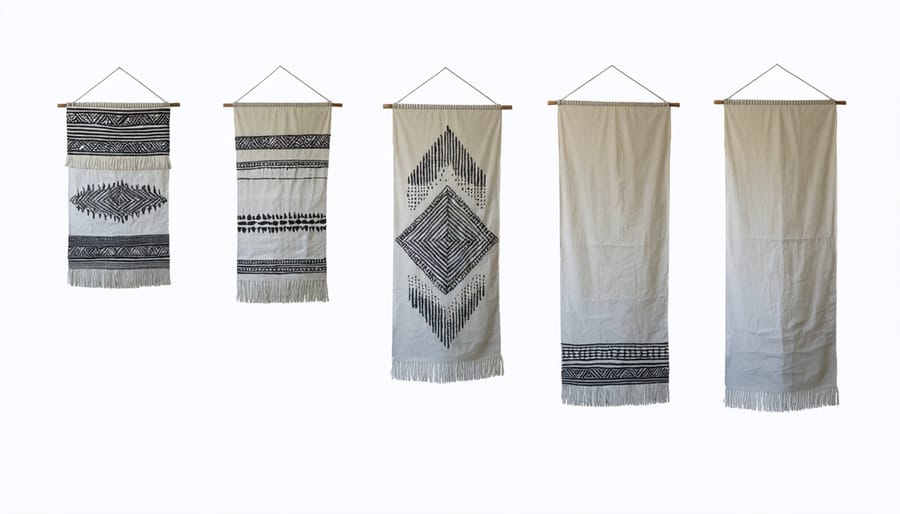
Creating textile art is one of the most accessible ways to add handcrafted charm to your home. Start with a simple wall hanging by selecting natural materials like cotton, wool, or linen in colors that complement your space. For beginners, try macramé using basic square knots: take four strands of cotton rope, fold them in half, and secure them to a wooden dowel. Create rows of knots, working from left to right, maintaining even tension throughout.
Another beginner-friendly project is weaving on a cardboard loom. Cut notches along the top and bottom of a sturdy piece of cardboard, then wrap yarn vertically to create your warp threads. Using a different colored yarn, weave horizontally through these threads, alternating over and under. Experiment with different patterns by skipping threads or using multiple colors.
For a quick textile accent, try making tassels to adorn pillows or curtains. Wind yarn around a book about 30 times, slip off carefully, and tie at one end. Cut the opposite end and wrap thread tightly around the top to create the tassel head. Group several tassels together for a striking wall hanging or garland.
Consider upcycling old fabrics into new decor pieces. Transform vintage scarves into unique throw pillows, or create a patchwork wall hanging from meaningful textile scraps. Remember to choose materials that tell a story – perhaps incorporating traditional patterns or techniques from your cultural heritage.
Always work in good lighting and keep your tension consistent for professional-looking results. These simple projects can be completed in an afternoon but will add lasting artisanal character to your space.
Traditional Pattern Making
Traditional pattern making offers a fascinating way to infuse your space with cultural authenticity and artistic flair. From intricate Moroccan geometric designs to flowing Celtic knots, these time-honored patterns can transform ordinary surfaces into stunning focal points. The key to success lies in understanding the basic principles of symmetry and repetition that govern these designs.
To create your own traditional patterns, start with simple grid layouts using graph paper or digital design tools. Many cultural patterns begin with basic shapes like circles, squares, or triangles arranged in repeating sequences. For Islamic geometric patterns, begin with a six-point star grid and build outward. For Celtic designs, practice interlacing curved lines in a structured pattern.
Natural materials work best for authentic pattern creation. Consider using handmade stamps carved from potatoes or linoleum blocks for textile printing. Clay tiles can be hand-painted with traditional motifs, while wood surfaces can be adorned using stencils or pyrography techniques. For wall applications, traditional lime plaster provides an ideal canvas for sgraffito techniques, where patterns are scratched into colored layers.
When incorporating these patterns, remember that less is often more. Choose one dominant pattern as your focal point and complement it with simpler designs. Traditional color combinations specific to each culture can enhance authenticity – for instance, using indigo and white for Japanese Shibori or terracotta and turquoise for Southwestern patterns.
For beginners, start with simple border patterns before attempting full-scale designs. Document traditional patterns you admire and practice recreating them in small sections. This methodical approach helps develop the skills needed for larger projects while maintaining cultural integrity in your artisanal decor.
Caring for Artisanal Decor
Material-Specific Care
Each artisanal piece requires specific care to maintain its beauty and extend its lifespan. For wooden items, dust regularly with a soft, dry cloth and avoid direct sunlight to prevent fading. Every few months, apply a quality wood conditioner to prevent drying and cracking, especially in drier climates.
Ceramic and pottery pieces need gentle handling and should be cleaned with mild soap and water when necessary. Avoid harsh chemicals that can damage glazes or traditional finishes. Store these items away from high-traffic areas to prevent accidental bumps.
Metal artworks, whether copper, brass, or wrought iron, benefit from regular dusting and occasional polishing with appropriate metal cleaners. In humid environments, apply a thin protective coating to prevent tarnishing and oxidation.
For textile-based decor like tapestries and woven pieces, vacuum gently using a brush attachment. Keep them away from direct sunlight and moisture, and consider professional cleaning every few years. For delicate pieces, rotating their display position helps prevent uneven fading.
Natural fiber items such as bamboo or rattan should be kept in climate-controlled spaces to prevent warping. Clean with a slightly damp cloth and avoid soaking these materials. For leather pieces, use specialized leather conditioners every six months to maintain suppleness and prevent cracking.
Remember that handcrafted items often use traditional materials that may require more attention than mass-produced alternatives, but this extra care helps preserve their unique character and value.
Preservation Techniques
Preserving your artisanal decor pieces is essential for maintaining their beauty and value over time. Start by understanding the materials used in your pieces – whether wood, textile, metal, or ceramic – as each requires specific care methods.
For wooden items, maintain a consistent indoor environment with humidity levels between 45-55%. Use a soft, dry cloth for regular dusting, and apply natural beeswax polish twice a year to protect the surface. Keep wooden pieces away from direct sunlight to prevent fading and warping.
Textile-based decorative items should be gently vacuumed using a brush attachment. Store delicate pieces like tapestries and woven wall hangings away from direct sunlight, and consider rotating them periodically to prevent uneven fading. For valuable textiles, use acid-free tissue paper when storing.
Metal artisanal pieces require regular dusting and occasional polishing with appropriate metal cleaners. In humid environments, consider using dehumidifiers to prevent oxidation. For ceramic and pottery items, avoid harsh cleaning chemicals – warm water and mild soap usually suffice. Handle these pieces with clean, dry hands to prevent oil transfer.
Documentation is also crucial for preservation. Keep records of your pieces’ origins, materials, and maintenance history. For particularly valuable items, consider consulting with professional conservators who can provide specialized preservation advice tailored to your specific pieces.
In today’s rapidly changing world, artisanal decor serves as a bridge between our modern lives and the rich cultural traditions that have shaped human creativity for generations. By choosing handcrafted pieces for our homes, we not only create visually stunning spaces but also become custodians of cultural heritage and supporters of traditional craftsmanship.
These unique pieces tell stories that mass-produced items simply cannot match. Whether it’s a hand-woven tapestry from Peru, a carved wooden screen from India, or pottery crafted by local artisans, each piece carries within it centuries of tradition, skill, and artistic expression. By incorporating these elements into our living spaces, we create environments that are not just beautiful but meaningful and authentic.
Moreover, supporting artisanal crafts helps preserve traditional techniques and provides sustainable livelihoods for craftspeople worldwide. As you embark on your journey to incorporate artisanal decor into your home, remember that each purchase makes a difference in keeping these ancient traditions alive.
Consider starting small – perhaps with a handcrafted ceramic vase or a traditional textile throw pillow. As you develop your eye for artisanal pieces, you’ll discover the joy of creating spaces that reflect both your personal style and the diverse cultural heritage of human creativity. Let your home become a celebration of craftsmanship, culture, and conscious design choices that honor the past while creating beauty for the present and future.