
Transform Your Home with UNESCO-Inspired Artisanal Treasures
Transform your living space with UNESCO’s cultural heritage treasures, where centuries-old craftsmanship meets modern interior design. From intricate Persian carpets to delicate Japanese ceramics, these protected artisanal masterpieces represent humanity’s most remarkable creative achievements and offer unique opportunities to bring authentic cultural elements into your home.
UNESCO’s World Heritage List doesn’t just preserve ancient monuments and natural wonders – it safeguards living traditions, crafting techniques, and artistic expressions that have shaped civilizations for generations. These protected cultural practices provide homeowners and designers with an exceptional palette of authentic decorative elements that tell compelling stories while adding distinctive character to contemporary spaces.
Picture Moroccan zellige tiles brightening a modern kitchen backsplash, or traditional Indian block-printed textiles transforming an ordinary sofa into a conversation piece. By incorporating these UNESCO-recognized crafts into our homes, we not only create visually stunning environments but also participate in preserving invaluable cultural traditions for future generations.
Whether you’re an experienced designer or a DIY enthusiast, understanding how to respectfully integrate these cultural elements into your décor opens up a world of possibilities for creating spaces that are both personally meaningful and culturally significant.
UNESCO’s Cultural Heritage and Modern Interior Design
Traditional Craftsmanship in Modern Spaces
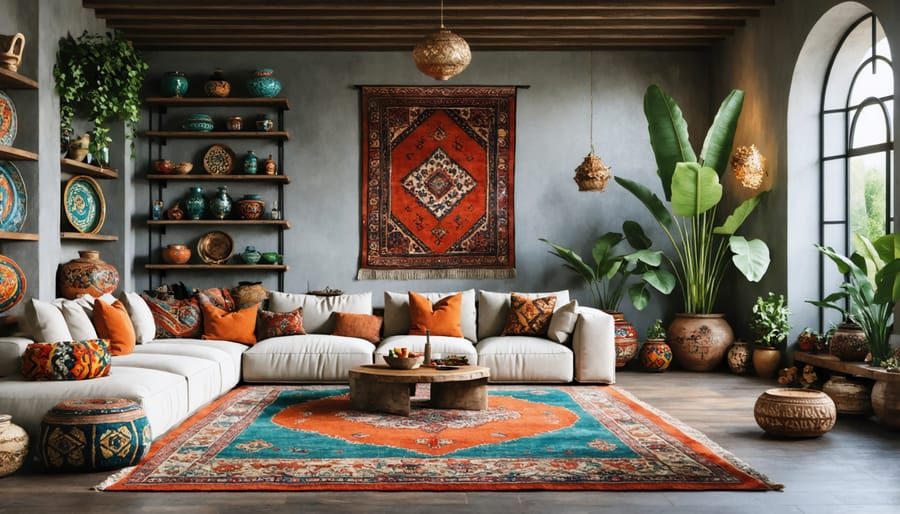
Traditional craftsmanship is experiencing a remarkable renaissance in modern interior design, bringing UNESCO-protected techniques into contemporary living spaces. From hand-woven tapestries adorning minimalist walls to centuries-old metalworking methods creating stunning light fixtures, these ancient skills are finding new life in unexpected ways.
Today’s homeowners are increasingly drawn to the authenticity and character that traditional craftsmanship brings to their spaces. Japanese wabi-sabi woodworking techniques are being used to create sleek furniture pieces, while Moroccan tadelakt plasterwork adds sophisticated texture to modern bathrooms. These elements not only preserve cultural heritage but also create unique focal points that tell stories within our homes.
The beauty of incorporating these traditional techniques lies in their versatility. Whether it’s hand-painted Portuguese azulejos in a contemporary kitchen backsplash or Turkish kilim weaving patterns reimagined as modern upholstery, these crafts bridge the gap between past and present. The result is a living space that honors ancestral knowledge while meeting today’s functional needs and aesthetic preferences.
Sustainable Design Through Cultural Heritage
Traditional crafting methods often embody centuries of sustainable practices, making them increasingly relevant in today’s eco-conscious world. UNESCO-protected cultural heritage techniques typically rely on locally sourced, renewable materials and zero-waste approaches that modern designers are now eagerly adopting. These time-tested methods, from natural dyeing processes to handwoven textiles, offer valuable lessons in creating upcycled home decor while minimizing environmental impact.
Many traditional craftspeople have perfected techniques for using every part of their raw materials, creating beautiful objects while producing minimal waste. For instance, traditional Japanese paper-making uses mulberry bark that can be sustainably harvested without harming the trees, while ancient pottery techniques often incorporate local clay and natural glazes that have virtually no carbon footprint.
These heritage practices also emphasize durability and repair rather than replacement, promoting a more sustainable consumption cycle. By incorporating these time-honored methods into modern design, we can create spaces that are not only culturally rich but also environmentally responsible.
Iconic UNESCO-Protected Crafts for Your Home
Persian Carpet Weaving
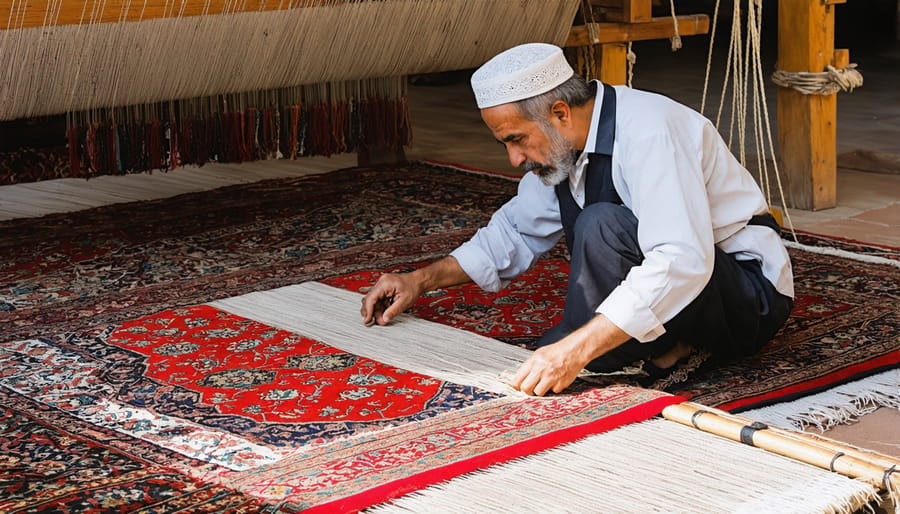
Persian carpets, recognized by UNESCO as an Intangible Cultural Heritage, can bring timeless elegance to modern interiors when styled thoughtfully. Start by selecting a carpet that features traditional Persian motifs in colors that complement your existing decor scheme. Earth tones and deep jewel colors work particularly well in contemporary spaces, creating a stunning contrast against minimalist furniture.
For maximum impact, position your Persian carpet as a focal point in living areas or dining rooms. Let it anchor your furniture arrangement while maintaining some visible carpet border. In open-concept spaces, use the carpet to define separate functional areas while maintaining design cohesion.
Balance the ornate patterns of Persian carpets with simple, clean-lined furniture. Consider pairing your carpet with modern pieces in neutral colors to let the carpet’s intricate designs shine. For a contemporary twist, try layering a smaller Persian carpet over a larger solid-colored rug.
Lighting plays a crucial role in showcasing these masterpieces. Position directional lighting to highlight the carpet’s detailed craftsmanship and rich colors. In bedrooms, hang a smaller Persian carpet as wall art to create an unexpected focal point while preserving its condition.
Remember that authentic Persian carpets are investment pieces that appreciate over time. Regular maintenance, including professional cleaning every few years, will help preserve their beauty and cultural significance for generations to come.
Turkish Ceramics and Tiles
Turkish ceramics and tiles, recognized by UNESCO for their cultural significance, offer endless creative possibilities for modern home décor. These vibrant pieces tell stories through their intricate patterns and bold colors, making them perfect statement elements in any space.
Consider creating a striking feature wall using traditional Iznik-style tiles in your entryway or bathroom. Their characteristic blue and turquoise hues, combined with floral motifs, instantly add Mediterranean charm. For a more subtle approach, frame individual ceramic tiles as wall art, allowing their detailed patterns to serve as conversation pieces.
In the kitchen, incorporate Turkish ceramic plates as decorative elements by mounting them on walls in an artistic arrangement. Mix different sizes and patterns while maintaining a cohesive color scheme for maximum impact. For a practical touch, use authentic Turkish tiles as a unique backsplash or counter accent.
Modern interpretations include using traditional tile patterns in unexpected places, such as stair risers or outdoor garden features. Create a cozy reading nook by adding Turkish ceramic elements to side tables or window sills. Business owners can make a lasting impression by incorporating these heritage pieces into commercial spaces, particularly in reception areas or conference rooms.
Remember to balance these bold elements with neutral surroundings to let their beauty shine. Whether used traditionally or reimagined in contemporary settings, Turkish ceramics add authentic cultural character to any space.
Japanese Washi Paper Art
Japanese washi paper art has seamlessly evolved from its ancient roots to find exciting modern applications in contemporary interior design and DIY projects. This UNESCO-recognized craft combines traditional handmade paper-making techniques with innovative uses that appeal to today’s design enthusiasts.
Modern interior designers frequently incorporate washi paper in statement wall coverings, lampshades, and room dividers. The paper’s natural translucency creates a soft, diffused light effect that adds warmth to any space. Homeowners can easily integrate this cultural element through washi tape accent walls, decorative boxes, or custom window treatments that filter natural light beautifully.
DIY enthusiasts have embraced washi paper for its versatility in crafting projects. From creating unique gift wrap to fashioning decorative storage solutions, the possibilities are endless. The paper’s durability, despite its delicate appearance, makes it perfect for both temporary and permanent installations.
What makes washi particularly special is its eco-friendly nature. Made from sustainable materials like kozo (mulberry bark), gampi, or mitsumata shrubs, it represents a perfect blend of traditional craftsmanship and environmental consciousness. Many contemporary artists are now combining washi with digital printing techniques, creating stunning pieces that honor the craft’s heritage while pushing creative boundaries forward.
For those looking to add authentic Japanese elements to their space, washi paper offers an accessible entry point into UNESCO-protected cultural heritage.
DIY Heritage-Inspired Decor Projects
Creating Moroccan-Style Wall Stencils
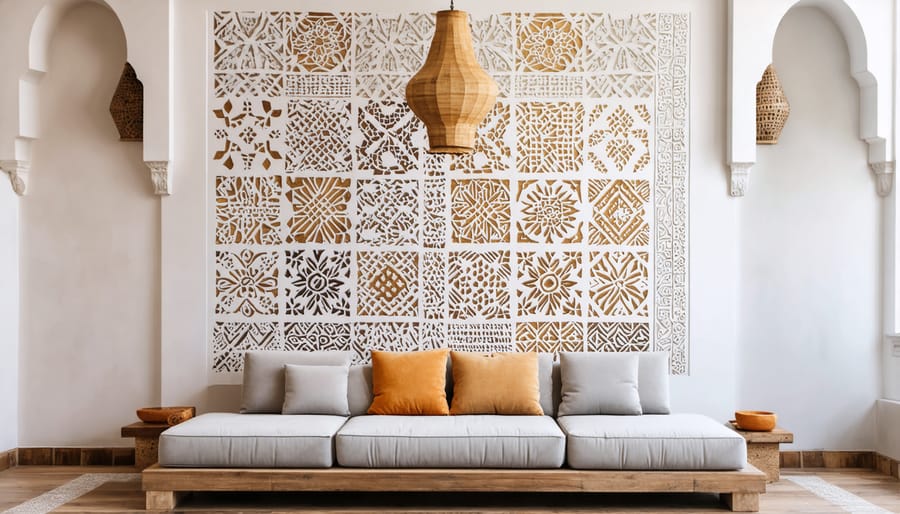
Transform your walls into stunning showcases of Moroccan heritage with this simple DIY stenciling project. Start by gathering your materials: a large piece of cardstock or mylar for your stencil, a pencil, ruler, compass, craft knife, and painting supplies.
Begin by sketching basic geometric shapes like hexagons, stars, or diamonds on your stencil material. Traditional Moroccan patterns often feature interlocking shapes with symmetrical designs. For beginners, start with a simple eight-pointed star pattern. Draw a 12-inch square, then divide it into eight equal sections from the center point. Connect these points to create your star shape.
Carefully cut out your design using a craft knife on a cutting mat. For intricate patterns, take your time and maintain clean, precise cuts. Before painting, secure your stencil to the wall using painter’s tape and ensure it’s level.
Choose colors that reflect authentic Moroccan aesthetics – deep blues, rich terracottas, and warm golds work beautifully. Use a foam roller or stencil brush to apply paint with a light, dabbing motion to prevent bleeding under the stencil. Work from the outside edges toward the center.
For a cohesive look, repeat your pattern across the wall, carefully lining up the design elements. Consider creating a feature wall or border rather than covering entire rooms. Remember to clean your stencil between applications for crisp, clean lines throughout your project.
This DIY approach allows you to bring UNESCO-recognized Moroccan artistic traditions into your space while adding personal creative touches.
Handcrafted Textile Wall Art
Creating UNESCO-inspired textile wall art allows you to celebrate traditional weaving techniques while adding cultural depth to your home decor. Begin by gathering natural materials like cotton, wool, or jute yarn, along with a wooden frame loom. You can even transform everyday materials into unique textile elements.
Start with basic weaving techniques: secure your warp threads vertically on the loom, spacing them evenly. Use a shuttle or weaving needle to pass your weft threads horizontally, alternating over and under the warp threads. Incorporate traditional patterns by varying colors and creating geometric shapes—a hallmark of many UNESCO-protected textile traditions.
For added authenticity, try these heritage-inspired techniques:
– Soumak weaving: Create raised, rope-like patterns by wrapping threads around multiple warps
– Tapestry weaving: Build intricate designs by using different colored wefts in specific areas
– Rya knots: Add texture by tying fringe-like knots into your weaving
Remember to maintain even tension throughout your work and experiment with different thread thicknesses for visual interest. Leave space at the top and bottom for hanging hardware, and consider adding traditional embellishments like wooden beads or metal accents that reflect specific cultural motifs.
When complete, mount your piece on a decorative rod or frame, positioning it where natural light can highlight its textural details.
Styling Tips for Cultural Heritage Decor
Incorporating UNESCO-inspired cultural heritage into your home décor doesn’t have to be overwhelming. Start by selecting one signature piece that resonates with your personal connection to a particular culture or region. This could be a handwoven textile from Peru’s Sacred Valley or a ceramic vessel inspired by Turkish pottery traditions.
Layer your cultural pieces thoughtfully by following the rule of thirds – group items in odd numbers and varying heights to create visual interest. When displaying traditional crafts, consider using modern display methods like floating shelves or glass cases to create an interesting contrast between old and new.
Mix textures and materials to create depth while maintaining harmony. For example, pair rough-hewn wooden artifacts with smooth silk textiles, or combine metalwork with natural fibers. This approach to sustainable decorating ideas helps create a balanced, curated look that honors traditional craftsmanship.
Color coordination is crucial when working with heritage pieces. Choose a neutral base palette and allow your cultural artifacts to provide pops of color. This prevents the space from feeling cluttered or overwhelming. Consider the room’s natural light – some pieces, like intricate metalwork or painted ceramics, may need strategic lighting to showcase their beauty.
For larger spaces, create dedicated cultural corners or feature walls that tell a story. Use photography or artwork depicting the UNESCO site alongside related artifacts. Remember to provide breathing room around significant pieces – overcrowding can diminish their impact.
When selecting new pieces, focus on authenticity and craftsmanship rather than matching sets. Mix elements from different cultures if they share common colors, patterns, or materials. This creates an eclectic yet cohesive look that celebrates global heritage while maintaining a contemporary feel.
As we reflect on the importance of UNESCO cultural heritage in interior design, it’s clear that preserving these traditional crafts and techniques offers more than just aesthetic value. By incorporating these elements into our homes, we become active participants in keeping centuries-old traditions alive for future generations. Each handwoven textile, traditional ceramic piece, or artisanal woodwork tells a story of human creativity and cultural identity that spans generations.
The beauty of integrating UNESCO-protected crafts into modern interiors lies in their ability to create spaces that are both timeless and deeply meaningful. These pieces not only add authentic character to our homes but also support traditional artisans and their communities, ensuring their skills and knowledge continue to thrive in our increasingly mass-produced world.
Whether you choose to display a single statement piece or build an entire design scheme around cultural heritage elements, remember that you’re contributing to something greater than interior decoration. You’re participating in cultural preservation, supporting sustainable craft practices, and creating living spaces that celebrate human heritage.
As we move forward in an ever-modernizing world, let’s continue to find creative ways to honor and incorporate these precious cultural traditions into our homes. By doing so, we ensure that UNESCO’s protected crafts remain relevant, appreciated, and very much alive in contemporary settings.