Transform Your Space: How Art Integration Creates Stunning Interior Design
Art integration in the classroom revolutionizes traditional learning by weaving creative expression into core academic subjects. When art transforms interior spaces within schools, it creates dynamic learning environments that engage multiple senses and learning styles. This innovative teaching approach combines visual arts, music, drama, and movement with subjects like math, science, and language arts, fostering deeper understanding and retention. By incorporating artistic elements into daily lessons, teachers unlock students’ creativity while simultaneously meeting academic standards. Studies show that art-integrated classrooms improve student engagement, boost critical thinking skills, and enhance emotional development. This powerful teaching strategy doesn’t just supplement learning—it fundamentally changes how students interact with and absorb educational content, making complex concepts more accessible and memorable through creative exploration and hands-on experiences.
The Power of Art in Interior Design
Visual Impact and Spatial Flow
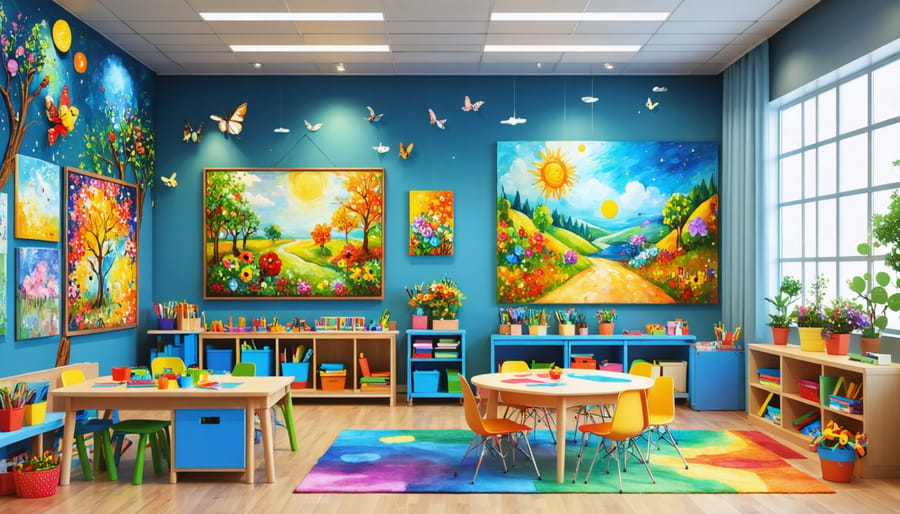
The strategic placement of artwork in the classroom goes beyond mere decoration – it creates intentional pathways and focal points that enhance both learning and movement. When integrating art, consider how students flow through the space during different activities. Wall-mounted pieces can guide traffic patterns naturally, while floor-standing installations might create natural gathering spaces for group work.
Color and composition play crucial roles in spatial dynamics. Bright, energetic pieces work well in activity zones, while calmer, more subdued artwork suits quiet reading corners or individual work areas. The height of displayed work matters too – positioning art at student eye level encourages engagement and makes the space more accessible to young learners.
Consider creating art zones that complement different learning activities. A creativity corner might feature student artwork and inspiring pieces, while scientific concepts could be reinforced through artistic interpretations near STEM workstations. The key is to balance visual interest with functionality, ensuring that art enhances rather than overwhelms the learning environment. Remember to leave some clean, clear spaces to prevent sensory overload and maintain focus on current lessons.

Color Psychology and Mood Setting
Color plays a vital role in art integration, affecting both learning environments and student engagement. By thoughtfully incorporating artwork with specific color schemes, teachers can create spaces that enhance focus, creativity, and emotional well-being. Warm colors like red, orange, and yellow can energize students and promote active participation, while cool tones such as blue and green foster calmness and concentration.
Consider creating bold contrasts through art pieces that combine complementary colors to stimulate visual interest and cognitive development. For example, displaying student artwork that explores color theory can serve as both decoration and an educational tool, helping children understand the emotional impact of different hues.
Teachers can rotate artwork seasonally, using bright, vibrant pieces during darker winter months to maintain energy levels, and softer, cooler tones during spring to help students stay focused during testing periods. This strategic use of color through art not only beautifies the classroom but also supports students’ emotional regulation and learning readiness throughout the school year.
Practical Art Integration Methods
Statement Pieces vs. Gallery Walls
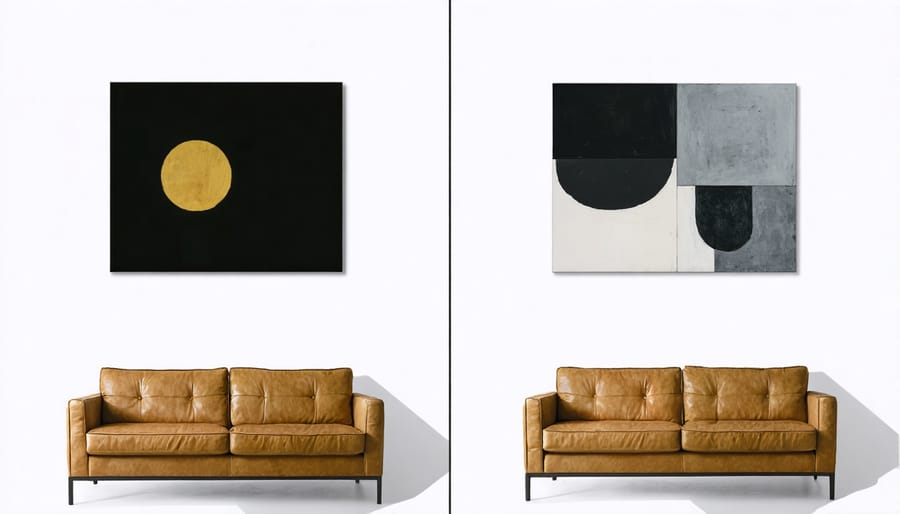
When integrating art into your space, you’ll typically choose between two main display approaches: statement pieces or gallery walls. Statement pieces are large, impactful artworks that command attention and serve as focal points in a room. These singular pieces work particularly well in spaces with high ceilings or above substantial furniture pieces, creating a bold visual anchor that sets the room’s tone.
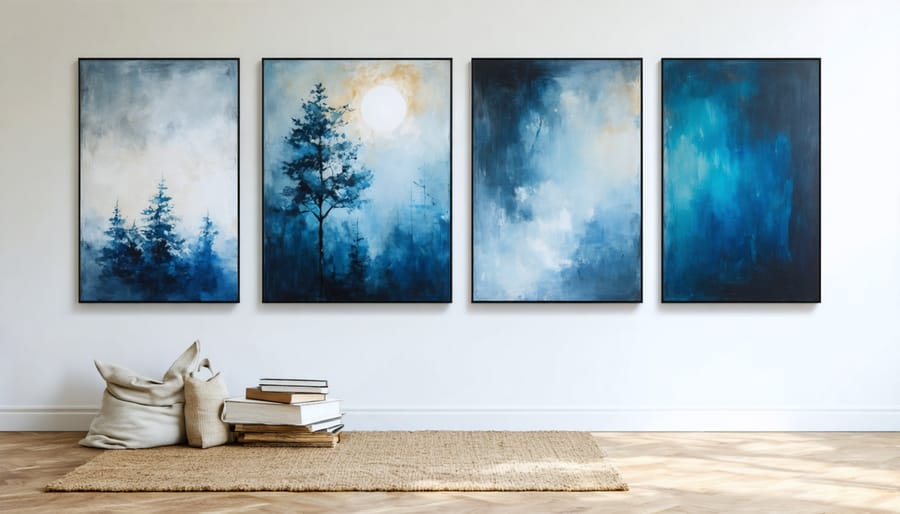
Gallery walls, on the other hand, offer a more dynamic and personalized approach. By combining multiple pieces of varying sizes, styles, and frames, you create a collective impact that tells a story. This style works wonderfully in hallways, living rooms, or office spaces where you want to showcase multiple pieces while maintaining a cohesive look.
Consider your space and purpose when choosing between these options. Statement pieces often work best in minimalist designs or rooms where you want to maintain a clean, uncluttered feel. Gallery walls are ideal for spaces where you want to create visual interest or display a collection of meaningful artwork. Both approaches can effectively transform a room, but the key is matching your choice to your space’s scale and your personal style preferences.
Mixed Media Integration
Mixed media integration in the classroom offers exciting opportunities for students to explore creativity through multiple artistic channels simultaneously. Just as designers blend different design styles, teachers can combine various art forms to create rich, multisensory learning experiences. Students might paint while listening to classical music, create sculptures that incorporate digital elements, or combine photography with traditional drawing techniques.
This approach allows students to experiment with different materials and mediums, from traditional paint and clay to digital tools and recycled materials. For example, a history lesson might involve creating a multimedia timeline where students use photography, painted illustrations, and digital storytelling elements to represent different historical periods.
The beauty of mixed media integration lies in its flexibility and inclusive nature. Students who might not excel in one artistic medium often find their creative voice through another, making the learning experience more accessible and engaging for diverse learning styles.
Design Harmony Through Art
Scale and Proportion
When selecting artwork for your classroom, size and proportion play crucial roles in creating visual harmony. A general rule of thumb is that artwork should occupy about 60-75% of the wall space above furniture or designated display areas. For younger students, consider hanging pieces at their eye level, typically around 4 feet from the floor. Large-scale collaborative projects work well on prominent walls, while smaller individual pieces can be grouped in clusters or galleries. Remember to leave enough breathing room between pieces – typically 2-3 inches for small works and 4-6 inches for larger ones. In shared learning spaces, avoid overwhelming the environment with too many pieces; instead, rotate artwork periodically to maintain student engagement and showcase different creative expressions throughout the year.
Style Coordination
Successful art integration relies heavily on coordinating your chosen pieces with your classroom’s existing design elements. Consider your room’s color scheme, incorporating artwork that either complements or thoughtfully contrasts with your current palette. Look at your classroom’s architectural features, such as wall angles, window placement, and built-in furniture, to determine optimal artwork positioning. The style of your teaching materials and educational displays should also influence your art selections. For instance, if you have a modern, minimalist classroom setup, consider contemporary art pieces that maintain this clean aesthetic. Similarly, if your room features traditional educational materials, classical art pieces might create a more cohesive look. Remember that visual harmony helps create a focused learning environment while still allowing creative expression to flourish.
Art integration in the classroom is a powerful tool that transforms traditional learning into an engaging, multi-sensory experience. By weaving visual arts, music, drama, and movement into core subjects, teachers can create deeper connections and lasting understanding for students of all learning styles. Remember that successful art integration doesn’t require extensive artistic training – start small with simple projects and gradually expand your approach. Whether it’s using painting to explore emotions in literature, creating musical patterns to understand math concepts, or acting out historical events, the possibilities are endless. Take the first step by choosing one subject and incorporating a creative element that resonates with your teaching style and your students’ interests. The rewards of art integration – increased engagement, improved retention, and enhanced creative thinking – make it well worth the effort.