Beautiful, Earth-Friendly Yards: Smart Landscape Design That Saves Water and Money
Transform your outdoor space into a sustainable sanctuary that works with nature, not against it. Modern landscape design isn’t just about creating beautiful gardens – it’s about crafting resilient, eco-friendly environments that thrive with minimal resources while supporting local ecosystems.
Smart sustainable landscaping starts with strategic plant selection, incorporating native species that naturally resist local pests and require less water. These adaptive plants create a self-sustaining ecosystem that attracts beneficial wildlife while reducing maintenance needs and water bills. By integrating rainwater harvesting systems and permeable surfaces, your landscape can capture and utilize natural resources efficiently, turning your property into a water-wise oasis.
Beyond plants, sustainable landscapes incorporate recycled materials, solar-powered lighting, and smart irrigation technologies that respond to real-time weather conditions. These innovations not only minimize environmental impact but also slash long-term maintenance costs. Whether you’re redesigning a compact urban yard or managing extensive commercial grounds, sustainable landscape design offers practical solutions that blend environmental responsibility with stunning aesthetic appeal.
The result? A beautiful, low-maintenance outdoor space that increases property value while contributing to a healthier planet. Welcome to the future of landscaping, where sustainability meets style.
Smart Water Management Through Strategic Design
Xeriscaping: Beautiful Gardens That Thrive on Less
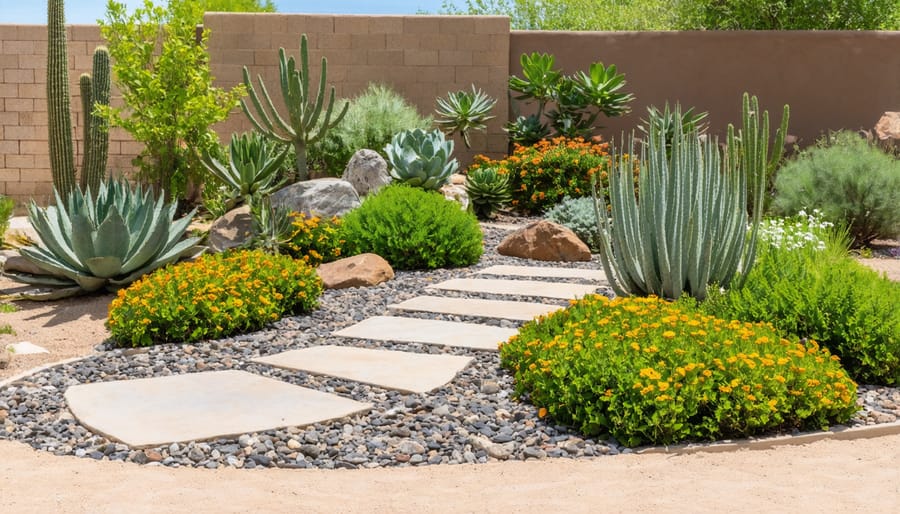
Xeriscaping is a smart approach to gardening that creates stunning landscapes while dramatically reducing water usage. This design philosophy combines drought-resistant plants, efficient irrigation, and strategic planning to maintain beauty with minimal resources.
Start by selecting native and drought-tolerant plants that naturally thrive in your climate. Consider options like lavender, sage, and ornamental grasses, which offer varied textures and year-round interest. Group plants with similar water needs together to prevent overwatering and create visual harmony.
Replace traditional lawns with attractive alternatives like ground covers or decorative gravel. Incorporate hardscaping elements such as stone pathways or rock gardens to add structure while reducing the need for irrigation. Use mulch generously around plants to retain moisture and suppress weeds.
Smart irrigation is crucial in xeriscaping. Install drip systems or soaker hoses to deliver water directly to plant roots, minimizing waste through evaporation. Consider adding rain sensors to your irrigation system to prevent watering during or after rainfall.
The beauty of xeriscaping lies in its versatility. You can create any style, from modern desert gardens to lush Mediterranean landscapes. By choosing the right plants and materials, your water-wise garden can provide color and texture throughout the seasons while requiring significantly less maintenance than traditional landscapes.
Remember to check local regulations, as many communities offer incentives for installing water-efficient landscapes, making xeriscaping an even more attractive option for sustainable gardening.
Rainwater Harvesting and Smart Irrigation
Rainwater harvesting is a game-changer for sustainable landscapes, offering a smart solution to reduce water consumption while keeping your garden thriving. By installing a basic collection system with rain barrels or cisterns beneath your downspouts, you can capture hundreds of gallons of free water during each rainfall. These systems can be as simple as a single barrel or as sophisticated as underground storage tanks connected to automated irrigation.
Smart irrigation takes this collected water and puts it to optimal use. Modern irrigation controllers can connect to local weather stations and soil moisture sensors, automatically adjusting watering schedules based on real-time conditions. This prevents overwatering and ensures your plants get exactly what they need, when they need it.
Consider implementing a drip irrigation system, which delivers water directly to plant roots, reducing waste through evaporation and overspray. For larger properties, zone-based irrigation allows you to group plants with similar water needs together, maximizing efficiency. You can even integrate rain gardens and bioswales into your landscape design, creating natural collection points that slowly release water back into the soil.
Remember to maintain your system regularly by cleaning filters, checking for leaks, and adjusting sprinkler heads seasonally. This attention to detail ensures your rainwater harvesting and irrigation system operates at peak efficiency, saving both water and money while supporting a lush, sustainable landscape.
Native Plants and Natural Habitat Creation
Choosing the Right Native Plants
When it comes to native plant selection, choosing species that naturally thrive in your local climate is key to creating a sustainable landscape. Start by researching plants indigenous to your region, as these varieties have evolved to withstand local weather patterns and soil conditions.
Consider your yard’s specific conditions, including sunlight exposure, soil type, and moisture levels. Native plants that match these conditions will require minimal maintenance and resources to flourish. Group plants with similar water needs together to create efficient watering zones.
Look for plants that provide year-round interest through varying bloom times, foliage colors, and textures. Native grasses, wildflowers, and shrubs can create stunning visual displays while supporting local wildlife and pollinators.
Don’t forget to account for mature plant sizes when planning your layout. Space plants appropriately to avoid overcrowding and reduce competition for resources. Consider incorporating native groundcovers to prevent soil erosion and minimize weed growth.
Remember that establishing native plants may take time, but their long-term benefits include reduced water usage, lower maintenance needs, and enhanced biodiversity in your landscape.
Creating Wildlife-Friendly Spaces
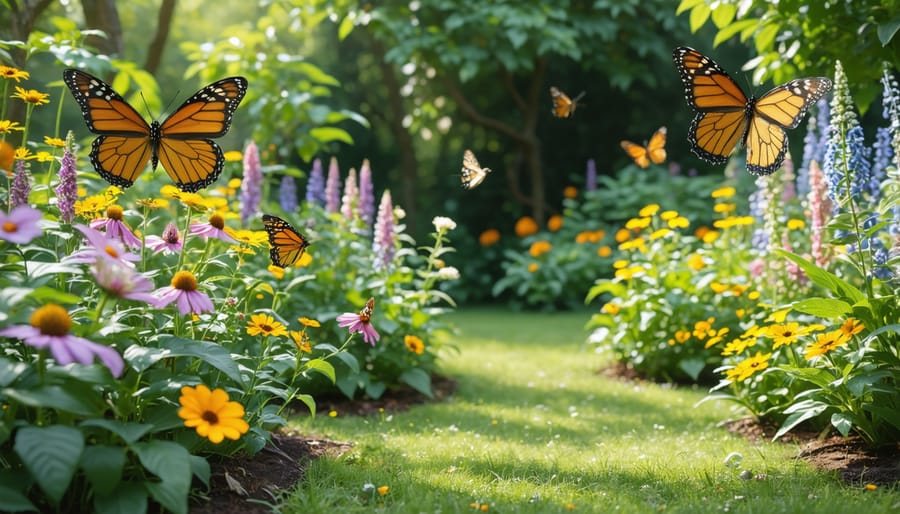
Creating a wildlife-friendly landscape doesn’t just benefit local fauna – it contributes to a healthier, more sustainable ecosystem right in your backyard. Start by incorporating native plants that provide food and shelter for local birds, butterflies, and beneficial insects. Layer your plantings with tall trees, medium shrubs, and ground cover to create diverse habitats that mirror natural environments.
Install bird feeders and baths strategically throughout your space, keeping them away from areas where predators might hide. Consider adding a small pond or water feature – even a shallow basin can attract beneficial wildlife and create a peaceful atmosphere. Leave some brush piles and fallen leaves in designated areas to provide shelter for small animals and natural mulch for your plants.
Avoid using chemical pesticides, which can harm beneficial insects and disrupt the natural food chain. Instead, encourage natural pest control by attracting insect-eating birds and beneficial predatory insects. Plant flowering species that bloom at different times throughout the season to provide consistent nectar sources for pollinators.
Remember to include host plants for butterfly larvae and dense shrubs where birds can nest safely. These thoughtful additions create a vibrant, living landscape that supports local biodiversity while enhancing your outdoor space’s natural beauty.
Sustainable Materials and Features
Permeable Surfaces and Natural Pathways
When designing sustainable landscapes, permeable surfaces and natural pathways play a crucial role in managing water runoff and maintaining ecosystem health. Instead of traditional concrete or asphalt, consider using materials like permeable pavers, gravel, or decomposed granite that allow water to seep naturally into the ground. These options not only reduce stormwater runoff but also help replenish groundwater supplies.
For walkways and garden paths, crushed stone or mulch creates an attractive, natural-looking surface that’s both eco-friendly and cost-effective. Stepping stones set in grass or surrounded by ground cover plants offer another sustainable alternative, creating an inviting path while maximizing water absorption.
Permeable concrete and porous asphalt are innovative options for larger areas like driveways. These materials look similar to traditional surfaces but contain small spaces that allow water to filter through. For patios, consider using spaced pavers with grass or low-growing plants between them, creating a beautiful pattern while maintaining permeability.
When installing these surfaces, proper base preparation is essential. A layer of crushed stone beneath the surface material ensures adequate drainage and prevents settling. For DIY installations, start with small projects like garden paths before tackling larger areas. Remember to consider your local climate and drainage needs when selecting materials, as some options may work better than others in different environments.
Recycled and Local Materials
Creating an eco-friendly landscape starts with choosing the right sustainable outdoor materials. Look for recycled or reclaimed materials in your local area, such as salvaged brick, repurposed concrete, or reclaimed wood for decking and garden features. These materials not only reduce environmental impact but often add unique character to your outdoor space.
Local stone and gravel are excellent choices for pathways and decorative elements, as they require minimal transportation and processing. Many suppliers now offer recycled glass mulch and crushed concrete aggregates, which provide attractive alternatives to traditional materials while keeping waste out of landfills.
Consider sourcing native materials from nearby quarries or salvage yards. These materials typically weather better in your local climate and blend naturally with the surrounding environment. For garden edges and retaining walls, look for locally manufactured products made from recycled materials or sustainable sources.
When selecting wood products, opt for FSC-certified lumber or explore alternatives like composite decking made from recycled plastics and wood fibers. These materials offer excellent durability and require minimal maintenance while supporting environmental conservation.
Remember to check with local suppliers about the availability of recycled materials – you might be surprised by the creative options available right in your community. Many contractors now maintain relationships with material recovery facilities, making it easier to source eco-friendly options for your landscape project.
Energy-Efficient Outdoor Living Spaces
Strategic Shade Planning
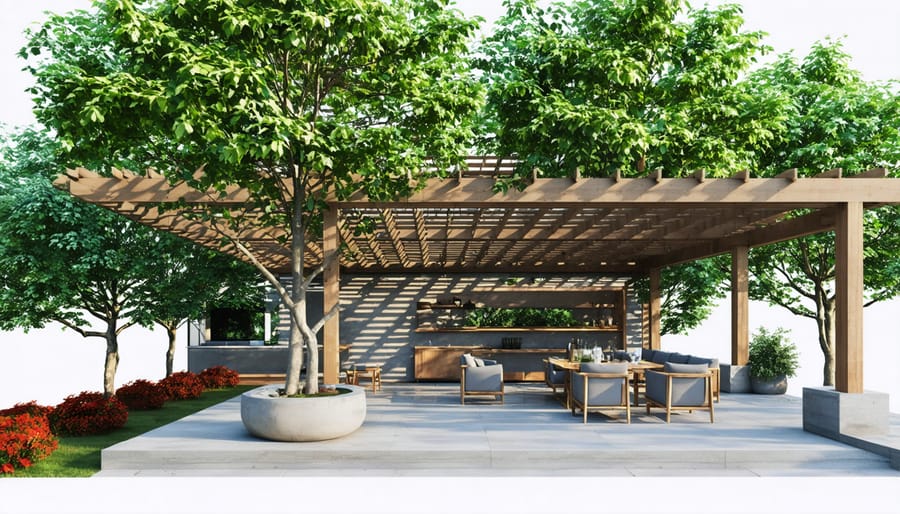
Strategic shade planning is one of the most effective ways to create a sustainable landscape that naturally cools your property and reduces energy costs. By carefully positioning trees and structures, you can create cool, comfortable outdoor spaces while minimizing your home’s air conditioning needs.
Deciduous trees are particularly valuable for shade planning, as they provide cooling shade during hot summers while allowing warming sunlight to pass through in winter when their leaves fall. Plant these shade-makers on the south and west sides of your property, where they’ll block the most intense afternoon sun. Large specimens like maples, oaks, and elms can reduce surrounding air temperatures by up to 6 degrees Fahrenheit.
Consider incorporating pergolas, arbors, or trellises into your design. These structures can support climbing vines like wisteria or grape, creating living shade canopies that add both beauty and functionality to your outdoor spaces. Position these features near patios, decks, or large windows to maximize their cooling effect.
For immediate shade solutions while waiting for trees to mature, consider temporary shade sails or retractable awnings. These can be strategically placed to protect high-traffic areas and can be adjusted as needed throughout the seasons.
Remember to factor in your local climate and sun patterns when developing your shade plan. Consider using online solar tracking tools to understand how shadows will fall across your property throughout the year, ensuring your shade elements are positioned for maximum effectiveness.
Solar-Powered Lighting Solutions
Solar-powered lighting has revolutionized modern outdoor lighting design, offering an eco-friendly solution that combines functionality with energy efficiency. These innovative fixtures harness sunlight during the day and automatically illuminate your landscape after dark, requiring zero electrical consumption from the grid.
Today’s solar lights come in various styles, from pathway markers and spotlights to decorative string lights and security fixtures. The latest models feature improved photovoltaic cells and LED technology, providing brighter, longer-lasting illumination compared to earlier versions. Many include motion sensors and adjustable brightness settings, maximizing energy efficiency while maintaining security.
Installing solar lights is surprisingly straightforward. Simply ensure the solar panels receive adequate sunlight during the day – typically 6-8 hours for optimal charging. Strategic placement is crucial: avoid areas heavily shaded by trees or structures, and consider seasonal sun patterns when positioning your lights.
For maximum sustainability, look for fixtures with replaceable batteries and weather-resistant construction. Modern solar lights often include smart features like automatic dusk-to-dawn operation and remote control capabilities via smartphone apps. Some systems even integrate with home automation platforms, allowing you to create sophisticated lighting schedules that enhance both security and ambiance.
By choosing solar-powered lighting, you’ll reduce your carbon footprint while enjoying significant savings on energy bills. Plus, there’s no need for complex wiring or professional installation, making it an ideal DIY project for sustainable landscape enhancement.
Creating a sustainable landscape isn’t just about being environmentally conscious – it’s about making smart, long-term investments in your property that benefit both nature and your wallet. By implementing the sustainable landscaping principles we’ve discussed, you’ll be reducing water consumption, minimizing maintenance needs, and creating a thriving ecosystem right in your backyard.
Remember that sustainable landscaping is a journey, not a destination. Start with small changes like installing a smart irrigation system or adding native plants to your garden. As you become more comfortable with these practices, you can gradually expand your sustainable landscape features to include rain gardens, permeable pavements, or even solar-powered lighting systems.
The benefits of sustainable landscaping extend far beyond environmental impact. You’ll enjoy lower maintenance costs, increased property value, and a beautiful outdoor space that requires less work to maintain. Plus, you’ll be contributing to local biodiversity and helping create a healthier environment for future generations.
Take action today by choosing just one sustainable feature to implement in your landscape. Whether it’s starting a composting system or replacing your lawn with drought-resistant plants, every step counts. With careful planning and thoughtful execution, you can create an outdoor space that’s both beautiful and environmentally responsible while inspiring others in your community to do the same.