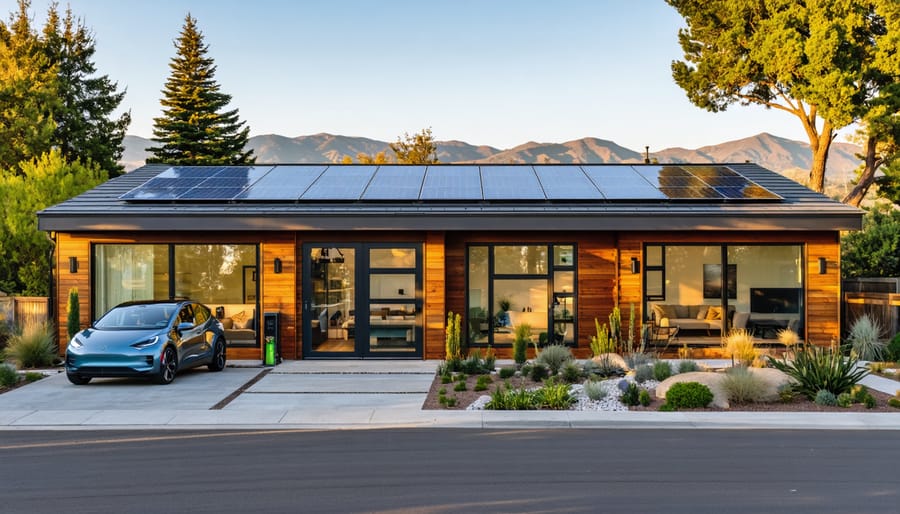
Why Modular Homes Are Winning the Eco-Friendly Revolution
Imagine building your dream home in half the time, with half the waste, and seamlessly integrated with the smart technology that makes modern living effortless. Eco-friendly modular homes are revolutionizing sustainable housing by combining factory-precision construction with green materials and cutting-edge automation—all while potentially saving you 10-20% compared to traditional builds.
Unlike conventional construction that generates mountains of jobsite waste, modular homes are built indoors under controlled conditions, reducing material waste by up to 90%. These prefabricated sections arrive at your property ready for rapid assembly, minimizing construction disruption and environmental impact. The real game-changer? They’re designed from the ground up to integrate solar panels, energy-efficient HVAC systems, and smart home technology that learns your preferences and optimizes energy use automatically.
Whether you’re a first-time homebuyer seeking affordability, a homeowner prioritizing sustainability, or someone who simply wants a beautifully designed space without the traditional construction headaches, modular homes deliver. They’re not the cookie-cutter boxes of decades past—today’s designs offer stunning customization, from sleek contemporary aesthetics to cozy traditional styles. This guide breaks down everything you need to know: real costs, design possibilities, smart technology integration, and the practical steps to make your eco-friendly modular home a reality.
What Makes a Modular Home Truly Eco-Friendly
Factory Precision Means Less Waste
One of the biggest environmental advantages of modular homes happens before they ever reach your property. Factory construction means materials are measured, cut, and assembled in a controlled environment where precision is paramount. Unlike traditional job sites where lumber might get soaked in the rain or drywall damaged during transport, factory conditions protect every component. This precision translates to remarkable efficiency—modular construction typically generates up to 90% less waste than conventional building methods.
Here’s how it works: Factories use computerized cutting systems that optimize every piece of material, similar to how puzzle pieces fit together without gaps. Leftover wood scraps, metal offcuts, and packaging materials get sorted immediately into dedicated recycling bins. Many manufacturers partner with recycling facilities to repurpose these materials into new products—sawdust becomes composite boards, metal gets melted down for future use, and cardboard returns to packaging production.
Think of it like meal prepping versus cooking on the fly. When you plan ahead and measure carefully, you waste far less. The factory setting also allows workers to repeat processes efficiently, learning exactly how much material each home module requires. This isn’t just good for the planet—it reduces costs that get passed along to you as savings on your final home price.
Energy Efficiency Built Into Every Wall
Modular homes are built with energy efficiency at their core—literally. Unlike traditional construction where weather conditions and rushed schedules can compromise quality, modular homes are constructed in climate-controlled factories where precision matters. Each wall panel is assembled with meticulous attention to detail, creating tighter seals and superior insulation that would be nearly impossible to achieve on a traditional job site.
The factory setting allows builders to use advanced energy efficiency strategies like spray foam insulation and multi-layered thermal barriers without worrying about rain delays or temperature fluctuations affecting installation. This controlled environment means your walls get consistent, gap-free insulation every time.
The modular design itself naturally reduces air leakage. When sections are joined together, they’re sealed with industrial-grade materials that create an incredibly airtight envelope. This means your heating and cooling systems work less to maintain comfortable temperatures, translating directly to lower utility bills—often 20-30% savings compared to traditional homes.
Many modular manufacturers now integrate smart thermostats and energy monitoring systems during construction, giving you real-time insights into your home’s performance from day one.
The Smart Home Technology That Pairs Perfectly With Modular Design
Pre-Integrated Smart Systems Save You Thousands
Here’s one of the biggest advantages of eco-friendly modular homes that often gets overlooked: your smart home technology gets installed at the factory, not after you move in. This approach saves you serious money and headaches.
Think about it—when you retrofit a traditional home with smart thermostats, automated lighting, or security systems, you’re paying premium prices for both equipment and installation. Electricians need to run new wiring through finished walls, which means cutting into drywall, patching, and repainting. It’s messy, time-consuming, and expensive.
Modular home manufacturers, however, integrate smart home energy systems during the construction process. They’re installing wiring and devices while walls are open and easily accessible. This factory efficiency typically cuts installation costs by 30-50% compared to retrofitting.
Beyond cost savings, factory installation means better integration. All your smart systems communicate seamlessly because they’re designed to work together from day one. No compatibility issues, no patchwork solutions, and no wondering why your smart thermostat won’t talk to your lighting system.
You’ll also get cleaner results. No visible wires snaking along baseboards or patched-up walls where someone had to fish cables through. Everything’s built-in and streamlined.
Most manufacturers offer various smart home packages, letting you choose your automation level upfront. Want basic energy monitoring? They’ve got it. Ready for a fully integrated system controlling climate, security, and entertainment? That’s available too—all at factory-direct pricing that beats any retrofit job.
Solar and Battery Storage Made Simple
One of the biggest advantages of modular homes is that they can be designed with solar panels and battery storage right from the planning stage. Unlike traditional homes where renewable energy feels like an expensive afterthought, modular construction lets you integrate these systems seamlessly—often at a lower cost since everything’s coordinated from day one.
Here’s what makes it practical: Most modular manufacturers can pre-wire your home for solar during factory construction, which eliminates the hassle of retrofitting later. You can opt for rooftop solar panels, and many designs now accommodate integrated battery systems like the Tesla Powerwall or similar options. This renewable energy integration connects directly to your smart home system, letting you monitor energy production and consumption from your phone.
**Real-World Example:** A typical 1,500 square-foot modular home with a 6kW solar system costs around $15,000-$20,000 for the solar installation. With federal tax credits (currently 30%), you’re looking at a net cost of about $10,500-$14,000. Most homeowners see a return on investment within 7-10 years through eliminated or drastically reduced electricity bills.
**The ROI Timeline:** Beyond the payback period, you’re essentially getting free electricity for the remaining 15-20+ years of your system’s life. Add battery storage (around $10,000-$12,000) and you’ve got backup power during outages plus the ability to store excess energy for nighttime use—making your modular home truly energy-independent.
Real Cost Comparison: Modular vs. Traditional Eco-Homes
Where You’ll Actually Save Money
Let’s talk real numbers—because “saving the planet” sounds great, but saving your wallet feels even better.
Construction time drops by 30-50% with modular homes since they’re built in controlled factory settings while site prep happens simultaneously. That translates to significantly lower labor costs (typically 20-30% less than traditional builds) and fewer weather-related delays that drain your budget.
Your monthly energy bills will thank you too. Quality modular homes with proper insulation and energy-efficient eco-friendly home features can slash heating and cooling costs by 40-60% compared to conventional construction. We’re talking hundreds of dollars annually that stay in your pocket.
Maintenance expenses? Lower across the board. Factory precision means tighter seals, better-fitted components, and fewer callbacks for fixes. Many modular manufacturers report 25% fewer warranty claims than site-built homes.
Here’s the kicker: because construction happens faster, you’re paying less in interim housing or double mortgages. If you’re currently renting while building, shaving 4-6 months off construction time could save $10,000-$15,000 right there.
The upfront cost might seem comparable to traditional building, but when you factor in time savings, reduced energy consumption, and lower maintenance needs, most modular homeowners break even within 3-5 years.
The Hidden Costs Nobody Talks About
While the modular home itself might have a transparent price tag, several additional expenses can catch buyers off guard. Let’s break down what you really need to budget for.
**Land preparation** is often the biggest surprise. Your site needs to be level, accessible, and ready for utilities. Depending on your property’s condition, this could mean clearing trees, grading slopes, or even blasting rock—costs that can range from $5,000 to $50,000 or more.
**Transportation fees** vary dramatically based on distance from the factory to your site. Most manufacturers include delivery within a certain radius, but remote locations can add $10,000-$30,000 to your bottom line. Narrow roads or tight turns? That’s another challenge altogether.
**Crane and assembly** typically run $3,000-$15,000 depending on your home’s size and complexity. If your property has limited access or requires specialized equipment, expect that number to climb.
Don’t forget **utility hookups**—connecting to water, sewer, electric, and gas systems averages $10,000-$30,000. Off-grid setups with solar panels and septic systems represent a different investment entirely but offer long-term savings and sustainability benefits.
Smart planning means accounting for these expenses upfront, so you’re not scrambling mid-project.
Design Options That Don’t Compromise Your Style
Customization Without the Construction Headaches
One of the biggest advantages of eco-friendly modular homes is their remarkable customization potential—without the typical renovation chaos. Unlike traditional construction, where design changes can mean tearing down walls and creating mountains of waste, modular homes let you personalize during the planning phase.
Start by selecting your floor plan. Most manufacturers offer flexible layouts that accommodate open-concept living, extra bedrooms, or dedicated home office spaces. You can adjust room sizes, relocate walls, and even combine modules to create your ideal footprint—all before a single piece arrives at your site.
Finish options are extensive too. Choose sustainable materials like bamboo flooring, reclaimed wood accents, or low-VOC paints that maintain your home’s eco-credentials. Many builders now offer integrated smart home packages, allowing you to pre-wire for automated lighting, climate control, and security systems during fabrication.
**Quick customization tip:** Work closely with your modular builder to map out smart device placements early. Pre-installing conduit and outlets for sensors, smart thermostats, and charging stations is far easier during factory assembly than retrofitting later.
The beauty? These personalizations happen in a controlled factory environment, reducing material waste by up to 90% compared to site-built alternatives while maintaining the eco-efficiency that drew you to modular construction in the first place.
Blending With Your Property’s Natural Environment
Your modular home should feel like it belongs exactly where it sits. Start by conducting a simple site survey—walk your property at different times of day, noting sun patterns, prevailing winds, and natural features like mature trees or slopes. Position your home to maximize passive solar heating by orienting main living spaces toward the south, and use existing trees as natural windbreaks and shade providers.
For landscaping, choose native plants that thrive without extra watering or maintenance. These species support local ecosystems while reducing your environmental footprint. Create transition zones between your home and natural surroundings using native grasses, wildflower meadows, or rock gardens that blend seamlessly with the landscape.
Consider incorporating permeable pathways, rain gardens, and green roofs to manage stormwater naturally. These features not only look beautiful but actively improve your property’s environmental performance. Drawing inspiration from sustainable home examples can help you visualize how site-specific design choices create harmony between structure and setting, ultimately reducing energy consumption while enhancing your home’s natural beauty.
Navigating Permits, Zoning, and the Buying Process
Questions to Ask Before You Sign
Before signing any contract, arm yourself with the right questions to protect your investment and ensure you’re getting exactly what you expect. Start by asking about **certifications and standards**—which green building certifications does the home carry (LEED, Energy Star, Passive House)? Request documentation proving these claims.
Next, dive into **warranty details**. What’s covered under warranty, and for how long? Does it include both structural elements and appliances? Clarify who handles repairs if something goes wrong after installation.
**Delivery and installation timelines** matter too. What’s the realistic timeframe from deposit to move-in? Are there penalties if they miss deadlines? Who manages permits and local code compliance?
Ask about **installation support and services**. Does the manufacturer provide on-site supervision? What preparation work is required on your land before delivery? Will they connect utilities, or is that your responsibility?
Finally, discuss **customization limitations and costs**. What modifications can you make now versus later? Are smart home integrations included or extra? Getting clear answers upfront prevents expensive surprises and ensures your eco-friendly modular home meets both your sustainability goals and lifestyle needs.
Is a Hybrid Smart Modular Home Right for You?
Deciding if a hybrid smart modular home fits your needs comes down to four key factors. First, consider your lifestyle—do you value energy efficiency, love tech integration, and want minimal construction disruption? Modular builds typically wrap up 30-50% faster than traditional construction, perfect if you’re eager to move in quickly or currently paying rent while building.
Location matters significantly. If you’re building in a remote area or somewhere with limited contractor availability, the controlled factory environment of modular construction eliminates weather delays and local labor shortages. However, check local zoning regulations first, as some areas have restrictions on modular homes.
Budget-wise, these homes work best for those seeking predictable costs. While upfront expenses are comparable to traditional builds, the locked-in pricing protects you from cost overruns. The real savings emerge over time through reduced energy bills—typically 20-40% lower than conventional homes.
You’re an ideal candidate if you’re environmentally conscious, tech-savvy, and appreciate streamlined project timelines. However, if you prefer hands-on involvement in every construction decision or plan extensive custom architectural features requiring on-site adjustments, traditional construction might offer more flexibility.
Think long-term too. With rising energy costs and increasing emphasis on sustainability, these homes typically offer stronger resale value. If you’re planning to stay put for 10+ years, the investment in smart, eco-friendly features pays substantial dividends.
Eco-friendly modular homes represent more than just a housing trend—they’re a smart investment in your future and our planet’s wellbeing. By combining sustainable building practices with modern technology, these homes offer an attractive solution for anyone looking to reduce their environmental footprint without sacrificing comfort or style.
If you’re ready to explore this option further, start by researching reputable manufacturers in your area. Look for companies with strong sustainability credentials, transparent pricing, and positive customer reviews. Don’t hesitate to ask detailed questions about materials, energy efficiency ratings, and customization options.
Visit model homes whenever possible. Seeing the quality of construction firsthand and experiencing the layout in person will give you confidence in your decision. Many manufacturers also offer virtual tours, which can be a great starting point for narrowing down your choices.
Take time to connect with current modular homeowners through online communities or local tours. Their real-world experiences can provide invaluable insights that specifications alone can’t capture. With proper research and planning, your eco-friendly modular home can become the sustainable, tech-savvy sanctuary you’ve been dreaming of.