Transform Your Kitchen into a Natural Haven with Biophilic Design
Transform your kitchen into a living, breathing sanctuary by integrating biophilic design principles that connect you with nature while you cook, gather, and create. Install large windows or skylights to flood your space with natural light, positioning work areas to maximize exposure to outdoor views and greenery. Layer living elements throughout your kitchen by incorporating herb gardens into windowsills, hanging plants from ceiling-mounted planters, and using natural materials like bamboo cutting boards and stone countertops. Create a seamless indoor-outdoor flow by extending your kitchen into a garden area or adding a living wall of edible plants that doubles as both decoration and a practical food source.
Beyond the aesthetic appeal, biophilic kitchens improve air quality, reduce stress, and enhance creativity while cooking. Research shows that exposure to natural elements in cooking spaces can lower blood pressure and increase productivity, making your kitchen not just beautiful, but fundamentally healthier. Whether you’re planning a complete renovation or looking for simple updates, incorporating nature into your kitchen design creates a space that nurtures both body and soul.
Natural Light: The Foundation of Biophilic Kitchen Design

Window Optimization Strategies
Natural light plays a crucial role in biophilic kitchen design, and strategic window placement can transform your space. Position your main workspace, such as the sink or prep area, near windows to benefit from daylight while performing daily tasks. For maximum light exposure, consider installing larger windows or combining multiple smaller ones to create a wall of natural light.
Layer your window treatments thoughtfully. Opt for light, airy materials like sheer curtains that filter sunlight while maintaining privacy. Cellular shades offer flexibility, allowing you to adjust light levels throughout the day while providing excellent insulation. For a modern touch, smart blinds can automatically adjust based on the sun’s position and your preferences.
Don’t overlook upper cabinet placement – consider replacing traditional upper cabinets with windows where possible. If removing cabinets isn’t feasible, glass-front cabinets can help maintain an open, light-filled feeling. For north-facing kitchens, skylights or solar tubes can introduce additional natural light from above, creating a bright, welcoming atmosphere that connects your indoor space with the outdoors.
Remember to balance natural light with practical considerations like energy efficiency. Use low-E glass coatings to reduce heat gain while maintaining clarity and brightness.
Skylights and Light Tubes
Not every kitchen is blessed with large windows, but that doesn’t mean you have to sacrifice natural light. Skylights and light tubes offer excellent alternatives for bringing daylight into your cooking space, creating that vital connection with nature that’s central to biophilic design.
Skylights are particularly effective in single-story homes or top-floor kitchens, providing up to 30% more natural light than vertical windows of the same size. Modern skylights often come with smart features like automatic rain sensors and remote-controlled shades, letting you manage light levels throughout the day.
For homes where traditional skylights aren’t feasible, solar tubes (also called sun tunnels or light tubes) offer an ingenious solution. These compact tubes channel sunlight from your roof through a reflective tunnel, dispersing it evenly throughout your kitchen. They’re more affordable than skylights, require minimal structural changes, and can be installed in just a few hours.
Both options not only reduce your reliance on artificial lighting during daylight hours but also help maintain your body’s natural circadian rhythm, contributing to better overall wellbeing in your kitchen space.
Living Elements in Your Kitchen Space
Herb Gardens and Living Walls
Bringing nature directly into your kitchen through herb gardens and living walls is one of the most practical ways to blend living elements into architecture. These green additions not only enhance the visual appeal but also serve a functional purpose in your cooking space.
Consider installing a vertical herb garden near your prep area for easy access to fresh basil, thyme, or mint while cooking. Modern hydroponic systems make it simple to maintain indoor herbs year-round, with built-in lighting and self-watering features. For those with limited counter space, wall-mounted planters or magnetic pots can create an efficient herb display without sacrificing precious work areas.
Living walls take the concept further, offering a dramatic visual impact while improving air quality. Start small with a modular living wall system that can be expanded over time. Choose low-maintenance plants like pothos, spider plants, or peace lilies that thrive in kitchen environments. Install proper lighting and irrigation systems to ensure your living wall stays healthy and vibrant.
For beginners, start with 2-3 hardy herbs in simple containers before graduating to more complex systems. Remember to position your plants where they’ll receive adequate natural light while staying clear of cooking heat and steam.

Low-Maintenance Plant Solutions
For busy homeowners who love the idea of a plant-filled kitchen but worry about maintenance, there are plenty of hardy, low-maintenance options that thrive in kitchen environments. Snake plants and ZZ plants are excellent choices, as they tolerate low light and irregular watering schedules. These sturdy plants can handle the occasional cooking steam and temperature fluctuations common in kitchens.
Herbs like rosemary, sage, and thyme not only add greenery but serve a practical purpose in cooking. These Mediterranean plants prefer drier conditions and don’t mind the warm environment near cooking areas. For countertops and windowsills, consider succulents and air plants, which require minimal watering and can handle varying light conditions.
Pothos and spider plants are perfect for hanging baskets or high shelves, adding cascading greenery without taking up valuable counter space. These plants are nearly indestructible and can thrive in artificial light. For those with limited natural light, artificial grow lights can supplement lighting needs while adding ambient illumination to your kitchen space.
Remember to choose containers with good drainage and consider self-watering pots for extra convenience. Group plants with similar care requirements together to streamline maintenance routines.
Natural Materials and Textures
Sustainable Wood Elements
Wood brings warmth, texture, and natural beauty to your biophilic kitchen design, creating an instant connection to nature. When selecting sustainable wood materials, opt for FSC-certified options that ensure responsible forest management while delivering stunning aesthetic appeal.
For countertops, consider butcher block surfaces made from bamboo or reclaimed hardwoods. These materials not only provide a durable work surface but also age beautifully, developing character over time. Install wooden open shelving to display plants and natural decor while keeping frequently used items within easy reach.
Cabinet choices can range from light ash to rich walnut, depending on your desired atmosphere. Light woods create an airy, Scandinavian feel, while darker varieties add sophistication and ground the space. Consider incorporating wooden accent panels or a statement wooden island to serve as focal points.
Decorative wooden elements can transform your kitchen’s ambiance. Install wooden beams across the ceiling for rustic charm, or add wooden pendant lights for a modern touch. Window frames and trim in natural wood finishes help frame outdoor views, strengthening the indoor-outdoor connection that’s central to biophilic design.
To maintain the beauty of wooden elements, use natural oils and finishes that enhance the wood’s natural grain while protecting its surface. This approach ensures your biophilic kitchen remains both beautiful and functional for years to come.
Stone and Natural Surfaces
Stone and natural surfaces bring an authentic touch of nature into your kitchen while offering exceptional durability and timeless appeal. Consider incorporating granite countertops, which not only provide a stunning natural pattern but also offer excellent resistance to heat and scratches. Each slab tells its own unique story through intricate veining and mineral compositions.
For a more budget-friendly option, quartzite or engineered stone surfaces can deliver similar natural aesthetics while requiring less maintenance. These materials often come in patterns that mirror natural stone, from dramatic marble-like swirls to subtle limestone textures.
Don’t limit natural surfaces to just countertops – consider extending stone elements to backsplashes, kitchen islands, or even flooring. Slate tiles can create a dramatic accent wall, while limestone flooring adds warmth and character. For a rustic touch, rough-cut stone veneer on a feature wall can transform your kitchen into a cozy cottage retreat.
Textural variety is key in biophilic design. Mix smooth, polished surfaces with rougher, more tactile elements. Try incorporating river rock details in a backsplash or using textured stone tiles for visual interest. Even small touches, like natural stone cabinet pulls or a carved stone sink, can make a significant impact.
Remember to balance stone elements with other materials to prevent the space from feeling too heavy or cold. Pair stone surfaces with warm woods and living plants to create a harmonious, nature-inspired kitchen that feels both grounding and inviting.
Natural Patterns and Forms
Organic Shapes in Kitchen Layout
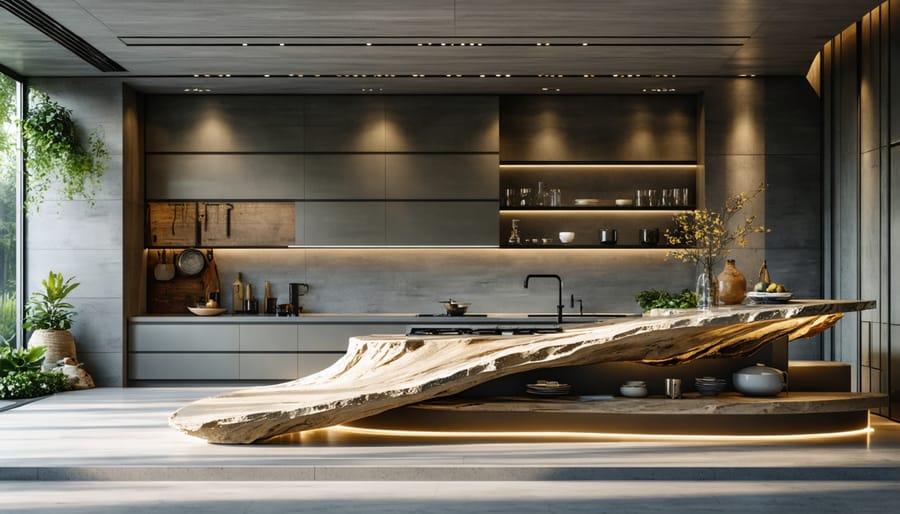
Moving away from rigid, boxy layouts, organic shapes in kitchen design create a more natural and welcoming environment. Curved islands and rounded countertops not only mirror forms found in nature but also promote better flow and movement throughout the space. Consider replacing sharp corners with gentle curves in your workspace, making it easier to navigate while cooking and entertaining.
Flowing layouts can be achieved through curved breakfast bars, circular dining nooks, or serpentine walkways. These organic patterns help reduce stress by eliminating harsh angles and creating more intuitive pathways. When planning your kitchen’s layout, think about how you naturally move through the space – your walking patterns should feel smooth and unforced, like a meandering stream.
To enhance this natural flow, incorporate rounded storage solutions like circular pantry units or curved open shelving. Even smaller elements like circular pendant lights or organically shaped cabinet handles can contribute to the overall sense of natural movement. Remember, the goal is to create a space that feels less manufactured and more in harmony with nature’s organic patterns.
Nature-Inspired Decorative Elements
Bring the beauty of nature into your kitchen through decorative elements that mimic organic patterns and textures. Start with your backsplash by choosing tiles that feature leaf motifs, honeycomb patterns, or wave-like designs. Natural stone-effect tiles can create a stunning focal point while maintaining easy maintenance.
Consider incorporating botanical prints in your kitchen textiles, such as curtains, tea towels, or seat cushions. Wall art featuring pressed flowers or nature photography can add visual interest without overwhelming the space. Look for cabinet hardware with organic shapes, like branch-inspired handles or pebble-like knobs.
For a subtle touch, choose countertop accessories that echo natural forms – think cork containers, wooden utensil holders, or ceramic pieces with nature-inspired glazes. Even your lighting fixtures can contribute to the biophilic theme through designs that mimic natural forms like water droplets or flowering buds.
Don’t forget the power of texture – woven baskets, bamboo organizers, and rough-hewn wooden bowls can add tactile interest while reinforcing the connection to nature. These elements work together to create a harmonious, nature-inspired space that feels both sophisticated and welcoming.
Practical Implementation Tips
Transforming your kitchen into a biophilic haven doesn’t require a complete renovation. Start by incorporating DIY biophilic elements that make a significant impact with minimal effort. Position potted herbs on windowsills or install simple floating shelves for small plants, creating both visual appeal and practical cooking resources.
Maximize natural light by removing heavy window treatments and replacing them with sheer, natural-fiber curtains. If privacy isn’t a concern, consider leaving windows uncovered entirely. For artificial lighting, choose bulbs that mimic natural daylight and install under-cabinet grow lights for indoor herbs.
Add natural materials through easy upgrades like bamboo drawer organizers, wooden utensil holders, or a reclaimed wood floating shelf. Replace synthetic cabinet handles with ones made from stone, wood, or brushed metal to bring in more organic textures.
Create a living wall using pocket planters or magnetic containers attached to a kitchen wall. Choose low-maintenance plants like pothos, snake plants, or air plants that thrive in kitchen conditions. For those worried about maintenance, high-quality artificial plants can still provide biophilic benefits.
Incorporate natural patterns through removable wallpaper with botanical prints, or add a backsplash with nature-inspired designs. Use natural fiber baskets for storage and display fresh produce in wooden bowls or woven containers.
Remember to keep pathways clear and maintain proper ventilation for plants. Start small with these changes and gradually build upon them as you become comfortable with maintaining your biophilic kitchen elements.
Creating a biophilic kitchen is more than just a design trend – it’s an investment in your wellbeing and connection to nature. By incorporating natural elements, sustainable materials, and living plants into your kitchen space, you can transform this essential room into a nurturing environment that promotes both physical and mental wellness.
We’ve explored how natural lighting, organic materials, and strategic plant placement can dramatically enhance your kitchen’s atmosphere. Whether you choose to start small with a herb garden window or commit to a complete renovation with natural stone countertops and wooden elements, every step toward biophilic design brings you closer to a more harmonious living space.
Remember that biophilic design is highly adaptable to your specific needs and budget. You can begin with simple changes like adding potted plants or installing nature-inspired artwork, then gradually implement larger modifications as time and resources allow. The key is to maintain balance between functionality and natural elements while creating a space that truly resonates with your lifestyle.
As you embark on your biophilic kitchen journey, focus on elements that bring you joy and connect you with nature. Whether you’re cooking, entertaining, or simply enjoying your morning coffee, a well-designed biophilic kitchen will enhance these daily experiences and create a more meaningful connection with your home environment.
Take the first step today – even small changes can make a significant impact in creating your nature-inspired kitchen sanctuary.