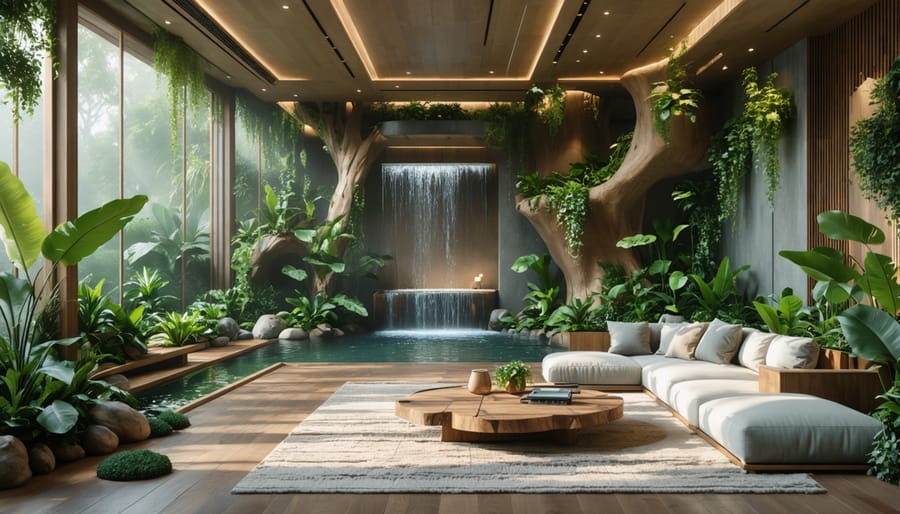
Transform Your Home Into a Mental Wellness Haven with Biophilic Design
Transform your living space into a sanctuary of nature-inspired design using Stephen Kellert’s revolutionary biophilic principles. This pioneering framework connects humans with natural elements to enhance mental wellness benefits through thoughtful architectural and interior choices. By incorporating organic materials, natural light, and living elements, Kellert’s approach creates environments that reduce stress, improve cognitive function, and boost creativity.
His research demonstrates that spaces designed with nature in mind can lower blood pressure, enhance productivity, and accelerate healing. From the curve of a wooden staircase mimicking natural forms to the strategic placement of windows that frame outdoor views, Kellert’s principles transform ordinary spaces into restorative environments that satisfy our innate connection to nature.
Whether you’re renovating your home or designing a commercial space, understanding Kellert’s biophilic framework offers practical solutions for creating environments that support human health and well-being. This comprehensive approach combines aesthetic appeal with evidence-based design strategies, making it increasingly valuable in our modern, urban-centric world.
Kellert’s Essential Elements of Biophilic Design
Direct Nature Experience
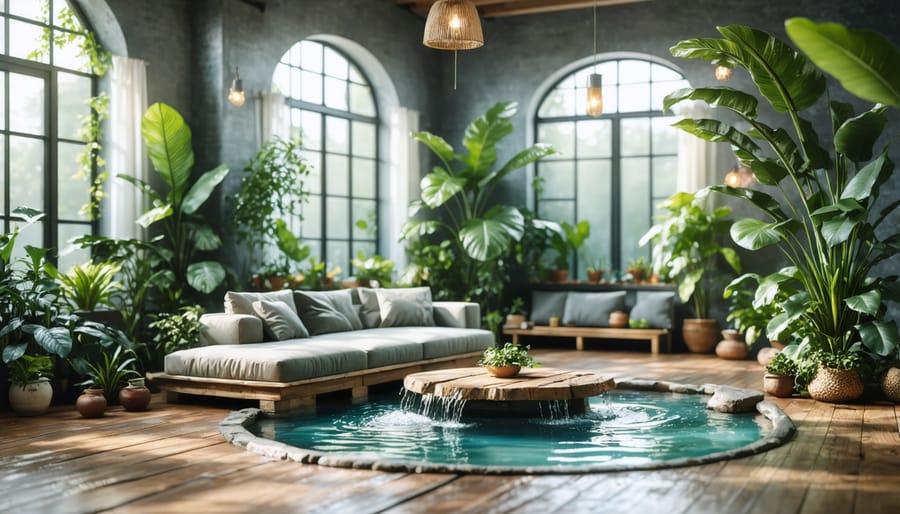
Direct nature experiences in biophilic design create immediate connections with the natural world through thoughtfully incorporated elements. Natural light leads the way, with large windows and skylights that not only illuminate spaces but also maintain our crucial connection to the day’s rhythm and seasonal changes. Consider installing adjustable blinds or light-filtering curtains to manage the intensity while maximizing daylight exposure.
Living plants are essential components, bringing life and vitality to any space. From statement floor plants like fiddle leaf figs to compact desk succulents, greenery adds color, texture, and natural air-purifying benefits. For those with limited time, low-maintenance options like snake plants or ZZ plants offer similar benefits with minimal care requirements.
Water features create multi-sensory experiences through sight and sound. A tabletop fountain, wall-mounted water feature, or even a small indoor pond can introduce the calming effects of flowing water. The gentle sound helps mask unwanted noise while creating a peaceful atmosphere.
Natural materials ground the space in authenticity. Incorporate wood furniture with visible grain patterns, stone countertops, bamboo flooring, or cork wall panels. These materials age beautifully and provide tactile experiences that synthetic materials can’t match. Even small additions like woven baskets, wool throws, or cotton textiles contribute to the natural material palette.
For maximum impact, combine these elements strategically. Place plants near windows to optimize growth, position water features where their sound can be appreciated, and layer natural materials to create rich, engaging environments that stimulate our innate connection to nature.
Indirect Nature Experience
Indirect nature experiences in biophilic design focus on incorporating nature-inspired elements without using actual natural materials. This approach offers a creative way to bring the outdoors inside through thoughtful design choices. While direct experiences involve real plants and natural textures and materials, indirect experiences rely on representations and simulations of nature.
Color plays a crucial role in this aspect of biophilic design. Think earth tones like sandy beiges, forest greens, and ocean blues. These colors can create a subtle connection to nature while maintaining a sophisticated interior aesthetic. Pattern selection is equally important – consider incorporating leaf motifs, wave-like curves, or honeycomb shapes into your wallpaper, textiles, or floor designs.
Textures inspired by natural elements add depth and interest to your space. Wood-grain patterns, stone-like surfaces, and fabrics that mimic organic materials can create a sensory experience that reminds us of nature. Even architectural elements can reflect natural patterns – curved walls reminiscent of wind-carved canyons or ceiling designs that echo tree canopies.
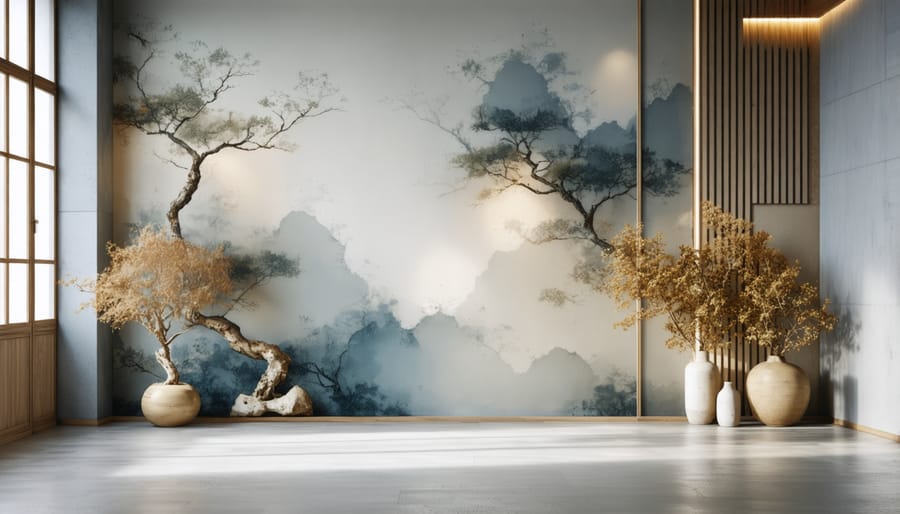
Photography and artwork featuring natural scenes serve as windows to the outdoors. Digital solutions, like nature-themed murals or projected landscapes, offer modern alternatives for spaces where traditional options might not be practical. These indirect experiences can be particularly effective in urban environments where access to nature is limited, helping to create a sense of connection to the natural world while maintaining the functionality of indoor spaces.
Space and Place Experience
The Space and Place Experience element of biophilic design focuses on how we can mirror nature’s spatial relationships in our built environments. Just as natural landscapes offer a mix of open meadows and cozy nooks, your indoor spaces should provide similar variety and intrigue. This principle is essential for creating balanced living spaces that feel both comfortable and inspiring.
Consider incorporating different ceiling heights to create varying spatial experiences – higher ceilings in gathering areas to evoke a sense of freedom, and lower ceilings in private spaces for intimacy. Natural transitions between rooms can be achieved through curved walkways or organic architectural elements, mimicking how paths wind through nature.
Arrange furniture to create both prospect (open views) and refuge (sheltered spots) within rooms. This might mean positioning a cozy reading nook near a window with a broader view, or using plants and screens to create semi-private areas within larger spaces. The key is to balance openness with security, much like finding shade under a tree while maintaining a view of the surrounding landscape.
Include transitional spaces like covered porches or winter gardens that blur the line between indoor and outdoor environments. These areas serve as natural buffer zones and help maintain our connection to the outside world while providing protection from the elements.
Practical Applications for Your Home
Living Spaces and Bedrooms
Living spaces and bedrooms offer prime opportunities to incorporate Kellert’s biophilic design principles through thoughtful furniture selection and arrangement. Start by positioning seating areas near windows to maximize natural light exposure and create visual connections with outdoor spaces. Choose furniture with organic shapes and natural materials – think wooden coffee tables with live edges, rattan chairs, or bamboo side tables.
For bedrooms, select bedding in nature-inspired colors like forest greens, earth tones, or ocean blues. Consider a wooden platform bed frame or one crafted from sustainable materials. Natural fiber rugs, such as jute or wool, add texture while maintaining the biophilic theme. Place potted plants strategically – perhaps a peace lily in a corner or trailing pothos on a high shelf.
Incorporate natural patterns through wallpaper featuring botanical prints or textiles with organic motifs. Use sheer, flowing curtains that allow natural light while providing privacy. Consider installing a small indoor water feature in living areas to introduce the calming sound of flowing water.
Storage solutions should blend functionality with natural elements – woven baskets, wooden shelving units, or bamboo organizers work well. Add comfort through organic cotton throw pillows and blankets featuring nature-inspired textures and patterns. Remember to keep spaces uncluttered, allowing natural elements to take center stage while promoting a sense of calm and connection to nature.
Home Office and Workspaces
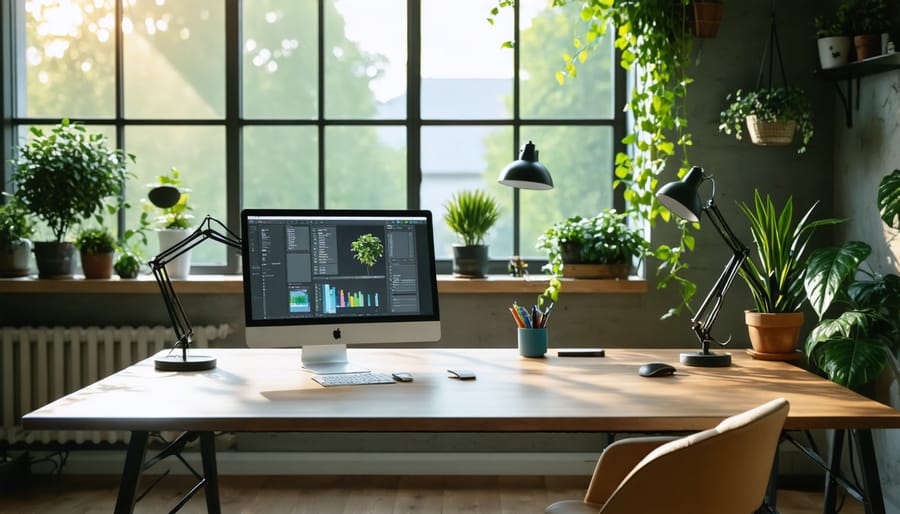
Creating a nature-connected home office doesn’t just make your workspace more beautiful – it can significantly boost your productivity and well-being. Start by positioning your desk near a window to maximize natural light exposure and views of outdoor greenery. If window access is limited, consider installing nature-inspired wallpaper or hanging large landscape photographs.
Incorporate living elements through desktop plants like peace lilies or snake plants, which thrive in indoor conditions and help purify the air. Create a vertical garden wall using preserved moss or living plants to add a striking natural focal point while maximizing space. For those concerned about maintaining an ergonomic home office setup, consider standing desk options made from sustainable materials like bamboo or reclaimed wood.
Use natural materials for storage solutions and desk accessories – think woven baskets, wooden organizers, and stone paperweights. Add texture through natural fiber rugs, wooden blinds, or cork bulletin boards. Consider installing a small desktop water feature to introduce the calming sounds of flowing water.
To maintain connection with nature throughout the day, use smart lighting that mimics natural daylight cycles. This helps regulate your circadian rhythm while creating a more energizing workspace. Remember to include adequate ventilation to maintain fresh air flow, perhaps through strategically placed indoor plants or an air-purifying system disguised within your biophilic design elements.
Incorporating Kellert’s biophilic design principles into our living and working spaces is more than just a design trend – it’s an investment in our well-being. By bringing nature indoors through thoughtful design choices, we create environments that reduce stress, enhance creativity, and promote better physical and mental health. Whether you’re planning a complete renovation or making small changes, every step toward biophilic design contributes to a more harmonious living space. Start with simple elements like natural materials and plants, then gradually expand to include more complex features such as living walls or water elements. The benefits of biophilic design are clear and scientifically proven, making it a worthwhile consideration for any home or workplace renovation project. Remember, creating connections with nature in our built environment isn’t just about aesthetics – it’s about fostering spaces that help us thrive.