Smart Home Tech That Actually Enhances Your Decor (Not Ruins It)
Transform your living space into a technological masterpiece by integrating smart home devices that enhance your interior design rather than detract from it. Install sleek, voice-controlled lighting systems that blend seamlessly with existing fixtures, replacing traditional switches with elegant touch panels that complement your wall décor. Mount smart displays within custom-built shelving units or behind two-way mirrors to maintain clean aesthetics while adding functionality. Conceal smart speakers within architectural features or choose design-forward models that double as decorative pieces.
The modern smart home no longer forces a choice between technology and style – today’s innovations disappear into carefully planned spaces while delivering unprecedented control over your environment. From temperature sensors disguised as artwork to motorized blinds that integrate with existing window treatments, every smart addition can elevate both the function and visual appeal of your home. The key lies in selecting devices that serve your lifestyle needs while maintaining the cohesive design vision you’ve created for your space.
Seamless Smart Lighting Solutions
Designer Smart Bulbs and Fixtures
Gone are the days when smart lighting meant choosing between functionality and style. Today’s designer smart bulbs and fixtures seamlessly blend cutting-edge technology with stunning aesthetics, transforming your lighting into conversation-starting focal points.
Leading brands like Artemide and Louis Poulsen now offer sophisticated pendant lights with built-in smart capabilities, allowing you to control both ambiance and illumination through your smartphone or voice commands. The Philips Hue Play light bar series can be mounted behind furniture or artwork to create dramatic wall-washing effects while maintaining full smart control.
For a truly artistic touch, consider statement pieces like the Nanoleaf Canvas or Lines, which combine customizable light panels into wall-mounted installations that respond to music or create preset scenes. LIFX’s beam and tile products offer similar creative possibilities with a more minimalist aesthetic.
Traditional fixture styles haven’t been left behind either. Smart chandeliers from brands like Modern Forms integrate seamlessly with home automation systems while maintaining classic elegance. Even table and floor lamps have gotten smarter, with options like the Dyson Lightcycle Morph adjusting automatically to natural daylight patterns while doubling as sculptural art pieces.
When selecting designer smart lighting, consider how the fixture looks both when illuminated and when off – the best pieces serve as beautiful decor elements regardless of their power state.

Hidden Strip Lighting and Accent Features
Transform your living spaces with subtle yet impactful seamless lighting integration that enhances both functionality and ambiance. Start by installing LED strip lighting beneath kitchen cabinets, along baseboards, or behind floating shelves to create a sophisticated glow that doesn’t overwhelm the space. These hidden fixtures can be controlled via smartphone or voice commands, allowing you to adjust brightness and color temperature throughout the day.
Consider adding strip lighting behind your TV or entertainment center for a theater-like experience, or tucking it beneath stair treads for both safety and style. Crown molding can cleverly conceal LED strips, washing walls with indirect light that adds dimension to any room. For a modern touch, install smart strips behind headboards or under bathroom vanities to create gentle nighttime illumination.
The key to successful hidden lighting is proper diffusion and placement. Use aluminum channels with frosted covers to eliminate visible LED dots and ensure even light distribution. When installing under cabinets, position strips closer to the back wall to minimize reflection on countertop surfaces. For maximum impact, layer your lighting by combining hidden strips with other smart fixtures, creating scenes that complement your existing decor while adding functionality to your daily routines.
Remember to choose high-quality, color-consistent LED strips that integrate with your preferred smart home platform for seamless control and automation.
Stylish Smart Displays and Controls
Customizable Touch Panels
Today’s touch panels have evolved far beyond basic light switches, offering sleek, customizable interfaces that complement any interior design style. These modern controllers serve as elegant wall-mounted command centers, allowing you to manage everything from lighting and temperature to music and security with a simple tap.
What makes these panels particularly appealing is their ability to blend seamlessly with your existing decor. Available in various finishes – from minimalist glass and brushed metal to traditional wooden frames – these devices can either make a statement or disappear into your wall design. Many manufacturers now offer customizable faceplates and screen themes, letting you match your panel’s appearance to your room’s color scheme and aesthetic.
The interface itself can be personalized to display only the controls you frequently use, reducing clutter and simplifying daily interactions. Whether you prefer a clean, modern look with simple icons or a more detailed display with temperature readings and music controls, these panels can be configured to suit your preferences.
Installation is typically straightforward, with most panels designed to fit standard electrical boxes. Some models even offer wireless options, providing flexibility in placement without requiring extensive wall modifications. Many homeowners appreciate the ability to start with basic functionality and gradually add features as their needs evolve, making these touch panels a future-proof investment in both technology and design.
Decorative Smart Displays
Gone are the days when technology meant sacrificing style. Modern decorative smart displays are revolutionizing how we blend stylish smart home solutions with interior design. These innovative devices transform from functional screens into stunning artwork or elegant mirrors when not in use, offering the perfect balance of form and function.
Samsung’s The Frame leads this trend, displaying museum-quality artwork when idle, while LG’s Mirror Display technology turns your smart screen into a sophisticated mirror at the touch of a button. These displays can showcase your personal photo collections, famous artworks, or ambient scenes that complement your room’s aesthetic.
Smart mirrors are particularly popular in bathrooms and dressing areas, combining traditional mirror functionality with weather updates, calendar notifications, and even lighting controls. Some models feature built-in voice assistants, allowing you to check your schedule or adjust your smart home settings while getting ready for the day.
For a more subtle approach, consider mountable digital canvas displays that mimic traditional artwork, complete with texture and depth. These can be programmed to change throughout the day or respond to room activity, creating dynamic living spaces that adapt to your lifestyle.
The key to successful integration lies in choosing displays that complement your existing décor while providing the smart features you’ll actually use. Many of these devices can be customized with different frames and bezels to match your interior design perfectly.

Invisible Smart Home Features
Hidden Speakers and Sound Systems
Gone are the days when bulky speakers dominated your living space. Modern hidden speaker systems offer an elegant solution that delivers premium sound while maintaining your home’s aesthetic appeal. These innovative systems can be seamlessly integrated into walls, ceilings, and even custom furniture pieces, creating an immersive audio experience without visible hardware.
In-wall and in-ceiling speakers have become increasingly popular, featuring paintable grilles that blend perfectly with your wall color. Some manufacturers offer completely invisible speakers that install behind a thin layer of drywall or plaster, producing high-quality sound while remaining completely hidden from view.
For those who prefer not to cut into walls, consider architectural speakers that can be disguised as light fixtures or air vents. These clever designs maintain the integrity of your walls while providing strategic sound placement throughout your home. Many smart home systems now support multi-room audio capabilities, allowing you to control different zones from your smartphone or voice assistant.
When planning your hidden audio system, consider working with an audio specialist to optimize speaker placement for the best acoustic performance. Pay attention to factors like room size, ceiling height, and furniture placement to achieve optimal sound distribution. Remember that proper installation is crucial for both sound quality and maintaining your home’s clean, uncluttered appearance.
Concealed Smart Home Hubs
Gone are the days when smart home hubs need to sit prominently on your coffee table or kitchen counter. Today’s smart home enthusiasts are getting creative with concealing these essential control centers while maintaining optimal functionality. Strategic placement is key – consider tucking your hub inside a decorative box with ventilation holes, behind books on a bookshelf, or within a stylish cabinet with mesh panels.
For those with built-in cabinetry, creating a dedicated tech drawer or compartment can keep your hub accessible yet hidden. Just ensure there’s proper airflow and that WiFi signals aren’t significantly compromised. Some homeowners are incorporating their hubs into custom millwork, like hollow floating shelves or purpose-built alcoves disguised by artwork.
The kitchen offers plenty of clever hiding spots too. Under-cabinet mounting keeps hubs out of sight while utilizing otherwise dead space. Some clever solutions include placing hubs in pantry corners or inside appliance garages alongside coffee makers and toasters.
Remember to consider signal strength when choosing a location. While that beautiful metal cabinet might seem perfect, it could interfere with connectivity. Opt for materials like wood, plastic, or fabric covers that won’t impede signals. Also, keep your hub within reach of power sources and ensure easy access for occasional maintenance or resets.
By thoughtfully concealing your smart home hub, you can maintain the clean aesthetics of your space without sacrificing the convenience of smart home technology.
Smart Furniture and Textiles
Charging-Enabled Furniture
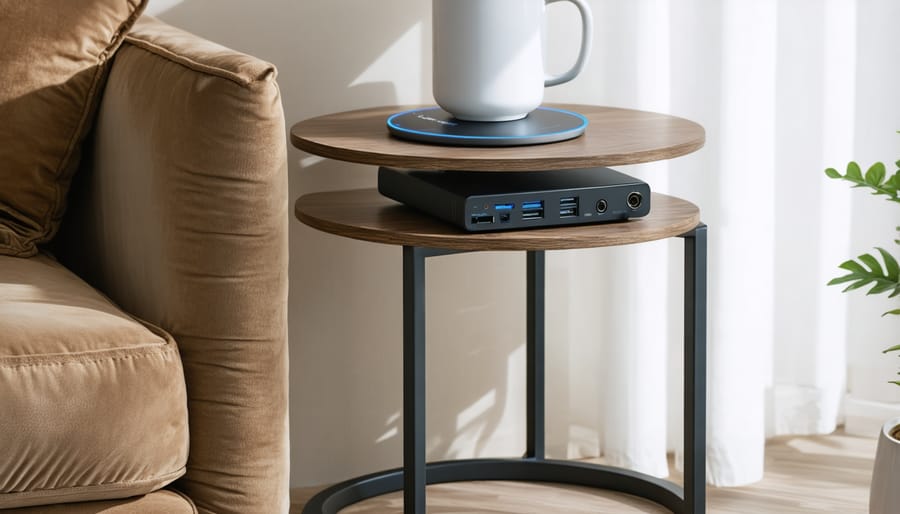
Modern homes are embracing a new wave of smart furniture solutions that seamlessly blend style with functionality. From sleek side tables with built-in wireless charging pads to sophisticated coffee tables featuring USB ports and power outlets, charging-enabled furniture is revolutionizing how we power our devices at home.
Picture a bedside table that not only complements your bedroom décor but also charges your smartphone overnight without unsightly cables. Or imagine a stylish ottoman with integrated power banks that lets you charge multiple devices while serving as an elegant footrest. These pieces are becoming increasingly popular among homeowners who value both aesthetics and convenience.
Many manufacturers now offer dining tables with discrete charging stations built into the surface, perfect for working from home or casual browsing during meals. Some even include temperature-controlled compartments for keeping beverages at the perfect temperature while you work or relax.
The latest designs feature furniture with smart lighting integration, allowing you to control ambient lighting through your phone or voice commands. Some pieces even come with Bluetooth speakers cleverly concealed within their structure, offering a complete entertainment solution without compromising on style.
When selecting charging-enabled furniture, look for pieces that match your existing décor while offering the connectivity options you need most. The best designs hide their tech features behind elegant facades, ensuring your space maintains its sophisticated appearance while providing all the modern conveniences you desire.
Smart Fabrics and Window Treatments
Smart fabrics and automated window treatments have revolutionized how we interact with our living spaces, combining style with cutting-edge functionality. Motorized curtains and blinds can now be programmed to open and close based on time of day, weather conditions, or your personal schedule, helping to regulate indoor temperature and natural light exposure.
The latest smart curtain systems can be controlled through smartphone apps, voice commands, or integrated into broader home automation routines. Some popular options include retrofit solutions that can transform your existing curtains into smart ones, perfect for homeowners who want to keep their current window treatments while adding modern convenience.
Smart textiles are making their way into our homes through temperature-regulating fabrics, self-cleaning materials, and even curtains with built-in air purification properties. These innovative materials can help maintain optimal indoor conditions while complementing your interior design scheme.
For optimal functionality, consider installing light and temperature sensors that work in tandem with your window treatments. This allows for automatic adjustments throughout the day, maximizing energy efficiency and comfort. Many systems also offer vacation modes that simulate occupancy by varying curtain positions throughout the day.
Installation options range from DIY-friendly wireless solutions to professional hardwired systems, making smart window treatments accessible regardless of your technical expertise or budget. When selecting your system, consider factors like power source (battery vs. hardwired), noise levels during operation, and compatibility with your existing smart home ecosystem.
Successfully integrating smart home technology while maintaining your home’s aesthetic appeal is an achievable goal with proper planning and execution. Throughout this guide, we’ve explored various ways to seamlessly blend technology with interior design, from concealing devices to choosing complementary finishes and strategic placement options.
Remember that successful smart home integration starts with a clear vision of your needs and lifestyle. Begin with essential systems like lighting, security, and climate control, then gradually expand based on your comfort level and requirements. Always consider both functionality and aesthetics when selecting devices, and don’t hesitate to invest in quality solutions that offer better design options.
Key tips for success include:
– Planning cable management early in the process
– Choosing devices with neutral or complementary finishes
– Using architectural features to conceal technology
– Opting for multi-functional devices to reduce clutter
– Regular maintenance to ensure systems work efficiently
The future of smart home technology continues to evolve toward more discrete and design-friendly solutions. By following these guidelines and maintaining a balance between innovation and aesthetics, you can create a sophisticated, connected home that enhances both your lifestyle and your interior design.
Whether you’re starting from scratch or upgrading existing systems, remember that small, thoughtful changes can make a significant impact. Focus on creating a cohesive look that serves your needs while preserving the warmth and character of your home.