Beautiful Furniture Starts Here: Your Path to Truly Sustainable Woodworking
Transform your woodworking practice into a force for environmental good by choosing responsibly harvested lumber, reclaimed materials, and non-toxic finishes for your next eco-friendly home decor project. Master woodworkers increasingly recognize that sustainable practices don’t just protect our forests—they often yield superior results, with reclaimed wood offering unique character and stability that new lumber can’t match. By embracing traditional joinery techniques over metal fasteners, selecting locally sourced materials, and utilizing every scrap through careful project planning, you’ll create pieces that honor both craftsmanship and conservation. Modern sustainable woodworking bridges centuries-old techniques with innovative approaches to waste reduction, making it possible to craft beautiful, lasting furniture while preserving precious forest resources for future generations.
What Makes Wood Sourcing Sustainable?
Certification Systems Worth Knowing
When choosing sustainable wood products, certification labels are your best friends. The Forest Stewardship Council (FSC) certification is the gold standard in sustainable forestry. Look for the FSC logo, which guarantees that products come from responsibly managed forests that provide environmental, social, and economic benefits.
The Programme for the Endorsement of Forest Certification (PEFC) is another trusted certification system. PEFC-certified products ensure that timber is sourced from forests managed according to strict environmental and social standards. They work particularly well with small forest owners and regional operations.
The Sustainable Forestry Initiative (SFI) is popular in North America, focusing on responsible forest management practices. While not as stringent as FSC, SFI-certified products still meet important sustainability criteria.
For reclaimed wood, look for the Rainforest Alliance Rediscovered Wood certification. This ensures the wood is genuinely salvaged and not harvested from living forests. When shopping, these certifications should be clearly visible on product labels or packaging – if you don’t see them, don’t hesitate to ask the supplier for verification.

Local vs. Imported Wood
When it comes to sustainable woodworking, the distance your materials travel matters just as much as how they’re harvested. Local wood sourcing significantly reduces the carbon footprint associated with transportation, as lumber shipped across continents can rack up thousands of miles in fossil fuel consumption. By choosing locally sourced wood, you’re not only supporting regional forestry and economy but also ensuring fresher, better-acclimated materials for your projects.
Local wood often comes with a story – you might know exactly which forest it came from or even the specific circumstances of its harvest. Many local suppliers practice sustainable forestry management and can provide detailed information about their sourcing methods. This transparency is harder to guarantee with imported woods.
However, some exotic woods are necessary for specific projects and aren’t available locally. In these cases, look for suppliers who participate in certified sustainable forestry programs and use efficient shipping methods. Consider whether a local alternative could achieve similar results – many domestic species can be finished to resemble exotic woods while maintaining a smaller environmental impact.
Smart Material Choices for Your Projects
Reclaimed Wood: Beauty with History
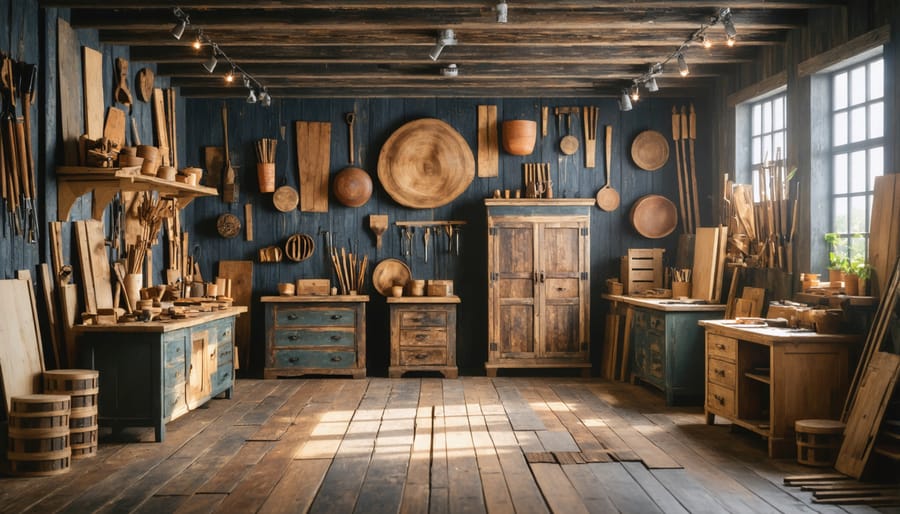
Reclaimed wood tells a story that new lumber simply can’t match. Every knot, nail hole, and weathered surface speaks to its history, making each piece uniquely beautiful. Working with reclaimed materials not only creates stunning pieces but also helps reduce environmental impact.
To source quality reclaimed wood, start by exploring local salvage yards, demolition sites, and architectural salvage stores. Online marketplaces and specialty dealers can also be excellent resources. When selecting pieces, look for wood that’s structurally sound, free from active insect infestation, and properly dried.
Before working with reclaimed wood, you’ll need to prep it carefully. Remove all metal objects like nails and staples using a metal detector and appropriate tools. Clean the wood thoroughly, and consider using a wire brush to remove loose debris while preserving the wood’s character. For indoor projects, ensure the wood is properly dried to prevent warping.
Remember that reclaimed wood often requires different handling than new lumber. It may be harder, more brittle, or have unexpected density variations. Always wear appropriate safety gear, including a dust mask, as older wood can harbor potentially harmful substances. Start with smaller projects to get comfortable with the material’s unique characteristics before tackling larger pieces.
The extra effort is worth it – reclaimed wood projects add warmth, character, and sustainability to any space while preserving a piece of history.
Fast-Growing Species for Sustainable Projects
When it comes to sustainable wood alternatives, several fast-growing species have revolutionized eco-friendly woodworking. Bamboo leads the pack, reaching maturity in just 3-5 years compared to traditional hardwoods that take decades. This versatile material offers excellent strength-to-weight ratio and works beautifully for furniture, flooring, and decorative pieces.
Eucalyptus, particularly the Eucalyptus grandis variety, grows remarkably fast and reaches harvest age in 14-16 years. It’s naturally resistant to decay and insects, making it perfect for outdoor furniture and decking projects. The wood features a beautiful grain pattern and takes well to various finishes.
Paulownia, often called the “aluminum of wood,” grows up to 20 feet annually and can be harvested in 8-10 years. Its lightweight nature and stability make it ideal for cabinet making and musical instruments. The wood resists warping and takes paint exceptionally well.
Another excellent option is hybrid poplar, reaching maturity in 10-15 years. While softer than traditional hardwoods, it’s perfect for indoor furniture, boxes, and decorative items. Its light color and straight grain provide a modern, clean aesthetic that many contemporary designers prefer.
These species not only grow quickly but also help reduce pressure on old-growth forests, making them smart choices for environmentally conscious woodworking projects.
Sustainable Workshop Practices
Waste Reduction Techniques
Minimizing waste in woodworking isn’t just good for the environment – it’s also great for your wallet. Start by carefully planning your projects and creating detailed cut lists to maximize material usage. The “measure twice, cut once” principle becomes even more important when working sustainably.
Consider using smaller offcuts for decorative elements, jewelry boxes, or children’s toys instead of throwing them away. Even sawdust can find new life as garden mulch or composting material. When working with larger pieces, arrange your cuts strategically to minimize waste – this technique, known as nesting, helps you get the most from each board.
Keep a scrap bin organized by size and type of wood. What might seem like waste today could become the perfect piece for tomorrow’s project. For longer boards with defects, consider cutting around the imperfections to salvage usable sections. Additionally, explore using wood from reclaimed sources, such as old furniture or demolished buildings, which not only reduces waste but often provides unique character to your pieces.
Digital planning tools can help optimize your cutting patterns, especially for complex projects. Remember to store your wood properly to prevent warping or damage, which could lead to unnecessary waste.
Eco-Friendly Finishes
When it comes to protecting your wooden creations, choosing the right finish is just as important as selecting sustainable wood. Today’s market offers numerous non-toxic finishing solutions that are both environmentally responsible and beautiful.
Natural oils like linseed, tung, and hemp oil provide excellent protection while maintaining wood’s natural beauty. These oils penetrate deeply into the wood, creating a durable finish that’s easy to maintain and repair. For added protection, consider natural hard wax oils, which combine plant-based oils with carnauba or beeswax.
Water-based polyurethane finishes have come a long way in recent years. They offer excellent durability with minimal VOC emissions and easy cleanup. Look for products certified by Green Guard or other environmental organizations to ensure you’re getting truly eco-friendly options.
Traditional alternatives like milk paint and shellac are making a comeback. Milk paint, made from milk protein, lime, and natural pigments, creates a beautiful matte finish that ages gracefully. Shellac, derived from lac bugs, provides a warm, classic finish that’s completely natural and food-safe.
For outdoor projects, consider using natural sealants like pine tar or a mixture of linseed oil and beeswax. These time-tested solutions provide excellent weather protection without harmful chemicals.
Embracing sustainable woodworking isn’t just about creating beautiful pieces – it’s about preserving our planet for future generations. By choosing responsibly sourced materials, implementing waste reduction strategies, and using eco-friendly finishes, you can make a significant positive impact on the environment while pursuing your craft.
Remember that every small choice matters. Whether you’re selecting reclaimed wood for your next project, organizing your workshop for optimal material use, or exploring natural finishing alternatives, each decision contributes to a more sustainable future. Consider starting with simple changes, like proper wood storage to prevent waste, or setting up a scrap wood organization system.
The journey to sustainable woodworking is ongoing and evolving. Stay informed about new eco-friendly materials and techniques, connect with like-minded craftspeople, and share your knowledge with others. By combining traditional woodworking wisdom with modern sustainable practices, you’ll not only create lasting pieces but also help protect our forests and ecosystems for generations to come.
Let’s work together to make sustainability the standard in woodworking, one project at a time.