Why Your Outdoor Rug Might Be Harming the Planet (And What to Buy Instead)
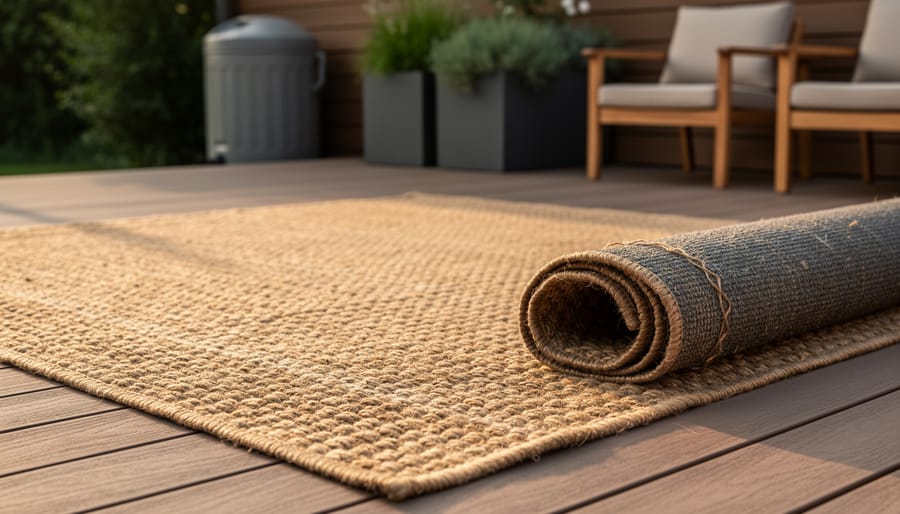
Choose rugs made from recycled plastic bottles or natural fibers like jute, sisal, or bamboo that biodegrade without leaving harmful residues in your yard. These materials withstand weather exposure while reducing landfill waste—one typical 8×10 rug diverts approximately 900 plastic bottles from oceans and waterways.
Verify third-party certifications like Global Recycled Standard (GRS) or OEKO-TEX to ensure manufacturers meet legitimate sustainability claims rather than engaging in greenwashing. Look for brands that disclose their carbon footprint and manufacturing processes, prioritizing those using solar-powered facilities or carbon-neutral shipping.
Select UV-resistant, mold-proof options specifically engineered for outdoor living spaces to maximize longevity—durability directly impacts sustainability since longer-lasting products reduce replacement frequency and waste generation. Quality sustainable rugs typically last 5-10 years outdoors compared to 2-3 years for conventional options.
Consider end-of-life recyclability before purchasing. Some manufacturers offer take-back programs that repurpose worn rugs into new products, creating a circular economy. Others provide compostable options that safely decompose in home composting systems within 1-2 years.
This guide breaks down the environmental impact of outdoor rug materials, identifies genuinely sustainable options for different outdoor settings, and provides a practical framework for making purchases that align with your environmental values without sacrificing style or functionality. You will learn to distinguish marketing claims from meaningful sustainability while creating beautiful outdoor spaces.
The Problem with Traditional Outdoor Rugs
Synthetic Materials and Microplastic Pollution
Most traditional outdoor rugs are made from polypropylene and other synthetic plastics that seem durable at first glance. But here’s the problem: these materials break down over time, releasing tiny plastic particles called microplastics into your yard and the broader environment.
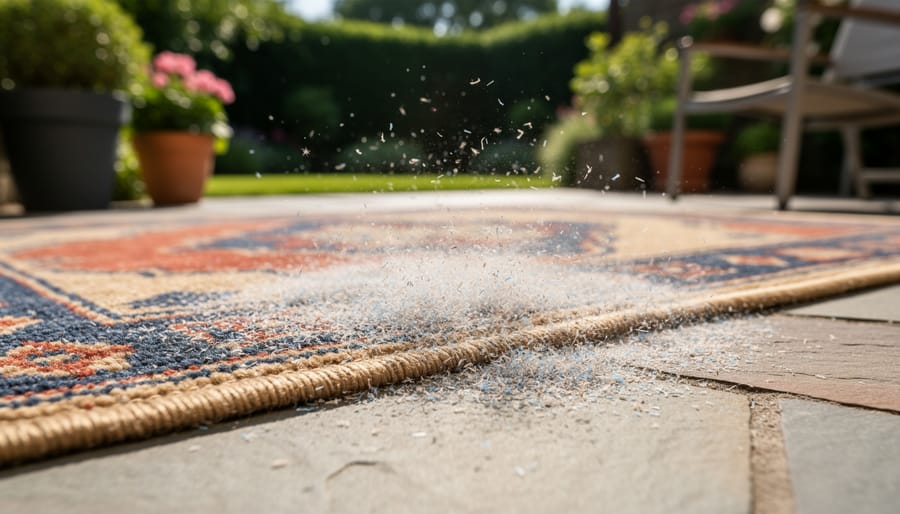
Every time it rains, wind blows, or someone walks across your synthetic outdoor rug, microscopic plastic fibers shed from the surface. These particles are so small they’re invisible to the naked eye, but they don’t disappear. Instead, they wash into storm drains, seep into soil, and eventually make their way into waterways where they harm wildlife and contaminate ecosystems.
The wear and tear from weather exposure accelerates this process. UV rays from the sun weaken plastic fibers, making them even more likely to fragment. A single polypropylene rug can shed thousands of microplastic particles throughout its lifetime, contributing to a growing pollution crisis that affects everything from marine life to drinking water supplies.
Understanding this connection between everyday products and environmental impact is the first step toward making better choices for your outdoor spaces.
Chemical Treatments and Toxic Runoff
Many conventional outdoor rugs undergo chemical treatments that pose serious environmental risks. Synthetic dyes, often containing heavy metals like chromium and lead, can seep into your garden soil when it rains, potentially contaminating groundwater and harming beneficial insects and plants. Stain-resistant and waterproof coatings frequently contain PFAS (per- and polyfluoroalkyl substances), commonly known as “forever chemicals” because they don’t break down naturally and accumulate in ecosystems.
These treatments don’t just affect the environment during the rug’s use. The manufacturing process releases toxic runoff into waterways near production facilities, impacting local communities and wildlife. When you hose down your outdoor rug or it’s exposed to rain, microscopic particles wash away into storm drains and eventually reach rivers and oceans.
To minimize this impact, look for rugs with OEKO-TEX or GOTS certifications, which guarantee the absence of harmful chemicals. Natural plant-based dyes and water-based treatments offer safer alternatives that perform well outdoors without the toxic footprint. Your outdoor space can look beautiful while keeping harmful chemicals out of the environment.
What Makes an Outdoor Rug Truly Sustainable
Eco-Friendly Materials That Actually Work Outdoors
Finding eco-friendly options that can handle sun, rain, and foot traffic doesn’t mean compromising on durability. Today’s natural fiber rugs and sustainable outdoor materials are engineered to withstand the elements while keeping your environmental footprint small.
Recycled PET bottles transformed into polypropylene fibers create some of the most weather-resistant outdoor rugs available. These materials resist fading, mold, and mildew while diverting plastic from landfills. One rug can repurpose dozens of bottles into something both practical and stylish.
Jute brings natural texture and biodegradability to covered patios and screened porches. While it needs protection from heavy moisture, jute’s renewable growing cycle and minimal processing make it a green choice for semi-protected spaces.
Natural rubber backing offers slip resistance without synthetic additives, perfect for poolside areas where safety matters. It’s harvested from rubber trees without harming them, making it a renewable resource.
Bamboo and seagrass work beautifully in dry climates or under solid roof coverage. Both grow incredibly fast without pesticides and add organic warmth to outdoor rooms. However, they’re best suited for low-moisture environments.
Organic cotton, while requiring more care outdoors, works wonderfully for seasonal use. Look for GOTS-certified options that guarantee no harmful chemicals touched the fibers during growing or processing.
The key is matching material strengths to your specific outdoor conditions. Understanding each option helps you choose rugs that truly last while supporting your sustainability goals.
Certifications Worth Looking For
When shopping for a sustainable outdoor rug, legitimate eco-certifications help you separate genuine green products from greenwashing. Look for OEKO-TEX Standard 100, which ensures your rug is free from harmful chemicals and safe for your family and pets. This certification tests for over 1,000 substances, giving you peace of mind about what you’re bringing into your outdoor space.
The Global Recycled Standard (GRS) verifies that recycled materials in your rug actually come from post-consumer waste, tracking the entire supply chain. If you’re choosing a rug made from recycled plastic bottles, GRS certification confirms those materials are genuinely recycled.
Cradle to Cradle certification takes a holistic approach, evaluating material health, material reuse, renewable energy use, water stewardship, and social fairness. It’s one of the most comprehensive standards available, rating products from Basic to Platinum levels.
For natural fiber rugs, the Global Organic Textile Standard (GOTS) guarantees organic fibers were grown without synthetic pesticides and processed using environmentally responsible methods with fair labor practices.
Don’t just take manufacturer claims at face value. Check product tags and websites for certification logos and registration numbers you can verify independently. These third-party certifications give you confidence that your sustainable outdoor rug purchase truly aligns with your environmental values.
Best Sustainable Outdoor Rug Materials for Different Spaces
Covered Patios and Porches
For covered patios and porches that shield your rug from direct rainfall, you have wonderful options that prioritize both sustainability and comfort. Organic cotton rugs bring that soft, barefoot-friendly feel perfect for lounging areas, and they’re biodegradable when their life cycle ends. Jute offers natural texture and durability while being completely renewable—it grows quickly without pesticides and actually improves soil quality. Bamboo rugs provide a sleek, modern aesthetic and exceptional strength since bamboo regenerates rapidly after harvesting. These materials work beautifully in protected spaces where they won’t face constant moisture exposure. Just remember that while your roof provides coverage, you’ll still want to bring these rugs inside during particularly humid seasons or store them when not in use. The trade-off for choosing these gentler materials is worth it—you’ll enjoy superior comfort underfoot while maintaining your commitment to environmental responsibility.
Full-Sun Decks and Poolsides
Full-sun areas like poolsides and open decks demand rugs that can handle the harshest conditions without fading or breaking down. Look for options made from UV-resistant recycled polyester or polypropylene fibers, which have been specially treated to withstand constant sun exposure while giving plastic waste a second life. These synthetic materials dry quickly after splashes and rain, making them perfect for moisture-prone areas.
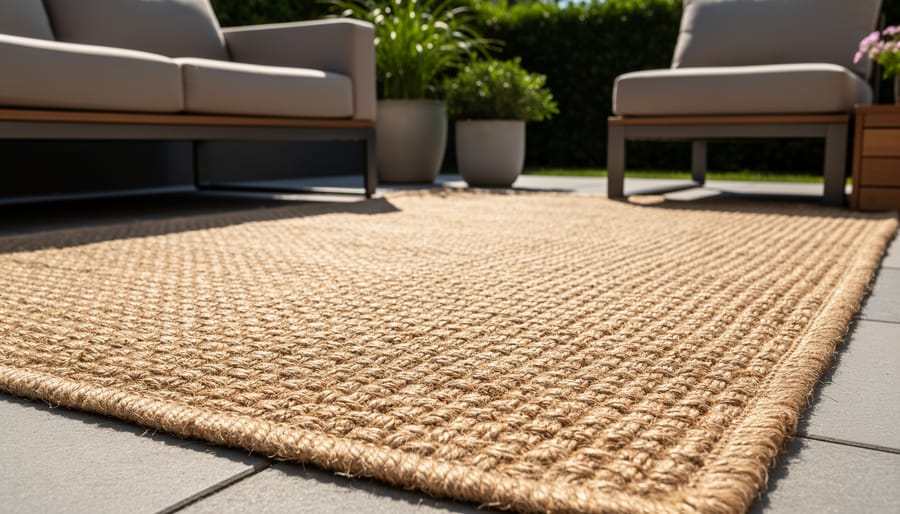
Natural fiber enthusiasts should consider solution-dyed jute or sisal rugs treated with eco-friendly UV protectants and water-resistant coatings. Unlike conventional chemical treatments, sustainable options use plant-based oils and water-based sealants that protect fibers without releasing harmful substances into your outdoor environment. These natural choices offer excellent texture and breathability while maintaining their color in direct sunlight.
For maximum durability, seek rugs with fade-resistant ratings and mildew-resistant properties achieved through sustainable processing methods. Many brands now use closed-loop dyeing systems that minimize water waste while creating vibrant colors that last season after season in full sun conditions.
High-Traffic Entryways
Your front door, back porch, and patio entrances take a beating with constant foot traffic, so you’ll want rugs that can keep up. Recycled PET rugs are champions here—they’re made from repurposed plastic bottles, resist moisture and mildew, and handle daily wear like pros. Look for tightly-woven natural fibers like sisal or jute blends that won’t unravel with repeated use. The key is density: a tight weave means less space for dirt to work its way in and less chance of fibers pulling loose. Choose low-pile options that won’t trap debris and are easy to shake out or hose down. Many recycled PET options come in neutral patterns that hide dirt well while maintaining their good looks season after season.
Garden and Landscape Pathways
For garden pathways and natural landscape areas, consider rugs made from 100% biodegradable materials like jute, coir, or seagrass. These earth-friendly options gradually break down over time, enriching your soil rather than contaminating it with synthetic fibers or microplastics.
Coir rugs work beautifully along garden paths, providing grip and texture while naturally resisting moisture and mildew. Their coarse weave allows water to drain through, preventing puddling and promoting healthy drainage. Jute offers a softer feel for stepping stone pathways or zen garden borders, decomposing within 1-2 years when left outdoors.
If you’re creating a temporary pathway for a garden event or seasonal display, untreated natural fiber runners serve perfectly. Once they’ve served their purpose, you can compost them or leave them in place to naturally integrate with your landscape. Choose options without rubber backing or synthetic dyes to ensure complete biodegradability. This approach transforms your outdoor decor into a circular system where nothing goes to waste.
Buying Guide: How to Choose Your Sustainable Outdoor Rug
Assessing Your Space and Climate
Before choosing your sustainable outdoor rug, take time to evaluate your specific space conditions. Start by observing sun exposure throughout the day. Does your patio get full sun, partial shade, or mostly covered protection? Direct sunlight can fade colors and break down certain materials faster, so UV-resistant options work best for sunny spots.
Next, consider moisture levels. Areas near pools, in humid climates, or prone to rain accumulation need quick-drying, mold-resistant materials like recycled plastic or natural jute treated for outdoor use. Check if water tends to pool in your space or if drainage is good.
Temperature swings matter too. Extreme heat can warp some materials, while freezing winters require rugs that won’t crack or deteriorate. If you experience dramatic seasonal changes, look for materials tested for temperature resilience.
Finally, think about foot traffic and usage patterns. High-traffic entryways need durable, easy-to-clean options, while decorative accent rugs in low-use corners can prioritize aesthetics. Do you have pets or children? Factor in cleanability and texture comfort. Understanding these variables helps you match the right sustainable material to your space, ensuring your investment lasts years while maintaining its eco-friendly benefits.
Balancing Sustainability with Durability
Here’s the truth: the most eco-friendly outdoor rug might need a bit more TLC than its synthetic cousin. Natural materials like jute, sisal, and bamboo are wonderfully sustainable, but they can be sensitive to constant moisture and heavy foot traffic. The good news? You don’t have to choose between your values and a rug that lasts.
Start by matching the material to your space. A covered porch? Go ahead with those natural fibers. Fully exposed patio? Look for recycled plastic options that combine sustainability with weather resistance. Many modern sustainable rugs blend natural and recycled materials, giving you durability without the guilt.
Extend any sustainable rug’s life with simple habits: shake it out weekly, bring it inside during storms, and store it properly in winter. Some manufacturers now treat natural fibers with plant-based sealants that boost weather resistance while keeping things green. When shopping, check the care instructions honestly—if maintenance feels overwhelming, choose a more resilient sustainable option. The most eco-friendly rug is ultimately the one you’ll actually use for years.
Budget-Friendly Sustainable Options
Good news: going sustainable doesn’t mean breaking the bank. You can find quality eco-friendly outdoor rugs starting around $50-$100 for smaller sizes (4×6 feet), while larger options typically range from $150-$300. Recycled plastic rugs offer the most wallet-friendly entry point, with many stylish choices under $100. Natural jute and sisal rugs also provide affordable alternatives, usually priced between $80-$200 depending on size.
Look for brands that use recycled materials or fast-growing natural fibers like bamboo and seagrass. These materials keep costs down while maintaining environmental integrity. Shopping end-of-season sales can net you premium sustainable rugs at 30-50% off. Consider flat-weave designs over hand-tufted options, as they’re generally more affordable and easier to clean outdoors. Remember, a well-made sustainable rug that lasts five years beats replacing cheap conventional rugs annually, making it the smarter investment for both your budget and the planet.
Caring for Your Sustainable Outdoor Rug
Eco-Friendly Cleaning Methods
Keep your sustainable outdoor rug clean without harsh chemicals by using simple, eco-friendly solutions you likely already have at home. Mix equal parts white vinegar and water in a spray bottle for an effective, natural cleaner that tackles dirt and odors. For tougher stains, create a paste using baking soda and water, gently scrub the affected area, then rinse thoroughly with a hose.
Regular maintenance makes a big difference. Shake out or vacuum your rug weekly to prevent dirt buildup, and always spot-clean spills immediately to avoid set-in stains. When deep cleaning is needed, use biodegradable dish soap mixed with warm water and a soft-bristled brush. Rinse completely to remove all soap residue, which can attract more dirt if left behind.
Air-dry your rug in direct sunlight, which naturally sanitizes and prevents mildew growth. Avoid power washers on delicate materials, as high pressure can damage fibers and reduce your rug’s lifespan. By choosing natural cleaning methods, you protect both your investment and the environment.
Seasonal Storage and Protection
Protecting your sustainable outdoor rug during off-season months or harsh weather ensures you’ll enjoy it for years to come. When temperatures drop or severe weather approaches, consider rolling your rug loosely and storing it in a dry, ventilated space like a garage or basement. Before storage, give it a thorough cleaning and make sure it’s completely dry to prevent mildew growth.
For year-round outdoor use, choose a covered area during winter months or invest in a breathable outdoor furniture cover that allows air circulation. Never store rugs in plastic bags, as trapped moisture can damage natural fibers and create the perfect environment for mold.
Here’s a simple DIY storage tip: Create a labeled storage system using cardboard tubes from carpet stores as cores for rolling your rugs. This prevents creases and maintains the rug’s shape. Add cedar blocks or lavender sachets to naturally deter pests without harsh chemicals.
If you live in a mild climate, regular rotation and periodic cleaning may be all you need. The key is balancing protection with proper airflow, which keeps your sustainable investment looking fresh season after season.
Integrating Sustainable Rugs Into Your Outdoor Living Design
Color and Pattern Choices for Natural Materials
Natural materials bring an organic beauty to outdoor spaces, typically featuring earth tones like beige, tan, brown, and soft grays. While these neutral hues might seem limiting, they actually create a versatile foundation that pairs beautifully with colorful cushions, planters, and outdoor furniture. Jute, sisal, and bamboo rugs naturally showcase these warm, inviting shades that won’t fade easily since they’re inherent to the fiber itself.
When selecting patterns, consider geometric designs or simple stripes that echo the natural texture of sustainable materials. These patterns complement eco-friendly decor without overwhelming your space. For a DIY approach, you can personalize a natural fiber rug using plant-based dyes from vegetables or flowers, creating custom colors while maintaining your sustainable commitment.
The beauty of working with natural materials is their ability to blend seamlessly with both modern and traditional outdoor furniture styles. Their neutral palette provides flexibility as your design preferences evolve, making them a practical long-term investment for environmentally-conscious homeowners who value both style and sustainability.
Layering and Zoning Outdoor Spaces
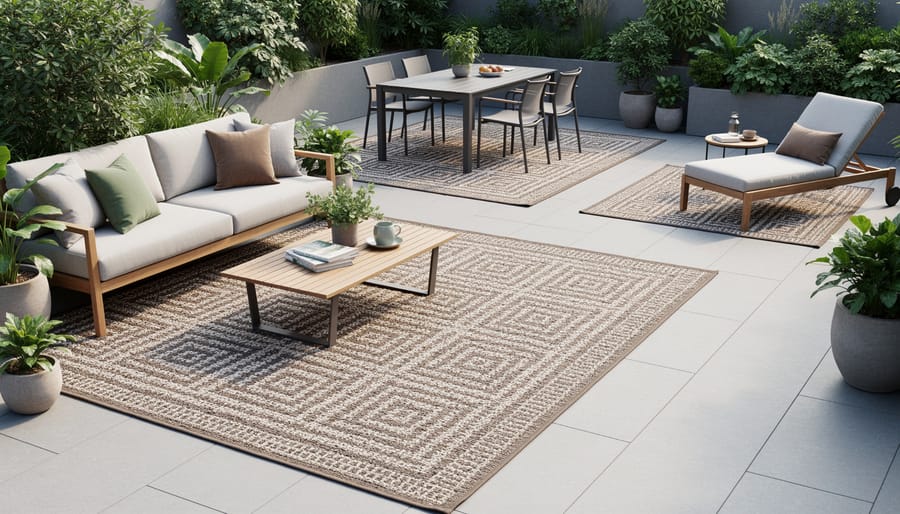
Transform your expansive patio or deck into a cohesive outdoor retreat by strategically placing sustainable rugs to create distinct activity zones. Start by anchoring your dining area with a rectangular rug that extends at least 24 inches beyond the table edges, allowing chairs to slide smoothly without catching. For conversation areas, position a larger rug under your seating arrangement, ensuring all furniture legs rest comfortably on the surface to visually group the space.
Layer smaller accent rugs in quiet corners to define cozy reading nooks or meditation spots. This zoning approach not only enhances your outdoor design but also adds visual depth while maintaining eco-friendly practices. Consider using complementary patterns and colors within the same sustainable material family to create flow between zones. The key is leaving adequate walking space between rugged areas while creating clear boundaries that guide movement naturally through your outdoor living space.
Making the switch to a sustainable outdoor rug is more than just a design choice—it’s a meaningful step toward protecting our planet while creating beautiful, functional eco-friendly outdoor spaces. As we’ve explored throughout this guide, sustainable options today don’t require you to sacrifice style, durability, or comfort. In fact, eco-conscious rugs often outperform traditional alternatives in longevity and weather resistance.
Remember the key factors when shopping: look for recycled materials like PET plastic or natural fibers such as jute and bamboo, verify certifications that back up sustainability claims, and consider the entire lifecycle from production to disposal. Think about your specific outdoor conditions—whether you need maximum water resistance for a poolside area or softer texture for a covered porch—and choose accordingly.
Your purchasing power makes a difference. Every sustainable rug you choose supports companies investing in cleaner manufacturing processes and reduces waste in landfills and oceans. Plus, you’ll enjoy a beautiful outdoor space that reflects your values and stands the test of time.
Ready to make your next outdoor rug purchase? Armed with this knowledge, you can confidently select an environmentally responsible option that perfectly suits your space, budget, and design vision. Your outdoor oasis awaits—and the planet will thank you for it.