Transform Your Backyard: Creating the Perfect Fireplace and Water Feature Oasis
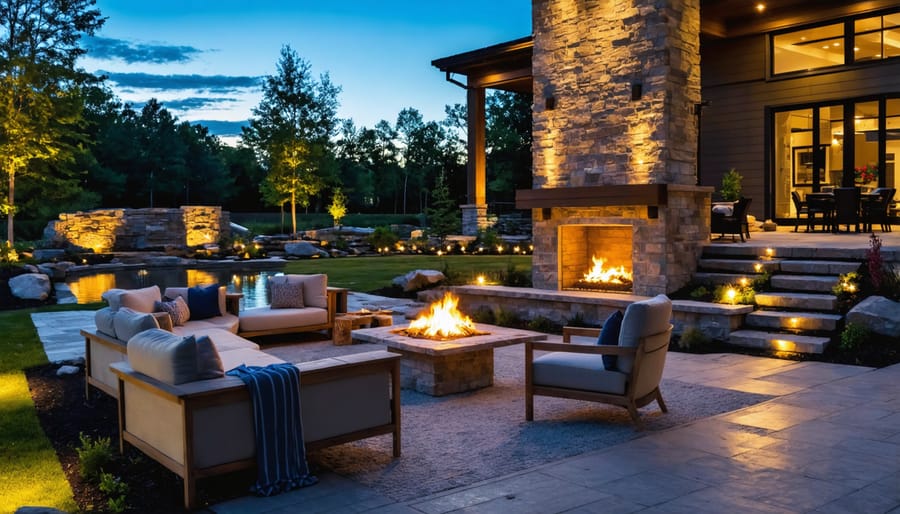
Transform your backyard into a perfect outdoor oasis by centering your design around a stunning fireplace that serves as both a focal point and gathering space. Modern outdoor fireplaces have evolved beyond simple fire pits, becoming architectural statements that seamlessly blend comfort with sophisticated design. Whether you’re hosting evening gatherings or seeking a cozy spot for year-round relaxation, an outdoor fireplace transforms your patio into an extension of your home’s living space. The magic happens when you pair your fireplace with thoughtful seating arrangements, ambient lighting, and weather-resistant materials that withstand the elements while maintaining their appeal. Today’s outdoor living spaces with fireplaces combine advanced materials, smart technology, and timeless design principles to create environments that are both practical and luxurious. From sleek contemporary designs to rustic stone masterpieces, these outdoor hearths offer endless possibilities for customization while providing the perfect backdrop for memorable moments under the open sky.
Planning Your Outdoor Living Space Layout

Space Requirements and Zoning Considerations
Before installing an outdoor fireplace, you’ll need to ensure your space meets both practical and legal requirements. Most outdoor fireplaces require a minimum of 100-150 square feet of usable space, plus additional clearance for seating and safety zones. Plan for at least 10 feet of overhead clearance and maintain a 10-foot distance from any structures or trees.
Check your local zoning laws and homeowners’ association regulations, as many areas have specific requirements for outdoor fire features. Common restrictions include minimum distances from property lines, permitted fuel types, and chimney height requirements. Some municipalities may require building permits or professional installation.
For safety and comfort, consider wind patterns in your yard when choosing the fireplace location. The smoke should naturally drift away from seating areas and neighboring properties. If you’re including water features, maintain a safe distance between them and the fireplace to prevent water spray from affecting the fire or damaging the fireplace structure.
Proper drainage is essential for both elements, so ensure your chosen location has adequate grading and appropriate utility access for gas lines or electrical connections if needed.
Creating Harmonious Fire and Water Zones
Creating a harmonious balance between fire and water features requires careful planning and thoughtful placement. For optimal visual impact, position your fireplace and water feature where they can be viewed simultaneously without competing for attention. A good rule of thumb is to maintain at least 10 feet of separation between these elements while ensuring both are visible from your primary seating area.
Consider the natural flow of your outdoor space when placing these features. Water elements work well near transition areas, such as pathways or garden borders, while fireplaces are best positioned as focal points or gathering spaces. The sound of running water should complement, not overpower, the crackling of the fire.
For safety and functionality, ensure proper drainage around water features and adequate ventilation near the fireplace. Use complementary materials like natural stone or concrete to create a cohesive look. LED lighting can enhance both elements after dark, creating stunning reflections on water surfaces while highlighting the warm glow of the fire.
Remember to account for prevailing winds when positioning both features to prevent water spray from reaching the fireplace area and smoke from interfering with water feature enjoyment.
Choosing the Perfect Outdoor Fireplace
Built-in vs. Portable Fireplaces
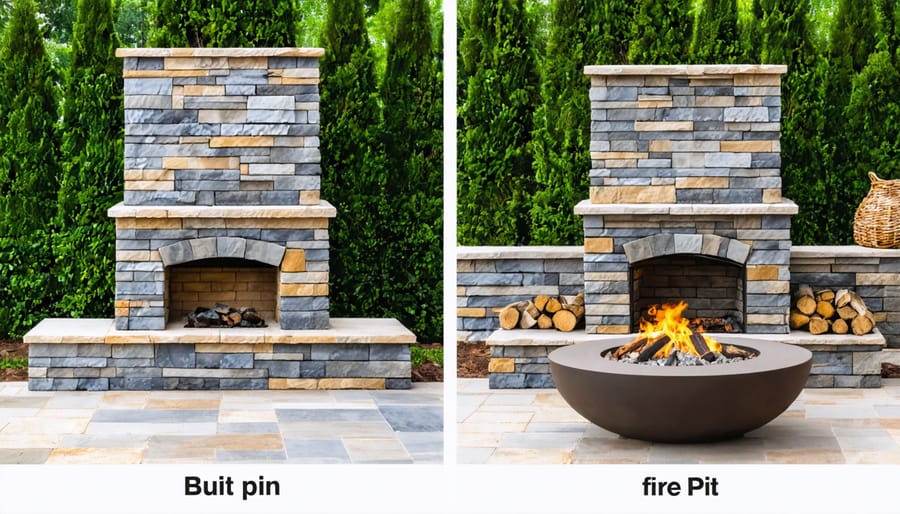
When planning your outdoor fireplace, one of the first decisions you’ll need to make is choosing between a built-in or portable option. Built-in fireplaces offer permanence and become striking architectural features that can significantly boost your property value. They’re customizable to match your home’s exterior and provide excellent durability, though they require substantial initial investment and permanent commitment to their location.
Portable fireplaces, on the other hand, offer flexibility and affordability. These units, which include fire pits, chimineas, and tabletop models, can be moved around your space as needed and stored during off-seasons. They’re perfect for smaller spaces or if you’re unsure about committing to a permanent installation. Many portable options now come with modern features like adjustable flames and smoke-reduction technology.
Consider these key factors when choosing:
Budget: Built-in fireplaces typically cost $5,000-$20,000, while portable units range from $100-$2,000
Space requirements: Built-ins need dedicated space and proper foundation; portables are more adaptable
Fuel type: Built-ins often use gas or wood, portables offer more fuel options including propane
Maintenance: Built-ins require professional servicing; portables are easier to maintain yourself
Local regulations: Some areas have restrictions on permanent structures or specific fuel types
Both options can create wonderful gathering spaces, so your choice should align with your lifestyle, budget, and long-term outdoor living goals.
Materials and Styling Options
The choice of materials for your outdoor fireplace can dramatically impact both its appearance and durability. Natural stone, such as limestone, granite, or slate, offers timeless appeal and exceptional weather resistance. Brick remains a popular choice, providing classic charm and excellent heat retention while complementing traditional home architecture. For a modern look, concrete and stucco deliver clean lines and can be customized with various colors and textures.
Metal fireplaces, particularly those crafted from stainless steel or cast iron, offer contemporary styling and exceptional durability. These options are ideal for smaller spaces or when seeking a more minimalist aesthetic. For a rustic feel, river rock or fieldstone creates an organic, natural appearance that blends seamlessly with landscaping.
Design styles range from Mediterranean-inspired with ornate details and warm earth tones to sleek contemporary designs featuring straight lines and monochromatic color schemes. Craftsman-style fireplaces incorporate detailed stonework and built-in seating, while industrial designs might showcase exposed metal and raw materials.
Consider incorporating practical elements like built-in wood storage, extended hearths for seating, or decorative screens. The firebox can be customized with fire glass, ceramic logs, or lava rocks to enhance the visual appeal. For added functionality, many homeowners opt for combination units that include pizza ovens or warming drawers, making the fireplace a true outdoor cooking and entertaining centerpiece.
Integrating Water Features
Types of Water Features
Water features add a tranquil dimension to your outdoor living space, creating a perfect balance with the warmth of your fireplace. From simple tabletop fountains to elaborate cascading waterfalls, there are numerous stunning water features that can enhance your outdoor sanctuary.
Wall fountains offer a space-saving solution that creates a striking focal point without taking up valuable floor space. These vertical features can be mounted directly onto existing walls or integrated into custom-built structures, making them particularly versatile for any size outdoor area.
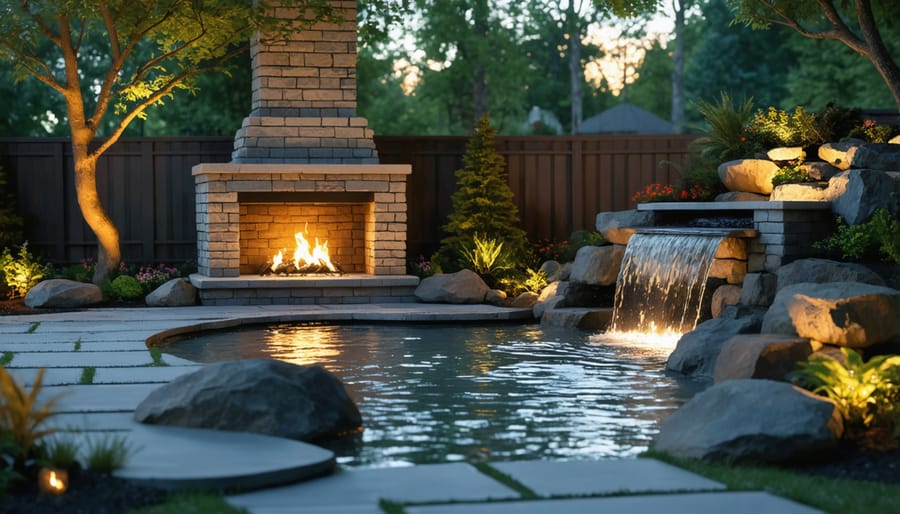
For those with more space, pond features provide a natural haven that attracts wildlife and creates a mesmerizing reflection of your fireplace at night. Consider incorporating a small bridge or stepping stones to add an interactive element to your design.
Pondless waterfalls offer the soothing sounds of rushing water without the maintenance requirements of a traditional pond. These features recirculate water through a hidden reservoir, making them both child-safe and low-maintenance.
For a modern touch, consider incorporating spillway bowls or water walls that create sheets of water, adding contemporary elegance to your outdoor living space. These features work particularly well when positioned near seating areas, where the gentle sound of flowing water can mask ambient noise and create a more intimate atmosphere.
Remember to consider the scale of your water feature in relation to your fireplace and overall space to ensure a harmonious design that doesn’t overwhelm the area.
Creating a Sensory Experience
Transform your outdoor living space into a multi-sensory retreat by strategically incorporating water features alongside your fireplace. The gentle sound of flowing water creates a soothing backdrop that perfectly complements the crackling of flames. Consider installing a cascading waterfall wall that catches the firelight’s glow, creating mesmerizing reflections during evening gatherings.
Position your water feature where it can be easily viewed from the main seating area, but ensure it’s far enough from the fireplace to create distinct zones. LED lighting beneath the water adds drama and helps define the space after dark. For maximum impact, choose water features with variable flow rates – a stronger flow for daytime entertainment and a gentler trickle for intimate evening conversations.
To enhance the auditory experience, incorporate different water movements: sheets of water for a contemporary feel, multiple tiers for a traditional cascade effect, or boulder arrangements for natural babbling sounds. Consider adding underwater speakers that can be synchronized with your outdoor entertainment system for an immersive experience.
Thoughtful plantings around both features can amplify their sensory appeal. Ornamental grasses that rustle in the breeze, fragrant herbs that release their scent when brushed against, and flowering plants that attract butterflies all contribute to creating a rich, engaging outdoor environment that delights all the senses.
Practical Considerations and Maintenance
Safety and Weather Protection
Creating a weather-ready outdoor space with a fireplace requires careful attention to both safety and protection. Install a spark screen to prevent embers from escaping, and always maintain a clear 3-foot perimeter around the fireplace free from flammable materials. Keep a fire extinguisher nearby and ensure proper ventilation to prevent smoke accumulation.
To protect your outdoor fireplace from weather damage, consider installing a dedicated cover when not in use. Choose weather-resistant materials for construction, such as stone or brick, and apply appropriate sealants to prevent moisture penetration. Regular inspection of the chimney and firebox for cracks or damage is essential, especially after severe weather events.
During winter months, drain any water features near the fireplace to prevent freeze damage, and clear snow and ice accumulation from the chimney. For gas fireplaces, ensure all connections are properly sealed and protected from the elements. Consider adding a permanent overhead structure like a pergola or partial roof to extend the lifespan of your outdoor fireplace while maintaining proper ventilation.
Seasonal Maintenance Tips
Keep your outdoor living space with fireplace looking pristine year-round with these seasonal maintenance tips. In spring, inspect your fireplace for winter damage, clean out ash and debris, and check for loose mortar or bricks. Clean your water features thoroughly, replace filters, and ensure pumps are working efficiently after winter storage.
Summer maintenance focuses on keeping water features crystal clear. Check water levels weekly, clean filters monthly, and treat water with appropriate chemicals to prevent algae growth. For the fireplace, inspect the chimney cap and clean any cobwebs or debris that may have accumulated.
Fall requires extra attention to prevent damage from falling leaves. Install mesh screens over water features and clean them regularly. Prep your fireplace for heavy use by having it professionally inspected and cleaned. Check weather stripping and covers for both features.
Winter preparation is crucial. Drain and cover water features if you live in freezing climates. For the fireplace, stock up on seasoned firewood, store it properly, and ensure your spark guard and tools are in good condition. Regular cleaning after each use will prevent creosote buildup and maintain optimal performance.
Finishing Touches
To truly elevate your outdoor fireplace space, focus on creating layers of comfort and ambiance through thoughtful finishing touches. Start with a professional outdoor lighting design that combines practical illumination with aesthetic appeal. Consider installing dimmable LED string lights overhead, path lighting for safety, and strategic spotlights to highlight architectural features and landscaping.
Arrange comfortable, weather-resistant seating in a conversational layout around the fireplace. Deep-seated sofas and chairs with plush cushions invite guests to linger, while side tables provide convenient surfaces for drinks and snacks. Add texture with outdoor throw pillows and cozy blankets for chilly evenings.
Integrate landscaping elements that complement your fireplace design. Plant evergreen shrubs for year-round structure, and incorporate fragrant herbs like lavender or rosemary near seating areas. Consider adding container gardens with seasonal flowers to introduce bursts of color and create natural privacy screens.
For functionality, include smart storage solutions like built-in benches with waterproof compartments for firewood and outdoor accessories. Install a small outdoor bar cart or serving station nearby for entertaining convenience. Weather-resistant artwork, mirrors, or wall-mounted planters can add personality to surrounding walls or fencing.
Don’t forget practical touches like a high-quality outdoor rug to define the space and add comfort underfoot, and a durable cover for your fireplace when it’s not in use. These finishing elements work together to create an inviting outdoor room that feels like a natural extension of your home.
Creating an outdoor living space with a fireplace is a transformative project that can significantly enhance your home’s value and your quality of life. By carefully considering the design elements we’ve discussed, from material selection to safety features, you can create a stunning outdoor retreat that serves as an extension of your home. Remember that proper planning is key – take time to evaluate your space, set a realistic budget, and consider how you’ll use the area throughout the year.
Whether you choose a traditional wood-burning fireplace or opt for a modern gas unit, the warmth and ambiance it provides will create countless memorable moments with family and friends. Don’t forget to incorporate comfortable seating, appropriate lighting, and weather-resistant materials to ensure your outdoor living space remains beautiful and functional for years to come.
Ready to begin your outdoor living space project? Start by sketching your ideal layout and consulting with professionals about permits and installation requirements. With proper planning and execution, you’ll soon be enjoying cozy evenings around your new outdoor fireplace, making the most of your outdoor living space in every season.