
What Is Research Peptide Terminology (and How Do You Read It)?
Research peptide terminology is the shorthand used on product listings, lab documents, and supplier pages to describe what a peptide is, how pure it is, and how it was tested. A peptide itself is just a short chain of amino acids. The jargon around it is what trips people up, and it’s learnable in an afternoon, especially when you’re comparing peptide sales with third-party testing.
If you’ve ever stared at a certificate of analysis and felt like you were reading a foreign menu, you’re in good company. Terms like purity percentage, lyophilized, batch number, and HPLC show up constantly, and each one tells you something specific. When you’re comparing sources, knowing the vocabulary is what lets you tell a clear, well-documented listing from a vague one.
This glossary keeps things plain and strictly educational. No dosing, no handling advice, no health claims, just what the words mean and how to read them. Think of it like decoding a contractor’s quote or a home inspection report: once you know the terms, the whole document gets easier. We’ll group the vocabulary into three simple clusters, then walk through a step-by-step reading routine you can repeat on any listing.
What Research Peptide Terminology Actually Means

Think of amino acids as individual beads. String a handful together and you get a peptide. String hundreds together, fold the whole thing into a complex shape, and you get a protein. In plain terms, a peptide is a short chain of amino acids, which makes it smaller and simpler than a protein.
So when you see “research peptide terminology,” it just means the vocabulary used to describe those short chains: how long they are, how pure a sample is, how it was tested, and how it’s packaged.
You’ll also see the phrase “research use” on many listings. That’s a labeling category, not a quality grade or a recommendation. It signals that an item is sold for laboratory and scientific work, and it tells you something about the setting the item belongs in.
Why does it all feel like a foreign language at first? Because listings and papers lean on abbreviations, unit shorthand, and lab-specific phrases without stopping to explain them. Nobody hands you a legend. The good news is that the vocabulary is smaller than it looks, and a handful of core terms will carry you through most of what you read.
Once the basic bead-and-string picture clicks, the rest of the glossary slots in around it.
The Core Terms Every Beginner Should Know
Building-Block Terms
Before you can read a listing with confidence, it helps to know the handful of words that sit underneath everything else. Think of these as the alphabet of the whole subject. Once they click, the longer labels start to feel a lot less intimidating.
- Amino acid
- A small molecule that acts as a single building block. Your body and labs alike use about twenty common types, each with its own name and abbreviation.
- Peptide bond
- The chemical link that joins one amino acid to the next, like a clasp between two beads on a string.
- Sequence
- The exact order of amino acids in a chain. Change the order and you get a different molecule, even if the same pieces are used.
- Residue
- One amino acid once it has been linked into a chain. When a paper mentions “residue 5,” it means the fifth bead along.
- Chain length
- How many amino acids are strung together. It’s usually written as a simple count, like “a 10-residue chain.”
The next question people ask is where “peptide” ends and “protein” begins. There’s no single hard line, but the usual rule of thumb goes like this. A peptide is a short chain, often fewer than about 50 amino acids. A polypeptide is a longer chain that may run past that mark, and the word is often used loosely for any long, unbranched strand. A protein is typically one or more polypeptides that have folded into a specific three-dimensional shape and do a particular job.
So size and structure are the clues. Short and simple usually means peptide, while long and folded usually means protein.
Product and Labeling Terms
Once you know the building blocks, the next stop is the label itself. Product pages and paperwork lean on a handful of repeat terms, and each one tells you something specific about what’s in front of you.
Here’s a quick-scan version:
- Purity percentage: The share of the material that is the intended peptide rather than leftover byproducts, so a higher number points to a cleaner sample.
- Lyophilized: Freeze-dried into a powder, a form commonly used because it stays stable on the shelf.
- Reconstitution: The word for returning a freeze-dried powder to liquid form; seeing it on a listing simply tells you the item arrives as a powder.
- Vial: The small sealed container the material comes in, usually labeled with its name and amount.
- Batch or lot number: An ID that ties your item to one specific production run, which makes tracing and comparing records possible.
- Certificate of analysis (COA): A document reporting the test results for a particular batch, including purity and identity checks.
The batch number and the COA work as a pair. Match the number printed on the vial to the number on the certificate, and you can confirm the paperwork actually describes your item rather than some other run.
Notice, too, what a label doesn’t say. A purity figure with no test method, or a COA with no batch number, leaves gaps. Spotting those gaps is half the skill of reading this vocabulary, and the next section walks through exactly how to do it.
Measurement and Testing Terms
Let’s start with units. You’ll see mg (milligram) and mcg (microgram) on almost every listing. A milligram is one-thousandth of a gram, and a microgram is one-thousandth of a milligram, so 1 mg equals 1,000 mcg. Mixing those two up is the classic beginner slip, so read the unit before the number.
Concentration describes how much of a substance sits in a given amount of liquid, usually written as mg per mL. It’s a ratio, not a total, so a small vial can have a high concentration, and a big one a low one.
Two verification terms come up constantly:
– HPLC (high-performance liquid chromatography): a lab method that separates a sample into its components so the main ingredient can be measured against everything else. This is where a purity percentage typically comes from.
– Mass spectrometry: a technique that weighs molecules very precisely, helping confirm that the thing in the vial is the thing the label says it is.
Then there’s “third-party tested,” which sounds reassuring but needs a closer look. It means an outside lab, not the seller, ran the analysis. That’s useful. It doesn’t guarantee the report matches your specific batch, that the testing was thorough, or that the lab itself is reputable. Check the batch number and the date.
How to Read a Peptide Listing or Document Step by Step
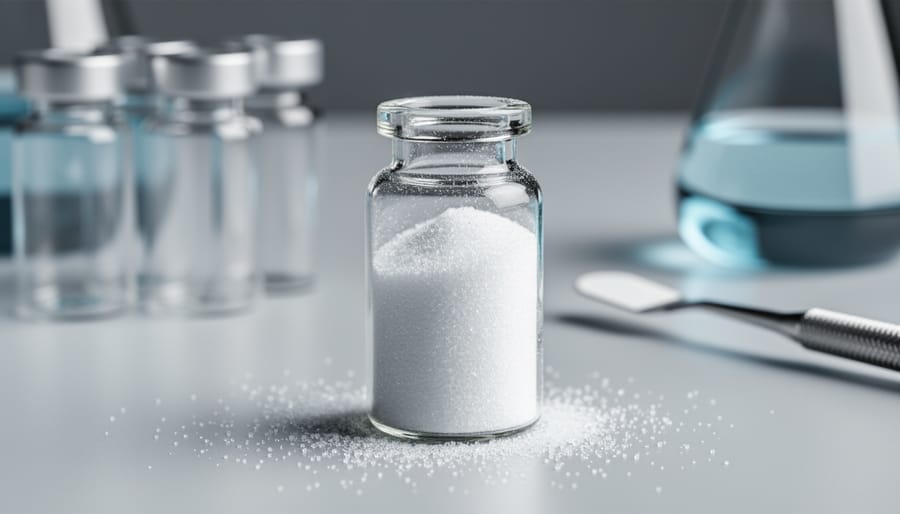
Reading a listing is a lot like inspecting a purchase before you commit. You go through it the same way every time, so nothing slips past you. Start at the top of the page or document and work down this checklist, ticking off what’s clearly stated and flagging what’s missing:
- Check that the full product name and amino acid sequence are written out, not just a nickname or abbreviation.
- Look for a batch or lot number, since that ties the item to its specific paperwork.
- Find the purity figure and see whether it says how it was measured (HPLC is the usual answer).
- Confirm there’s testing documentation, ideally a certificate of analysis that matches the batch number on the label.
- Note any storage information the seller provides, and whether the form is described as lyophilized.
Once you’ve run through the list, compare what you found against the page itself. Does the batch number on the certificate match the one on the label? Is the purity percentage backed by an actual test report, or just stated in a headline? A gap isn’t automatically a red flag, but it’s worth noting before you go any further.
Keep your notes tidy while you do this. A simple routine, like the ones in these 5S desk methods makes it easy to keep each listing’s paperwork sorted and labeled, so you can come back to it later without hunting. A clear surface and a consistent checklist turn what feels like a confusing document into something you can read in a couple of minutes.
Where This Vocabulary Shows Up: Uses and Settings

Most beginners first meet this vocabulary in three places: published research papers, supplier catalogs, and training material. Papers use the terms precisely, so you’ll see sequence, residue, and chain length in the methods section. Catalogs lean on labeling language like purity percentage, lot number, and certificate of analysis. Training handouts tend to explain a handful of terms and then assume you know the rest. Reading all three side by side is the fastest way to see how one word can shift in tone from source to source.
Here’s a small tech tip: keep a personal term list where you can actually find it. A simple spreadsheet works well, with one column for the term, one for a plain definition, and one for where you spotted it. Bookmark a trusted glossary, and save papers as searchable PDFs so you can hit Ctrl+F instead of rereading pages.
If you’re building a study corner, the basics are familiar. Clean surfaces, good lighting, and labeled, organized storage go a long way, and the same ideas behind a comfortable office environment apply. A tidy smart device setup can keep your digital notes within easy reach, too.
Common Questions About Peptide Terms
What’s the difference between a peptide and a protein?
Mostly size. A peptide is a short chain of amino acids, while a protein is a much longer chain that folds into a complex shape. There’s no single hard cutoff, so sources draw the line a little differently.
What does “for research use only” mean?
It’s a label telling you the item is sold for laboratory or scientific work, not as a product for people to take. It’s a statement about intended purpose, not a quality rating.
What does a purity percentage tell me?
It shows how much of the sample is the target compound compared with other material in the vial. It’s only as trustworthy as the test behind it, so check for a matching certificate of analysis.
Why do abbreviations vary between sources?
Labs, suppliers, and journals each developed their own shorthand over time, so the same compound can carry several names. When two listings look different, compare the full sequence or chemical name rather than the nickname.
Those four answers cover most of the early stumbling blocks. If a term still trips you up, jot it down and look it up as it appears.
A small handful of core terms goes a long way. Once you’re comfortable with the building-block words, the labeling vocabulary, and the testing terms, most listings and documents stop looking like a wall of jargon and start reading like plain information. You don’t need to memorize everything in one sitting. Pick the terms that tripped you up first, and let the rest sink in as you go.
The easiest habit is to bookmark this glossary and keep it open in a tab or notes app. When a new abbreviation shows up on a label or in a paper, add it to your own running list. Over time, that personal list becomes a quick reference that saves you from second-guessing yourself.
And if you’re still shaping the room where all this reading and organizing happens, browse the other Accent Interiors guides on setting up tidy, functional home and workspace areas. A clear space makes clear thinking easier.