70s Home Decor Is Back: How to Rock Retro Style Without Looking Dated
Transform your living space with authentic 70s design elements by mixing bold geometric patterns in earth tones with contemporary furnishings, bringing that groovy style back to modern homes without sacrificing current comfort. Install statement lighting fixtures featuring smoked glass or dramatic metalwork to create instant vintage ambiance while maintaining modern functionality. Layer shag rugs, macramé wall hangings, and rattan furniture pieces against clean-lined modern basics for a balanced aesthetic that honors both eras. Incorporate iconic 70s colors like harvest gold, avocado green, and burnt orange through easily changeable elements like throw pillows, artwork, and ceramic accessories – perfect for testing the retro waters without fully committing to permanent changes. The beauty of 70s décor lies in its versatility: these pieces work surprisingly well with today’s minimalist trends, creating spaces that feel both nostalgic and fresh. Whether you’re a dedicated vintage collector or simply looking to add character to your contemporary space, 70s design elements offer the perfect blend of statement-making style and practical livability.
Iconic 70s Color Palettes That Still Work Today
Earth Tones and Warm Neutrals
The signature color palette of 1970s interior design centered around rich earth tones that brought the natural world indoors. Warm browns, from deep chocolate to lighter tan hues, dominated living spaces and created a cozy, grounded atmosphere. These were often paired with burnt orange, a color that became synonymous with the era’s vintage charm with modern aesthetics.
Mustard yellow emerged as another defining shade, appearing on everything from shag carpets to kitchen appliances. This golden tone added warmth and personality to spaces while complementing the era’s wooden furniture and architectural elements. Terracotta and rust colors rounded out the palette, often appearing in textiles and wall coverings.
Today, these earth tones are experiencing a major revival, albeit in more subtle applications. Instead of covering entire walls in dark brown, consider using these colors as accents through throw pillows, vintage posters, or ceramic pieces. Mix mustard yellow with contemporary grays for a fresh take, or incorporate burnt orange through modern artwork and textiles. The key is balance – using these distinctive 70s colors thoughtfully while maintaining a clean, current aesthetic that doesn’t feel dated.
Bold and Psychedelic Colors
The 1970s brought an explosion of color that transformed homes into vibrant expressions of personality and freedom. Psychedelic patterns and bold contrasts that pop defined the era, with intense oranges, deep purples, and avocado greens leading the charge. These weren’t just random choices – they reflected the decade’s rebellious spirit and break from conventional design rules.
Living rooms often featured sunset orange paired with chocolate brown, while kitchens embraced the iconic harvest gold alongside forest green. The key to recreating this look today is choosing two or three dominant colors and letting them play throughout your space. Think mustard yellow curtains against purple walls, or a burnt orange sofa with emerald green throw pillows.
Geometric patterns and swirling designs added another layer of visual interest, especially in wallpapers and textiles. To incorporate this style without overwhelming your space, try starting with a single statement wall or a few carefully chosen accessories. Modern interpretations might include a vintage-inspired area rug with psychedelic patterns or throw pillows featuring bold, spiral designs. The goal is to capture the era’s energetic spirit while maintaining a balance that works for contemporary living.
Must-Have Furniture Pieces from the 70s
Conversation Pits and Sunken Living Rooms
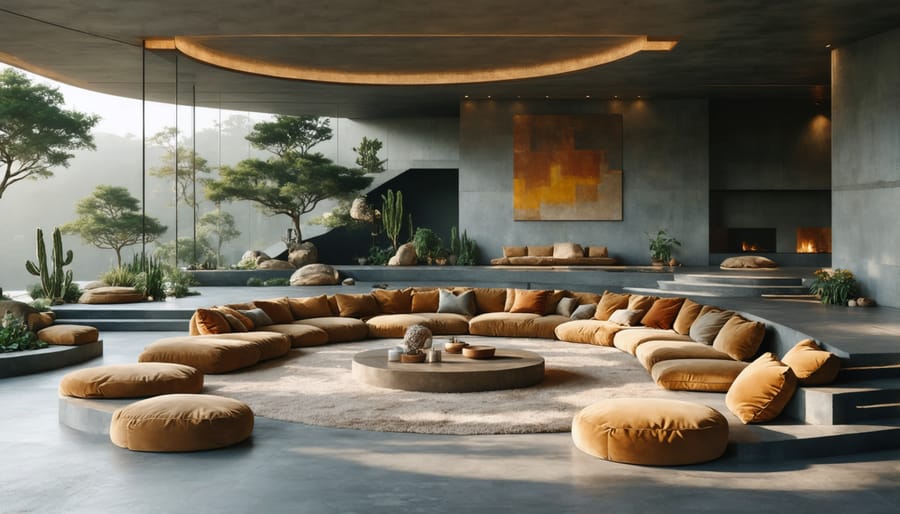
Conversation pits and sunken living rooms epitomized 1970s architectural innovation, and they’re making a stunning comeback in modern homes. To create a contemporary version, you don’t necessarily need major construction – there are clever ways to capture that iconic sunken feel while maintaining practical functionality.
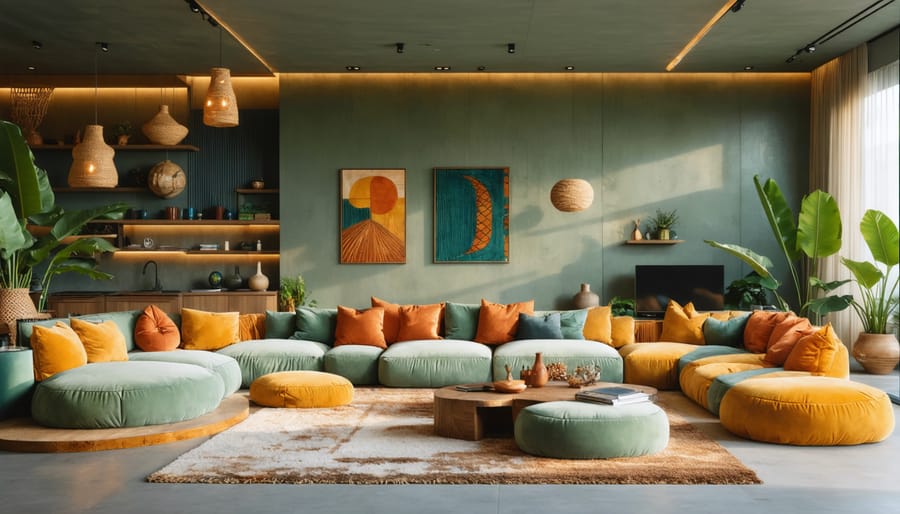
Start by defining your space with strategic furniture placement. Create a U-shaped seating arrangement using low-profile modular sofas or sectionals in rich textures like velvet or bouclé. Add chunky floor cushions and oversized pillows in earth tones or bold geometric patterns for authentic ’70s flair.
For a true sunken effect without structural changes, consider using platform decking around your seating area, creating the illusion of a lower level. Install LED strip lighting underneath for ambient glow and visual separation. Paint the surrounding walls in warm neutrals or classic ’70s colors like harvest gold or burnt orange to enhance the cozy atmosphere.
Modern technology integration is key – incorporate hidden charging stations and wireless speakers into your conversation pit design. Select coffee tables with built-in storage to maintain a clean look while accommodating contemporary needs.
For those ready to commit to construction, a genuine sunken living room should drop about 12-18 inches below the main floor level. Add wide steps around the perimeter for safety and visual interest, and consider installing plush carpeting or comfortable floor padding to encourage casual seating and lounging.
Statement Seating
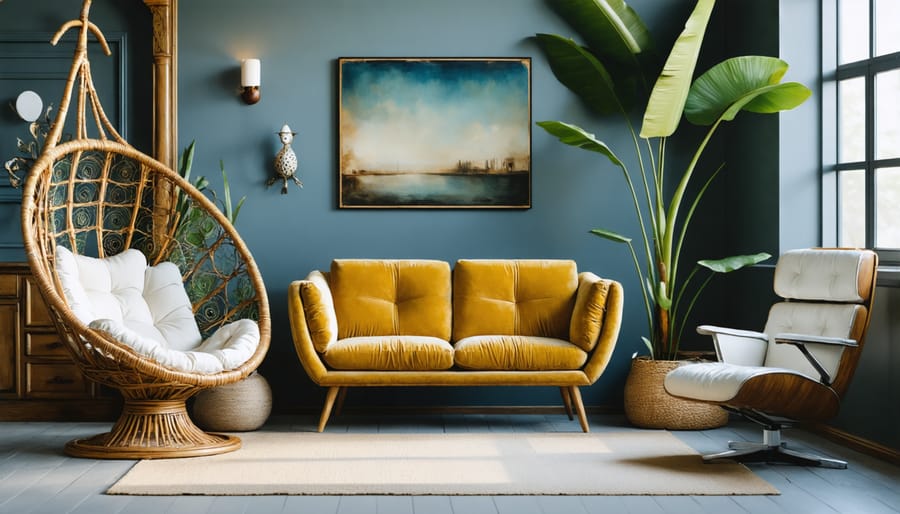
The 1970s revolutionized seating with designs that perfectly balanced comfort and dramatic style. Egg chairs, with their iconic curved silhouette and cozy cocoon-like embrace, became the ultimate statement piece in any room. These suspended or pedestal-mounted chairs weren’t just furniture; they were conversation starters that offered a unique seating experience.
Papasan chairs brought a laid-back, bohemian vibe to living spaces with their round, nest-like design. Originally featuring rattan frames with plush cushions, these versatile seats became synonymous with casual comfort and remain popular in modern boho-inspired interiors. Today’s versions often come with weather-resistant materials, making them perfect for both indoor and outdoor spaces.
Perhaps the most revolutionary seating concept of the era was modular seating. These innovative sofas could be arranged and rearranged to suit any space or social situation. Low-slung and often featuring bold geometric shapes, modular sofas typically came in earth tones or vibrant colors like orange, brown, and harvest gold. The sections could be configured into traditional layouts or broken apart for more informal seating arrangements.
To incorporate these vintage seating styles today, consider mixing one statement piece with contemporary furniture. An egg chair can serve as a reading nook in a modern living room, while a papasan chair adds casual charm to a sunroom. Modular seating remains particularly relevant, offering the flexibility modern homeowners crave while maintaining that distinctive 70s aesthetic.
Signature Materials and Textures
Wood Paneling and Rattan
Wood paneling and rattan are making a major comeback, but with a fresh, modern twist that pays homage to their 70s roots while fitting seamlessly into contemporary spaces. Instead of the dark, heavy wood paneling that dominated vintage interiors, today’s approach favors lighter finishes and strategic placement. Consider installing wood panels as an accent wall or applying whitewash techniques to existing paneling for an updated look.
Rattan furniture and accessories have evolved from their bohemian beginnings to become sophisticated statement pieces. Modern rattan pieces often feature sleeker lines and are paired with luxurious cushions in contemporary fabrics. For a subtle nod to the era, incorporate rattan pendant lights or decorative wall hangings rather than filling an entire room with the material.
DIY enthusiasts can breathe new life into vintage wood panels by sanding and applying modern stains or paint colors. Popular techniques include creating geometric patterns with wood strips or installing panels horizontally instead of vertically for a more current feel. When working with rattan, focus on pieces that combine the material with metal or glass elements for an industrial-chic vibe that bridges the decades.
Remember that less is more when incorporating these materials – a single statement piece can have more impact than an overwhelming collection of vintage items.
Shag Carpets and Textured Fabrics
Shag carpets and textured fabrics were the heart and soul of 70s interior design, and they’re making a surprising comeback in modern homes. Today’s versions offer improved durability and easier maintenance while maintaining that iconic plush feel. Modern shag carpets come in a wider range of pile heights and colors, making them more versatile for contemporary spaces. Consider incorporating a neutral-toned shag rug as an accent piece rather than wall-to-wall carpeting for a subtler nod to the era.
Textured fabrics have also evolved, with today’s manufacturers offering durable, stain-resistant versions of classic 70s patterns like geometric prints and bold florals. Velvet, bouclé, and chunky weaves are particularly popular for throw pillows and upholstery, adding depth and visual interest without overwhelming a room. For a contemporary twist, try mixing different textures in complementary colors rather than matching sets.
DIY enthusiasts can easily update vintage pieces by reupholstering chairs or creating custom throw pillows using modern performance fabrics that mimic classic 70s textures. The key is balancing these bold elements with cleaner, contemporary pieces to create a space that feels current while honoring the decade’s distinctive style. Remember, less is more when working with these statement-making textiles.
DIY 70s-Inspired Decor Projects
Macramé Wall Hangings
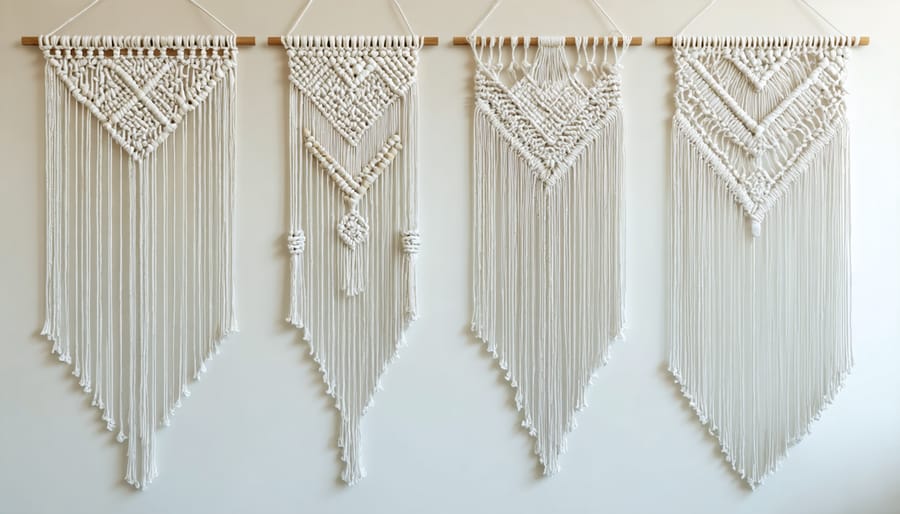
Macramé wall hangings epitomize 1970s artistic expression, and their resurgence in modern décor proves that great style never truly goes out of fashion. Today’s macramé pieces combine vintage charm with contemporary aesthetics, making them perfect statement pieces for any room.
To create your own macramé wall hanging, start with basic materials: cotton cord (4-6mm thickness works best), a wooden dowel or branch for hanging, and sharp scissors. Begin by mastering the fundamental knots: the square knot, spiral knot, and half-hitch knot. These three techniques form the foundation of most macramé patterns.
For beginners, try this simple project: Cut eight 6-foot lengths of cord and fold them in half over your dowel, creating 16 working strands. Create a row of square knots across the top, then alternate between square knots and spiral knots as you work downward. Add visual interest by incorporating wooden beads or creating negative space patterns.
Modern interpretations often feature asymmetrical designs, ombré-dyed cord, or metallic accents. Consider using natural cotton in earth tones for an authentic 70s feel, or opt for contemporary colors like blush pink or sage green to blend with current design trends.
Display your macramé piece above a credenza, headboard, or in an empty corner to create a focal point. For added impact, layer multiple pieces of varying sizes and patterns, or combine with other 70s-inspired elements like hanging plants and woven wall baskets.
Remember that while vintage macramé often featured complex patterns, today’s aesthetic leans toward simpler, more minimalist designs that complement rather than overwhelm your space.
Geometric Wall Art
Geometric patterns were a hallmark of 70s interior design, and you can easily transform your space with art inspired by this iconic era. Creating your own geometric wall art is both budget-friendly and deeply satisfying. Start with large wooden panels or canvas boards as your base. You’ll need painter’s tape, acrylic paints in classic 70s colors like harvest gold, avocado green, and burnt orange, and basic painting supplies.
Begin by planning your design on paper. Popular 70s patterns included diamonds, hexagons, and sunburst designs. Use a pencil and ruler to lightly sketch your pattern on the board. Apply painter’s tape along the lines to create clean edges. When painting, work in sections, allowing each color to dry completely before removing the tape and adding new sections.
For an authentic 70s look, incorporate graduated color schemes within your geometric shapes. Try creating an ombré effect by mixing your chosen color with white or a complementary shade. Consider adding metallic accents in gold or copper for that extra vintage touch.
Don’t feel constrained by traditional square or rectangular frames. Experiment with uniquely shaped panels, like octagons or elongated diamonds, to create a statement piece. Group several smaller geometric pieces together for a gallery wall effect, or go bold with one large-scale artwork that commands attention.
Remember to seal your finished piece with a clear protective coating to ensure its longevity. This DIY approach lets you customize colors and patterns to complement your existing decor while maintaining that distinctive 70s vibe.
The 70s era brought us some of the most distinctive and memorable design elements in home decor history, and today’s revival of these vintage styles proves their lasting appeal. Whether you’re going all-in with a funky conversation pit or simply adding touches of retro charm, the key is finding the right balance between nostalgic elements and contemporary sensibilities.
Remember that successful 70s-inspired decor doesn’t mean recreating an exact time capsule. Instead, focus on incorporating signature elements like warm earth tones, bold geometric patterns, and natural materials in ways that complement your existing space. Start small with vintage-inspired throw pillows or macramé wall hangings before committing to larger pieces like a sunburst mirror or shag carpet.
For the best results, mix authentic vintage finds with modern pieces that echo 70s design principles. Don’t be afraid to experiment with color combinations and textures – the 70s were all about personal expression and creativity. Keep sustainability in mind by shopping at thrift stores, flea markets, and estate sales for genuine vintage pieces that add character to your space.
The most important takeaway is to have fun with your design choices while staying true to your personal style. The 70s aesthetic is versatile enough to work in any modern home when approached thoughtfully and with attention to detail. By carefully selecting key pieces and incorporating them gradually, you can create a space that honors the past while remaining firmly grounded in the present.