How Global Design Traditions Transform Modern Indoor-Outdoor Spaces
Transform your living spaces into cultural sanctuaries by blending authentic design elements with modern functionality. Create seamless indoor-outdoor flow using traditional architectural principles like Japanese engawa corridors or Mediterranean courtyard layouts. Layer culturally significant textiles, artwork, and artifacts throughout connected spaces while maintaining visual harmony through consistent color palettes and natural materials.
Cultural interior design transcends mere decoration – it weaves stories, heritage, and lived experiences into the fabric of your home. Traditional wisdom often emphasizes the sacred relationship between interior spaces and nature, offering timeless solutions for modern living. By thoughtfully incorporating elements from specific cultural traditions, from Moroccan riad-inspired water features to Scandinavian hygge concepts, spaces become both personally meaningful and universally welcoming.
Whether reimagining a compact urban apartment or designing an expansive family home, cultural design principles provide a framework for creating spaces that honor tradition while embracing contemporary lifestyle needs. These spaces don’t just look authentic – they function as living connections to heritage, fostering a deeper sense of belonging and purpose in our daily environments.
Cultural Design Elements That Bridge Indoor and Outdoor Spaces
Japanese Engawa Design
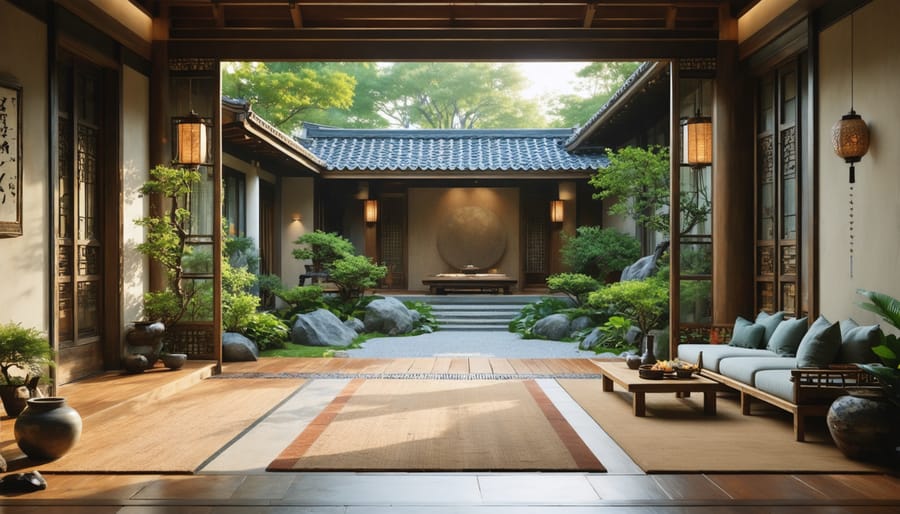
The engawa, a traditional Japanese architectural feature, represents the perfect balance between indoor and outdoor living spaces. This covered wooden walkway typically runs along the exterior of Japanese homes, creating a seamless transition between the interior rooms and the garden. Think of it as nature’s front row seat – a place where you can sit and admire your garden while staying protected from the elements.
Modern homes are increasingly adopting this versatile design concept. By incorporating an engawa-inspired space, you can create a multi-functional area that serves as a casual seating spot, a peaceful meditation zone, or even a mini greenhouse for your plants. The key is to use natural materials like wood flooring and sliding glass doors to maintain that authentic Japanese feel.
To create your own engawa-inspired space, consider installing a raised wooden platform along your home’s exterior, protected by extended roof eaves. Add comfortable floor cushions and subtle lighting to transform it into a cozy retreat. This transitional space not only adds value to your home but also provides a unique way to experience both indoor comfort and outdoor beauty throughout the changing seasons.

Mediterranean Courtyard Living
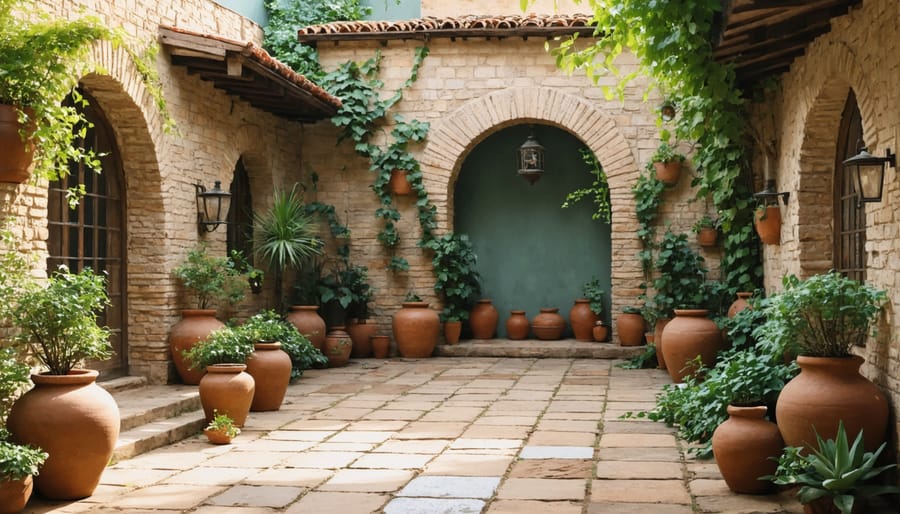
Mediterranean courtyard living embodies the art of seamless indoor-outdoor flow, drawing inspiration from ancient Roman villas and Greek island homes. This design philosophy centers around a central courtyard that serves as the heart of the home, creating a natural transition between interior spaces and the outdoors.
Key elements include large archways and floor-to-ceiling windows that frame garden views and welcome natural light. Traditional materials like terracotta tiles, whitewashed walls, and natural stone help maintain temperature control while creating an authentic Mediterranean feel. Water features, such as fountains or reflecting pools, add both visual appeal and soothing ambient sounds.
The courtyard itself typically features drought-resistant plants, climbing vines, and potted citrus trees, creating a microclimate that helps cool surrounding rooms. Covered pergolas and strategically placed awnings provide shade during hot summer months while allowing winter sun to warm the space.
To enhance the connection, use consistent flooring materials from inside to out, and incorporate traditional Mediterranean patterns in both spaces through tiles, textiles, and architectural details. This creates a cohesive design that celebrates the region’s indoor-outdoor lifestyle.
Natural Materials and Cultural Authenticity
Indigenous Material Selection
Indigenous materials have long been the cornerstone of authentic cultural design, offering both aesthetic appeal and practical benefits. From adobe and rammed earth to bamboo and local stone, these sustainable building materials tell stories of regional identity while creating spaces that feel genuinely connected to their environment.
Today’s designers are finding innovative ways to incorporate these traditional materials into modern spaces. Clay-based walls, for instance, not only add textural interest but also help regulate indoor temperature naturally. Bamboo, traditionally used in Asian architecture, has found new life as flooring, wall panels, and decorative screens, offering both sustainability and style.
Local stone varieties bring authenticity to both interior and exterior spaces, creating a seamless flow between indoor and outdoor areas. Whether it’s slate from local quarries or river rocks collected nearby, these materials ground your space in its geographical context.
Natural fibers like sisal, jute, and local grasses can be woven into rugs, wall coverings, and decorative elements, adding layers of texture while honoring traditional craftsmanship. These materials age beautifully and often improve in character over time, creating spaces that feel both timeless and lived-in.
When selecting indigenous materials, consider their durability, maintenance requirements, and how they’ll interact with your local climate. The goal is to create spaces that respect traditional building practices while meeting modern comfort and functionality needs.
Sustainable Cultural Design
Sustainable cultural design marries traditional aesthetics with eco-conscious practices, creating spaces that honor heritage while protecting our planet. Start by sourcing local, sustainable materials that reflect cultural elements – for instance, using bamboo flooring in Asian-inspired designs or recycled terra cotta tiles in Mediterranean spaces. These choices not only reduce transportation emissions but also support local artisans and maintain authentic cultural connections.
Consider incorporating traditional architectural elements that naturally promote sustainability. Japanese shoji screens, for example, maximize natural light while providing privacy, reducing energy consumption. Similarly, Middle Eastern mashrabiya patterns can be recreated using sustainable materials to provide natural ventilation and shade.
When selecting furniture and décor, opt for pieces made from reclaimed materials or those created using traditional craft techniques with eco-friendly materials. Many artisans now combine ancestral knowledge with sustainable practices, creating pieces that tell cultural stories while minimizing environmental impact.
Embrace biophilic design elements that align with cultural traditions, such as indoor courtyard gardens in Spanish colonial styles or vertical green walls inspired by tropical Asian architecture. These features improve air quality and create connections to nature that are deeply rooted in cultural practices.
Remember to use non-toxic, natural finishes and paints that complement cultural color palettes. Many traditional pigments can be sourced from sustainable alternatives, allowing you to maintain authenticity while reducing harmful chemicals in your space.
Creating Cultural Flow in Modern Spaces
Furniture Placement and Flow
The arrangement of furniture in cultural interior design goes beyond mere functionality – it’s a reflection of cultural values and spatial philosophies. In many Asian cultures, furniture placement follows principles of flow and energy movement, similar to biophilic design principles, where natural pathways and sight lines are preserved.
Start by identifying the room’s focal point, which varies by culture. In Japanese design, it might be a tokonoma alcove, while Mediterranean spaces often center around communal gathering areas. Leave ample walking space between furniture pieces – many Eastern cultures prefer more open floor area than Western designs.
Consider the cultural significance of seating arrangements. Middle Eastern and North African spaces typically feature low-level seating along walls, promoting conversation and community. In contrast, Chinese furniture arrangement often emphasizes symmetry and balance, with pieces placed in pairs.
For multifunction spaces, use movable furniture pieces that can be easily rearranged for different activities. This flexibility is particularly important in smaller urban homes where spaces need to adapt to various uses throughout the day.
Remember to position furniture to take advantage of natural light and views, creating a harmonious connection between indoor and outdoor spaces that many cultures value deeply.
Color and Pattern Integration
Colors and patterns are powerful tools in cultural interior design, serving as visual storytellers that connect spaces to specific traditions and heritage. When incorporating culturally significant elements, start by researching the meanings behind different colors in your chosen culture. For example, red symbolizes luck and prosperity in Chinese design, while blues and whites often represent spirituality in Mediterranean spaces.
Layer patterns thoughtfully by following the rule of thirds: choose one dominant pattern that reflects your cultural inspiration, accompanied by two complementary designs at different scales. Traditional motifs like Moroccan geometric patterns, Indian paisley, or Japanese wave designs can be integrated through wallpaper, textiles, or tile work.
Consider the visual weight of cultural patterns and balance them with solid colors. A bold Turkish kilim pattern on throw pillows might be balanced with neutral walls, while intricate Japanese-inspired wallpaper could be complemented by simple, monochromatic furniture pieces.
Remember to respect cultural authenticity while avoiding stereotypical or superficial applications. Mix traditional elements with contemporary pieces to create a space that feels both respectful and lived-in rather than museum-like. This approach ensures your design remains fresh while honoring its cultural roots.
DIY Cultural Design Projects
Creating a Zen Garden Connection
Creating a serene Zen garden space in your home offers a perfect blend of cultural authenticity and sustainable garden design. Start by selecting a quiet corner, either indoors near a window or in a protected outdoor area. The key elements you’ll need include fine gravel or sand, a few carefully chosen rocks, and minimal plant life.
Begin by laying a moisture-barrier if installing indoors, then add a 2-inch layer of sand or fine gravel. Choose a wooden rake with thin tines to create the signature ripple patterns that represent flowing water. Select three main rocks of varying sizes to create your focal point – this follows the traditional Japanese principle of triangular arrangement.
For plants, stick to moss and small bamboo, which require minimal maintenance and perfectly capture the Zen aesthetic. Add a simple bamboo water feature or stone lantern for authentic ambiance. Keep the space clutter-free and minimal – remember, in Zen design, less is truly more.
Frame your garden with simple wooden borders or contemporary metal edging to contain the sand. Consider adding a small wooden bench or meditation cushion nearby to create a dedicated space for reflection. The beauty of a Zen garden lies in its simplicity and the calming effect it brings to your home’s overall design.

Moroccan-Inspired Outdoor Living Area
Transform your outdoor space into a vibrant Moroccan oasis by incorporating authentic design elements and comfortable seating arrangements. Start with a foundation of rich, warm colors like deep blues, burnt oranges, and golden yellows. Layer plush floor cushions and low-sitting poufs around a traditional brass or copper table to create an intimate seating area perfect for gatherings.
Install weatherproof fabric curtains in geometric patterns to provide shade and privacy while adding visual interest. Choose outdoor-rated textiles featuring traditional Moroccan motifs like quatrefoils and arabesques for pillows and cushion covers. Add authenticity with hand-painted ceramic tiles along walls or as table tops, selecting patterns that complement your color scheme.
Lighting plays a crucial role in creating ambiance. Hang traditional pierced metal lanterns at varying heights, and scatter LED-powered moroccan lamps throughout the space for evening entertaining. Install string lights overhead to create a magical canopy effect after sunset.
Complete the atmosphere with potted plants native to Morocco, such as citrus trees, palm plants, and fragrant herbs like mint and rosemary. Add architectural elements like arched doorways or screens featuring intricate cutout patterns. For the finishing touch, incorporate a small water feature – the gentle sound of flowing water is quintessentially Moroccan and adds a cooling effect to your outdoor sanctuary.
Remember to choose weather-resistant materials that can withstand outdoor conditions while maintaining the authentic look of traditional Moroccan design.
Cultural interior design offers a unique opportunity to create spaces that tell stories, honor traditions, and celebrate diversity while maintaining a modern, livable environment. By thoughtfully incorporating cultural elements into your home, you’re not just decorating – you’re creating meaningful connections and preserving heritage through design.
Remember that successful cultural interior design isn’t about recreating a museum display or following strict rules. Instead, it’s about finding authentic ways to blend cultural elements with your personal style and practical needs. Whether you choose to start small with decorative accessories or embark on a complete room transformation, the key is to maintain respect for the cultural elements you’re incorporating while creating a space that feels genuine and comfortable.
Consider starting with one room or a specific design element that speaks to you. Perhaps begin with traditional textiles as throw pillows, incorporate ancestral artwork, or experiment with color schemes inspired by your chosen culture. As your confidence grows, you can gradually expand your cultural design elements throughout your home.
The beauty of cultural interior design lies in its ability to create unique, personality-filled spaces that go beyond trends. By embracing these design principles, you’re not just creating a beautiful home – you’re crafting an environment that celebrates cultural heritage while meeting modern lifestyle needs. Take the first step today, and watch as your space transforms into a meaningful reflection of the cultures that inspire you.