
Why Zigbee Smart Devices Make Your Home Automation Dreams Real
Transform your living space with Zigbee smart devices – the cornerstone of modern smart home automation that delivers reliable, energy-efficient control without the complexity of traditional systems. Unlike Wi-Fi devices that can strain your network, Zigbee creates a robust mesh network where each device strengthens the overall connection, ensuring seamless operation even with dozens of connected gadgets. This proven technology powers everything from smart bulbs and switches to sensors and thermostats, all working together through a single hub that speaks their common language.
For homeowners ready to upgrade their living spaces, Zigbee offers the perfect balance of sophistication and simplicity. Its low power consumption extends battery life in wireless devices for months or even years, while military-grade encryption keeps your home network secure from intrusion. Whether you’re starting with a single smart bulb or planning a whole-home transformation, Zigbee’s universal compatibility with major brands like Philips Hue, Samsung SmartThings, and Amazon Echo makes it the ideal foundation for a truly connected home.
What Makes Zigbee Different from Other Smart Home Technologies
The Power of Mesh Networking
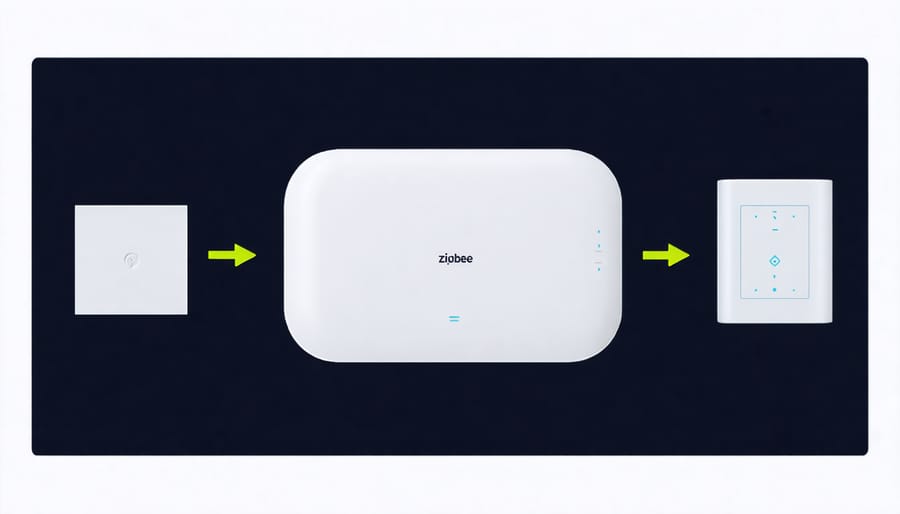
One of Zigbee’s most impressive features is its mesh networking capability, which creates a web-like network of connected devices that work together to extend range and boost reliability. Unlike traditional hub-to-device connections, each Zigbee device acts as a relay point, passing signals from one device to another until reaching its destination.
Think of it like a game of pass-the-parcel: if one path is blocked, the signal simply finds another route through the network. This means that adding more Zigbee devices actually strengthens your entire smart home network. Even if one device fails, the others maintain their connections through alternative paths.
This mesh structure also solves the common problem of weak signals in distant rooms or around obstacles. Instead of relying on a single hub to reach every corner of your home, each powered Zigbee device extends the network’s reach. A smart plug in your hallway, for instance, can help your kitchen light communicate with a motion sensor in your basement, ensuring seamless operation throughout your home.
The best part? This all happens automatically, with no technical setup required from you.

Battery Life That Actually Lasts
One of the biggest advantages of Zigbee smart devices is their impressive battery life, which can last anywhere from several months to several years, depending on the device type and usage. This extended battery performance is possible because Zigbee technology was specifically designed to be energy-efficient, using minimal power during operation and standby modes.
Unlike WiFi-powered devices that constantly maintain high-bandwidth connections, Zigbee devices communicate in short, efficient bursts and can remain in sleep mode most of the time. For example, a Zigbee motion sensor might only wake up when it detects movement, while a smart door lock primarily activates during open/close operations.
This energy efficiency translates to real convenience in your smart home setup. You won’t need to constantly replace batteries in your sensors, remotes, or other battery-powered devices. Many users report changing batteries in their Zigbee devices only once every 1-2 years, with some devices lasting even longer. This makes Zigbee devices particularly practical for hard-to-reach locations like ceiling-mounted sensors or outdoor monitoring equipment, where frequent battery changes would be inconvenient.

Essential Zigbee Devices for Your Smart Home
Smart Lighting Solutions
Transforming your home with smart lighting solutions has never been easier, thanks to Zigbee technology. These innovative smart home devices offer seamless control and incredible flexibility for your lighting needs.
Zigbee-compatible smart bulbs come in various options, from simple white bulbs to full-color models that can create millions of different hues. Popular brands like Philips Hue and IKEA TRÅDFRI offer reliable performance and excellent compatibility with most home automation systems.
Smart switches are another fantastic addition, allowing you to control traditional light fixtures without replacing existing bulbs. These switches can be operated manually, through voice commands, or via smartphone apps, making them perfect for both everyday use and creating automated schedules.
For more complex setups, lighting controllers act as central hubs, managing multiple lights and creating coordinated scenes. You can easily program morning routines, movie night settings, or security lighting patterns that make your home both more comfortable and secure.
Security and Sensors
Security devices are among the most popular Zigbee smart home products, offering reliable protection and seamless integration with your home automation system. Motion sensors can detect movement in specific areas, triggering alerts or activating connected devices like cameras or lights. These sensors are particularly effective in hallways, entryways, and outdoor spaces, providing an extra layer of security when you’re away.
Door and window sensors are essential components of any smart security setup. These compact devices alert you whenever a door or window is opened or closed, helping you monitor access points throughout your home. Many models also include temperature sensors, which can help detect potential fire hazards or climate control issues.
For comprehensive security, Zigbee-enabled cameras and smart locks work together with these sensors to create a robust security network. The beauty of using Zigbee devices for security is their reliability and low power consumption – most sensors can operate for months or even years on a single battery. Plus, because Zigbee creates a mesh network, your security devices help strengthen the overall connectivity of your smart home system, ensuring reliable performance even in larger homes or buildings.
Climate Control and Comfort
Zigbee-enabled climate control devices bring precision and efficiency to your home’s temperature management. Smart thermostats like the Ecobee SmartThermostat and Zen Thermostat integrate seamlessly with your Zigbee network, allowing you to create sophisticated heating and cooling schedules that adapt to your lifestyle.
Environmental sensors play a crucial role in maintaining optimal comfort levels throughout your home. These compact devices monitor temperature, humidity, and air quality in different rooms, providing real-time data to your smart thermostat. This enables more accurate temperature control and helps eliminate hot or cold spots in your living spaces.
Many Zigbee climate control systems also feature occupancy detection, automatically adjusting settings when rooms are empty to save energy. You can easily monitor and adjust your home’s climate from your smartphone or integrate these devices with voice assistants for hands-free control.
For optimal performance, consider placing temperature sensors in frequently used rooms and areas with significant temperature variations. Most Zigbee thermostats support multiple sensors, creating a comprehensive climate control network that ensures consistent comfort while maximizing energy efficiency. The system’s low power consumption and reliable mesh network connectivity make it an excellent choice for whole-home climate management.
Setting Up Your First Zigbee Network
Choosing the Right Hub
Selecting the right Zigbee hub is crucial as it serves as the brain of your smart home system. Popular options include the Samsung SmartThings Hub, Amazon Echo devices with built-in hubs, and the Philips Hue Bridge. Each offers unique features that cater to different needs and preferences.
The Samsung SmartThings Hub stands out for its versatility, supporting multiple protocols beyond Zigbee and offering extensive third-party device compatibility. It’s an excellent choice for users planning to expand their smart home ecosystem over time.
Amazon’s Echo devices with built-in Zigbee hubs, like the Echo 4th generation and Echo Show 10, provide a convenient all-in-one solution. They combine smart speaker functionality with hub capabilities, making them perfect for those just starting their smart home journey.
The Philips Hue Bridge, while primarily designed for Hue lighting products, works well with other Zigbee devices and offers robust lighting automation features. It’s particularly suitable for users focusing on smart lighting solutions.
When choosing a hub, consider factors like:
– Device compatibility
– User interface simplicity
– Local processing capabilities
– Automation features
– Price point
– Future expansion possibilities
Remember that your hub choice will influence which devices you can add to your network later, so it’s worth taking time to research and select one that aligns with your long-term smart home goals.
Pairing and Placement Tips
Getting your Zigbee devices up and running smoothly starts with proper pairing and placement. First, ensure your Zigbee hub is centrally located in your home and away from large metal objects or thick walls that could interfere with signals. Position it at least 3 feet away from WiFi routers to minimize interference.
When pairing new devices, start with those closest to the hub and work your way outward. Put your hub in pairing mode, then activate the device according to its manual – usually by pressing a button or inserting batteries. Wait for confirmation before moving to the next device.
For optimal coverage, place Zigbee devices within 30-60 feet of each other indoors. Remember that each powered device acts as a signal repeater, strengthening your network. Strategic placement of plugs or light bulbs can help bridge gaps between more distant devices.
If you’re experiencing connection issues, try these quick fixes:
– Relocate devices closer to the hub or other Zigbee devices
– Remove physical obstacles between devices
– Check for battery levels in battery-powered devices
– Restart your hub if multiple devices are disconnecting
For larger homes, consider starting with a few plug-in devices to create a strong foundation before adding battery-powered sensors in more remote locations. This approach ensures reliable connectivity throughout your space while minimizing troubleshooting later on.
Common Zigbee Challenges (And How to Solve Them)
Connection Issues Solved
Having trouble with your Zigbee devices? Don’t worry – most connection issues have simple solutions. If your device won’t pair, start by ensuring it’s within 30 feet of your hub during the initial setup. Walls and large metal objects can interfere with signals, so try moving devices closer together temporarily during pairing.
When devices drop offline unexpectedly, first check if they need new batteries. Low power is often the culprit behind connection problems. Next, verify that your hub’s firmware is up to date, as outdated software can cause connectivity issues. If problems persist, try performing a network reset on your hub – this refreshes all connections and often resolves stubborn pairing problems.
For devices that seem sluggish or unresponsive, consider their placement in your network. Zigbee creates a mesh network, where devices relay signals to each other. Adding a powered Zigbee device (like a smart plug) between distant sensors can significantly improve reliability. Also, keep your hub centrally located in your home for optimal coverage.
If you’re experiencing interference, check for nearby Wi-Fi routers operating on the same channel. Changing your Zigbee channel in your hub’s settings can help reduce conflicts and improve stability. Remember to reboot both your hub and problem devices as a first troubleshooting step – sometimes the simplest solution is the most effective.
Compatibility and Integration
One of the greatest advantages of Zigbee smart devices is their excellent compatibility across different brands and platforms. Most Zigbee devices work seamlessly with popular smart home hubs like Samsung SmartThings, Amazon Echo (with built-in hub), and Hubitat. This interoperability means you can mix and match smart home appliances from various manufacturers without worrying about compatibility issues.
Many major brands, including Philips Hue, IKEA TRÅDFRI, and Aqara, use Zigbee technology in their products. This means you can start with one brand’s ecosystem and gradually expand your smart home setup with devices from other manufacturers. The Zigbee Alliance (now called the Connectivity Standards Alliance) ensures that certified products maintain consistent communication standards.
When setting up your Zigbee network, remember that you’ll need a compatible hub or controller to manage your devices. Some smart speakers and displays now come with built-in Zigbee hubs, making it easier than ever to start your smart home journey. Additionally, Zigbee devices create a mesh network, where each powered device acts as a signal repeater, strengthening the overall network connectivity and reliability throughout your home.
Before purchasing any Zigbee device, check its compatibility with your existing hub and confirm whether it requires any additional bridge or controller for full functionality.
Zigbee smart devices offer an exciting path to creating a more connected and efficient home environment. With their reliable mesh networking, extensive device compatibility, and energy-efficient operation, these devices represent an excellent choice for both beginners and advanced smart home enthusiasts. Whether you’re starting with a simple smart bulb setup or planning a comprehensive home automation system, Zigbee’s proven technology and growing ecosystem of products provide the flexibility and functionality you need.
To get started, consider beginning with a compatible hub and a few basic devices like smart bulbs or plugs. As your comfort level grows, you can gradually expand your system by adding more sophisticated devices such as sensors, switches, and security components. Remember to check device compatibility with your chosen hub and take advantage of the many resources available for setup guidance and troubleshooting.
The future of smart home technology is here, and Zigbee is leading the way toward more intuitive and connected living spaces.