Transform Your Home: Seamless Indoor-Outdoor Living Made Simple
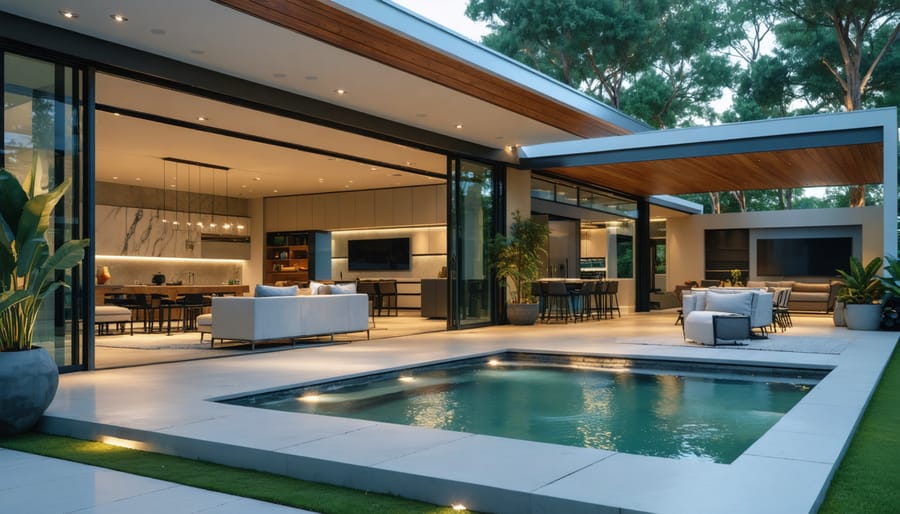
Transform your living space by designing for seamless indoor-outdoor flow through strategic architectural choices and thoughtful space planning. Install floor-to-ceiling sliding glass doors to eliminate visual barriers and create an uninterrupted sight line between interior rooms and outdoor living areas. Position indoor and outdoor furniture to establish natural pathways that guide movement between spaces, while selecting weather-resistant materials and consistent color palettes that visually connect both environments. Incorporate transitional elements like covered patios, pergolas, or sunrooms that serve as buffer zones between fully enclosed and open-air spaces, effectively blending the boundaries between indoors and out. Modern technology integration, including smart lighting systems and climate control solutions, ensures comfort and functionality across integrated spaces while maintaining the natural harmony between your home’s interior and exterior environments.
This unified approach to design transforms traditional spatial boundaries into fluid, multi-functional areas that enhance both daily living and entertaining possibilities, making your home feel more spacious, connected, and in tune with its surroundings.
Creating Visual Flow Between Spaces
Consistent Materials and Colors
Creating a cohesive look between indoor and outdoor spaces starts with selecting durable materials for integrated spaces that work harmoniously together. Begin by choosing materials that can withstand both interior and exterior conditions while maintaining their appearance. Natural stone, concrete, and weather-resistant woods are excellent choices that create visual flow and stand up to environmental challenges.
Color plays a crucial role in integration design. Select a primary color palette that works seamlessly across both spaces, typically drawing inspiration from nature. Earth tones, warm neutrals, and soft greens create an organic transition, while bold accent colors can be used to add visual interest and define specific areas.
Consider using similar flooring materials or coordinating patterns to guide the eye from inside to outside. For example, if you have wooden floors inside, choose decking with a similar tone and grain pattern. For walls and surfaces, maintain consistency by using complementary textures and finishes throughout both spaces.
Remember to factor in how materials and colors appear in different lighting conditions. What looks perfect during bright daylight might appear different under evening artificial light. Test your material and color choices under various lighting conditions before making final decisions. This attention to detail ensures your integrated space maintains its cohesive appearance throughout the day and seasons.

Strategic Window and Door Placement
The strategic placement of windows and doors is crucial for creating a seamless indoor-outdoor connection while maintaining comfort and privacy. Start by mapping the sun’s path across your property to maximize natural light throughout the day. South-facing windows typically provide the most consistent daylight, while east-facing windows offer energizing morning light, perfect for kitchens and breakfast nooks.
Consider installing floor-to-ceiling windows or sliding glass doors in main living areas to create dramatic views and enhance the feeling of space. For privacy without sacrificing light, opt for clerestory windows – high horizontal windows that let in light while maintaining wall space below for furniture placement.
When positioning doors, align them with interior traffic patterns to create natural flow between spaces. French doors or bi-fold doors can transform an entire wall into an opening, effectively blurring the boundary between inside and out. For areas requiring more privacy, like bathrooms or bedrooms, consider transom windows or strategically placed smaller windows that capture views of treetops or sky.
Smart window treatments can provide flexibility in controlling light and privacy. Motorized blinds or electrochromic glass can be adjusted throughout the day to manage heat gain and glare while maintaining views. Remember to balance the desire for openness with energy efficiency by using double-pane or low-E glass in larger window installations.
Functional Design Elements
Weather-Resistant Furniture Solutions
When creating seamless indoor-outdoor spaces, selecting the right furniture is crucial for both functionality and longevity. Start by choosing materials specifically designed to withstand various weather conditions. Teak, aluminum, and high-quality synthetic wicker are excellent options that combine durability with style. These materials resist moisture, UV damage, and temperature fluctuations while maintaining their appearance.
For cushions and upholstery, opt for solution-dyed acrylic fabrics like Sunbrella, which offer superior fade resistance and water repellency. These materials dry quickly and resist mold and mildew, making them perfect for transitional spaces that experience both indoor and outdoor conditions.
Consider multifunctional pieces that can adapt to different settings. Modular furniture sets allow you to reconfigure layouts based on your needs, while stackable chairs and folding tables provide flexibility for storage during extreme weather. Look for pieces with powder-coated finishes or marine-grade hardware to prevent rust and corrosion.
Don’t forget about storage solutions. Weather-resistant deck boxes or outdoor cabinets can protect cushions and smaller items when not in use. For areas partially exposed to the elements, choose furniture with built-in drainage features or elevated feet to prevent water accumulation.
Remember to balance durability with comfort. Modern weather-resistant materials can match the comfort of indoor furniture while standing up to outdoor challenges, ensuring your transitional space remains inviting year-round.
Climate Control Strategies
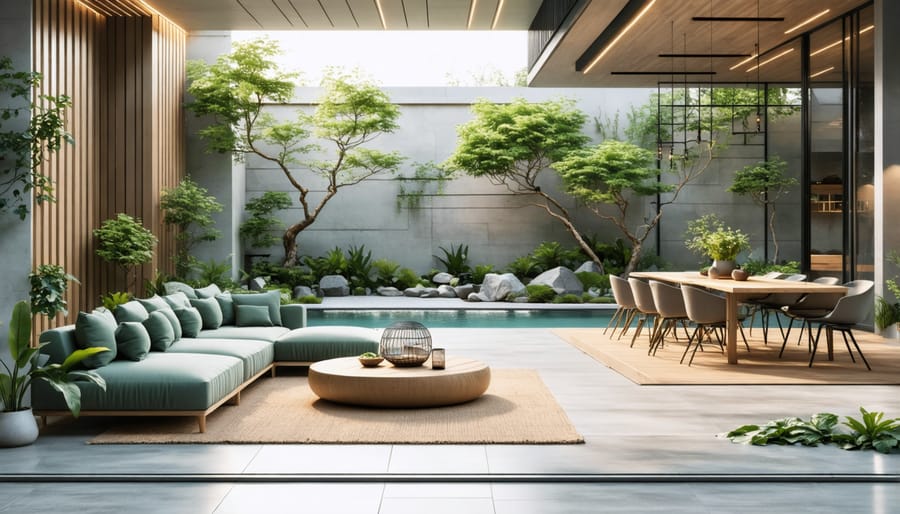
Maintaining comfortable temperatures in integrated spaces requires thoughtful planning and strategic implementation. The key is creating a balanced environment that works year-round, regardless of whether your doors and windows are open or closed.
Start by considering natural climate control methods. Strategic placement of trees and pergolas can provide shade during hot summer months while allowing warming sunlight during winter. Retractable awnings offer flexible sun protection, and you can adjust them based on seasonal needs.
For temperature management, consider installing ceiling fans in covered outdoor areas and transitional spaces. These create gentle air movement and help maintain comfort without significant energy costs. In colder regions, infrared heaters mounted on walls or ceilings can provide targeted warmth for outdoor living spaces.
Modern climate control technology offers sophisticated solutions for integrated spaces. Zoned HVAC systems allow you to control different areas independently, preventing energy waste while maintaining comfort. Smart thermostats can automatically adjust settings based on indoor-outdoor temperature differences and your usage patterns.
Don’t overlook the role of materials in temperature regulation. Use heat-resistant flooring in sun-exposed areas and consider installing double-paned glass doors and windows with good insulation properties. For outdoor spaces, choose furniture and materials that can withstand temperature fluctuations while maintaining comfort.
Remember that good ventilation is crucial. Installing screen doors or retractable screens allows fresh air flow while keeping insects out during warmer months.
Lighting Design Integration
Lighting plays a crucial role in creating seamless transitions between indoor and outdoor spaces. By implementing professional lighting design techniques, you can establish a cohesive atmosphere that flows naturally from your interior to your exterior areas.
Start by analyzing your natural light sources and identifying key focal points in both spaces. Use similar color temperatures throughout to maintain visual consistency – warm white lighting (2700-3000K) creates an inviting ambiance that works well in both environments. Layer your lighting with a combination of ambient, task, and accent fixtures to achieve depth and functionality.
For indoor areas adjacent to outdoor spaces, consider installing dimmer switches to adjust light levels throughout the day. Use similar fixture styles or finishes to reinforce the connection between spaces. Outdoor lighting should complement your interior scheme while being weather-resistant and properly rated for exterior use.
Smart lighting systems can help coordinate your indoor-outdoor lighting seamlessly. Program scenes that activate both spaces simultaneously, creating perfect ambiance for entertaining or relaxing. Don’t forget about pathway lighting to ensure safe navigation between areas, and use uplighting on architectural features or landscaping to create visual interest that can be enjoyed from both inside and out.
Remember to consider light pollution and neighbor privacy when planning outdoor lighting. Using directed fixtures and motion sensors can help manage light levels appropriately while maintaining the integrated design aesthetic.

Smart Technology Integration
Automated Systems
Modern automated systems have revolutionized how we integrate indoor and outdoor spaces, making them more comfortable and convenient than ever before. Smart lighting systems can create seamless ambiance transitions, automatically adjusting brightness levels from interior rooms to outdoor patios as day turns to night. Motion sensors can trigger subtle pathway lighting, ensuring safe navigation while maintaining the aesthetic appeal of your integrated spaces.
Temperature management becomes effortless with smart climate control systems that monitor both indoor and outdoor conditions. These systems can automatically adjust HVAC settings and motorized shade positions to maintain optimal comfort while maximizing energy efficiency. Many of these eco-friendly smart home solutions can be controlled through smartphone apps, allowing you to adjust settings even when you’re away.
Security integration is another key benefit of automated systems. Smart cameras and motion sensors can monitor both interior and exterior spaces, while automated door locks and lighting schedules create a comprehensive security envelope around your property. Connected doorbell cameras let you see and communicate with visitors whether you’re in the garden or away from home.
The beauty of these automated systems lies in their ability to work together seamlessly. Scene settings can coordinate multiple functions simultaneously – dimming lights, adjusting temperature, and securing entry points – all with a single command or pre-set schedule.
Entertainment Solutions
Modern entertainment systems have revolutionized how we enjoy audio and visual experiences across our living spaces. By thoughtfully integrating speakers, screens, and smart controls, you can create a seamless entertainment environment that flows naturally between indoor and outdoor areas.
Start by planning your audio setup with multi-zone capabilities. Weather-resistant outdoor speakers can be strategically placed in garden beds, mounted under eaves, or disguised as landscape features. These can be synchronized with your indoor sound system, allowing music to follow you as you move between spaces. Consider installing in-ceiling speakers for a clean look that doesn’t compromise sound quality.
For visual entertainment, retractable screens or weatherproof TVs offer flexible solutions for outdoor viewing. Mount them in covered areas like patios or pergolas, and pair them with automated blinds or awnings to control glare. Smart home integration lets you manage everything from a single device – adjust volume, switch inputs, or control ambient lighting with just a tap.
Cable management is crucial for a polished look. Plan your wiring routes early, using weatherproof conduits for outdoor runs and discrete channels for indoor-outdoor transitions. Consider adding a dedicated outdoor media cabinet to house components, ensuring it’s properly ventilated and protected from the elements.
Remember to include adequate Wi-Fi coverage in your outdoor spaces to support streaming services and smart device control. A mesh network system can help eliminate dead zones and ensure consistent connectivity throughout your integrated entertainment areas.
Maintenance and Longevity
Maintaining integrated spaces requires a thoughtful approach to ensure their longevity and continued functionality. Start by establishing a regular maintenance schedule that includes cleaning both indoor and outdoor areas consistently. Pay special attention to transition points, such as threshold seals and weatherstripping, which often experience the most wear and tear.
For flooring materials, apply appropriate sealants annually to protect against moisture and UV damage. This is particularly important for natural materials like wood and stone that extend from indoor to outdoor spaces. Clean gutters and drainage systems regularly to prevent water damage that could affect your integrated spaces.
Consider implementing smart home technology to monitor environmental conditions. Automated sensors can alert you to moisture issues or temperature fluctuations that might affect your integrated spaces. This proactive approach helps prevent costly repairs down the line.
Choose materials known for their durability and weather resistance. While initial costs might be higher, quality materials like composite decking, marine-grade hardware, and UV-resistant fabrics will save money in the long run through reduced maintenance needs.
Inspect moving parts like sliding doors, bifold systems, and retractable screens twice yearly. Lubricate tracks and hinges, and check weatherproofing components for signs of wear. Address any issues promptly to prevent them from becoming major problems.
During seasonal transitions, adjust your maintenance routine accordingly. In fall, ensure proper drainage and protection from falling leaves. In spring, check for any winter damage and refresh protective coatings. This seasonal approach helps maintain the seamless flow between spaces while protecting your investment for years to come.
Creating a seamless integration between indoor and outdoor spaces is more than just a design trend – it’s a lifestyle enhancement that can transform how you live and interact with your home. By following the principles we’ve discussed, from choosing the right materials and lighting to implementing smart technology solutions, you can create a harmonious flow that makes your space feel larger, more inviting, and more functional.
Remember that successful integration doesn’t happen by accident. It requires thoughtful planning, attention to detail, and a clear vision of how you want to use your space. Whether you’re starting with a simple patio makeover or planning a complete home renovation, begin with the basics: establish your goals, consider your climate, and choose materials that complement both indoor and outdoor areas.
Don’t be afraid to start small and expand your project over time. Even minor changes, like adding similar flooring materials or installing matching lighting fixtures, can make a significant impact on the overall feel of your space. The key is to maintain consistency while creating practical, beautiful areas that truly enhance your lifestyle.
Now that you have the knowledge and tools, it’s time to start planning your own integration project. Your perfect indoor-outdoor living space awaits!