Blockchain Makes Your Smart Home Truly Secure (Here’s How)
Imagine your smart home devices working together with the unbreakable security of a digital fortress. That’s exactly what blockchain technology brings to IoT security – a revolutionary approach that’s transforming how we protect our connected homes. By combining decentralized blockchain networks with everyday smart devices, homeowners can now create tamper-proof security systems that defend against cyber threats while maintaining complete control over their data.
The marriage of blockchain and IoT addresses the most pressing security concerns in modern smart homes: data privacy, device authentication, and unauthorized access. Unlike traditional centralized systems where a single breach can compromise your entire network, blockchain creates an encrypted, distributed network of trust. Each smart device transaction – whether it’s your doorbell camera recording movement or your thermostat adjusting temperature – is recorded in an immutable ledger that hackers can’t alter.
For homeowners investing in smart technology, blockchain IoT security isn’t just another tech buzzword – it’s becoming as essential as deadbolts and alarm systems. As our homes grow smarter, the need for robust security solutions grows stronger, and blockchain technology offers a practical, reliable answer to this modern challenge.
Why Traditional Smart Home Security Falls Short

Common Security Threats to Smart Homes
As smart homes become increasingly connected, they face several notable security challenges that every homeowner should be aware of. The most common threats include unauthorized access to smart devices, data breaches that expose personal information, and potential hijacking of home automation systems. These smart home privacy concerns can lead to serious consequences if left unaddressed.
Device manipulation is a particular worry, where hackers might gain control of security cameras, smart locks, or thermostats. This could result in privacy violations, unauthorized entry, or even manipulation of your home’s environment. Network vulnerabilities can also expose your entire smart home system to attacks, especially when devices aren’t properly secured or regularly updated.
Another significant threat is man-in-the-middle attacks, where criminals intercept communications between your devices and control hub. This can lead to stolen passwords, compromised personal data, and unauthorized access to your home automation systems. Additionally, weak or default passwords on smart devices create easy entry points for cybercriminals, making it crucial to implement strong security measures from the start.
Limitations of Current Security Solutions
Traditional security measures fall short when it comes to protecting today’s interconnected smart home devices. Password protection and basic encryption, while useful, simply can’t keep up with the increasing sophistication of cyber threats targeting IoT devices. These conventional methods often create a single point of failure – if one device is compromised, your entire network becomes vulnerable.
Another significant limitation is the centralized nature of current security solutions. When all your smart home data passes through a single server or cloud service, it creates an attractive target for hackers. Plus, if that central system goes down, you could lose access to all your connected devices.
Standard security protocols also struggle with device authentication and updates. Many smart home devices lack proper verification methods, making it difficult to ensure that only authorized devices connect to your network. The manual update process for security patches across multiple devices is time-consuming and often overlooked by homeowners.
Storage capacity and processing power limitations of IoT devices further complicate traditional security implementation, often resulting in compromised protection measures that leave your smart home vulnerable.
How Blockchain Transforms Smart Home Security
Decentralized Device Authentication
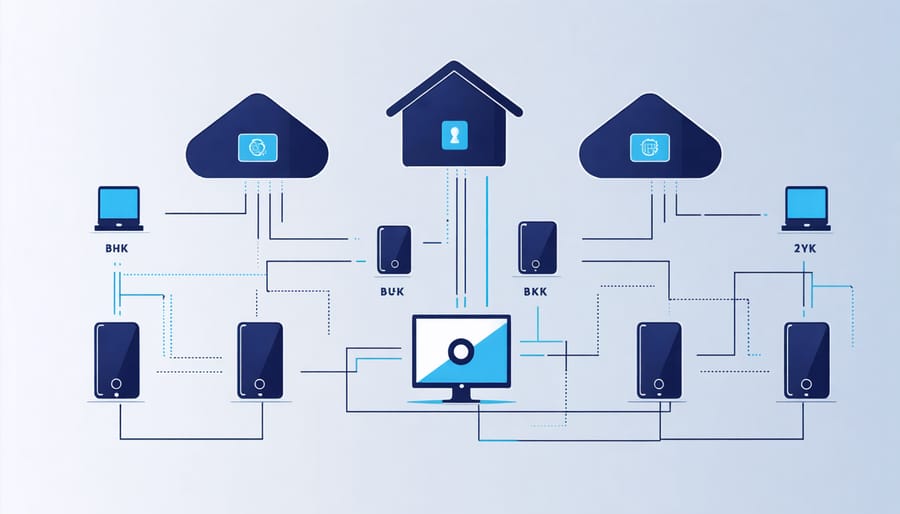
In the world of smart homes, device authentication is crucial for maintaining security. Blockchain technology transforms this process by creating a secure, decentralized network where each smart device has its own unique digital identity. Think of it as a digital passport that can’t be forged or tampered with.
When you add a new smart device to your home network, blockchain verification ensures it’s genuine and authorized to connect. This process uses advanced security protocols to create an unbreakable chain of trust between your devices.
Here’s how it works in your smart home: Each device receives a unique cryptographic key pair – a public key that others can see and a private key that stays secret. When devices communicate, they use these keys to verify each other’s identity, much like checking ID cards at a secure facility. The blockchain maintains a permanent record of these verified devices and their interactions, making it nearly impossible for unauthorized devices to sneak into your network.
The beauty of this system is its self-managing nature. Once set up, your smart home devices automatically authenticate each other without the need for a central authority. This means faster, more reliable connections and reduced risk of unauthorized access. If a device starts behaving suspiciously, the blockchain network can quickly identify and isolate it, protecting your entire smart home ecosystem.
For homeowners, this translates to peace of mind knowing that every device in their smart home network is genuine and secure, from security cameras to smart thermostats.
Encrypted Data Storage and Sharing
When it comes to protecting your smart home data, blockchain technology offers a game-changing approach to secure storage and sharing. Think of blockchain as a super-secure digital vault that keeps all your smart home information safe while giving you complete control over who can access it.
Instead of storing your sensitive data on a single server that could be hacked, blockchain spreads it across multiple locations in encrypted chunks. This means that even if someone tried to break in, they’d only get meaningless pieces of encrypted information. It’s like having your valuables split into parts and stored in different high-security safes around the world.
For homeowners with multiple smart devices, blockchain makes sharing data between devices safer and more reliable. When your smart thermostat needs to communicate with your security system, or your lighting controls need to sync with your smart blinds, blockchain ensures these conversations happen securely and privately.
What’s particularly great for homeowners is the ability to share specific data with service providers without exposing everything. Need to give your HVAC maintenance company access to your thermostat data? With blockchain, you can grant temporary, limited access while keeping other smart home information private. This selective sharing capability puts you in complete control of your home’s digital footprint.
The system also keeps an unchangeable record of who accessed what and when, making it easier to track any suspicious activity. For smart home enthusiasts, this means peace of mind knowing that your home’s data is not just secure, but also traceable and accountable.
Setting Up Blockchain Security in Your Smart Home
Compatible Devices and Systems
Today’s blockchain-enabled IoT security solutions work seamlessly with a wide range of smart home devices, making smart device integration more secure than ever. Popular compatible devices include smart locks from brands like Yale and August, which can now incorporate blockchain verification for enhanced access control. Security cameras from manufacturers such as Arlo and Nest can benefit from blockchain-secured video storage and authentication.
Smart thermostats, including models from Ecobee and Honeywell, can safely communicate temperature data and automation schedules through blockchain networks. Lighting systems from Philips Hue and LIFX can integrate with blockchain platforms to prevent unauthorized access to your home’s lighting controls.
Most modern smart home hubs, including Samsung SmartThings and Amazon Echo, are compatible with blockchain security protocols. These hubs serve as central control points, managing the secure communication between various devices. Smart doorbell systems from Ring and Eufy can utilize blockchain technology to protect video feeds and visitor data.
For whole-home protection, smart alarm systems from ADT and SimpliSafe can be enhanced with blockchain security features. Even everyday appliances like smart refrigerators and washing machines from LG and Samsung can benefit from blockchain-secured operations and data protection.
The best part is that most of these devices require minimal technical knowledge to set up with blockchain security. Many manufacturers are now including blockchain compatibility as a standard feature, making it easier than ever to create a secure smart home environment.
Installation and Configuration Tips
Setting up blockchain security for your IoT devices doesn’t have to be complicated. Here’s a straightforward guide to get you started:
First, assess your current smart home setup and check for device compatibility solutions before implementation. Start by installing a blockchain-enabled gateway device, which acts as the central hub for your IoT security system.
Connect your smart devices to the gateway using these steps:
1. Download your chosen blockchain platform’s mobile app
2. Create a secure digital wallet
3. Register each IoT device on the blockchain network
4. Generate unique digital certificates for device authentication
5. Configure your security preferences through the app
For optimal performance, ensure your internet connection is stable and set up a dedicated Wi-Fi network for your IoT devices. This creates an additional security layer and helps manage network traffic more effectively.
Important configuration tips:
– Enable automatic updates for all devices
– Set strong passwords and change them regularly
– Configure two-factor authentication where available
– Back up your digital certificates and store them securely
– Monitor device activity through the dashboard regularly
Remember to test your setup by:
– Verifying all devices are properly connected
– Checking that data transactions are being recorded
– Confirming automated security responses work as intended
– Testing backup systems and recovery procedures
Start with a small number of devices and gradually expand your network as you become more comfortable with the system. This approach helps you maintain control and ensure everything works smoothly as you scale up your smart home security.
Future-Proofing Your Smart Home Security
As smart home technology continues to evolve, future-proofing your security system becomes increasingly important. Blockchain integration offers a solid foundation for long-term protection, adapting to new threats while maintaining reliable performance. The decentralized nature of blockchain means your smart home security will become more robust over time, not less.
One emerging trend is the adoption of self-executing smart contracts for automated security responses. These contracts can manage everything from access permissions to emergency protocols without human intervention, making your home security both more efficient and more reliable. As more devices become blockchain-compatible, your existing setup will seamlessly integrate with new technology.
Looking ahead, we’re seeing the development of AI-powered security features that work alongside blockchain systems. These innovations will enable your smart home to learn from security events and adapt its responses accordingly, all while maintaining the tamper-proof record-keeping that blockchain provides.
The long-term benefits are substantial: reduced maintenance costs, improved interoperability between devices, and enhanced protection against evolving cyber threats. By investing in blockchain-secured IoT devices today, you’re essentially creating a security framework that can grow and adapt with future technological advances.
For optimal future-proofing, consider choosing devices and systems that offer regular firmware updates and support for emerging blockchain protocols. This approach ensures your smart home security remains cutting-edge for years to come.
As we’ve explored, blockchain technology offers a game-changing approach to securing your smart home IoT devices. By implementing these solutions, you can create a more robust and trustworthy connected home environment that protects your family’s privacy and safety. The decentralized nature of blockchain, combined with its transparent yet secure structure, makes it an ideal choice for managing device authentication and data protection in your smart home setup. Remember, while the technology might seem complex, getting started is easier than you might think. Start small by implementing blockchain security for your most critical devices first, then gradually expand your protected network. The future of smart home security is here, and blockchain technology is leading the way toward safer, more reliable connected homes for everyone.