3-Way Lighting Made Simple: Transform Your Room’s Ambiance Instantly
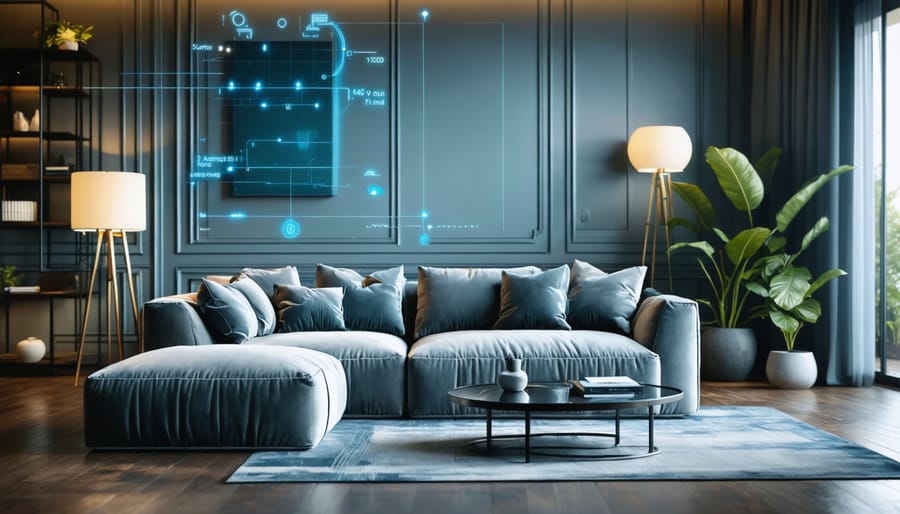
Master three-way lighting to transform your room’s lighting design with precision and elegance. These versatile fixtures revolutionize space functionality by offering multiple brightness levels from a single switch, perfect for creating ambiance in living rooms, bedrooms, or home offices. Install three-way switches at room entrances and strategic locations to control lighting from multiple points, eliminating the frustration of crossing dark spaces to reach a switch. Modern three-way lighting systems now integrate seamlessly with smart home technology, allowing voice control and automated scheduling while maintaining the classic functionality that makes them a cornerstone of thoughtful home design. Whether retrofitting an existing space or planning new construction, understanding three-way lighting opens up possibilities for both practical convenience and sophisticated atmosphere control.
What Makes 3-Way Lighting Special?
The Magic of Multiple Light Levels
Three-way lighting transforms a single fixture into a versatile illumination source with multiple brightness levels. Typically offering low, medium, and high settings, these fixtures adapt to various activities and times of day. The low setting creates perfect ambient lighting for evening relaxation or watching TV, while the medium setting provides balanced illumination for casual activities like reading or dining. The high setting delivers maximum brightness ideal for detailed tasks, cleaning, or when natural light is limited.
This flexibility makes three-way lighting particularly valuable in multi-purpose spaces like living rooms and home offices, where lighting needs change throughout the day. For example, you might use the high setting while working on crafts in the afternoon, switch to medium for family gatherings in the evening, and dim to low for a cozy movie night. The ability to adjust brightness without installing multiple fixtures or complex dimming systems makes three-way lighting both practical and energy-efficient, allowing you to use only the amount of light you need.

Energy Savings and Convenience
Three-way lighting offers significant advantages when it comes to both energy savings and daily convenience. By providing multiple brightness levels, these fixtures allow you to use only the amount of light needed for specific activities, making them an excellent addition to your energy-efficient home solutions. Instead of running a bright bulb at full power when you only need ambient lighting, you can switch to a lower setting, reducing electricity consumption and extending bulb life.
The convenience factor is equally impressive. Whether you’re reading, watching TV, or simply relaxing, you can adjust the light level with a simple turn of the switch. This eliminates the need for multiple fixtures in the same space and saves you the hassle of constantly plugging and unplugging lamps. During different times of day, you can easily complement natural light by selecting the appropriate brightness level, creating the perfect atmosphere while maintaining energy efficiency.
Choosing the Right 3-Way Lamp
Style Considerations
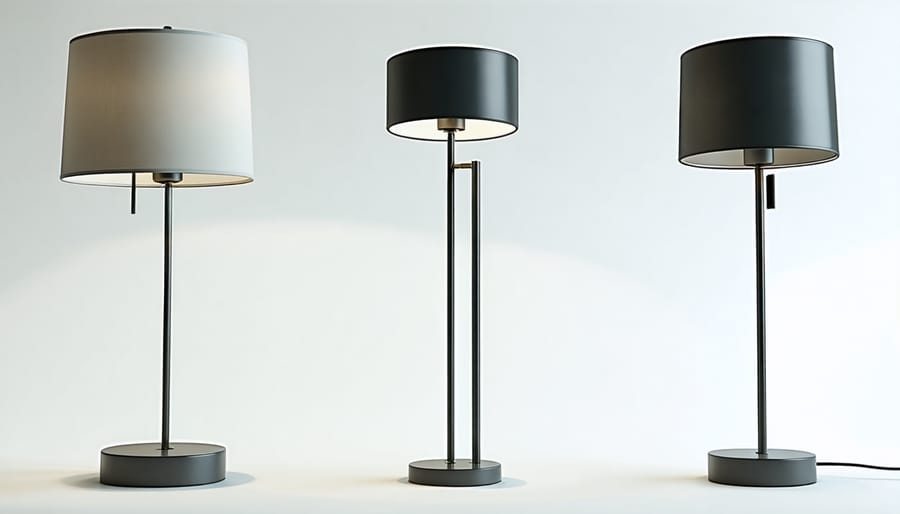
Three-way lighting fixtures come in an impressive array of styles to complement any interior design theme. For traditional spaces, consider table lamps with classic ceramic bases and pleated fabric shades, or elegant floor lamps with ornate metalwork. Modern interiors benefit from sleek torchiere-style floor lamps with clean lines and minimal ornamentation, while industrial designs often feature exposed bulbs and metal finishes.
Contemporary homes can showcase sculptural table lamps with geometric shapes and mixed materials like glass and brushed metal. For transitional spaces, look for fixtures that blend traditional silhouettes with updated finishes, such as mercury glass bases with simple drum shades. Wall-mounted swing-arm lamps work particularly well in reading nooks or beside beds, offering both functionality and style.
When selecting a three-way fixture, consider the overall scale of your room. Larger spaces can accommodate substantial floor lamps, while compact table lamps work better in smaller areas. The shade material also impacts both aesthetics and light distribution – glass shades provide direct illumination, while fabric options create softer, more diffused light that’s perfect for creating ambiance.
Technical Requirements
When setting up a 3-way lighting system, choosing the right light bulbs is crucial for proper functionality. These fixtures require specific 3-way bulbs with two filaments that operate independently or together to create three distinct brightness levels. Standard bulbs won’t work in 3-way fixtures, even if they physically fit.
Most 3-way bulbs come in wattage combinations like 50-100-150W or 30-70-100W for incandescent options. For energy-efficient alternatives, LED 3-way bulbs typically offer equivalent brightness levels while consuming significantly less power, such as 5-10-15W configurations that match the output of traditional 50-100-150W bulbs.
Compatibility is essential when selecting bulbs and fixtures. Always check the socket type – 3-way sockets have an extra contact point and are marked with a “3-way” designation. The fixture’s maximum wattage rating must accommodate your chosen bulb’s highest setting to ensure safe operation.
For smart home integration, many manufacturers now offer smart 3-way LED bulbs that work with home automation systems. These bulbs can maintain the traditional 3-way switching functionality while adding app control and voice command capabilities.
Remember to verify dimmer compatibility if you plan to use your 3-way fixture with a dimmer switch. Not all 3-way bulbs work with dimmers, and using incompatible combinations can lead to flickering or premature bulb failure. When in doubt, consult the manufacturer’s specifications or seek advice from a lighting professional.
Perfect Placement and Usage Tips
Room-by-Room Recommendations
Each room in your home can benefit from strategic 3-way lighting placement. In living rooms, position switches at main entry points and near seating areas for convenient control of larger overhead fixtures or multiple wall sconces. For bedrooms, install switches by the door and next to the bed, allowing you to control ambient lighting without getting up.
Hallways and staircases are perfect candidates for 3-way lighting, with switches at both ends to ensure safe passage. In large kitchens, consider placing switches at different entrances to control task lighting over countertops and islands. For home offices, position switches near the door and desk area to manage both ambient and task lighting effectively.
For outdoor applications, install 3-way switches inside your house and near garage or patio doors to control exterior lighting. In basement recreation rooms, place switches at the top and bottom of stairs for convenience and safety. Master bathrooms benefit from switches near the door and vanity area, providing easy access to proper lighting for different tasks throughout the day.
Layering with Other Light Sources
3-way lamps work best when thoughtfully combined with other lighting sources to create a well-balanced lighting scheme. Start by positioning your 3-way lamp as part of a layered lighting approach, combining it with overhead fixtures, wall sconces, or other table lamps. The adjustable brightness levels of 3-way lamps make them excellent transition pieces between brighter and dimmer areas of your room.
For optimal results, consider using your 3-way lamp as task lighting near seating areas or desks, while letting other fixtures handle ambient and accent lighting duties. During the day, set your 3-way lamp to its lowest setting to complement natural light from windows. As evening approaches, gradually increase the brightness to maintain comfortable light levels.
When mixing different light sources, pay attention to color temperature. Choose bulbs with similar warmth or coolness across all your fixtures to create a cohesive look. Remember that 3-way lamps can serve as the primary light source in smaller spaces or as supplementary lighting in larger rooms, making them versatile additions to any lighting plan.
Common Issues and Solutions
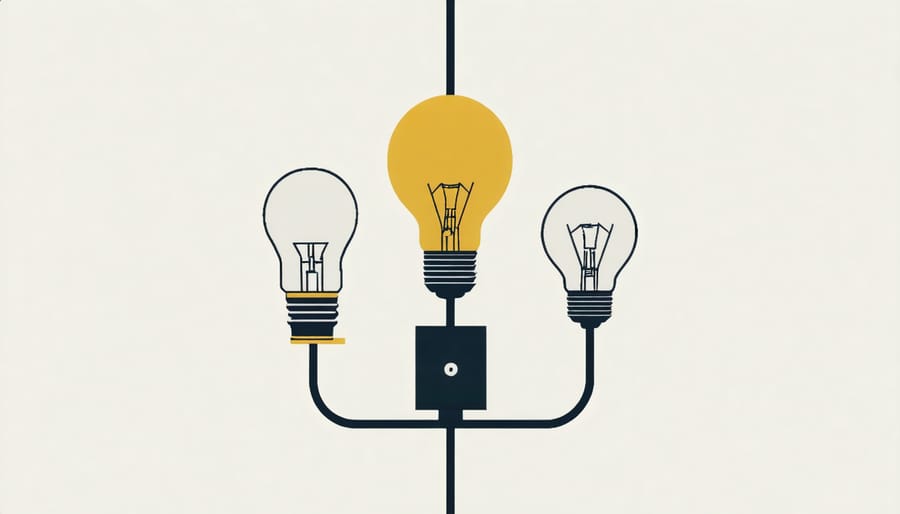
When your 3-way lighting isn’t working properly, there’s usually a straightforward solution. Here are the most common issues and their fixes:
One of the most frequent problems is when neither switch controls the light. This typically happens due to incorrect wiring or a faulty switch. First, check if the bulb is properly screwed in and working. If that’s not the issue, ensure all switch connections are tight and correctly wired.
If the light stays on regardless of switch position, you’re likely dealing with a miswired switch or a defective switch mechanism. In this case, turn off the power at the circuit breaker and verify the wiring connections match your setup’s wiring diagram.
Sometimes the light works from one switch but not the other. This usually indicates a bad switch or loose connection. Test the problematic switch by gently wiggling it – if the light flickers, you’ve found your culprit and the switch needs replacement.
Dim or flickering lights often point to a loose neutral wire or an incompatible LED bulb. Make sure you’re using bulbs specifically rated for 3-way switches, and check all wire connections are secure.
For safety reasons, if you’re not comfortable working with electrical components, it’s best to contact a licensed electrician. They can quickly diagnose and fix these issues, ensuring your 3-way lighting system works safely and efficiently.
Remember to always turn off power at the circuit breaker before attempting any electrical repairs or inspections.
Three-way lighting offers an incredibly versatile solution for creating the perfect ambiance in any space while providing practical illumination control. Throughout this guide, we’ve explored how these systems work, their various applications, and the benefits they bring to both residential and commercial settings. From traditional table lamps to modern smart lighting solutions, 3-way switches provide flexibility and convenience that single-switch systems simply can’t match.
Remember that successful implementation depends on proper installation, compatible components, and strategic placement. Whether you’re upgrading existing fixtures or planning a new lighting design, consider factors like room size, natural light sources, and daily activities when choosing your 3-way lighting setup. For DIY enthusiasts, always prioritize safety and follow local electrical codes, or consult a professional electrician for complex installations.
By incorporating 3-way lighting into your space, you’ll enjoy enhanced functionality, improved energy efficiency, and greater control over your environment. As lighting technology continues to evolve, these versatile systems remain a practical and valuable investment for any property, offering the perfect blend of convenience, comfort, and style.