3D Printed Furniture is Transforming Modern Home Interiors
Step into the future of home design as 3D-printed interiors revolutionize how we create and customize our living spaces. From sleek, organically-shaped furniture to stunning architectural elements that defy traditional manufacturing constraints, 3D printing technology is transforming residential interiors with unprecedented possibilities.
This groundbreaking approach allows homeowners to design and produce custom furnishings, decorative elements, and functional fixtures that perfectly match their space and style preferences. Imagine creating a flowing, sculptural room divider that doubles as a storage solution, or crafting perfectly-sized shelving units that fit unusual wall dimensions with millimeter precision.
Beyond aesthetics, 3D-printed interior elements offer practical advantages: reduced material waste, lower production costs, and the ability to rapidly prototype design ideas before final implementation. Whether you’re a design enthusiast looking to incorporate unique statement pieces or a practical homeowner seeking customized storage solutions, 3D printing opens up a world of possibilities for creating truly personalized living spaces.
As this technology becomes increasingly accessible, we’re witnessing the dawn of a new era in interior design where the only limit is your imagination. Join us as we explore how 3D printing is reshaping our homes, one layer at a time.
The Rise of 3D Printed Furniture in Home Decor
Technology Behind 3D Printed Furniture
The magic behind 3D printed furniture lies in its innovative blend of revolutionary materials and cutting-edge technology. Most 3D printed furniture pieces are created using specialized filaments, including recycled plastics, composite wood materials, and eco-friendly polymers. These materials are heated and extruded through large-format printers, building furniture layer by layer with precise computer control.
The process typically begins with digital modeling software, where designers create detailed 3D blueprints of furniture pieces. These designs can be customized for size, shape, and structural integrity before printing begins. Modern 3D printers can produce furniture pieces up to 6 feet in height and width, making everything from dining chairs to storage units possible.
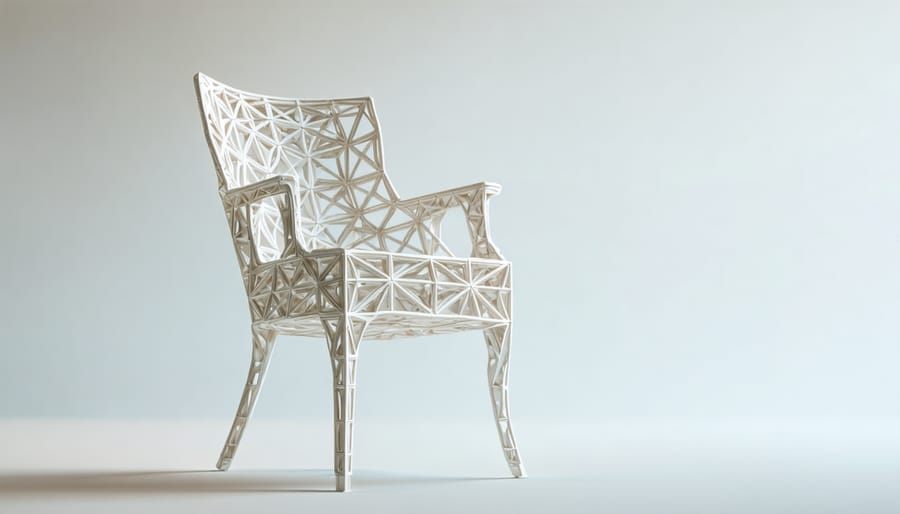
What’s particularly exciting is the ability to create complex geometric patterns and organic shapes that would be impossible with traditional manufacturing methods. The technology allows for hollow internal structures that reduce material usage while maintaining strength, and intricate surface textures that add both visual interest and functionality to each piece.
Benefits of 3D Printed Furniture
3D printed furniture brings a remarkable set of advantages to modern home design. First and foremost, it offers unparalleled customization options, allowing homeowners to create pieces that perfectly fit their space and style preferences. Whether you need a uniquely shaped bookshelf for an awkward corner or a desk with specific dimensions, 3D printing makes it possible.
Sustainability is another major benefit. The technology typically uses eco-friendly materials like recycled plastics and biodegradable compounds, significantly reducing waste compared to traditional manufacturing. The process is also more energy-efficient, as furniture is printed on-demand rather than mass-produced.
Cost-effectiveness makes 3D printed furniture particularly attractive. While initial designs might require some investment, the ability to print replacement parts or duplicate successful pieces can lead to significant long-term savings. For those interested in custom furniture, 3D printing often costs less than commissioning traditional custom pieces.
The technology also enables rapid prototyping and quick design modifications, making it easier to experiment with different styles and configurations before settling on the final piece. This flexibility is especially valuable when designing integrated storage solutions or multi-functional furniture for smaller spaces.
Popular 3D Printed Furniture Pieces for Modern Homes

Seating and Tables
3D printing has revolutionized furniture design, offering homeowners unprecedented customization options for their seating and table arrangements. Modern 3D-printed chairs combine ergonomic comfort with striking geometric patterns that would be difficult to achieve through traditional manufacturing methods. From minimalist dining chairs to plush lounge seating, these pieces can be tailored to match your exact specifications and style preferences.
The possibilities for tables are equally impressive. Imagine a coffee table with an intricate lattice base that appears to defy gravity, or a dining table featuring organic curves that flow seamlessly from top to base. These pieces can be printed in sections and assembled on-site, making them perfect for spaces with difficult access or unique dimensional requirements.
Materials for 3D-printed furniture have evolved significantly, now including recycled plastics, biodegradable compounds, and even hybrid materials that combine printed components with traditional wood or metal elements. This versatility allows for both structural integrity and aesthetic appeal, while also supporting sustainable design practices.
For those interested in statement pieces, 3D-printed modular sofas and sectionals offer the ability to create custom seating arrangements that perfectly fit your space. These pieces can incorporate built-in features like USB charging ports or hidden storage compartments, bringing both functionality and innovation to your living areas.
When selecting 3D-printed furniture, consider how each piece will interact with your existing décor and the overall flow of your space. The technology allows for seamless integration of different styles, from ultra-modern to transitional designs that complement traditional interiors.
Storage and Decorative Elements
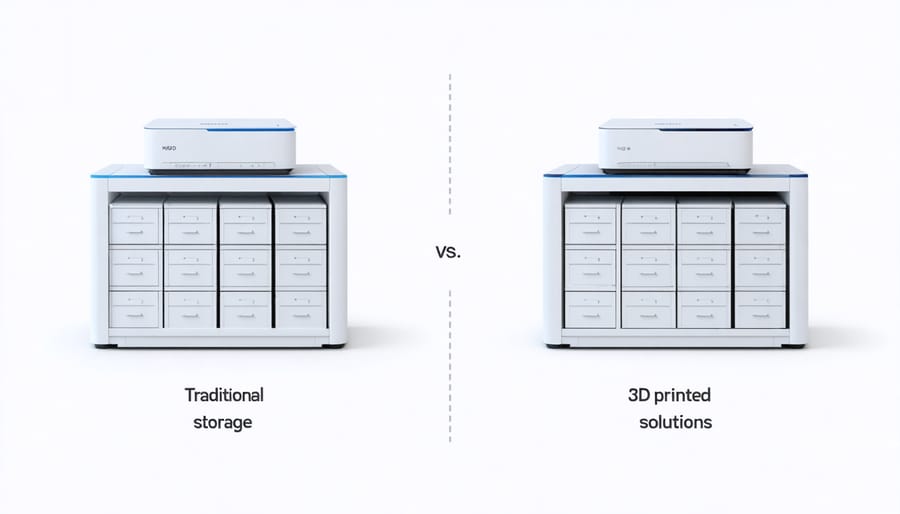
3D printing has revolutionized storage solutions and decorative elements in modern homes, offering customization that perfectly fits any space. Homeowners can now print modular shelving units that adapt to awkward corners or create floating storage systems that seem to defy gravity. These pieces can be designed with precise measurements to maximize storage efficiency while maintaining a sleek, contemporary aesthetic.
For decorative elements, 3D printing opens up endless possibilities. From intricate geometric wall panels to personalized light fixtures, you can create unique artistic pieces that reflect your style. Popular options include customized room dividers with complex patterns, statement centerpieces, and architectural wall treatments that add texture and visual interest to any room.
The technology allows for the creation of multi-functional pieces that serve both practical and aesthetic purposes. Think storage ottomans with built-in charging stations or decorative wall panels that double as hidden storage compartments. You can even print custom organizational inserts for drawers and cabinets that perfectly accommodate your belongings.
What makes these 3D-printed storage and decorative elements truly special is their sustainability factor. They can be produced with minimal waste, and when designs need updating, the materials can often be recycled into new pieces. This approach not only reduces environmental impact but also allows for easy updates as your style preferences evolve.
Integrating 3D Printed Furniture into Your Home
Design Considerations
When selecting 3D-printed furniture to transform your interior space, consider both functionality and aesthetics. Start by measuring your available space carefully, as 3D-printed pieces often come in customizable dimensions that can maximize your room’s potential. Choose lightweight designs for items that need frequent moving, and opt for sturdier structures for permanent fixtures.
Consider the material finish of your 3D-printed pieces. While many items come with a distinctive layered texture, some can be smoothed and painted to match your existing décor. Modern AR design technology can help you visualize how pieces will look in your space before printing.
When placing 3D-printed furniture, maintain balance by mixing them with traditional pieces. Create focal points using statement pieces like geometric shelving or artistic room dividers. Pay attention to weight distribution, especially for wall-mounted items, and ensure proper installation with appropriate mounting hardware.
For optimal durability, position 3D-printed items away from direct sunlight and heat sources, as some materials may be sensitive to extreme conditions. Regular maintenance with appropriate cleaning products will help preserve their appearance and structural integrity.
Maintenance and Care
Maintaining 3D-printed interior elements requires specific care to ensure their longevity and appearance. Regular dusting with a soft microfiber cloth prevents particle buildup in the characteristic layer lines of 3D-printed surfaces. For deeper cleaning, use a mild soap solution and avoid harsh chemical cleaners that could potentially degrade the printing materials.
Temperature and humidity control are crucial for preserving 3D-printed furniture. Keep items away from direct sunlight and heat sources, as excessive heat can cause warping or deformation. Maintain room humidity between 40-60% to prevent material degradation or brittleness.
Inspect your 3D-printed pieces regularly for signs of wear or damage. Pay special attention to stress points, joints, and weight-bearing areas. If you notice any cracks or separation between layers, address these issues promptly to prevent further deterioration.
For painted or finished 3D-printed items, touch up the surface coating as needed. Use appropriate primers and paints compatible with your specific printing material. Consider applying a protective clear coat to high-traffic items to enhance durability and make cleaning easier.
Store unused or seasonal 3D-printed decor items in a climate-controlled environment, wrapped in soft materials to prevent scratches or damage during storage.
The Future of 3D Printed Home Interiors
The landscape of 3D printed home interiors is rapidly evolving, promising to revolutionize how we furnish and personalize our living spaces. As the technology becomes more sophisticated, we’re seeing the emergence of customizable furniture pieces that can be printed on-demand, perfectly matching both the homeowner’s style preferences and spatial requirements.
Industry experts predict that within the next decade, we’ll witness the rise of in-home 3D printing stations, allowing homeowners to create everything from decorative elements to functional furniture pieces right in their own spaces. These advancements will seamlessly integrate with smart home technology, enabling automated furniture production based on real-time usage patterns and needs.
Sustainable materials are at the forefront of this revolution, with researchers developing eco-friendly printing materials made from recycled plastics, organic compounds, and even living materials that can adapt to environmental conditions. These innovations promise furniture that’s not just customizable but also environmentally responsible.
The future also holds exciting possibilities for dynamic furniture – pieces that can transform or adjust their shape based on user needs. Imagine a dining table that can expand or contract depending on the number of guests, or storage solutions that automatically reconfigure to maximize space efficiency.
As costs continue to decrease and printing technology becomes more accessible, we’re likely to see a shift toward hyper-personalized interiors where every piece tells a story and serves a specific purpose. This democratization of design will enable homeowners to become active participants in creating their perfect living spaces, rather than passive consumers of mass-produced furniture.
The integration of 3D-printed furniture and interior elements marks a revolutionary shift in how we approach home design and customization. As this technology continues to evolve, homeowners and designers now have unprecedented freedom to create unique, personalized spaces that perfectly match their vision and lifestyle needs. The cost-effectiveness, sustainability, and rapid production capabilities of 3D printing are making custom interior design more accessible than ever before.
Looking ahead, we can expect to see even more innovative applications of 3D printing in home interiors, from intricate decorative elements to fully functional furniture pieces. The ability to produce complex geometric designs, combined with an expanding range of printable materials, opens up endless possibilities for creative expression in our living spaces.
For homeowners and designers alike, embracing 3D-printed interior elements offers a perfect balance of functionality, aesthetics, and sustainability. As the technology becomes more mainstream, we’ll likely see it transform from a novel concept into a standard approach for creating personalized, efficient, and beautiful living spaces. The future of interior design is here, and it’s being shaped one layer at a time.